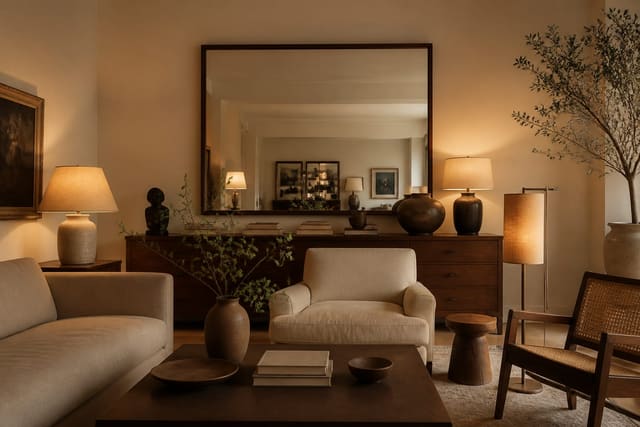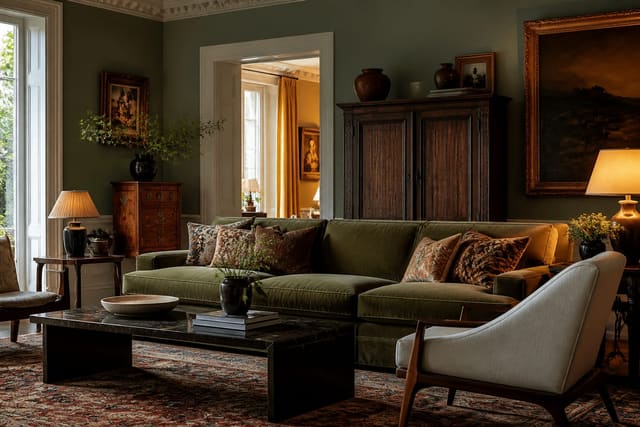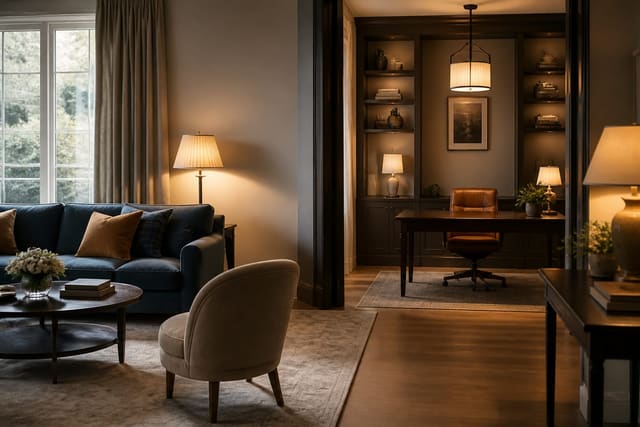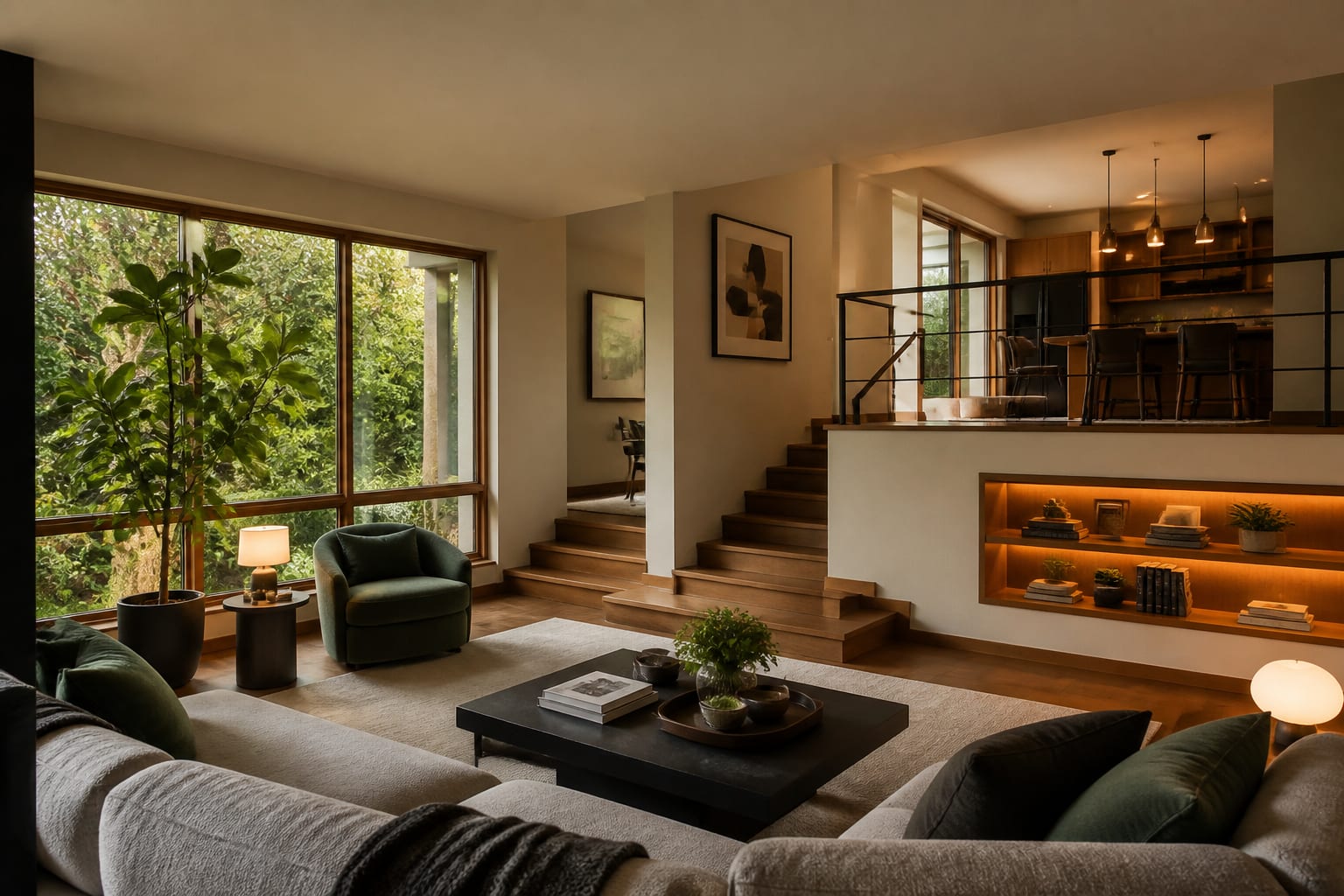
A split-level feels off when the half-flights are treated as a problem instead of a plan. To design one well, connect the levels visually with a consistent palette and good light, then let each level own a clear purpose so the short staircases read as deliberate transitions. My read is that most split-levels look dated not because of the architecture but because each level was decorated as its own little island, and the eye trips at every landing.
I think the fix is mostly about flow. When color, flooring, and light carry continuously from one half-level to the next, the staggered layout stops feeling chopped up and starts feeling like a series of connected zones, which is actually its strength.
Tie the levels together with a continuous palette
The most powerful move in a split-level is making the floors read as one home, and that starts with continuity underfoot and on the walls. When the upper level is gray laminate, the mid-level is beige carpet, and the lower level is a third floor entirely, every staircase becomes a hard border. Run one flooring material, or at least a tightly related set, across the levels and the eye flows up and down without stopping.
Wall color does the same job. Keep your wall tones within a 2 to 3 shade range across the whole home so each landing is a gentle step, not a jolt. In practice I keep adjacent levels within roughly 10 percent of each other in value, close enough that the change reads as one continuous wash. On the stairs themselves, a single run of art hung with each frame about 6 inches apart carries the eye up without a visual gap. That does not mean everything is identical; it means the palette is a family. The thinking behind making disparate elements feel related is exactly what I cover in how to mix design styles, and it applies floor to floor as much as object to object.
Use the staircase walls as the connective tissue. A single run of art, a consistent railing finish, or a continuous wall color climbing the stairs carries the eye through the transition. When the stair itself is designed rather than ignored, the half-flights become a feature instead of an interruption, and the staggered plan finally reads as intentional.
Fix the dark mid-level entry
Nearly every split-level has the same weak spot: a mid-level entry that gets little natural light and sets a gloomy first impression. Because it is the first thing anyone sees, it deserves the most attention. The mid-level usually sits between floors with few or no windows, so it relies on borrowed and artificial light, and most owners under-light it badly.
A few targeted moves lift it fast:
- Hang a large mirror opposite or beside any light source to bounce daylight deeper into the entry.
- Add at least 2 light sources, an overhead plus a wall sconce or table lamp, at warm 2700K.
- Choose a light, warm wall color to reflect rather than absorb the limited light.
- Keep the floor finish glossy or mid-toned so it bounces light instead of swallowing it.
- Lighten the stair railing to an open baluster or glass panel so light passes through to the entry.
The dark-room playbook applies directly here; the layered approach in my AI design dark room solutions guide turns a dim mid-level from the home's worst feature into a welcoming threshold. Get the entry right and the rest of the house feels brighter by association.
Give each half-level a clear job
The staggered layout is actually a gift: it hands you naturally zoned spaces, each a few steps removed from the next. The mistake is leaving those zones vague. Assign each half-level one clear purpose, public living on one, sleeping on another, a flexible den or office on the lower level, and the home suddenly makes sense to move through.
Use the natural separation for functions that benefit from it. A lower level a few steps down is ideal for a media room, a guest suite, or a quiet office because the half-flight buffers sound and sightlines. When a level needs to do two things at once, the zoning tactics in my dual-purpose room ideas help you split it cleanly without building walls. Keep 6 to 8-foot open sightlines between adjacent levels where you can, so the zones stay connected even as they stay distinct.
Scale your furniture to the often-modest ceiling heights split-levels carry. Lower-profile sofas, beds, and storage keep the rooms from feeling squeezed, and consistent furniture heights across levels reinforce the sense that it is all one home rather than a stack of separate apartments.
Common mistakes to avoid
The most common mistake in a split-level is decorating each level as an unrelated room, which fractures the home into disconnected pieces. Carry a consistent palette and flooring across the levels and the whole thing reads as one home. A close second is ignoring the dark mid-level entry; leave it dim and every guest's first impression is gloom, so light it deliberately with at least 2 sources and a mirror.
Another frequent error is heavy, closed stair railings that block light and sightlines between levels; open them to a 36-inch baluster or glass to let the floors breathe together. People also tend to oversize furniture for the modest ceilings, which makes the rooms feel low and cramped, so choose lower-profile pieces. The last mistake is leaving the half-levels purposeless; give each one a clear job and the staggered plan becomes the home's best asset instead of its quirk.
Use AI design to preview your split-level updates
The tricky thing about a split-level is that you cannot judge flow from a single room; the home lives or dies on how the levels connect, and that is impossible to picture from paint chips on a wall. Re-Design helps you test it. Upload a photo of your stairwell, mid-level entry, or a level you want to rework, and the AI design tool re-renders it with a continuous palette, brighter light, or an open railing so you can see whether the levels start to read as one.
Because you upload your real space, the previews keep your actual stair geometry, window placement, and ceiling height honest. Try a unified flooring color, then a brighter entry with a mirror and an open railing, and compare how connected the levels feel before you commit to refinishing floors or rebuilding a staircase you would have to live with for years.