Spring is not the season you enjoy the garden — it is the season you write a check to your future self. Every dahlia tuber you bury in April and every tray of zinnia seed you start under lights is a deposit that pays out in July. Plant nothing now and you get a tidy green nothing all summer.
The reward for getting the timing right is a bed that keeps producing color for four straight months instead of fading after one tired June flush. Done well, spring planting is less about cramming the ground full and more about sequencing what opens when.
Time the soil, not the calendar
The biggest rookie error is planting by date instead of by soil temperature. A warm-season annual set into 50°F soil just sits there, sulking, while a plant set two weeks later into 60°F soil races past it and never looks back.
Buy a $12 soil thermometer and push it 3 inches down at midday for a couple of days running. For most of the summer stars — dahlias, zinnias, cosmos, basil, and marigolds — you want a steady 60°F reading and your last-frost date safely behind you. In most temperate zones that window lands somewhere between late April and the third week of May, but the thermometer beats any almanac.
Cool-tolerant performers can go in earlier. Sweet peas, snapdragons, and larkspur shrug off a light frost and actually resent heat, so they belong in the ground 3 to 4 weeks before the warm crowd. Get them established while it is still chilly and they reward you with a strong May show before the heat-lovers take over.
Sequencing by temperature, not the calendar page, is the single habit that separates a full bed from a patchy one. My spring garden checklist breaks the prep into a week-by-week order so nothing slips through the cracks.
Start seeds indoors to stretch the season
If you only buy nursery six-packs in May, you are paying premium prices for a narrow selection and a late start. Starting seed indoors flips that — for the cost of one $4 packet you get 25 to 40 plants and a six-week head start.
Set up a simple rig: a seed tray, a bag of sterile seed-starting mix, and a shop light or grow light hung 2 to 3 inches above the seedlings for 14 to 16 hours a day. Sow zinnias, cosmos, marigolds, and snapdragons 6 to 8 weeks before your frost date, keep the mix at 70°F to germinate, then harden the seedlings off over 7 to 10 days before they move outside.
Hardening off is the step people skip and regret. Move the trays outdoors for an hour the first day, then add an hour or two daily until they handle full sun and wind without wilting. Skip it and a sunny afternoon scorches three weeks of work in an hour.
Not everything wants the indoor treatment, though. Plants with long taproots — poppies, larkspur, nasturtiums, and zinnias if you prefer — resent transplanting and do best direct-sown where they will grow. Sow those straight into warm soil and thin the seedlings to their final spacing once they have two sets of true leaves.
Build three waves of bloom
A summer of color is really three overlapping shows, not one. Plan all three in spring and you never face a bare bed in the gap between flushes.
- Early wave (May–June): alliums, late tulips, and self-sown larkspur carry the first six weeks.
- Main wave (June–August): dahlias, zinnias, cosmos, and sunflowers do the heavy lifting and rebloom if you deadhead.
- Late wave (August–September): rudbeckia, salvia, and asters keep the bed alive when the early annuals quit.
If you want a shortlist of no-fail picks to sow or set out this spring, start with these five workhorses that read as color from across the yard:
- Zinnias in a hot mix of coral, magenta, and gold for nonstop cutting from July onward.
- Dahlias in dinnerplate sizes for September drama once shorter annuals fade.
- Cosmos sown direct for airy height that fills gaps between sturdier clumps.
- Salvia in deep violet to pull pollinators and hold structure through heat.
- Rudbeckia for that late-summer gold streak when the bed needs a second wind.
For the dahlias, space tubers 18 inches apart and plant them 4 to 6 inches deep, eye facing up. Direct-sow zinnias and cosmos at a 9 to 12 inch spacing once frost is gone — they germinate in 7 to 10 days and bloom in roughly 60. A single packet of zinnia seed, about $4, fills a 4-foot run of border with enough left over to share.
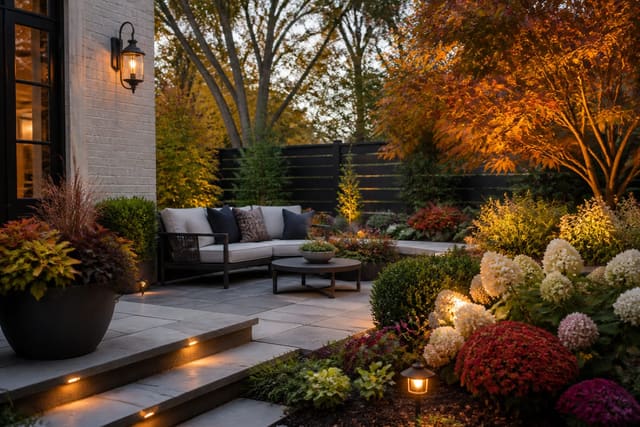
Think about what the bed does after the flowers fade, too. The structure you set now is the same structure you will work around in fall, so it pays to read up on autumn garden design ideas before you commit to a layout you will fight in September.
Stage the bed for height and density
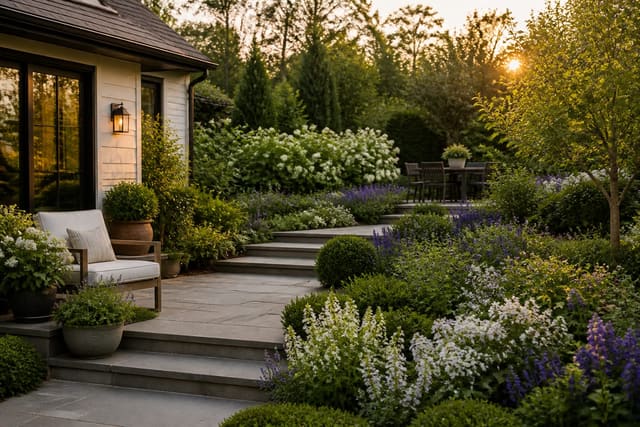
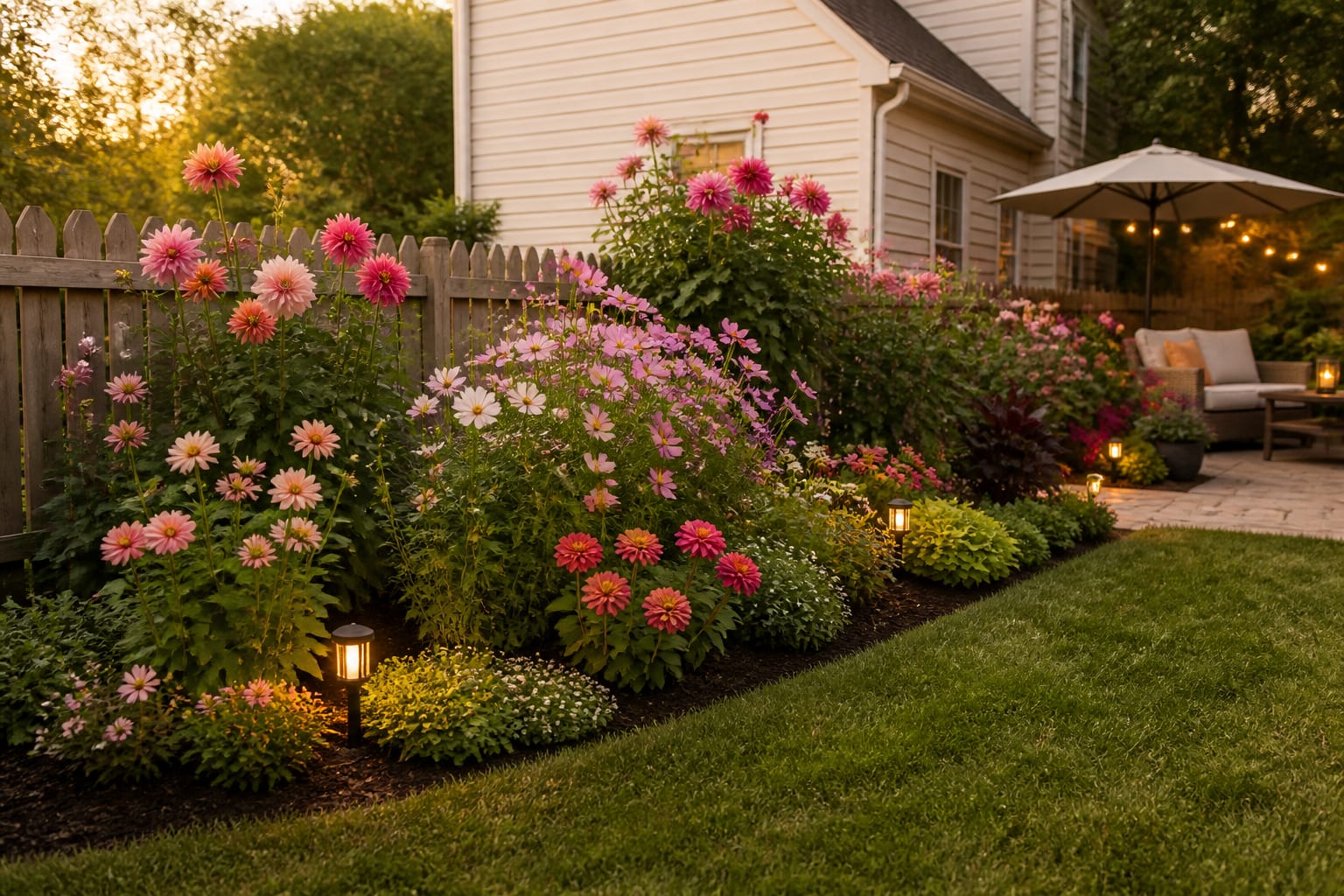
Color reads best when it is layered like a small stage set. Put the tall growers — dahlias, sunflowers, and cosmos at 4 to 6 feet — at the back, mid-height zinnias and salvia in the middle band, and low edging like sweet alyssum or marigolds at the front.
Plant tighter than the tag tells you. Nursery spacing assumes a single mature specimen with room to show off; for a cottage-density look, drop the recommended spacing by about 25% and let the plants knit into one another. Feed every two weeks with a diluted liquid fertilizer once buds form, and cut the very first dahlia bloom early to force a bushier, more productive plant for the rest of the season.
Group your colors with intention rather than scattering one of everything. A bed reads as designed when you repeat a palette — say coral, white, and a single deep magenta — in clusters down its length. Three colors, repeated, beats a confetti of twelve every time.
Mulch once the soil has warmed and the seedlings are up, laying a 2 to 3 inch layer to lock in moisture and smother weeds without burying the crowns. A drip line or soaker hose on a timer, set to run 30 minutes twice a week, keeps the bed evenly hydrated through July heat far better than a sporadic sprinkler. Consistent water is what turns a struggling bed into a generous one.
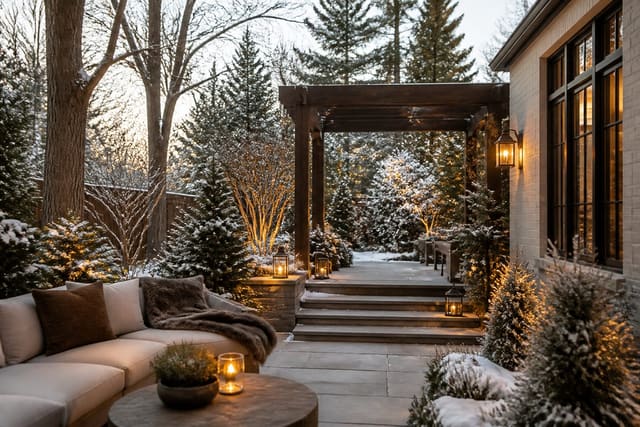
And plan for the cold months while you are at it; the bones you leave standing matter more than you think, which is why a glance at winter garden design ideas helps you choose seed heads and ornamental grasses worth leaving up through the frost.
Use AI design to preview your summer garden before you commit
Soil and seed packets give you no preview — you plant in April and find out in July whether the color story actually works. That four-month lag between effort and payoff is exactly where a digital mockup earns its keep.
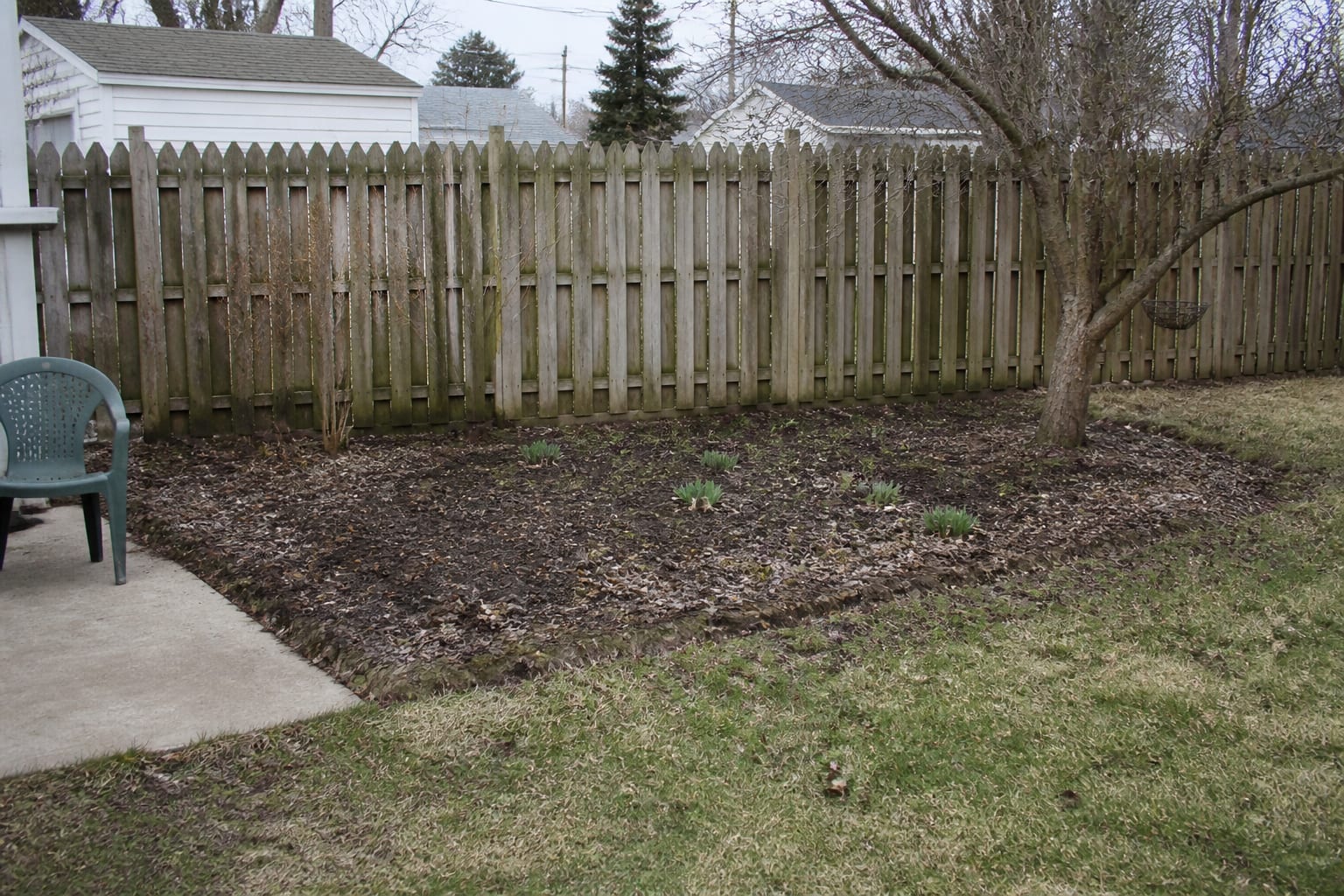
Snap a photo of your bare spring bed and upload it to Re-Design, then let the AI design tool render the same space filled in with the dahlias, zinnias, and ornamental grasses you are weighing. You can test a hot coral-and-magenta scheme against a calmer white-and-blue palette and judge the mature height and density before a single tuber goes in the ground. It turns a long, expensive guess into a decision you can actually look at and adjust in minutes.