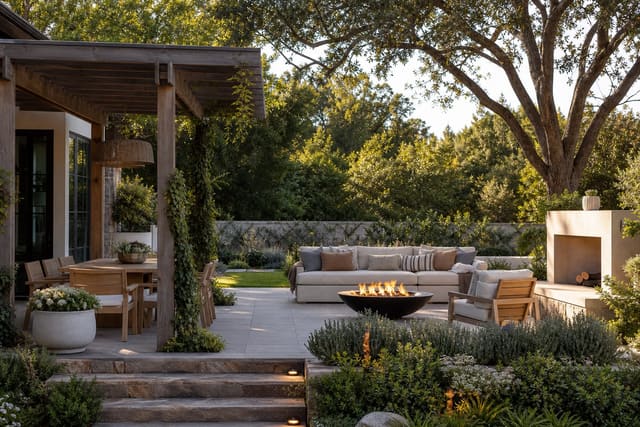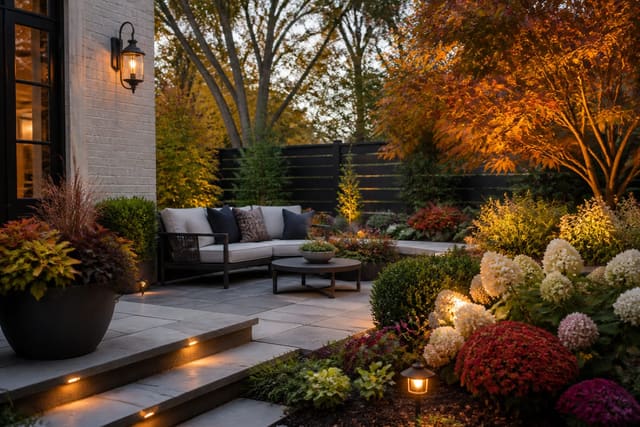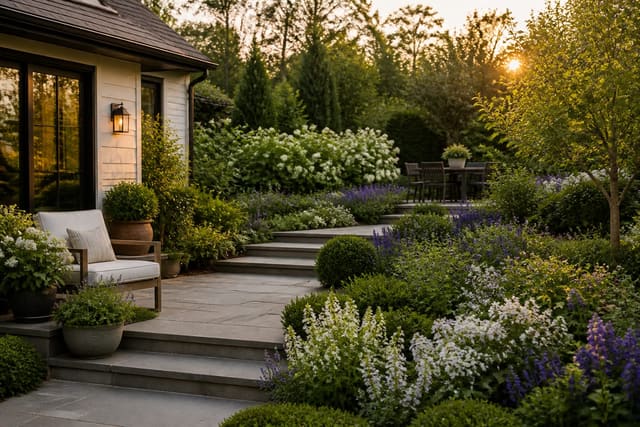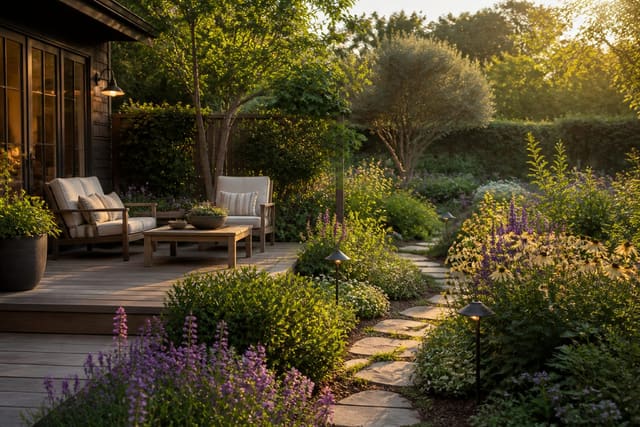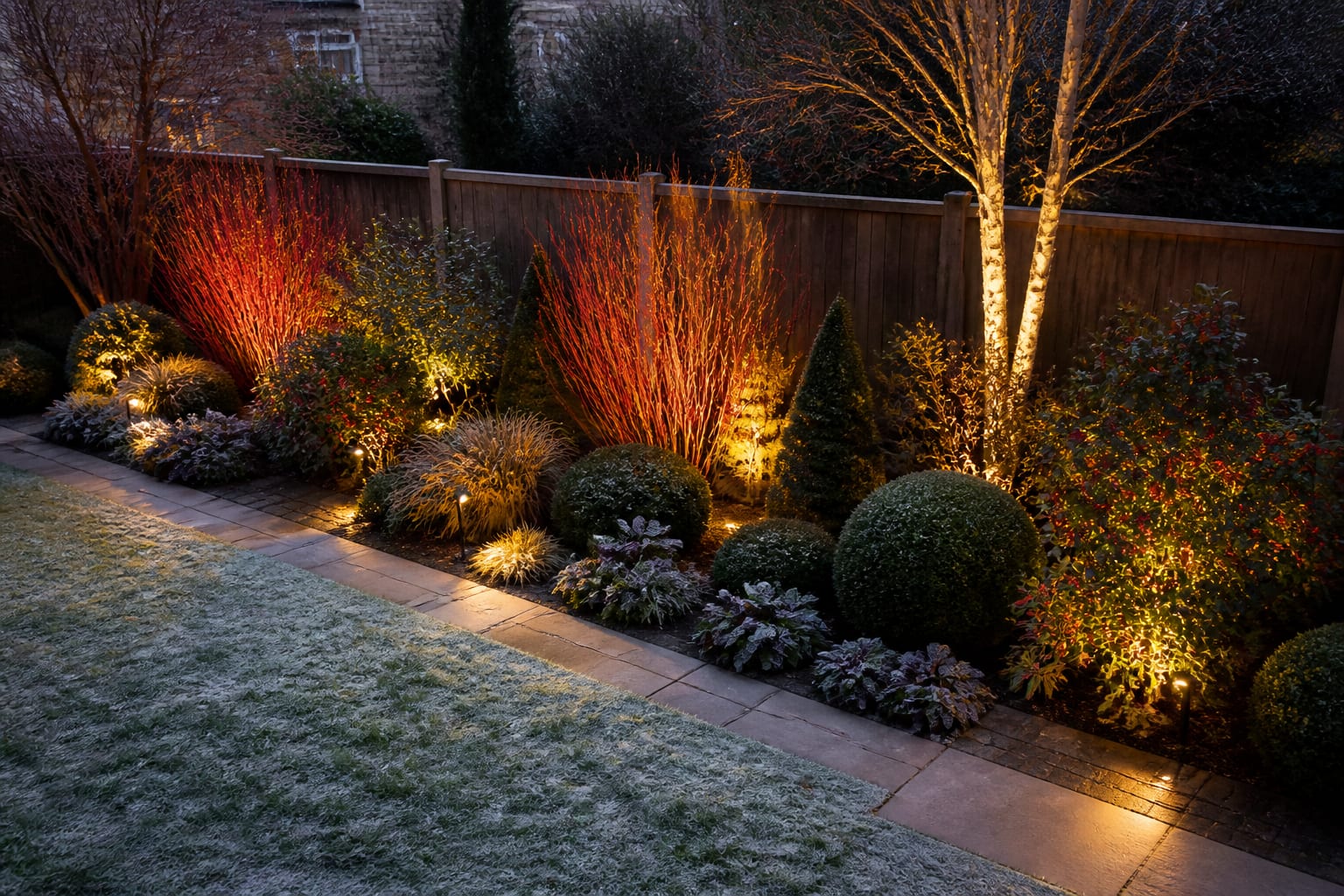
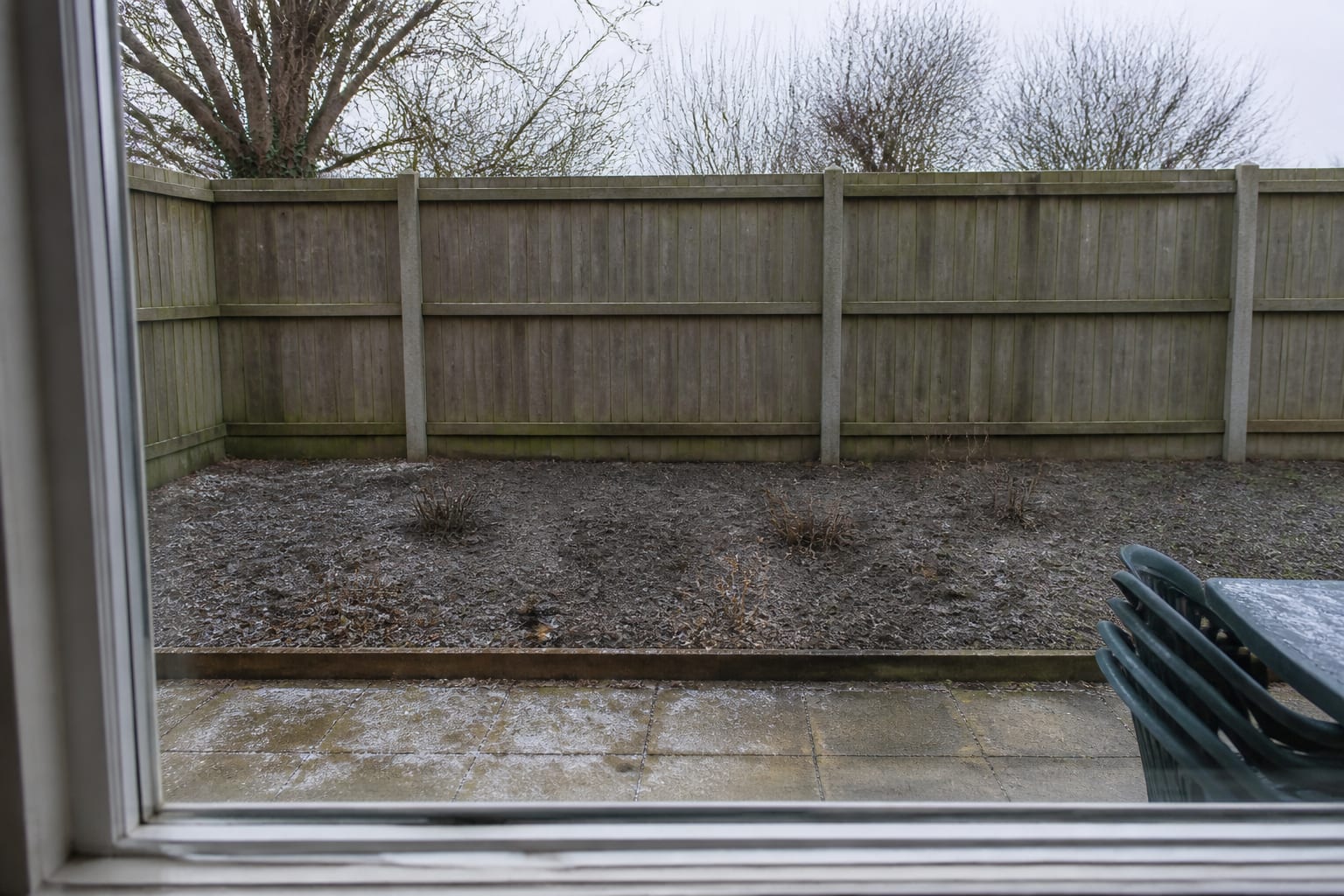
A garden does not have to die in winter; that outcome is a design failure, not a season. With the right plants and a few structural moves, a winter garden can be the most quietly dramatic version of itself, all bark, berry, evergreen form, and scent on cold air. The work is mostly about planting for the bones of the garden rather than the flowers, and the best time to do it is now.
Designing for Bones, Not Blooms
Summer gardens are judged on flowers; winter gardens are judged on structure. Once frost flattens the soft growth, what remains is shape, silhouette, and the few plants that actively perform in the cold. A garden that reads well in January is one where someone deliberately built a framework of evergreens and woody plants to hold the space together.
Aim for about one-third evergreen content across the planting. That ratio is enough to keep a visible outline through the bare months without making the garden feel heavy and static in summer. Clipped box, yew, and pittosporum give you green architecture; a single well-placed evergreen shrub of 3 to 4 feet can anchor a whole border once the perennials collapse. Build out from those anchors with the four pillars of winter interest, and the season stops feeling empty. A hard landscape element helps too, since a path, a bench, or a weathered urn reads strongly when the planting is at its sparest and gives the eye somewhere to land on the greyest day.
Placement matters as much as plant choice. In winter you experience the garden mostly from inside, through a window, so put your strongest performers within that sightline. A 6-foot dogwood with scarlet stems is wasted at the bottom of the garden and electric when framed by the kitchen window. Walk the route you actually take in January, from the back door to the bins or the car, and concentrate the scent and color along it; that is where you will meet the garden when it is cold and dark, not on a summer stroll to the far hedge.
Light works for you in winter if you plan around it. The sun sits low all day, so plants that depend on being backlit, like white-stemmed birch and red dogwood, glow most strongly when you position them between the low sun and your viewpoint. A spotlight or two on a timer extends the effect into the long evenings, picking out bark and evergreen form against the dark. Plan the planting season ahead too; the structure you set now connects directly to the autumn display covered in autumn garden design, where seedheads and grasses hand the baton to winter's bark and berries.
A Winter Interest Planting Checklist
Use this as a copyable shopping list, choosing at least one plant from each pillar so the garden has color, form, and scent rather than just green.
- Colored stems: plant Cornus 'Midwinter Fire' or red-stemmed dogwood in groups of 3 to 5, cutting one-third of stems each spring for the brightest new growth.
- Evergreen structure: add 2 to 3 clipped box or yew shapes, or a 4-foot pittosporum, to hold the garden's outline through frost.
- Berries: include a winterberry holly or a Cotoneaster for red berries that last into February and feed birds through the cold.
- Winter scent: site a Sarcococca (sweet box) or witch hazel within 6 feet of a path or door so the perfume actually reaches you.
- Bark interest: plant a paperbark maple or a birch with white bark where low winter sun can backlight the trunk.
- Ground cover: underplant with hellebores and winter aconites, which flower from December through March at around 8 to 12 inches tall.
Six pillars, a handful of plants, and a garden that does real work in the coldest 12 weeks of the year. Buy fewer specimens but in considered groups; three dogwoods together read as a deliberate feature, while one lost in a border reads as an accident. Budget realistically, too: a respectable starter framework of one dogwood group, two clipped evergreens, a holly, and a scented shrub runs roughly $150 to $300 at garden-center prices, less if you buy bare-root in the dormant season when many woody plants cost 30 to 50 percent less than potted ones.
Common Mistakes to Avoid
The biggest mistake is planting nothing for winter at all and then being surprised when the garden goes blank. Winter interest has to be designed in during autumn planting; you cannot conjure it in January. If you wait until the garden looks dead to think about it, you have missed the window by months.
A second common mistake is spacing winter plants too far apart. Colored stems and berries read best in groups, so a single dogwood or one holly gets lost. Plant in odd-numbered clusters of 3 to 5 and the effect multiplies. The third error is ignoring sightlines: gardeners place a beautiful witch hazel in a far corner no one sees from the house in January, when it should sit within view of the window where you spend cold mornings.
Finally, many people forget scent and light. Winter perfume from sweet box or daphne only works within a few feet of where you walk, so siting it 30 feet from any path wastes it. And colored bark depends on being backlit, so plant white-stemmed birch or red dogwood where the low sun can pass through them. Get sightlines, grouping, and timing right and the rest follows. When spring finally arrives, a spring garden checklist will help you transition the bed, and the perennials from a spring planting plan slot neatly around the evergreen bones you established for winter.
Preview Your Winter Garden in Re-Design
Frequently Asked Questions
How do I design a garden for winter interest?
Build around four pillars: evergreen structure, colored bark and stems, berries, and winter scent. Aim for roughly one-third evergreen content to keep an outline through frost, plant the showy elements in groups of 3 to 5, and position the best performers where you can see them from indoors. Do this work during autumn planting, not in midwinter.
What plants give a garden color in winter?
Red-stemmed dogwood, witch hazel, winterberry holly, and white-barked birch all deliver color when little else does, while hellebores and winter aconites flower at ground level from December onward. Sweet box and daphne add scent. Group the woody plants in clusters of three to five so the color reads from a distance.
How much of a winter garden should be evergreen?
Around one-third evergreen content is a reliable target. That is enough to hold a visible structure once perennials die back, without the garden feeling dark or static in summer. Use clipped box, yew, or pittosporum as anchors and build the seasonal, deciduous interest around them.