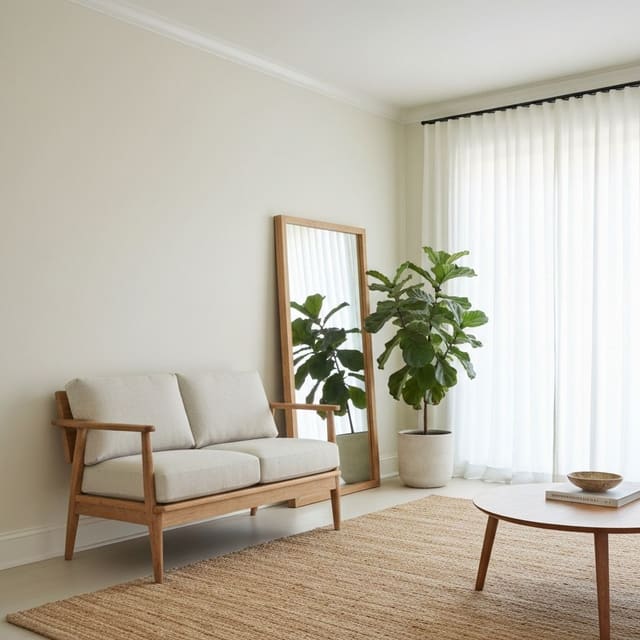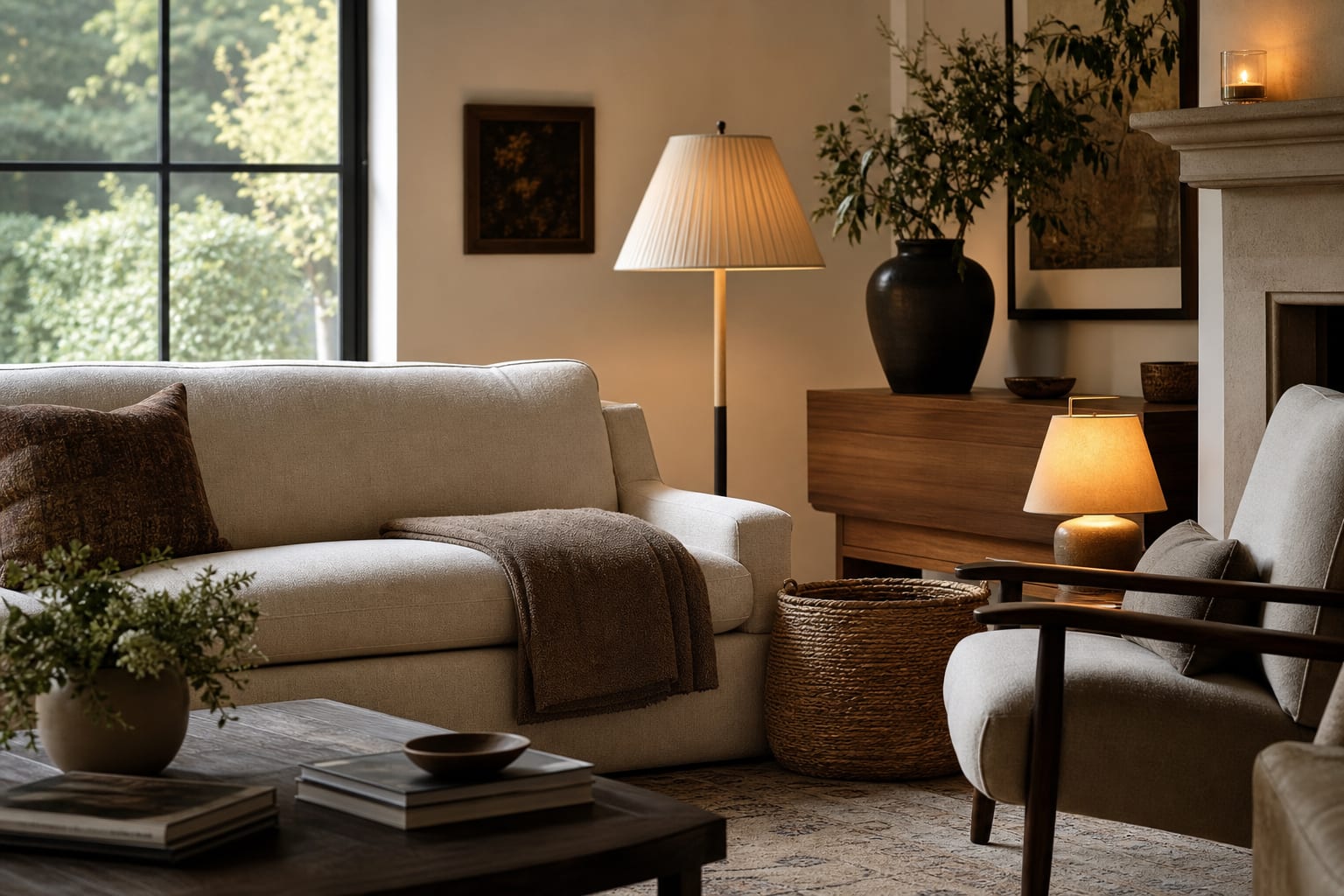
Throw blankets read intentional when one folded throw lives on the sofa back, a basket or closed ottoman near the sofa holds the rotation, no throw exceeds 50 by 60 inches (couch size, not bed size), and the palette stays to three tones max. A throw is decor only when it has a job and a home; rumpled fleece on every chair reads tired, not cozy. The fix is fewer visible blankets, stronger placement, and a real spot for the rest.
What makes throw blanket storage look stylish instead of accidental?
Limit the number on display, give extras a closed or structured home, and make the visible throw repeat a color or texture already in the room. One throw on the sofa plus one accessible backup is enough for most living rooms. A sectional can carry two visible throws if they differ in texture but share a color family; three or more on one sofa looks like laundry waiting for instruction.
Size matters. A standard 50-by-60-inch throw suits a lounge chair or sofa arm. A 60-by-80-inch blanket works for a deep sectional but needs bulkier storage since thin cotton, linen, and wool fold flat while sherpa, chunky knit, and faux fur need room to breathe.
Color should repeat what's already in the room — oatmeal, camel, charcoal, olive, or rust against neutral furniture — not arrive at random. A loud throw can work only when the rest of the sofa stays quiet.
Which storage method fits your sofa, basket, ladder, or bench?
The right method depends on texture and how often the blanket gets used.
| Method | Best for | Sizing notes |
|---|---|---|
| Basket | Daily-use soft throws | 18–22 in. wide, 14–18 in. high; keep lower than the sofa arm |
| Lidded basket/bin | Homes with pets, kids, or crumbs | Hides the messy fold; use if the room already has open woven texture |
| Blanket ladder | Attractive throws you want on display | 60–72 in. tall, rungs 10–12 in. apart |
| Storage bench | Hidden bulk capacity | 16–19 in. high; leave lid clearance |
A basket should be firm-shaped, not a floppy tote, and sit near the sofa without towering over it. A ladder only works if every throw on it is worth seeing — lean it beside a fireplace or reading chair, never in a walkway. A bench tucks under a window or behind a sofa; if it opens from the top, leave room to lift the lid without shifting pillows first. For rooms that struggle with clutter generally, see living room storage that avoids visual chaos.
Test this on your own room photo with ReDesign — keep the doorway, walls, windows, main furniture, and lighting visible so the preview solves the room you actually have.
How do you display throws without making the room look messy?
A displayed throw needs a deliberate fold, a deliberate landing spot, and enough contrast to be seen without shouting.
- Sofa arm: fold lengthwise, then in thirds, and let the bottom edge hang 12–18 inches.
- Sofa back: fold to about one-third of the sofa width (roughly 24–30 inches on an 84-inch sofa) and place it off center, not spread end to end.
- Chair: fold over one arm or a back corner; don't bury a seat people actually use.
Lighting changes how texture reads — a wool throw under warm light (2700K–3000K) looks inviting, while cold overhead bulbs make it look dingy. If the room still feels flat once blankets are controlled, see layered living room lighting. North-facing rooms need extra warmth: cream, oatmeal, camel, tobacco, rust, and warm olive read better than icy white or blue-gray under cool light — more on that in north-facing living room colors and lighting.
Common blanket storage mistakes that make a room feel sloppy
- Displaying every blanket because each is useful. Keep one or two within reach; move the rest to a bench, cabinet, or closet.
- Using an undersized basket. A throw crammed into a 12-inch basket looks like overflow — it should drop in loosely with the top edge near the rim.
- Mixing too many textures in one corner. Chunky knit, faux fur, fringe, and a ribbed rug together become visual static; let one plush texture lead.
- Ignoring floor clearance. A basket needs at least 6 inches of breathing room; a ladder needs a clear base free of cords or vents.
- Choosing for the close-up, not the room. Fringe and high-contrast patterns can look chaotic from the doorway — stand 8–10 feet back before deciding.
Use AI to preview your living room before you buy another basket
The usual mistake is proportion, not taste — a beautiful basket can still be too small, and a rust throw can warm a sofa or clash with the rug depending on light. Photograph the room from the doorway or the spot where you first see the sofa, including arms, side tables, rug, lamps, and the current blanket pile — don't stage it into a version you won't maintain.
Test one variable at a time: a single folded throw on the arm, then a basket beside the seat, then a storage ottoman, then a ladder on the nearest blank wall, keeping everything else constant. Pick the version that reads calmest from the doorway, then turn it into a shopping brief — one visible throw, one backup location, one texture family, one exact spot where the blanket returns when nobody's using it.
Frequently Asked Questions
How do I display throw blankets on a sofa?
Use one throw, folded in thirds over one arm or in a narrow third across the back. Multiple throws layered on a sofa read as leftover laundry, not styling, regardless of how nicely each one is folded.
Where do extra throws go between uses?
Store them in a closed storage ottoman, a side-table cabinet, or a 14-by-18-inch woven basket beside the sofa. Open shelves loaded with throws look messy within a week because folds loosen with handling.
What size throw works on a sofa?
A 50-by-60-inch throw fits one seat and folds cleanly on a sofa arm or back. Bedroom-sized blankets (60 by 80 inches and up) overflow the sofa's edges and read as misplaced bedding.
What fabric throws look most designed?
Woven cotton, wool, or linen in muted earth tones like cream, oat, and rust read most intentional. Printed fleece, synthetic fur, and logo throws break the designed look no matter how they're folded.
How many throws should a living room have visible?
One on display, with two or three more in rotation inside closed storage. Any visible throw beyond that first one is styling overflow and signals the room lacks a real storage spot.
> Try this: Ready to see this on your own room? Open ReDesign and run the preview.
Three transformations to try
1. Single folded throw over one sofa arm 2. Woven basket beside sofa with rotating throws 3. Closed ottoman storing throw collection