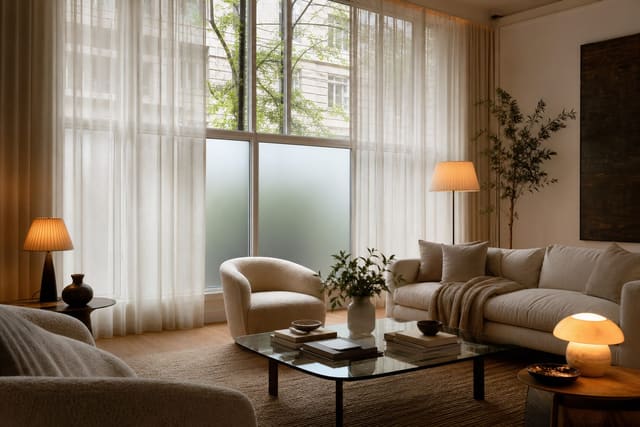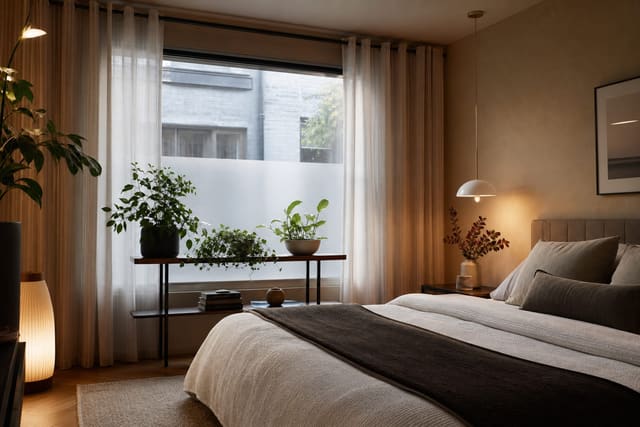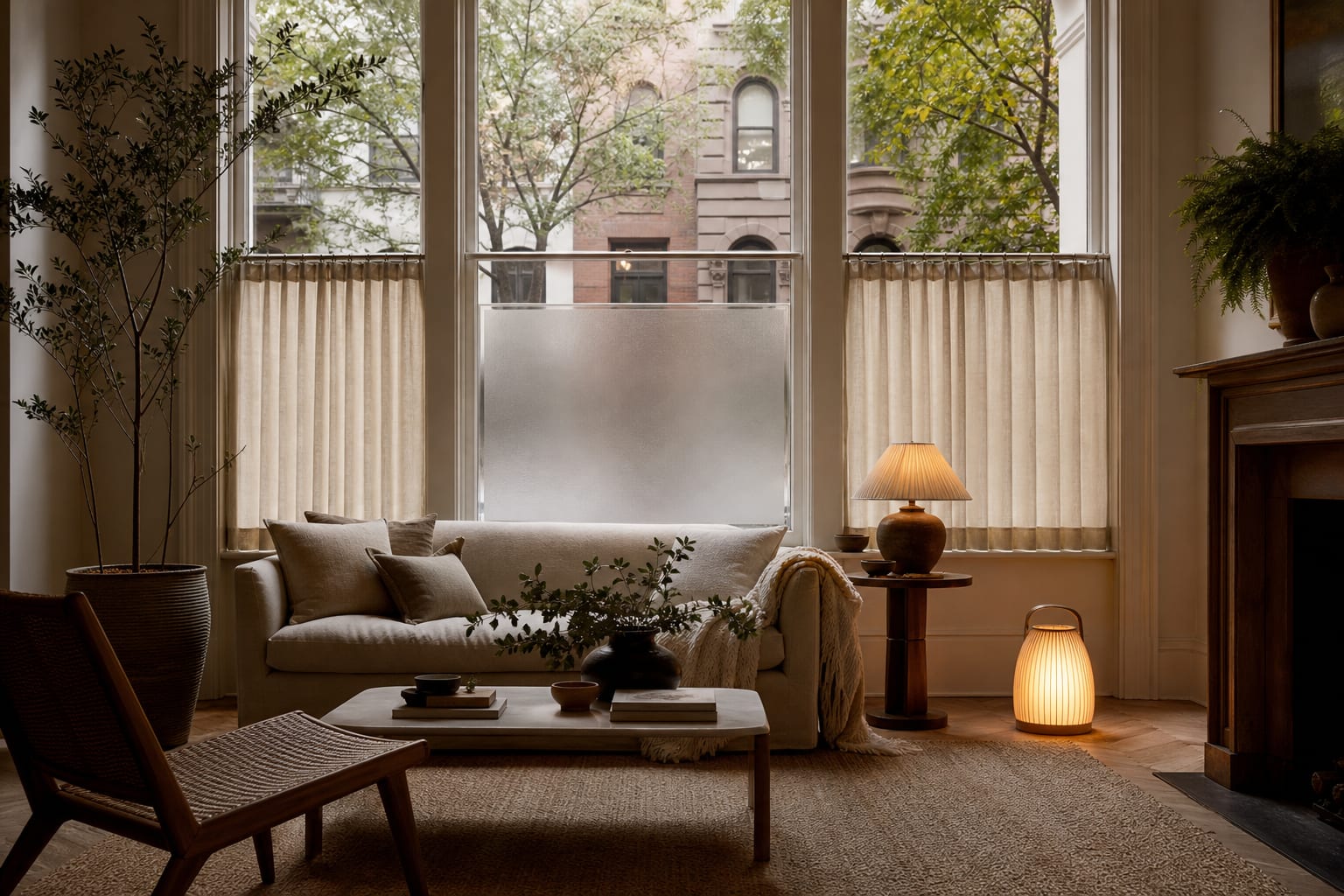
Street-level window privacy works best with top-down/bottom-up cellular shades (block the lower half, leave the upper half open), café curtains on the lower window only, frosted privacy film, or layered sheer-plus-blackout systems — matched to your window height and street distance. The lower 36 to 54 inches usually matter most, since that's where pedestrians and neighbors actually look in. Protect that zone, leave the top glass clear, and the room stays bright and private.
How do you get privacy without losing daylight?
Stand on the sidewalk, driveway, or opposite landing at the time the room feels most exposed, and judge the real sightline before buying anything. If the issue is seated privacy, you may only need coverage from sill height to about 48 inches; a stoop or raised sidewalk pushes that to 60 inches.
Frosted film is the cleanest base layer for rentals because it changes the glass, not the wall. Use plain frosted, reeded, linen-texture, or rice-paper film rather than busy decorative patterns. Static-cling film suits renters; adhesive film looks smoother but installs less forgivingly.
Leave the top third of the window open whenever possible for sky glow and the feeling that the room still breathes. If the window faces a wall or alley instead, see treatments for a window facing a brick wall for the same open-light logic.
Which layer handles privacy: film, café curtains, shades, or drapery?
Each treatment does a different job, so match it to the exposure.
- Frosted film — best for narrow windows, modern rooms, or spots where fabric would crowd a radiator or counter. Cover the lower half to two-thirds, leaving a 1/16-inch edge gap to prevent peeling.
- Café curtains — best for charm and texture. Mount the rod inside the casing or just above the lower sash, using about 1.5–2x the window width in linen, cotton voile, or muslin.
- Top-down bottom-up shades — best when privacy needs change by hour, as in a ground-floor bedroom or bath. Choose light-filtering cellular fabric unless the room needs true blackout.
- Full drapery — best for living rooms, bedrooms, or dining spaces where night privacy matters most. Hang the rod 4–8 inches above the casing, extending 6–12 inches past each side so panels clear the glass by day. If drilling isn't allowed, check no-damage curtain mounting options before buying panels adhesive hooks can't support.
Test this on your own room photo with ReDesign — keep the doorway, walls, windows, and furniture visible so the preview solves the room you actually have.
How do plants, furniture, and light reduce exposure?
A street-facing window feels vulnerable when glass is the only thing on the wall. Add a middle layer so the eye meets depth before it meets the sidewalk.
Place one or two plants — a rubber plant, ficus, parlor palm, dracaena, pothos, or snake plant — where they break the sightline to seating or the bed. Keep foliage 10 to 18 inches off the glass so leaves avoid condensation and cold panes.
Use furniture as a buffer: a 28–32-inch console under the window gives the glass a base, and a low bookcase or bench can create a visual threshold in a living room. Avoid placing a pillow directly under exposed lower glass unless it's already blurred.
Lighting changes privacy after dark. A room brighter than the street turns every window into a lit frame, so put lamps beside or behind seating, use downward-directing shades, and choose warm 2700K bulbs. If layered privacy makes the room feel dim, fix the light plan rather than stripping the window bare — see creating fake natural light in any room for diffusing light and brightening vertical surfaces.
Common mistakes to avoid
- Covering the whole window. This punishes the room instead of solving privacy — leave the upper glass open when possible.
- Defaulting to mirrored film. It looks commercial, may break lease rules, and reverses at night when the room is brighter than the street.
- Using too little sheer fabric. A flat panel gives false coverage and can show silhouettes after dark; add fullness or a second opaque night layer.
- Skipping the outside check. Go outside after dark with lamps on and look for gaps, bright sill strips, or one revealing sliver.
- Over-decorating the fix. Fake stained glass, heavy lace, and novelty films draw more attention to an already awkward window.
Use AI design to preview your street-facing window
This is a layering problem, not a single purchase — film, curtains, plants, furniture height, and lamp placement all change the result. Photograph the room in daylight from a corner so the window, floor, and adjacent furniture are visible, and add a night shot with lamps on if evening privacy is the real issue.
Test controlled versions before buying: lower frosted film with clear upper glass, café curtains with plants, top-down shades with side panels, or drapery that closes only at night. Keep the wall color and major furniture steady so you're judging the privacy move, not a fantasy redesign.
Prompt for specifics: film on the lower 48 inches, café curtain fullness, a rod extended 8 inches past the trim, warm 2700K lamps away from the glass, and plants scaled to the sill. The winning preview feels bright at noon, private at night, and unremarkable enough that you stop thinking about the sidewalk.
Frequently Asked Questions
What is the best privacy treatment for street-level windows?
Top-down/bottom-up cellular shades let you cover the bottom half for privacy while leaving the top half open for daylight — the best single solution for most living rooms and bedrooms.
Do frosted privacy films work well?
Yes. Adhesive privacy films diffuse light without blocking it, last 5–10 years, and remove cleanly. The trade-off is a constant etched-glass look with no clear-glass option.
Can café curtains give privacy without blocking light?
Yes. A tension rod or installed rod at the window's midpoint with linen or cotton café curtains covers the lower window while keeping the upper half clear.
Should sheers and blackouts layer for privacy?
Yes, especially in bedrooms. Sheers stay closed by day for diffuse light and partial privacy, while blackouts close at night for full coverage — the standard primary-bedroom setup.
Does AI preview privacy treatments?
Yes. Upload a photo of your street-level window and AI can preview top-down shades, café curtains, and privacy film against your existing window and trim.
> Try this: Ready to see this on your own room? Open ReDesign and run the preview.
Three transformations to try
1. Top-down/bottom-up cellular shades 2. Café curtains on lower window only 3. Privacy film with bare-window read