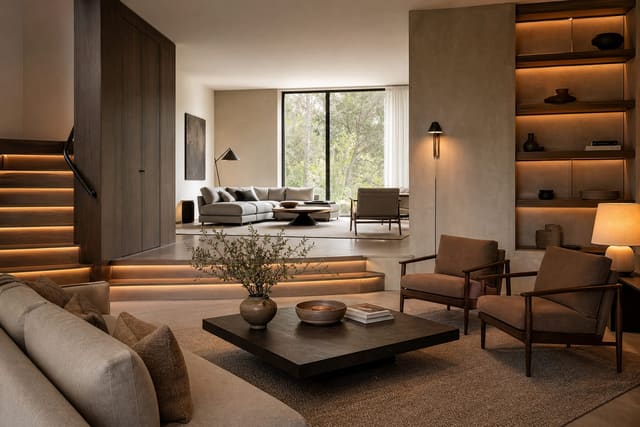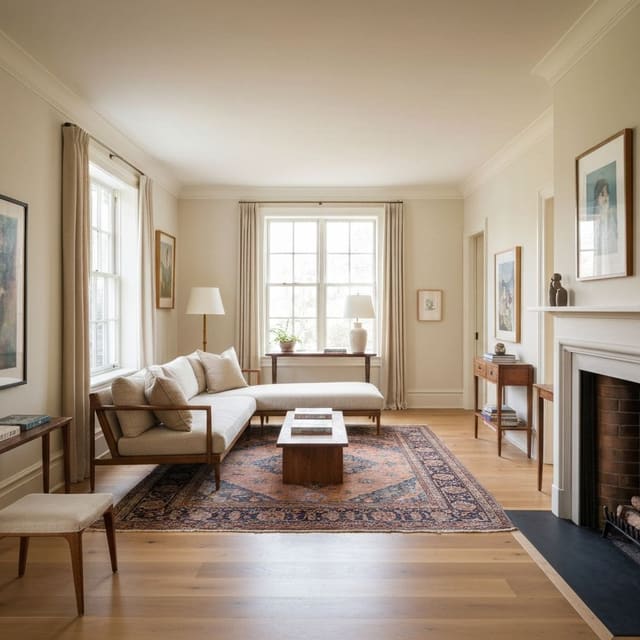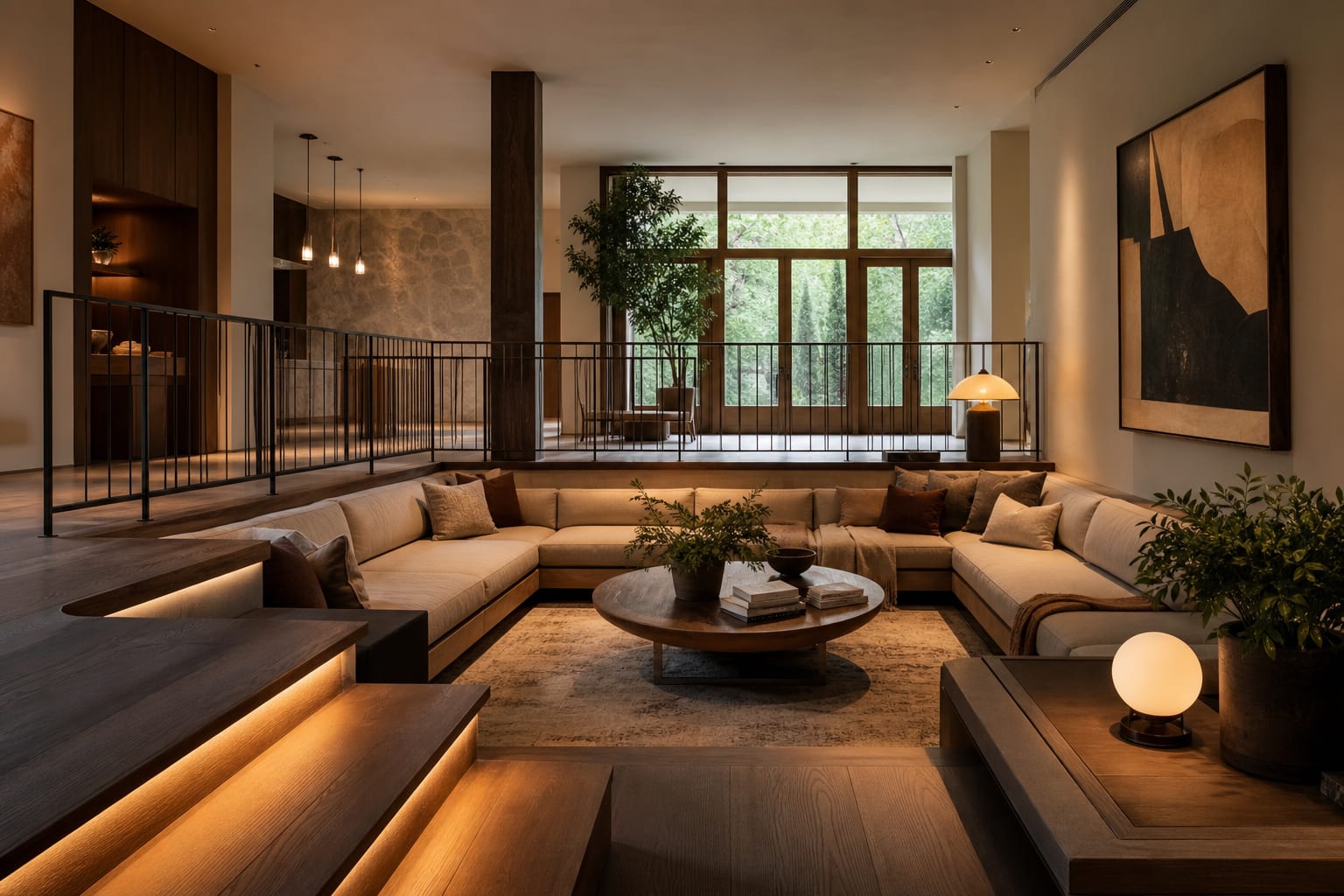
A sunken living room reads as an asset when step risers are emphasized with contrasting trim or stone, conversation pit furniture sits low (16 to 18-inch deep sofas, 14 to 16-inch coffee tables), and lighting drops to floor and table lamps so the eye reads the pit as a cocoon, not a basement. Fill it in only when the drop blocks daily circulation or safety, not because it recalls the 1970s.
Is a sunken living room a liability or an asset?
A sunken living room is an asset when the level change is visible, safe, and useful. It becomes a liability when the step interrupts circulation, hides in shadow, or fails the people who live there.
Start with the route through the room. If the sunken area sits off to one side and creates a natural seating zone, it deserves an update before demolition. If everyone must cross the drop to reach the kitchen, patio, hallway, or bathroom, the architecture is an obstacle course.
The safest sunken rooms make the edge obvious from 6 to 8 feet away. A single carpet color running across both levels can hide the change, especially at night, so use a different rug field, a nosing detail, narrow metal trim, or low-voltage step lighting.
Depth matters too. A drop of 4 inches is often more dangerous than a full step because people don't register it as a level change; a 6 to 8-inch drop reads more clearly but still needs contrast, lighting, and a landing not crowded by chair legs.
If your home is a split-level with multiple half-flights, treat the pit as part of the larger circulation story. The layout thinking in split-level living room design applies here, since the issue is rarely one step but how every rise, railing, doorway, and sightline connects.
What makes the drop feel intentional instead of dated?
The drop feels intentional when the lower zone has a clear job: conversation, TV, reading, music, or a fireplace grouping. It feels dated when it holds leftover furniture arranged as if the floor were flat.
Anchor the lower area with one strong seating shape that follows the pit edge while leaving comfortable entry points. Keep at least 30 inches of clear walking space at the step down, and avoid placing a coffee table within 18 inches of the landing.
Scale the sofa to the pit, not the room above it. Low backs, exposed legs, or a modular sectional make the drop feel lounge-like rather than buried. Match upholstery to the real household, since kids, pets, and movie nights change the answer more than a showroom fabric does, as covered in this practical sofa material guide.
Lighting is the second fix: light at three heights, meaning step or perimeter light near the edge, lamps at seated height, and overhead or wall light that defines the zone. Use warm 2700K to 3000K bulbs with high color rendering so carpet, wood, and upholstery don't flatten into one dark mass.
Rugs should clarify the lower seating zone without disguising the step. One large rug inside the sunken area often works better than a rug crossing the threshold, leaving a clear border at the edge.
Test this on your own room photo with ReDesign before choosing a direction; keep the doorway, walls, windows, main furniture, lighting, and fixed features visible so the preview solves the room you actually have.
When should you fill in the floor?
Fill in the floor when the sunken area blocks daily life, creates a genuine accessibility problem, or would cost less to remove than to make safe. Nostalgia isn't a reason to keep bad architecture.
Accessibility is the first test. A living room step becomes more than inconvenient for anyone using a walker, cane, wheelchair, knee brace, or with poor night vision, and a ramp inside a small living room often needs more run than the space can spare.
Moisture and structure matter too. Some sunken living rooms sit on slabs; others are framed below the main floor. Before promising an easy fill-in, check vents, outlets, baseboard heat, flooring transitions, fireplace hearths, stair relationships, and exterior door thresholds, since raising the floor by 6 to 8 inches can trigger a chain of trim, electrical, HVAC, and code details.
A fill-in makes the most sense when the pit is shallow, awkwardly placed, and not tied to a strong feature, such as a small rectangle between the front door and kitchen. If it wraps a fireplace, catches a view, or humanizes a large open plan, updating it may beat erasing it. Buyers forgive a sunken living room when it looks deliberate, bright, and safe, and worry when it looks shadowy and hard to furnish.
Common mistakes that make a conversation pit feel unsafe
- One continuous floor material with no edge cue. Matching wood or carpet hides the threshold; add stair nosing, a thin border, or integrated lighting.
- A railing that's too heavy. A bulky guardrail turns the upper level into a balcony and traps the lower zone; use slim metal, wood slats, low shelving, or glass instead.
- The main sofa facing away from the step. This pinches the entrance and forces guests behind a furniture wall; let the sofa face the best feature and keep one entry side open.
- Lighting only the ceiling. Overhead light leaves the step edge in shadow; add a floor lamp, wall washer, or LED strip under a built-in ledge so the level change glows instead of disappearing.
- Dark colors in a pit that already lacks daylight. North-facing or overhang-shaded rooms turn into shadow bowls. The advice in north-facing living room colors and lighting applies directly: warmer whites, muted color, reflective surfaces, and layered lamps.
Use AI design to preview the step before construction
AI design helps because the decision is expensive and spatial: the same pit can look brilliant with the right edge, seating, and lighting, or clumsy with the wrong furniture. Upload a straight photo of the actual living room and test versions where the level change stays in place first.
Photograph from the main entrance so the image includes the step edge, upper floor, lower seating area, windows, ceiling line, and any fireplace or TV wall. Take one version in daylight and one in the evening with your normal lamps, since a room that looks fine at noon can turn risky after dark.
Run focused previews: one with the pit kept and updated through a lighter rug, visible stair edge, lower sectional, and layered lamps; one with a partial guard or built-in ledge; one with the floor filled in. Keep windows, fireplace, and main furniture consistent so you judge the architecture, not a fantasy remodel.
The useful preview shows the smallest real change that solves the problem. If step lighting, a clearer rug boundary, and a better sofa make the pit inviting, keep it; if every good image requires leveling the floor and replacing all the furniture, the room is asking for construction, not styling.
Before spending on demolition, tape the proposed edge treatment on the floor, place lamps where the preview suggested, and mock up furniture clearances with painter's tape. Walk through at night; if the step is obvious, the seating feels grounded, and circulation no longer makes people hesitate, the sunken living room has earned its place.
Frequently Asked Questions
How do I update a 1970s sunken living room?
Emphasize the step risers in stone or contrasting trim, swap shag carpet for low-pile wool or jute, replace the modular conversation pit with low-profile linen sofas, and add warm 2700K floor lamps. Modernize the materials and keep the architecture.
Should I fill in a sunken living room?
Rarely. Filling in a sunken floor costs $20,000 to $50,000 in framing, subfloor, and finish work, while redesigning the pit with current materials reads as designed for 5 to 15 percent of that cost.
What furniture works in a sunken conversation pit?
Use low-profile (16 to 18-inch seat depth) modular L-shape or U-shape seating that matches the pit perimeter, a 14 to 16-inch coffee table low enough to clear the seated sightline, and floor cushions for overflow seating.
How do I light a sunken living room?
Place floor and table lamps inside the pit at 2700K on dimmers, plus one accent overhead fixture above the conversation zone. The pit reads as a cocoon at night when overhead light is off and three lamp sources carry the room.
Is a sunken living room a resale liability?
It depends on the local market. In mid-century markets sunken rooms read as character; in standard markets they read as renovation cost. A well-designed sunken room photographs strong and often offsets buyer hesitation.
> Try this: Ready to see this on your own room? Open ReDesign and run the preview.
Three transformations to try
1. Modern conversation pit with low-profile linen seating 2. Emphasized stone risers and warm lamp lighting 3. Pendant cluster above conversation pit zone