The best sunroom ideas treat the room as a real, year-round space rather than a porch with leftover wicker: pick one clear function, specify fade-resistant fabrics, layer adjustable shading, and add dedicated heating and cooling. Get those four things right and the sunniest room in the house becomes the one nobody wants to leave.
What is a sunroom actually for?
Decide the room's job before buying furniture. A sunroom can be a reading lounge, casual dining spot, plant conservatory, or home office, but rarely all of them at once in a typical 12-by-14-foot space with three or four walls of glass. Orientation should drive the choice: east-facing rooms suit a breakfast nook, while west-facing rooms with harsh afternoon sun work better as an evening lounge with serious shading. Map the sun's path across the room at different hours, since a spot that's perfect at 9 a.m. can be unusable glare by 3 p.m. Decide the function first and the fabric, shading, and layout choices become obvious instead of a series of compromises.
See also our guide to Conservatory Interior Design Ideas.
What fabrics and materials survive direct sun?
Standard indoor cotton and linen fade to pale ghosts within months of daily sun exposure. Specify solution-dyed acrylic, the fabric used in premium outdoor cushions, where color runs through the fiber instead of sitting on the surface. Performance polyester and olefin blends also hold up well and still feel soft indoors.
| Material | Works well | Avoid |
|---|---|---|
| Fabric | Solution-dyed acrylic, performance polyester | Untreated cotton, linen |
| Frame | Powder-coated aluminum, teak, all-weather resin wicker | Untreated wood |
| Floor | Porcelain tile, sealed concrete, luxury vinyl plank | Hardwood, dark surfaces |
Window film adds a fade-blocking, UV-filtering layer without darkening the glass, protecting fabric and wood alike. A washable indoor-outdoor rug takes the chill off tile and anchors the seating area. The goal is materials that look like a polished living room but perform like outdoor gear.
For a related angle, read Living Room Without Tv Ideas.
How do you shade and heat a sunroom year-round?
Glass is great for light and bad for temperature control, so shading and climate systems decide whether the room gets used in August and February.
- Add cellular shades. Top-down-bottom-up models block low afternoon glare while keeping the upper view, and the trapped air pocket cuts heat loss in winter.
- Stop heat before the glass. Exterior solar screens or a retractable awning outperform interior blinds on west-facing rooms.
- Shade the roof. If it's glass or polycarbonate, motorized skylight shades are worth the cost.
- Install a ductless mini-split. It heats and cools a single room efficiently without extending the home's main HVAC system.
- Warm the floor. In-floor electric heat under tile takes the bite out of cold mornings.
- Seal every gap. Weatherstrip operable windows and the door to the house so shading work isn't undone by drafts.
A ceiling fan helps move air in summer and push warm air back down in winter. Aim to hold the room between roughly 65 and 78 degrees, and it stops being a seasonal space.
How should you arrange furniture and plants?
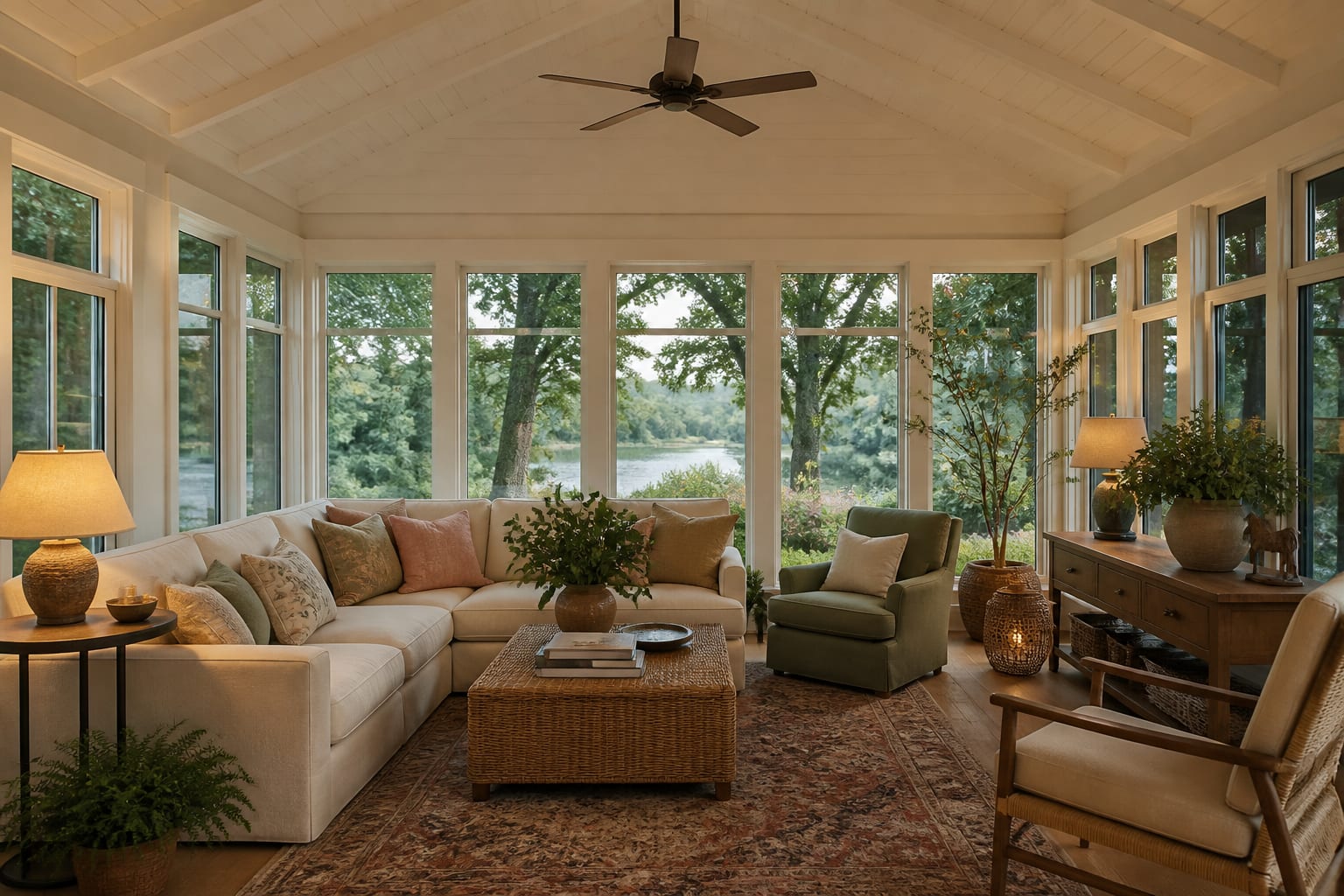
Float furniture a few inches off the glass so cushions avoid direct contact with hot panes and windows stay easy to clean. Anchor the seating zone with an indoor-outdoor rug sized so every seat's front legs rest on it, which visually defines the group in a room with few solid walls. Keep pieces low-profile, favoring a pair of lounge chairs and a small sofa over one oversized sectional that swallows the floor.
A sunroom is one of the few spaces where sun-loving plants genuinely thrive: fiddle-leaf figs, bird of paradise, citrus trees, and trailing pothos soften the hard lines of frames and glass. Stage them at varying heights on plant stands and the floor for depth. Since glass walls leave no room for recessed lighting, add a floor lamp or plug-in sconces for evenings and gray days, then finish with a side table, a throw, and one piece of art on the room's only solid wall.
Bring the look home with Re-Design
Sunrooms are hard to picture because the light changes everything. With Re-Design, upload a photo of your glass room and preview layouts, fade-resistant fabrics, shading like cellular shades or an awning, and plant staging before you buy. Compare a breakfast nook against a reading lounge, test rug placement, and see how darker tile or a lighter floor reads in all that sun before committing.
Frequently Asked Questions
How do I keep a sunroom from overheating in summer?
Stop heat before it enters the glass with exterior solar screens or a retractable awning, which outperform interior blinds on west-facing rooms. Add cellular shades inside, run a ceiling fan, and install a small ductless mini-split. UV window film filters heat and light without darkening your view of the yard.
What furniture holds up in a sunroom?
Use the same materials as quality outdoor furniture: solution-dyed acrylic cushions, powder-coated aluminum, teak, and all-weather resin wicker. These resist fading and the heat-and-humidity swings a glass room sees. Avoid standard cotton, linen, and untreated wood, which fade, crack, or dry out within a single season of direct exposure.
Can a sunroom be used in winter?
Yes, with the right climate setup. A ductless mini-split heats the room efficiently, in-floor electric heat under tile warms cold mornings, and cellular shades cut heat loss through the glass. Weatherstrip every window and the door to the house. Holding the room near 68 degrees turns a three-season porch into a true four-season room.
What plants work best in a sunroom?
Choose species that tolerate strong, direct light, such as fiddle-leaf figs, bird of paradise, citrus trees, and trailing pothos. Stage them at varying heights using plant stands and floor placement to add depth. These sun-loving plants soften the hard lines of glass and metal frames that define most sunrooms.