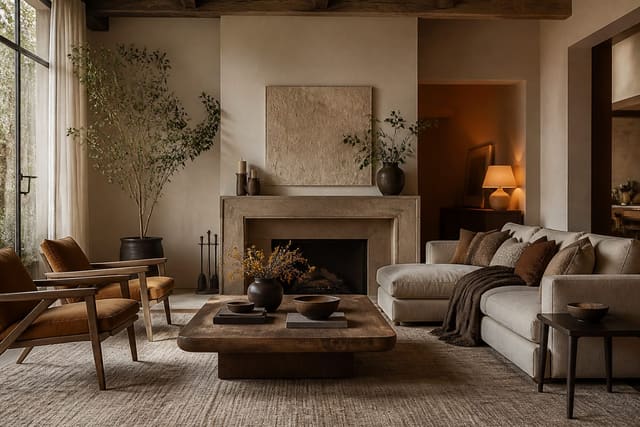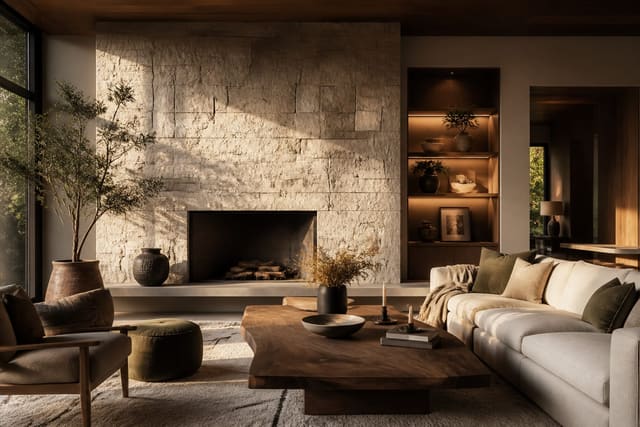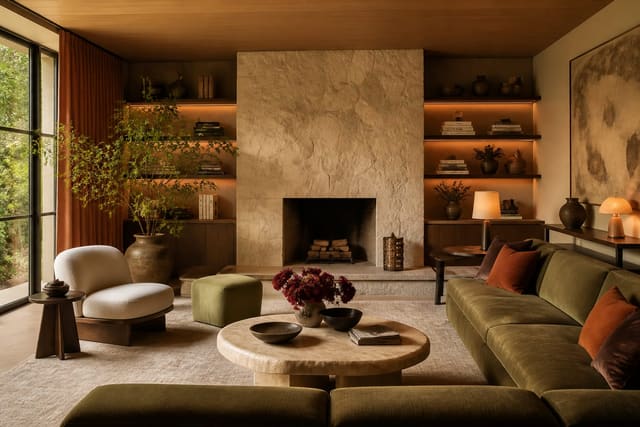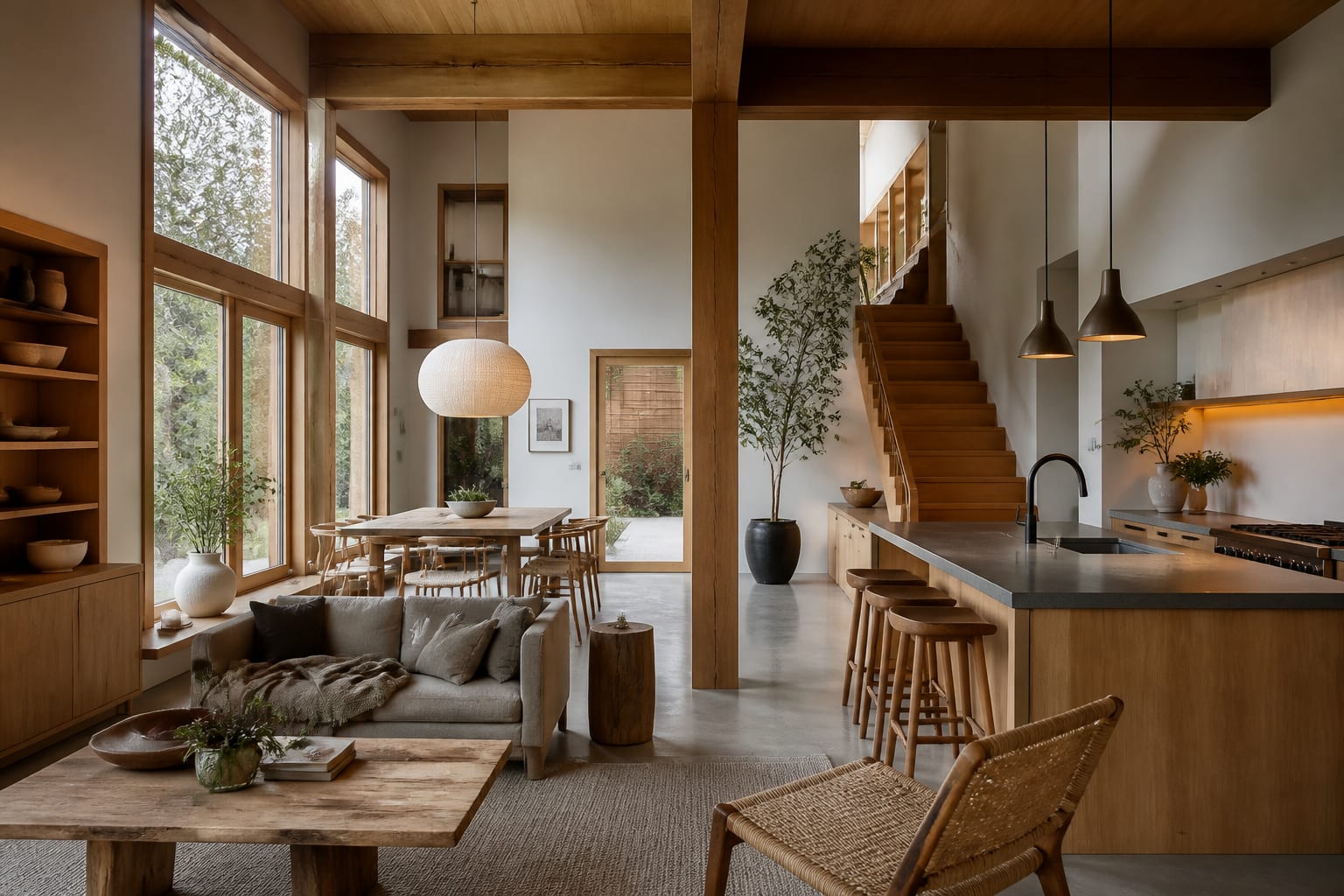
Most sustainable design advice gets it backwards by focusing on green-labeled products you buy more of. The genuinely eco choice is almost always durability and longevity: a solid-wood table that lasts 40 years beats a 'sustainable' particleboard one replaced every five. The 2026 direction is quieter and smarter, centered on materials that age well, finishes that do not off-gas, and layouts that use daylight instead of fighting it.
What 'sustainable' actually means in a home
Sustainability in design comes down to three measurable things: how long a material lasts, what it releases into your air, and how much energy the space demands to stay comfortable. A product can carry an eco label and still fail all three if it falls apart in a few years or off-gasses formaldehyde.
Longevity leads. The most wasteful object is the one you throw away, so the most sustainable furniture is whatever you keep for decades. Solid hardwood, full-grain leather, natural stone, and metal all age into something better looking rather than worse. They cost more upfront, but a $1,800 solid-oak dining table amortized over 30 years costs $60 a year, while a $400 veneer table replaced every five costs $80 a year and sends three tables to a landfill. The same logic holds for finishes and fixtures: a classic, timeless choice you never feel the urge to redo beats a trendy one you replace in three years, both for your wallet and for the planet.
Indoor air is the second pillar and the one people overlook. Conventional paints, adhesives, and pressed-wood furniture release volatile organic compounds that linger for months. Low-VOC paints cap emissions at 50 grams per liter and zero-VOC versions at 5 or fewer, and they now match conventional paint for coverage and durability. Pair them with natural-oil wood finishes and solid-wood casegoods to keep your air clean. For where these material choices sit within the broader picture, our interior design trends 2026 overview maps the wider movement.
Energy is the third pillar, and it is where the math is most convincing. A home's heating and cooling typically account for nearly half its energy use, so the highest-return sustainable choices are often invisible: air-sealing, insulation, and shading. Designing for daylight cuts the need for artificial light during the day, while operable windows positioned for cross-ventilation can delay or eliminate air-conditioning in shoulder seasons. These choices rarely show up on a mood board, but they shape both your utility bills and your footprint far more than any single accessory.
There is also a shift in how the design world talks about waste. The conversation has moved from recyclability, which is often more aspiration than reality, toward designing for repair and reuse from the start. Furniture with replaceable parts, slipcovers you can wash or swap, and modular pieces you can reconfigure all keep things in service longer. A sofa with a removable, washable cover and a solid hardwood frame can outlast three cheaper sofas, which is the whole point.
Eco materials and choices worth adopting
These are specific, defensible moves rather than vague green gestures. Prioritize the ones that match your budget and climate:
- Specify FSC-certified or reclaimed wood for floors and furniture, which guarantees responsible forestry or reuse.
- Use cork or wool for flooring and rugs; both are renewable, biodegradable, and naturally insulating.
- Choose recycled-content tile and terrazzo, some of which contain 70 percent or more post-consumer glass.
- Install LED lighting throughout, which uses roughly 75 percent less energy than incandescent and lasts 15 to 25 times longer.
- Add insulating cellular shades, which can cut heat loss through windows by up to 40 percent in winter.
- Pick natural textiles like organic cotton, linen, and hemp over synthetics that shed microplastics.
- Refinish or reupholster existing solid-frame furniture instead of replacing it, keeping embodied carbon in use.
No single swap defines an eco home; the cumulative effect of durable, low-emission, renewable choices is what matters. Even adopting half this list meaningfully shrinks both your footprint and your long-term replacement spending.
Common mistakes to avoid
The biggest mistake is greenwashing yourself into buying more. Replacing serviceable furniture with new 'sustainable' pieces almost always has a worse footprint than keeping what you own, because manufacturing and shipping dominate a product's lifetime impact. The greenest item is usually the one already in your house.
A second mistake is ignoring indoor air quality while chasing visible eco materials. People install bamboo flooring with a high-VOC adhesive underneath and assume they have done the right thing. The finish and glue matter as much as the surface; always check for low-VOC certification on adhesives and sealants, not just the headline material.
The third error is over-spending on payback-poor upgrades while skipping cheap high-impact ones. Air-sealing gaps and adding attic insulation often returns its cost in two to four years through lower bills, yet people skip it for flashier purchases. Energy-conscious design starts with the building envelope, then moves to fixtures and finishes. For how these durable, neutral choices intersect with palette decisions, our color trends 2026 guide is a useful companion.
A fourth, subtler trap is chasing certifications without understanding them. A label like FSC or GREENGUARD genuinely means something, but plenty of products use vague language like eco, natural, or green with no standard behind it. Learn the handful of credible marks for the categories you buy most, then ignore the rest of the marketing. Our interior design trends 2026 full guide digs deeper into how to read these claims and where the durable, low-impact movement is genuinely heading versus where it is just branding.
Finally, do not let perfect be the enemy of better. No home is fully sustainable, and treating it as all-or-nothing leads people to give up entirely. Swapping to LED bulbs, choosing a low-VOC paint on your next repaint, and keeping a serviceable sofa another five years are real, cumulative wins. Sustainability is a direction you steer toward over years of ordinary decisions, not a single purchase you make once and check off.
Preview sustainable swaps in Re-Design
Frequently Asked Questions
What are the sustainable interior design trends? The leading direction favors durability and longevity over disposable goods, low-VOC and zero-VOC finishes for cleaner air, and renewable or recycled materials like FSC wood, cork, wool, and recycled tile. Energy-conscious layouts that maximize daylight and ventilation round it out. The theme is fewer, better, longer-lasting choices.
Is sustainable design more expensive? Upfront, often yes, but it is usually cheaper over time. A durable solid-wood piece kept for decades costs less per year than a cheap one replaced repeatedly, and energy upgrades like insulation and LED lighting pay back through lower bills. The total cost of ownership is what matters.
What is the most sustainable flooring? Cork and wool lead for renewability, while reclaimed or FSC-certified hardwood is excellent for longevity. Whatever you choose, pair it with a low-VOC adhesive and finish, since the installation products affect indoor air as much as the flooring itself.