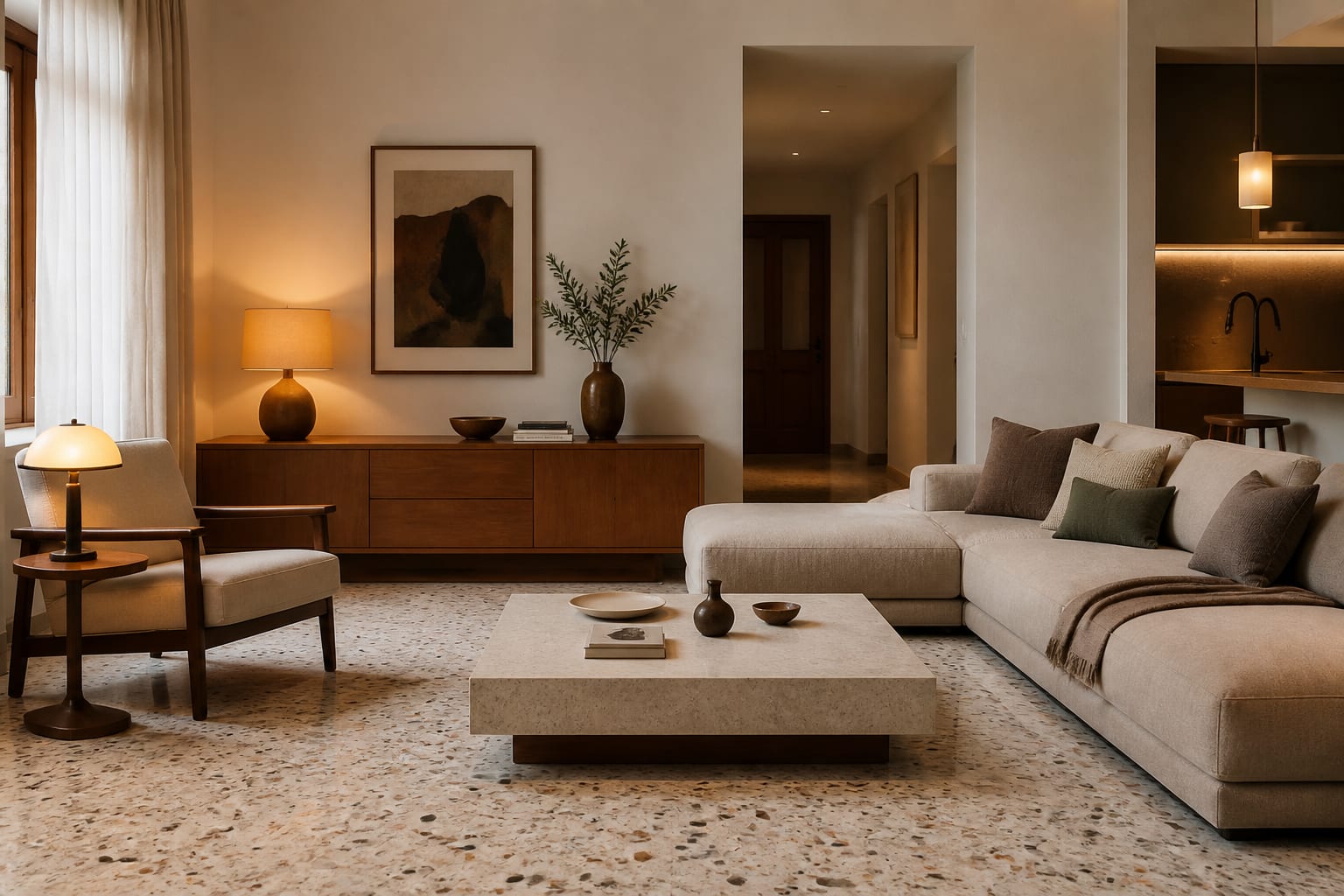
Terrazzo has outlasted every trend that tried to replace it because it does something few materials can: it hides wear, adds movement, and reads as both vintage and modern depending on the chips you choose. The mistake people make is treating it as a whole-room commitment when its best use is often a single, deliberate surface. My advice: start with one terrazzo moment and let the speckle earn the rest of the room.
The difference between terrazzo that looks timeless and terrazzo that looks like a passing fad comes down to chip size and palette, which is where most of this guide lives. Get those two decisions right and the material does the rest on its own.
Where terrazzo earns its place underfoot
Flooring is terrazzo's strongest argument. A terrazzo floor scatters light and color across the whole plane, which means it hides dust, pet hair, and the scuffs that make solid floors look tired within a season. In an entry or kitchen, a tight pea-gravel chip in a warm cream binder gives you a surface that looks intentional and survives years of traffic without showing its age.
There is also a practical durability story here. Poured terrazzo is essentially cement or epoxy packed with stone, so a properly sealed floor shrugs off the spills and grit that wreck softer materials. Reseal it every few years and it can outlast the building it sits in.
If you want the look without a poured-in-place install, large-format terrazzo tiles in a 24-inch square deliver most of the effect at a fraction of the labor. The visual movement also makes terrazzo a natural floor for a quiet corner; it grounds a reading nook ideas layout without needing a rug to do the work. A speckled floor under a single armchair turns an afterthought corner into a deliberate one.
Counters, thresholds, and small terrazzo moments
You do not have to floor a whole room to use terrazzo well. Some of the most lasting applications are small and deliberate, which also keeps the budget sane:
- A terrazzo bathroom vanity top with chunky 1-inch chips in two tones
- A poured threshold strip between two flooring materials, about 6 inches wide
- A terrazzo-topped console or side table as a single sculptural accent
- A backsplash run of terrazzo slab behind a simple matte sink
- A windowsill or bench seat cap that catches light and resists water
That last idea pairs beautifully with built-ins. A terrazzo cap turns a plain window seat ideas bench into a focal point that also shrugs off spills and direct sun. Small terrazzo moments like these give you the material's texture and movement without the commitment of a full floor, and they let you test whether you actually love the look before you commit to 200 square feet of it.
Counters are where terrazzo competes hardest with marble and quartz. A terrazzo slab brings pattern that hides crumbs and water spots, which is the opposite of a polished black counter that announces every fingerprint. For a busy kitchen, that forgiveness is worth more than a flawless reflective surface.
There is a budget angle worth naming too. A small terrazzo accent lets you taste the trend for the price of a single tile box rather than a whole-floor invoice. A terrazzo soap dish, a single terrazzo step, or a precast terrazzo planter delivers the speckle in a piece you can move or replace later. This is how I tell clients to start when they like the look but are not yet sure they want to live with it for a decade.
Mixing terrazzo with the right neighbors keeps it from feeling like a showroom sample. Pair it with warm wood, matte plaster walls, and unlacquered brass, and the speckle reads timeless and collected. Pair it with high-gloss everything and it tips toward the trendy commercial look that ages fastest. The material is happiest playing a textured supporting role rather than fighting three other busy surfaces for attention.
Choosing chips, color, and scale that age well
The palette is everything. The binder, the background color holding the chips, sets the entire mood, and most people obsess over the chips while ignoring it. A warm bone or sand binder feels organic and forgiving; a stark white binder feels clinical; a charcoal binder feels dramatic and modern. Choose the binder for the feeling you want, then pick chips that support it.
Three quick rules I follow when specifying terrazzo:
- For a timeless result, keep chips small, around a quarter inch, in tones within two shades of the binder.
- For a bold, current look, go large with 1 to 2-inch chips in contrasting colors.
- Limit yourself to three chip colors, or the surface starts to look busy and cheap.
Scale should answer to the room. Fine chips calm a small bathroom, while big, scattered chips give a large open kitchen the visual energy it can absorb. Drop a 2-inch-chip terrazzo into a tiny powder room and it can feel chaotic; drop a delicate pea-chip into a vast loft and it disappears.
Terrazzo also works overhead. A speckled binder on a soffit or a slab-look ceiling is an unexpected move that connects with bolder statement ceiling ideas, though most people will start at floor level and work up. Treating the fifth wall as a terrazzo surface is the kind of detail that makes a room feel designed rather than decorated.
Maintenance should factor into the decision, because not all terrazzo behaves the same. Cement-based terrazzo is more porous and wants resealing every two to three years to stay stain-resistant, while epoxy-based terrazzo is nearly nonporous and shrugs off acids and oils with little fuss. For a kitchen counter or a busy bath, the epoxy version usually earns its slightly higher price. Ask which binder you are getting before you sign, since the word terrazzo covers both and the upkeep is genuinely different.
Sample the real thing at full scale before ordering. A 12-by-12-inch sample shows the chip rhythm far better than a 3-inch chip, and seeing it in your own light catches surprises the showroom hides. Lay the sample on the floor or counter where it will live, walk past it for a few days, and notice whether the speckle still pleases you when it is not staged under perfect lighting.
Use AI design to preview terrazzo before you commit
Terrazzo is hard to imagine from a 3-inch sample chip, and the binder color completely changes how a room feels. Upload a photo of your kitchen, bath, or entry to Re-Design and drop a terrazzo floor or counter into the space before you order a single slab. You can compare a warm sand binder against a cool gray one, test large chips versus fine ones on your actual square footage, and see whether the speckle calms or competes with your cabinets, all before the installer quotes the job. That preview is the cheapest way to avoid committing thousands to a pattern that fights the rest of the room.