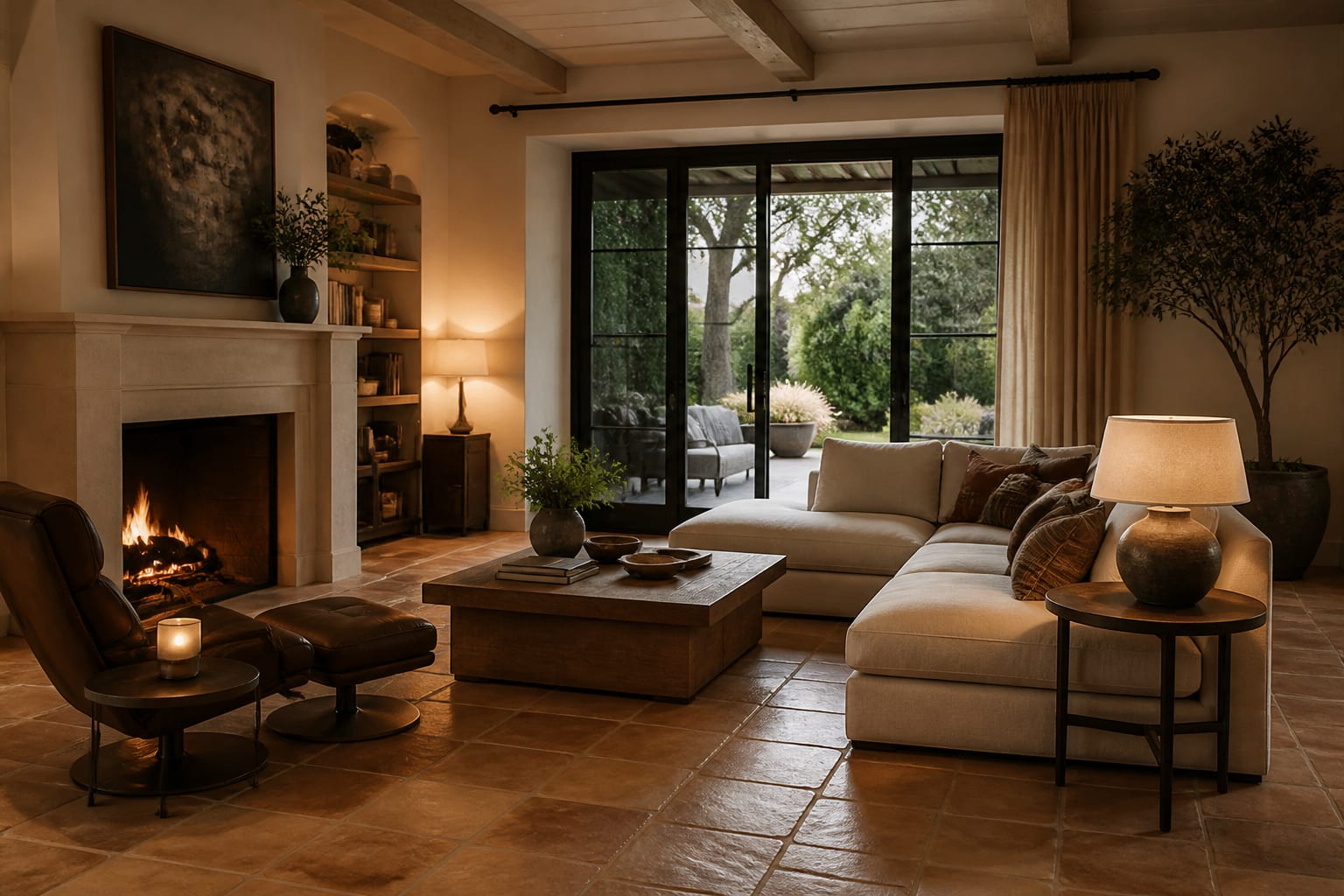
A tile floor lives or dies on two choices most people rush: the scale of the tile and the pattern you lay it in. Pick a tiny tile for a big room and the floor turns into a grid of grout lines that looks busy and dates fast. Pick a slab-look tile in a small powder room and it can feel oversized and clumsy. The pattern then layers on personality, from a quiet straight lay to a bold checkerboard. Get scale and pattern in agreement with the room's size and use, and the floor becomes the feature that anchors the whole space rather than background you stop noticing.
Pattern ideas that change the whole room
The layout you choose does more to define a tile floor's character than the tile color does. A straight, grid-aligned lay is the quiet default that lets a beautiful tile or a busy room speak for itself. But a handful of classic patterns can turn an ordinary porcelain into the room's signature, and each carries a different feeling underfoot and overhead.
- Lay a herringbone in 4-by-12 or 6-by-24-inch planks for a tailored, directional floor that adds movement to a narrow hallway or entry.
- Run a checkerboard in 12-inch squares of two contrasting colors, set on the diagonal, for a graphic kitchen or mudroom floor with vintage confidence.
- Cover an open kitchen and living area in 24-by-24-inch large-format porcelain to minimize grout lines and read almost like a poured stone slab.
- Frame a foyer or bathroom with a contrasting border tile to define the zone and give the floor a finished, rug-like edge.
- Stack a basketweave or pinwheel mosaic in a powder room for a small, jewel-box floor where intricate scale feels like a luxury, not a chore.
- Set hexagon tiles wall to wall in a bathroom for a soft honeycomb texture that hides the occasional water spot and grips underfoot.
- Mix a patterned encaustic-look tile as a center field with a plain border to get bold character without overwhelming a compact kitchen.
Each of these works because the pattern matches the room's job. Directional herringbone lengthens a hall, large-format slabs calm an open plan, and a tight mosaic rewards the close-up viewing distance of a small bath.
Picking the right tile scale
Scale is the spec people underestimate, and it controls how busy or serene the floor feels. The reliable rule is to size the tile up as the room grows: 12-by-24-inch and 24-by-24-inch tiles suit kitchens, living areas, and open plans, where fewer grout lines read cleaner and make the room feel larger. In a generous bathroom, large-format tile on the floor and walls creates a seamless, spa-like envelope. Reserve small formats, the 1- and 2-inch mosaics, for shower pans where the extra grout adds slip resistance and for accent bands rather than entire main floors.
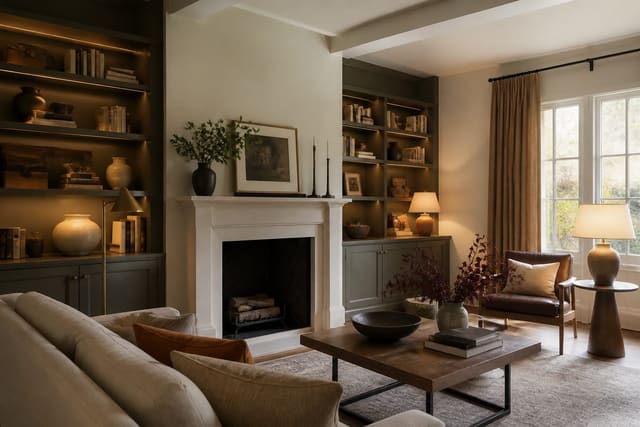
Grout lines are the hidden cost of small tile. Every joint is a line to clean and a seal to maintain, so a floor of 2-inch tiles carries many times the grout of a 24-inch slab floor covering the same area. That is the practical reason large-format porcelain dominates modern remodels: less maintenance and a quieter look. Keep grout joints tight, around 1/8 inch for rectified large-format tile, and slightly wider, 3/16 inch, for handmade or irregular tile that needs the room. For built-in storage that pairs with a strong floor, our built-in shelving ideas show how to balance a graphic tile with calm cabinetry above it.
Grout, color, and the details that finish a floor
Grout is not an afterthought; it is a design layer that can make a pattern disappear or sing. Matching the grout closely to the tile color produces a seamless, expansive floor where the eye reads one continuous surface, ideal for large-format porcelain in an open plan. Choosing a contrasting grout, like a charcoal grout under white tile, outlines every piece and turns a simple square layout into a graphic statement, which is how a basic subway-style floor gets its punch.
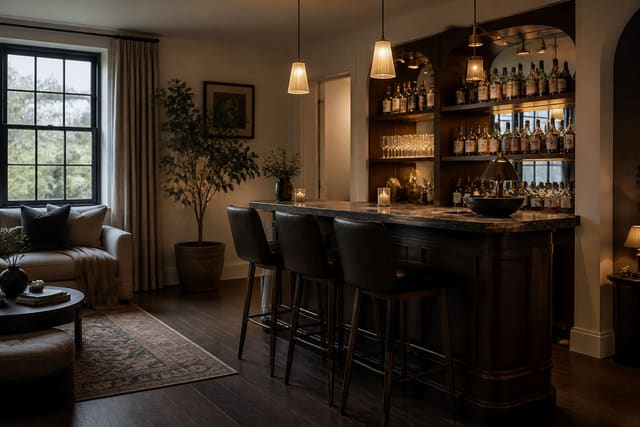
Color and finish on the tile itself carry the room's temperature. Warm-toned, wood-look porcelain planks bring the coziness of hardwood to a moisture-prone room without the water risk, bridging styles in a kitchen or bath. Cool gray and greige large-format tiles read modern and recede, letting cabinetry and furniture lead. For finish, a matte or honed surface hides smudges and grips better underfoot, while a polished tile bounces light but shows every footprint and can be slick when wet. In a bar or entertaining zone where a bold floor sets the tone, pair the tile with the room's other statements, as in our home bar ideas for a coordinated look. Always buy 10 to 15 percent extra so cuts, breakage, and a future repair all come from the same dye lot.
See it first in Re-Design
Tile patterns are notoriously hard to picture from a single sample, since one 6-inch chip cannot show how a herringbone or checkerboard reads across a whole floor. Upload a photo of your kitchen, bathroom, or entry into Re-Design and re-design the floor with the pattern and scale you are considering, whether that is a 24-inch slab-look porcelain, a diagonal checkerboard, or a wood-look herringbone. You can flip between a matched and a contrasting grout, test a large format against a small mosaic, and see how the pattern interacts with your cabinets and wall color before you commit to ordering and a tile setter's labor.
Frequently Asked Questions
What size tile makes a small room look bigger?
Larger tiles with fewer grout lines make a small room feel more open, so a 12-by-24-inch tile often beats a 6-inch square in a compact bathroom. Matching the grout color to the tile pushes the effect further by reducing visible joints, letting the floor read as one continuous, expansive surface.
Which tile pattern is best for a hallway?
Herringbone is a strong hallway choice because its directional lay draws the eye down the length of the space, making a narrow corridor feel longer and more intentional. A straight lay aligned with the hall also works, while a contrasting border can frame the run and tie it to adjacent rooms.
Should grout match or contrast the tile?
It depends on the look you want. Matched grout hides the joints for a seamless, calm floor that suits large-format tile in open spaces. Contrasting grout outlines each tile and amplifies a pattern, which gives a simple square or checkerboard layout graphic punch. Both are valid; choose by how loud you want the floor.
How much extra tile should I order?
Order 10 to 15 percent more than your measured square footage to cover cuts, breakage during installation, and a stash for future repairs. Diagonal and intricate patterns waste more on cuts, so lean toward 15 percent for those. Keeping leftover tile from the same dye lot makes later patches blend instead of standing out.