Most bedrooms fail not because they lack style but because they pick a fight between old and new. Transitional bedroom ideas win precisely because they refuse that fight. This approach softens the hard edges of contemporary design with traditional warmth, then trims traditional fussiness with cleaner lines. The result reads calm rather than busy, which is exactly what a bedroom should feel like. If your current room feels either too cold or too cluttered, a transitional reset is usually the shortest path back to rest.
Start With a Quiet, Layered Palette
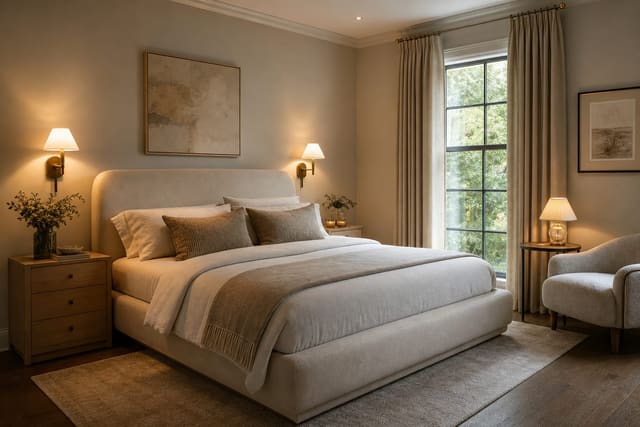
The foundation of a transitional bedroom is a restrained color story that leans on warm neutrals. Think greige walls, soft oatmeal linens, and a headboard in a muted tone that recedes rather than shouts. These backgrounds let the eye rest, which is the whole point of a bedroom in the first place.
Once the base is set, depth comes from texture instead of saturated color. A nubby wool throw, a smooth lacquered nightstand, and a bouclé bench each catch light differently, so the room feels collected even when nearly everything sits in the same tonal family. This contrast of surfaces is what separates a transitional scheme from a flat, beige one.
When you do introduce color, keep it earthy and limited. A dusty sage, a faded terracotta, or a soft ink blue works beautifully as an accent on pillows or a single piece of art. The rule of thumb is to let those accents stay supporting players, never the lead, so the room keeps its low, even hum rather than competing for attention from every corner.
Consider how the palette shifts across the day as light moves through the room. A neutral that looks crisp at noon can turn flat and gray by dusk, so testing your wall color against both morning and evening light before you commit saves you from a finish that fights the mood you want. Choosing tones with a touch of warmth in them keeps the bedroom feeling like a sanctuary at every hour rather than only in bright daylight.
See also our guide to Small Master Bedroom Luxurious for more on transitional bedroom ideas.
Choose Furniture With Simple, Grounded Lines
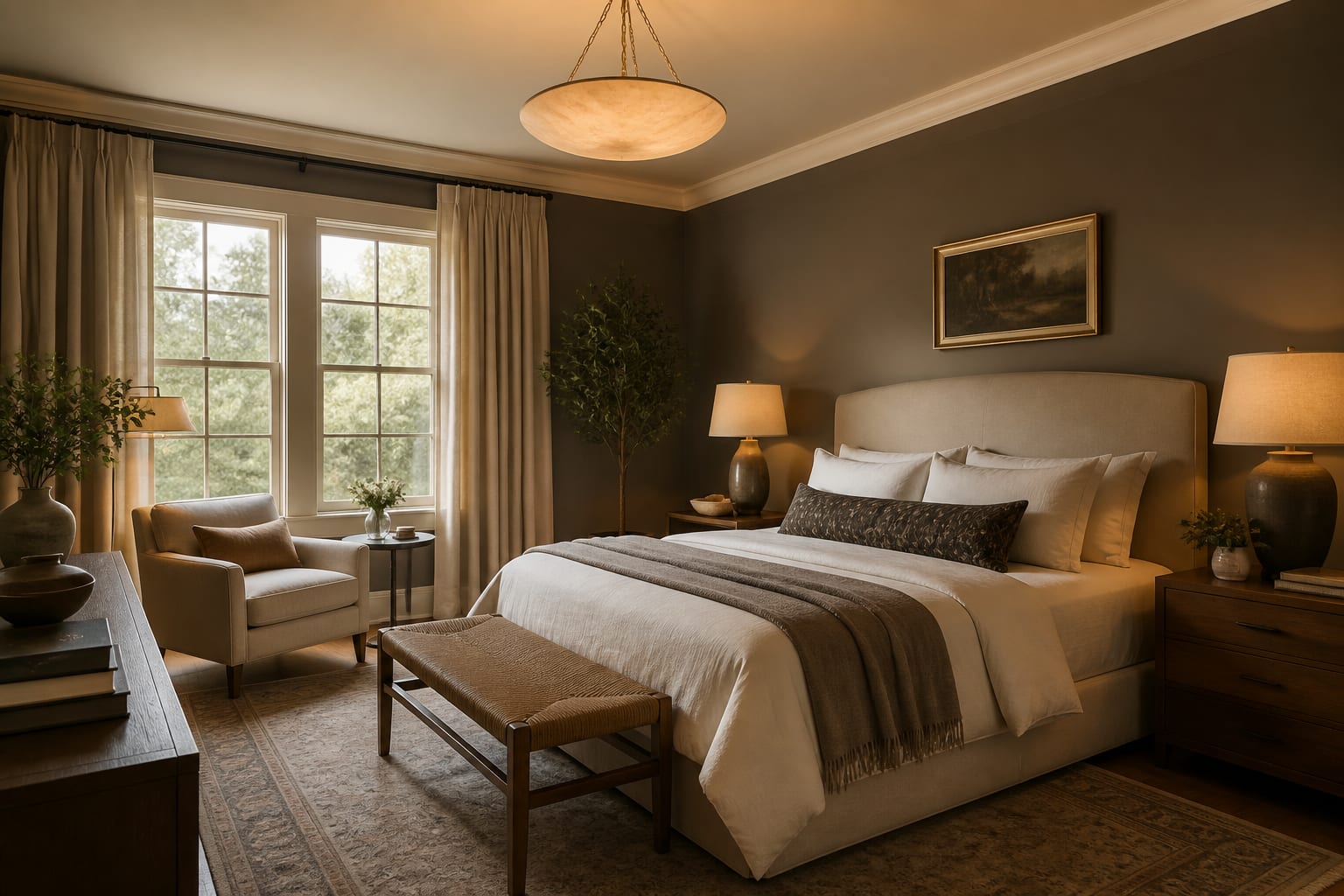
Transitional bedroom furniture sits in the sweet spot between ornate and stark. Look for nightstands and dressers with clean profiles but warm wood tones, and an upholstered headboard with a gently curved or softly squared top rather than an elaborate tufted frame. The silhouette should feel familiar and comfortable without reading as traditional reproduction.
Proportion matters more than any single piece. A bed that anchors the room needs nightstands that relate to its height and width, and a bench or low dresser that balances the visual weight on the opposite wall. When pieces are scaled to one another, the room feels intentional even if the furniture comes from different sources or eras.
Mixing materials keeps the look from feeling like a matched bedroom set, which is the trap transitional design helps you avoid. Pair a wood bed frame with a metal-and-marble nightstand, or set a leather bench at the foot of a linen-upholstered headboard. The goal is a curated mix that looks gathered over time, with each material echoed somewhere else in the room so nothing feels accidental or out of place.
Leave a little room around the larger pieces so the eye can register their shape. A bed pushed tight into a corner loses the calm symmetry that makes transitional rooms feel resolved, while a few inches of breathing space on each side lets the furniture read as deliberate. When every piece has room to be seen and relates clearly to its neighbors, the bedroom feels composed rather than crowded, and that sense of order is half of what makes the style feel restful.
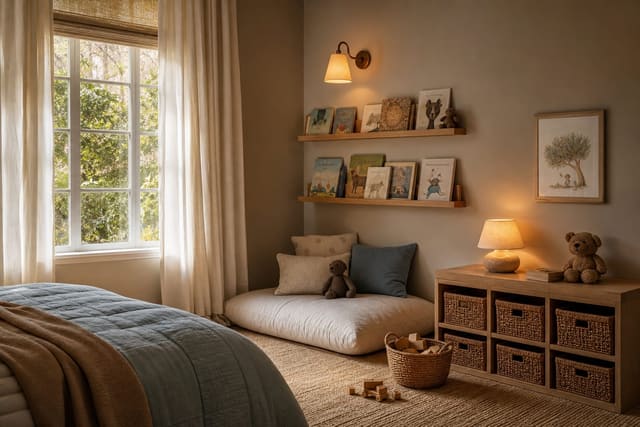
For a related angle on transitional bedroom ideas, read Reading Corner Kids.
Build Lighting in Three Calm Layers
A single ceiling fixture is the fastest way to make any bedroom feel like a waiting room. Transitional spaces rely on layered light instead, working at three heights so the room can shift from bright and functional to soft and restful as the evening goes on.
Start with ambient light from a flush mount or a discreet chandelier with simple lines. Add task lighting with a pair of bedside lamps or wall sconces flanking the bed, ideally on dimmers so you can read without flooding the room. Finish with a low accent source, such as a small lamp on a dresser, to fill the shadows and give the corners a gentle glow.
Warmth of the bulbs ties the whole scheme together. Choose lamps with warm, low-color-temperature output rather than cool, blue-white light, which reads clinical and keeps you alert when you would rather wind down. Consistent warm tones across every fixture make the layers feel like one considered system instead of a collection of mismatched lamps, and that cohesion is what gives a transitional bedroom its signature sense of calm.
Pay attention to where the light actually falls, not just where the fixtures hang. Bedside lamps should sit at a height where the bottom of the shade lands near eye level when you are propped against the headboard, so the bulb never glares directly at you. Aiming each source to graze a surface or wash a wall, rather than blast the center of the room, keeps the whole space soft and shadow-rich, which is precisely the unhurried feeling a bedroom should invite at the end of a day.
Add Soft Architecture and Finishing Touches
Transitional rooms often borrow a few quiet architectural cues to add character without commitment. A simple flat-panel wainscot, a subtle picture-rail molding, or a paneled accent behind the bed introduces structure and shadow lines that keep large walls from feeling blank, all while staying cleaner than traditional millwork.
Window treatments should reinforce the same calm restraint. Floor-length drapes in a natural linen, hung high and wide to frame the glass, soften the room and improve its acoustics. Pair them with a woven shade for privacy and light control, and the layered window reads as intentional rather than heavy or dated.
Finally, edit your surfaces. Transitional style depends on negative space, so resist the urge to crowd every nightstand and dresser. A stack of two books, one sculptural object, and a single plant say more than a dozen small trinkets ever could. Choose accessories with simple forms and natural materials, repeat a tone or two from your palette, and let the empty space around each object do its job.
Textiles are the last layer that pulls everything into harmony. A duvet in a quiet weave, two flat shams behind a pair of plumper pillows, and a single throw folded at an angle give the bed dimension without fuss. Keeping these pieces within the same tonal range as the walls and drapes makes the room feel enveloping rather than busy. That breathing room, paired with soft layered fabrics, is what makes the finished bedroom feel both warm and serene.
- Layer a warm greige wall with oatmeal linens to set a quiet, restful tonal foundation
- Mix a wood bed frame with a marble-and-metal nightstand for a curated, collected look
- Hang floor-length linen drapes high and wide to frame the windows and soften acoustics
- Flank the bed with matching sconces on dimmers to free up nightstand surface space
- Add a leather or bouclé bench at the foot of the bed to balance visual weight
- Introduce a single earthy accent like dusty sage through pillows or one piece of art
- Install simple flat-panel wainscot behind the headboard to add structure without traditional fuss
- Edit each surface to a few sculptural objects so negative space keeps the room serene
Bring the look home with Re-Design
Before you commit to a new headboard or paint color, see the look in your actual room first. With Re-Design you upload a photo of your bedroom and preview transitional palettes, furniture pairings, and lighting layers rendered onto your own walls and windows. That lets you test a greige base or a linen drape against your real space, so you buy with confidence instead of guessing how the pieces will read together.
Frequently Asked Questions
What colors define a transitional bedroom?
Warm neutrals lead, including greige, oatmeal, and soft taupe, supported by limited earthy accents like sage, faded terracotta, or ink blue. The palette stays low and tonal, relying on texture rather than bright saturated color for its depth and quiet visual interest.
How is transitional different from modern bedroom design?
Modern leans cool, hard-edged, and minimal, while transitional softens those lines with traditional warmth and comfort. You keep clean silhouettes but add curves, natural materials, and layered textiles, so the room feels collected and inviting rather than stark or showroom-cold.
Can I make a small bedroom feel transitional?
Yes. Stick to a tight neutral palette, choose furniture with simple grounded lines, and use wall sconces to keep nightstands clear. Layered warm lighting and a few well-edited accessories make even a compact room feel calm, intentional, and comfortably transitional.