The trendiest kitchens date the fastest, which is exactly why transitional kitchen ideas keep winning. Rather than chasing whatever finish is having a moment, this approach marries the timeless bones of traditional cabinetry with the clean restraint of modern design. You get warmth and function without the fussy molding or the cold, all-white sterility that ages a space. A well-built transitional kitchen still looks current ten years after the renovation, and that staying power is worth far more than any single fashionable detail you might be tempted to chase.
Anchor the Room With Shaker Cabinetry
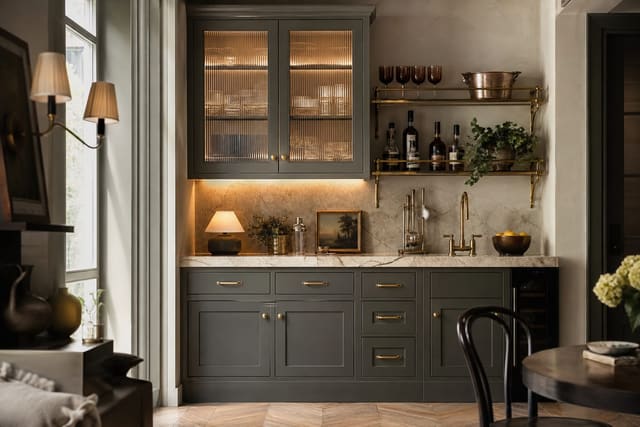
Shaker cabinets are the quiet workhorse of transitional kitchen design. Their flat recessed panel reads as neither ornate nor severe, which is precisely why the style bridges traditional and modern so gracefully. Painted in a warm white, soft greige, or muted green, they offer a clean canvas that does not feel cold.
A two-tone treatment pushes the look further while keeping it grounded. Many designers pair lighter perimeter cabinets with a darker island, or set wood-tone uppers above painted lowers, so the room gains depth without resorting to bold color everywhere. The contrast feels deliberate and collected rather than busy.
Hardware choices finish the cabinetry story. Simple bar pulls and round knobs in an unlacquered brass or matte black read as transitional because they are neither antique nor aggressively industrial. Keeping the hardware consistent in shape but flexible in finish lets you tie the cabinetry to the rest of the room.
The payoff of building on Shaker doors is longevity, both in style and in construction. Solid wood frames with quality joinery survive decades of daily use, and their neutral profile means you are never locked into the moment you renovated. When the boxes are well built and the doors are this restrained, the kitchen has a foundation that will carry many future style refreshes through new paint, fresh hardware, or a different counter without ever demanding a full gut renovation. That durability is a large part of why the transitional approach saves money across the long run.
See also our guide to Kitchen Home Bar Design for more on transitional kitchen ideas.
Mix Materials for Warmth and Depth
A transitional kitchen earns its richness from contrast between surfaces rather than from any single statement piece. Natural stone countertops, whether honed marble, quartzite, or a quiet quartz, bring movement and depth that a flat solid color cannot match. Pair that stone with warm wood shelving or a butcher-block section to soften the harder surfaces.
Backsplashes are where many kitchens overcommit to a trend, so restraint pays off here. A handmade subway tile with subtle variation, a slab that matches the counter, or a simple stacked tile in a warm neutral keeps the wall interesting without dating the room. The texture matters more than any flashy pattern.
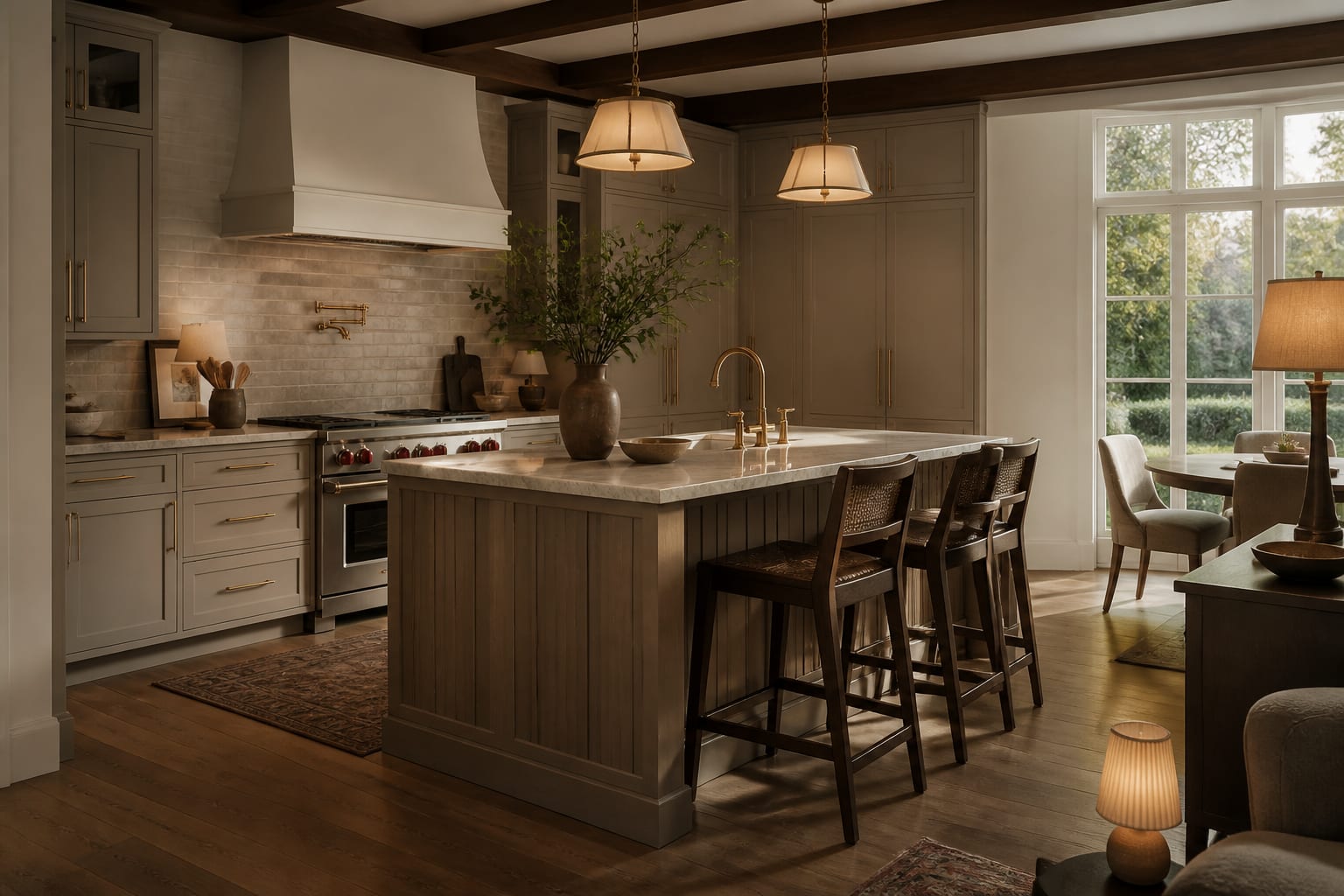
Mixing metals is the move that signals a confident transitional design. A brushed brass faucet can live happily alongside matte black pendant lights and stainless appliances, as long as you repeat each finish at least once so it looks intentional. This deliberate blend keeps the kitchen from reading as a matched builder package and instead feels like a space someone thoughtfully assembled, with warm and cool tones balanced so nothing dominates the room.
Think about how each surface will wear over a decade of cooking, not just how it photographs on day one. Honed stone hides etching better than a high polish, quartz shrugs off acid and stains, and a sealed wood section develops a patina that only adds character. Choosing materials for how they age, rather than chasing the glossiest sample in the showroom, is what keeps a transitional kitchen looking gracefully lived-in instead of tired.
For a related angle on transitional kitchen ideas, read Cottagecore Kitchen Ideas.
Design an Island That Works Hard
The island is usually the heart of a transitional kitchen, doing duty as prep zone, gathering spot, and visual anchor all at once. Giving it a contrasting cabinet color or a different countertop material makes it the focal point while reinforcing the layered, collected feel the whole style depends on.
Function should drive the dimensions before aesthetics do. Plan enough clearance for traffic and seating, leave room for stools that tuck fully underneath, and consider how the workflow moves between sink, range, and refrigerator. An island that looks beautiful but blocks the cook helps no one, so the layout has to earn its keep first.
Pendant lighting over the island ties the design together and adds a layer of warmth. Choose fixtures with simple silhouettes in a finish you have already used elsewhere, hung at a height that lights the surface without obstructing sightlines across the room.
Storage built into the island quietly carries much of the kitchen's workload. Deep drawers for pots, a hidden bin pull-out, and a dedicated spot for small appliances keep clutter off the perimeter counters so the calm surfaces the style depends on actually stay clear. Planning that storage around how you really cook, rather than filling the cabinet boxes with generic shelving, turns the island into the engine of the room. With seating, smart storage, and good light working in concert, the island becomes the natural place where the household gathers, which is exactly what a transitional kitchen is built to encourage rather than discourage.
Layer Lighting and Keep Lines Clean
Lighting separates a flat transitional kitchen from a memorable one. Relying on a single overhead fixture flattens the room, so the better approach stacks ambient, task, and accent sources that each handle a different job and let you shift the mood from bright cooking to soft evening hosting.
Under-cabinet strips wash the counters with even task light and erase the shadows that a ceiling fixture casts when you stand at the prep area. Recessed cans handle general illumination, while pendants and a small statement fixture over the sink or table add personality. Putting these on separate switches or dimmers gives you real control over how the space feels at any hour.
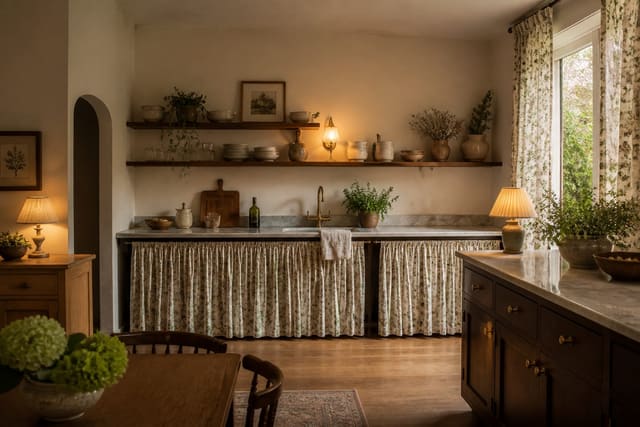
The final discipline is keeping the lines clean. Transitional kitchens reward restraint, so paneled appliances, integrated handles where it suits the design, and uncluttered counters let the good materials speak. Edit the open shelving down to a few pieces, hide the small appliances you rarely use, and resist filling every surface.
Consistency in the small details is what separates a polished kitchen from a merely nice one. Aligning cabinet reveals, matching grout to tile so the wall reads as one quiet plane, and repeating a single profile across the trim all reduce visual noise without anyone consciously noticing why the room feels settled. These quiet decisions add up. That breathing room, reinforced by careful detailing, is what makes the cabinetry, stone, and metals read as a calm, cohesive whole rather than a showroom crowded with competing details.
- Choose warm-white Shaker cabinets with a darker island to add depth without bold color everywhere
- Pair honed marble counters with a butcher-block section to soften the room's harder surfaces
- Repeat each metal finish at least once so mixed brass and matte black look intentional
- Wash counters with under-cabinet strips to erase shadows that a single overhead fixture casts
- Hang simple-silhouette pendants over the island at a height that keeps sightlines clear
- Pick a handmade subway tile with subtle variation instead of a trend-driven bold pattern
- Plan island clearance so stools tuck fully underneath and traffic flows around the cook
- Conceal rarely used small appliances so good stone and cabinetry stay the visual focus
Bring the look home with Re-Design
Renovation choices feel less risky when you can see them in your own kitchen first. With Re-Design you upload a photo of your space and preview transitional combinations like a darker island, honed stone, or mixed-metal hardware rendered onto your actual cabinets and walls. Testing a two-tone scheme or a new pendant against your real room helps you commit to finishes you will still love long after the project wraps.
Frequently Asked Questions
What makes a kitchen transitional rather than traditional?
A transitional kitchen keeps comfortable, familiar elements like Shaker cabinets but strips away ornate molding, glazed finishes, and fussy detail. It pairs that warmth with cleaner lines, simpler hardware, and restrained materials, landing between classic and modern instead of fully committing to either direction.
Are white cabinets necessary for a transitional kitchen?
No. White works, but warm greige, soft green, navy, and natural wood tones all suit the style. Many transitional kitchens use two tones, pairing a lighter perimeter with a contrasting island, which adds depth and keeps the room from feeling cold or sterile.
Can I mix metal finishes in a transitional kitchen?
Yes, and mixing metals is encouraged. Brushed brass, matte black, and stainless can coexist when you repeat each finish at least once. That deliberate blend signals a confident, collected design rather than a matched builder package, which is central to the transitional look.