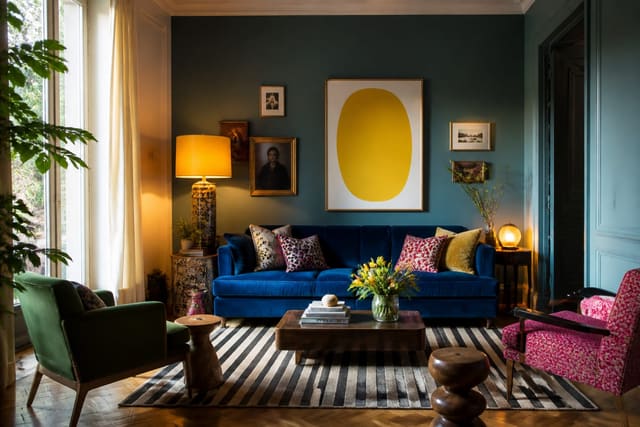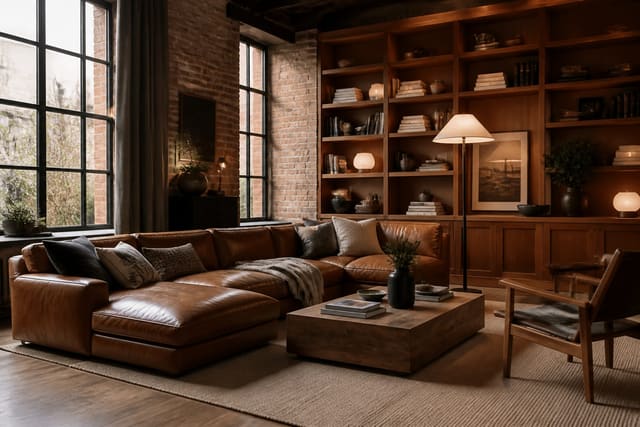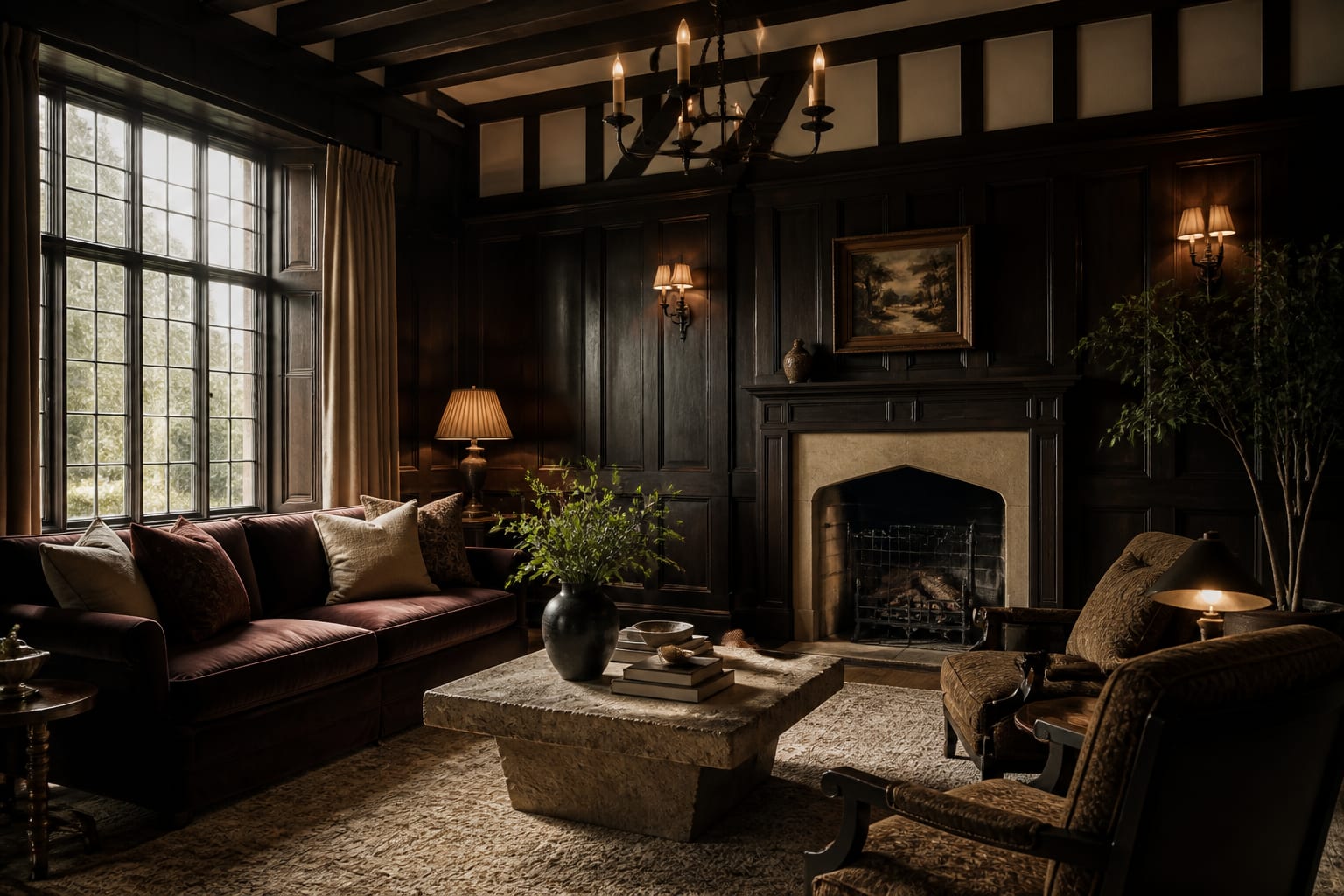
Drama is the whole assignment in a Tudor interior, and the materials are built to deliver it. Drawing on English medieval and Tudor-revival design popular in the 1920s and 1930s, the look leans on dark timber, arched doorways, leaded-glass windows, and heavy texture to create rooms with real atmosphere. My honest opinion is that a Tudor should feel a little theatrical; the failure mode is not too much drama but too little, when people sand it down into something beige and timid.
The architecture practically scripts the mood. Steeply pitched details, exposed beams, stone or brick fireplaces, and those distinctive arched openings give a Tudor bones that no other style has. The trick is to amplify that character while keeping enough light and warmth that the rooms stay livable rather than gloomy.
Work with the dark wood, not against it
The defining feature of a Tudor is timber, and the instinct to paint it white to lighten the room is the single biggest mistake you can make. Exposed ceiling beams, dark wood paneling, and timber detailing are the reason the style has presence. Keep them dark and rich, a deep walnut or near-black stain, and let them frame the room. The contrast between dark wood and lighter walls is exactly what gives a Tudor its depth.
That contrast is the balancing act. Because the wood is so dominant, the walls usually need to go lighter to keep the room from closing in: warm cream, soft plaster tones, or a textured limewash all let the beams pop while keeping the space breathable. A beamed ceiling around 108 inches reads as grand when the plaster between the timbers stays pale, and oppressive when everything goes dark at once. Where original beams survive, expect substantial timbers roughly 6 to 8 inches deep, and keep them; boxing them in with thin trim looks fake against the real thing.
If your Tudor runs genuinely dark, the answer is more warm light and brighter walls, not stripped timber. Layered lamplight and a few cheerful accents keep the mood rich rather than grim, and the saturated, spirit-lifting accent approach in my dopamine decor ideas guide can inject color into a heavy timbered room through textiles and art without flattening the drama.
Frame the arches and the glass
Arched openings are a Tudor calling card, doorways, fireplace surrounds, and wall niches that curve at the top where other styles square off. Do not lose them. If you are opening up a wall or replacing a door, repeat the arch rather than fighting it; a squared-off modern opening in a Tudor reads as a missed opportunity. Painting the curved reveal a shade darker than the wall makes the arch read deliberately.
Leaded and stained glass is the other irreplaceable feature. Those diamond-pane and casement windows throw a particular dappled light and signal the era instantly. Keep them, restore them if they are failing, and dress them lightly so the glass stays visible. Heavy curtains that hide leaded windows waste one of the best things a Tudor owns.
A few moves that lean into Tudor character:
- Repeat the arch motif in shelving, mirrors, and cabinet doors to echo the architecture.
- Use wrought-iron hardware, sconces, and a chandelier to reinforce the medieval feel.
- Keep a stone or brick fireplace as the room's anchor and resist drywalling over it.
- Hang a tapestry or a large textured textile to soften a hard plaster-and-timber wall.
Layer texture for atmosphere
Tudor rooms are about richness you can feel. Where lighter period styles chased airiness, the Tudor leans into heavy, tactile materials: velvet upholstery, wool tapestry, aged leather, stone, and dark iron. Layering these textures is what builds the warm, slightly medieval atmosphere the style is famous for. A single material does not do it; the depth comes from combining several.
Furniture should have weight. Substantial wood pieces, a trestle table, a high-backed upholstered chair, a carved chest, suit the architecture far better than slim modern legs. Jewel-toned upholstery in deep burgundy, forest green, or sapphire picks up the historic palette and reads richly against the dark wood. The way I add warmth and softness to a hard, raw shell in my soft industrial style ideas guide translates well here, where stone and timber need fabric to feel inviting.
Lighting carries a lot of the mood. Warm 2700K bulbs in iron fixtures, table lamps casting pools of amber, and a statement chandelier hung roughly 84 inches above the floor in a beamed room give you atmosphere without harshness. Layer at least three separate light sources per room so no single fixture has to flatten the space. Avoid bright, cool, flat ceiling light; it strips the drama out of a Tudor faster than anything else, and it makes the timber look gray and lifeless rather than deep and warm.
Common mistakes to avoid
The most common mistake is painting the dark beams and paneling white to modernize, which erases the contrast and character that make a Tudor a Tudor. Keep the timber dark and lighten the walls instead.
A second frequent mistake is letting the room go too dark across the board, with dark wood, dark walls, and heavy curtains all at once, until it feels like a dungeon; balance the timber with pale plaster and warm light. A third is squaring off the arched openings during a renovation, which throws away a defining feature; repeat the arch instead. People also hide the leaded and stained glass behind heavy drapery, wasting the dappled light those diamond panes provide. The last common mistake is furnishing with slim, lightweight modern pieces that look flimsy against the heavy architecture; choose substantial wood and richly textured upholstery that can hold their own.
Use AI design to test a Tudor scheme before you commit
The real gamble in a Tudor is the balance: go too pale and you lose the drama, go too dark and the room becomes a cave. Re-Design lets you test that balance before you commit. Upload a photo of your actual Tudor room, exposed beams, arched doorway, and leaded windows included, and the AI design re-renders it with warm plaster walls, jewel-toned upholstery, and iron lighting so you can see where the line sits in your own space.
Because you upload your real room, the preview keeps your true beam color, the curve of your arches, and the dappled light your leaded glass throws across the floor. Try a cream-plaster scheme with burgundy velvet, then test a deeper limewash with forest-green seating, and see which one keeps the drama and the light before you buy a single fixture.