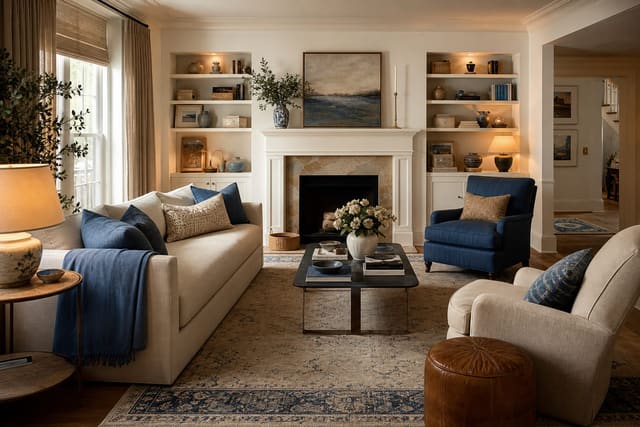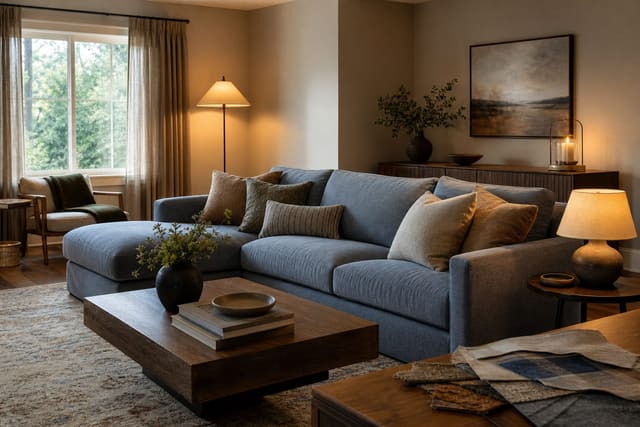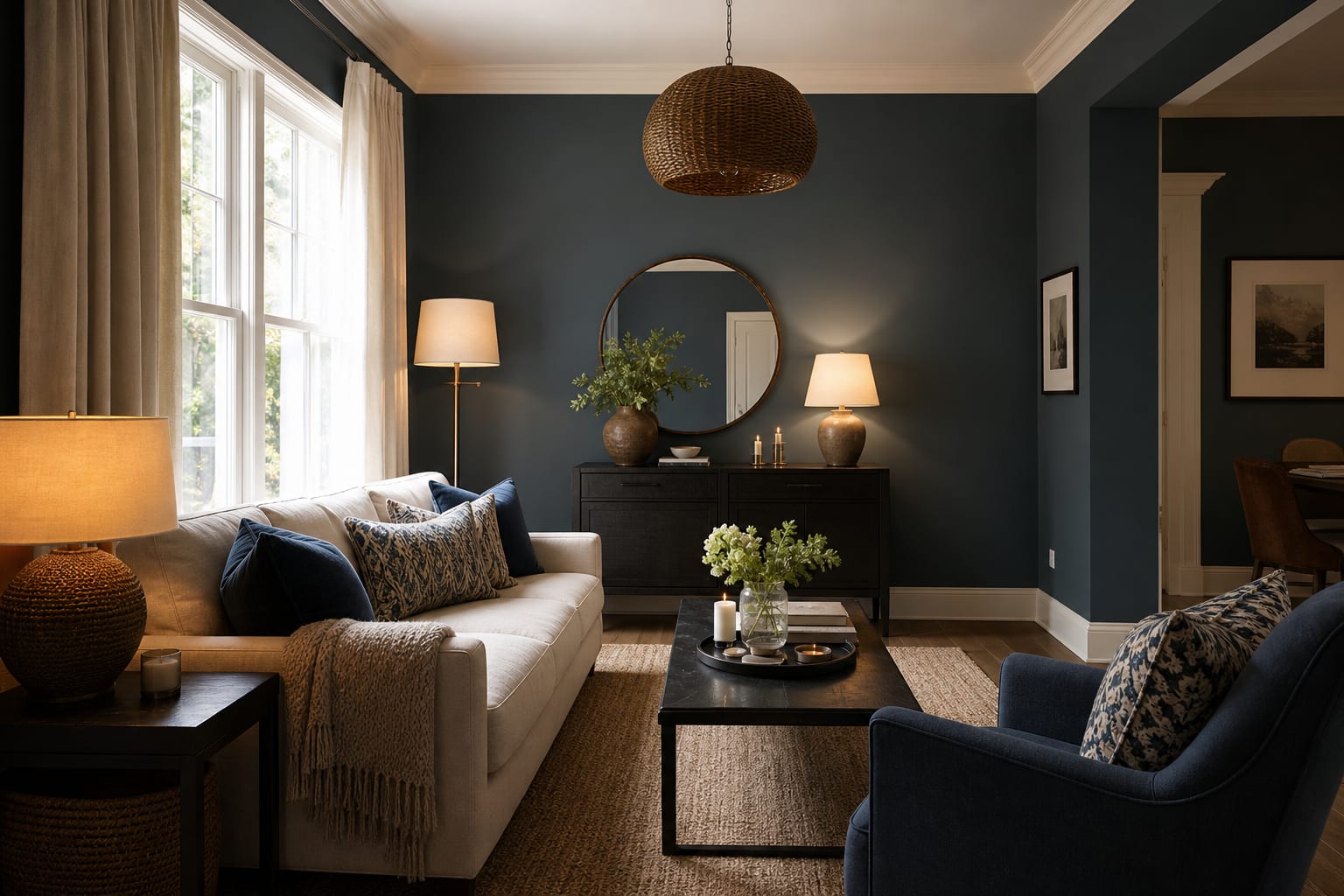
A two color room looks choppy fix works by giving one color roughly 70% of the room, repeating the second color in furniture and decor, and softening the break line with trim, rugs, or drapery. Most failed two-tone rooms aren't ugly — they lack a clear boss color, so the wall break, trim, and furniture compete instead of cooperating.
How do you fix a two-color paint scheme that looks choppy?
Choose one dominant color for most of the visual field, repeat the second color in furniture or decor, and use trim, lighting, rugs, and sightlines to connect the two halves. The room needs hierarchy more than another sample pot.
Start with proportion: let one color carry about 70% of the room and the second closer to 20-30%. A split that gives each color equal power feels restless, especially when the break line hits an awkward height behind a sofa, bed, or cabinet.
If the lower wall is dark and the upper wall is pale, the darker color needs to reappear elsewhere at least three times — a lamp base, framed print, pillow, cabinet, throw, or rug. If the upper color never repeats below eye level, the room reads as two rooms stacked on top of each other. The reverse holds too: a pale lower wall under a saturated top can feel top-heavy unless the pale color repeats in curtains, bedding, or a large rug. The goal is visual evidence both colors belong to the same house, not perfect matching.
Which color should lead the room?
Let the color connected to the largest permanent surfaces lead — flooring, tile, countertops, built-ins, fireplace stone, a sectional, or a large rug outranks the paint idea you liked online. A two-tone wall that ignores orange oak floors or a pink-beige sofa will always look pasted on.
If one paint color already agrees with the fixed finishes, make it dominant. A warm cream that flatters honey flooring should cover the main wall field, while muted green, clay, or dusty blue becomes the accent. If the accent is the only color that looks good, it may belong on a door, cabinet, or lower wainscot rather than every second wall.
Undertone is where many two-tone rooms break. A cool gray lower wall under a yellow-beige upper wall can make both colors look wrong even alone. If the split reads dirty or sour, check clashing undertones in the room before blaming the whole concept.
Use sample boards, not tiny chips — two coats on boards at least 12 by 18 inches, checked beside the floor, sofa, trim, and window in morning light, afternoon light, and lamplight. Test this on your own room photo with ReDesign before committing; keep doorways, windows, main furniture, and fixed features visible so the preview solves the room you actually have.
How do trim, ceilings, and sightlines connect the scheme?
The break line matters as much as the colors. If it lands at a random height, the room feels cut in half regardless of palette. Tie it to architecture: chair rail, wainscot cap, picture molding, cabinet top, tile edge, or mantel.
For a horizontal split, avoid the exact middle of the wall unless the room has strong classical trim. A lower third often feels grounded; a two-thirds upper field keeps ceilings from feeling pressed down. In an 8-foot room, a chair rail around 32 to 36 inches works — a line at 48 inches can look like a belt.
Decide on the ceiling too. A bright white ceiling above two warm walls can look harsh; a muddy ceiling makes the room feel heavy. In low rooms, use a softened white or the lighter wall color on the ceiling. In taller rooms, the darker color can wrap onto the ceiling only with enough lamps and pale textiles to keep it from feeling capped.
Keep trim consistent — one finish on baseboards, casing, and doors rather than another stripe at every edge. Satin trim against matte or eggshell walls adds contrast without more color noise.
Sightlines matter in open plans. If the two-color treatment stops at one doorway but the next room shows a third palette, the break feels accidental. Repeat one of the two colors in the next space through art or upholstery. If the room also feels dim, fix the light first; see fake natural light in any room for a plan that can make the same colors read cleaner.
Common two-color room mistakes
- A perfect 50/50 split makes the eye bounce, especially in small bedrooms and low-ceiling rooms. Give one color the bigger job and let the second appear as a repeated accent.
- Stopping the accent at the wall. A navy lower wall with no navy in the rug, art, or textiles looks unfinished. Repeat the accent at least three times within 6 to 10 feet of the painted area.
- Ignoring furniture height. A break line running behind a sofa top or headboard creates a jagged horizon. Raise or lower the line, or add molding so the transition looks architectural.
- Using the wrong white. Blue-white trim beside cream and terracotta looks sterile; yellow-white beside sage and gray looks dingy. Compare whites in the room before ordering curtains or trim paint.
- Letting mirrors repeat the problem. A mirror reflecting the split line, clutter, or a dark corner makes the room feel more broken up. Place mirrors to catch a window, lamp, or calm wall instead — see using mirrors to amplify light for the same logic applied to color continuity.
How does AI design help before you repaint?
A pairing that looks balanced in a saved image can fracture once it meets your sofa height, doorways, rug size, and ceiling line. Upload a straight photo from the doorway or back corner, including the floor, ceiling line, windows, main furniture, and the full two-color wall — don't crop out the awkward doorway or the orange floor causing the problem.
Run focused previews: one where the lighter color becomes dominant and the darker color repeats through textiles, one where the darker color moves only to built-ins or the lower third of the wall, and one where the colors stay but trim, rug, and lighting change. Keep the largest furniture consistent unless you're actually replacing it.
Look for the lowest-commitment version that reduces segmentation. If the best preview only works once the sofa and flooring disappear, it's a different room, not a paint fix. The useful preview shows whether a rug, pillow covers, warmer lampshades, or one repainted wall solves the split.
What should you change first this weekend?
- Fix the border. Clean up a shaky line, uneven tape edge, or random stopping point with a chair rail or picture molding, or repaint above or below the break so one wall field reads clearly.
- Repeat the accent color three ways. One low repeat (rug), one middle repeat (pillow), one high repeat (art) — related but not identical, so the room doesn't feel stiff.
- Soften the largest edges. Hang curtains 6 to 8 inches above the casing, extend the rod 8 to 12 inches beyond the trim, and let panels finish about 1/2 inch above the floor in one of the two wall colors or a bridge neutral like flax or mushroom.
- Correct the light. Use 2700K to 3000K bulbs at 90 CRI or higher so the colors don't turn muddy at night, and add a lamp near the darker paint field if it falls into shadow.
A choppy room rarely needs more decoration first — it needs clearer color hierarchy, cleaner edges, and enough light for the plan to read.
Frequently Asked Questions
Why do my two colors fight?
Two colors at near-equal proportion (50/50) read as a battle. Shifting to 60/40 or 70/30 lets the eye rest on one color as dominant and the other as accent, which resolves most of the visual tension.
What is a bridge tone?
A bridge tone is a third color containing undertones of both existing colors. For navy and green, that's often a warm cream or oak wood; for terracotta and teal, a warm putty or walnut works.
Should I just repaint one of the two colors?
Often no. The cheaper fix is recovering a piece in the bridge tone or adding bridge-toned soft goods first, and repainting only if that addition still fails to harmonize the room.
How do metals tie two colors together?
Brass warms cool colors, polished chrome cools warm colors, and aged bronze neutralizes both. Repeating one strong metal across hardware, lighting, and frames gives two colors a common partner.
Can AI preview a bridge tone before I buy anything?
Yes. Upload a photo of the two-color room and AI can preview bridge tone additions, proportion shifts, and metal accents so you see the fix before repainting or shopping.
> Try this: Ready to see this on your own room? Open ReDesign and run the preview.
Three transformations to try
1. Warm cream bridge between navy and green 2. Brass accents tying two colors 3. 70/30 proportion shift in two-color room