A two-tone wall only reads as intentional when the split line lands at the right height, so commit to a measured line rather than eyeballing it. Color-blocking fails most often because the divide floats randomly across a wall with no architectural anchor. The smartest splits follow an existing reference: a chair rail at 32 to 36 inches, a window sill, or roughly two-thirds up a 9-foot wall. Keep the darker shade below to ground the room and the lighter shade above to lift the ceiling. With a crisp line, a thin trim band, and a sheen that suits each zone, two tones can add architecture to a flat, featureless box.
Choosing the Split Height That Anchors the Wall
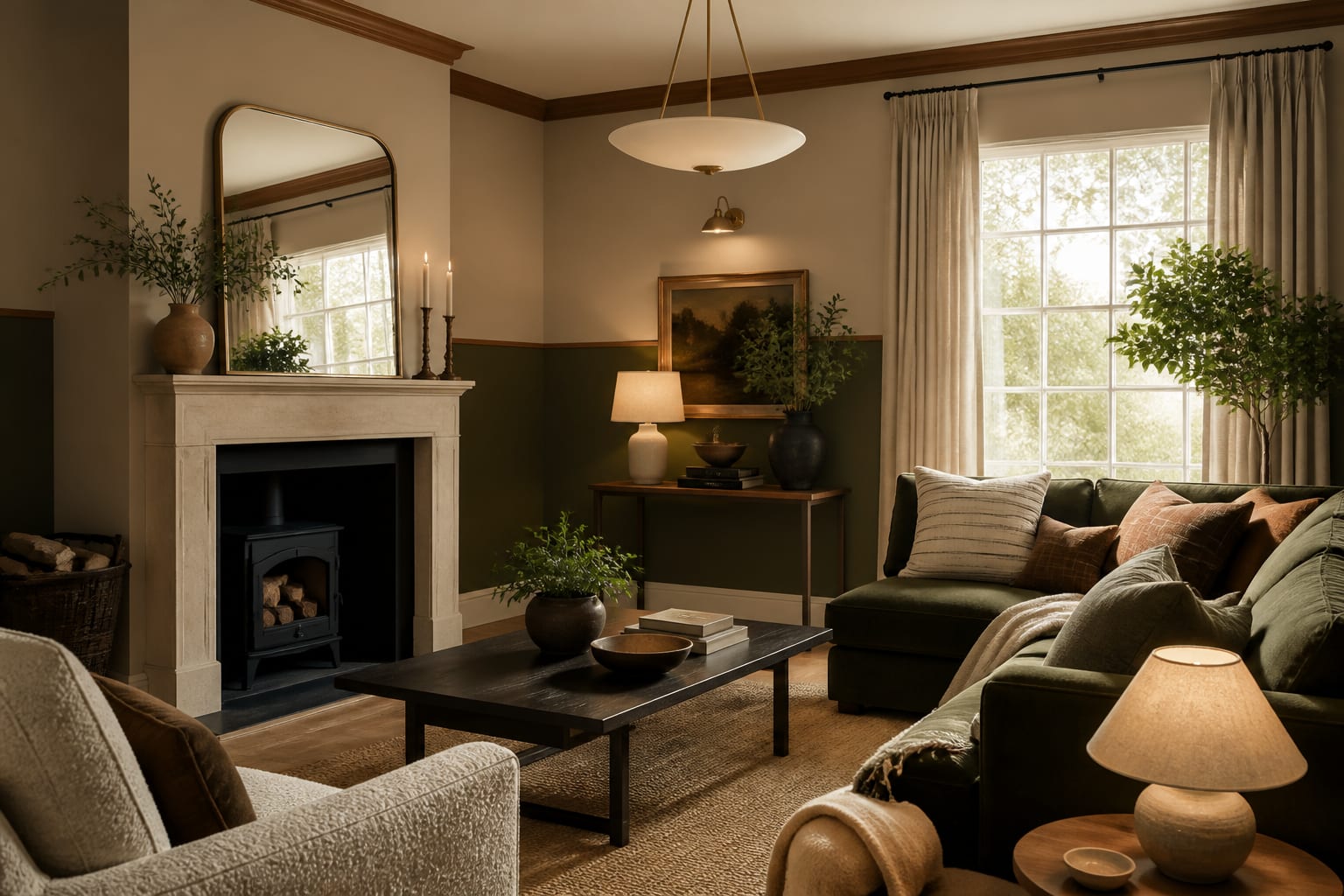
The split line carries the whole effect, so its height is the first decision worth measuring. A traditional dado mirrors old chair-rail heights and sits at 32 to 36 inches from the floor, which suits dining rooms, hallways, and entries that take scuffs. Pushing the line higher, to roughly two-thirds up a 9-foot wall (about 6 feet), gives a more contemporary, gallery-like feel and makes the lower color the dominant field. Lowering it to one-third, near 36 inches in a taller room, keeps the space airy because light reigns above. Avoid the dead center of the wall: a 50/50 split chops a room in half visually and rarely flatters standard ceiling heights. Tie the line to something the eye already expects. Window sills, door-top trim, and stair stringers all give logical anchors that make the divide look architectural instead of arbitrary. In a room with several windows at the same height, run the line straight off the sills so it continues uninterrupted. Before committing, mark the height in pencil at several points, then snap a chalk line or use a long spirit level to connect them. Walls are rarely perfectly square, so trust the level rather than measuring up from an uneven floor. Stand back and view the proposed line from the doorway, because that is where guests first read the proportions. A line that looks fine up close can feel low or top-heavy from across the room. If furniture will sit against the wall, picture a sofa back or console at 30 to 36 inches and keep the divide clear of that clutter zone. Getting the height right does more for the finished look than the colors themselves, so spend the extra ten minutes here.
See also our guide to How To Choose Paint Colors for more on two tone paint ideas rooms.
Picking Color Pairings and the Right Sheen
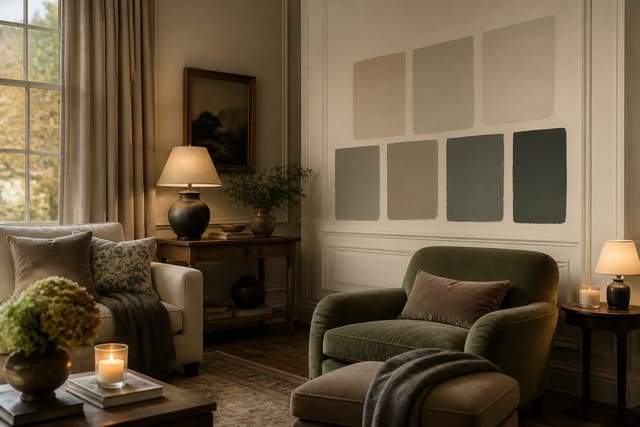
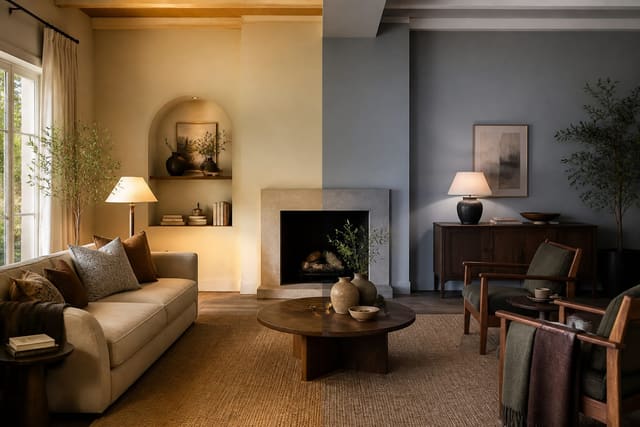
Two tones work best when the colors share a family or an undertone rather than fighting each other. A safe formula pairs a deep, saturated lower shade with a soft, lighter version of the same hue above, such as a charcoal-navy base under a pale dove gray. For more contrast, hold the undertones together: warm greige below with warm cream above reads cohesive, while a cool gray under a warm beige can clash. Earthy combinations like olive and oatmeal, or terracotta and chalk white, suit relaxed spaces, while ink blue under bright white feels crisp and modern. Sheen does heavy lifting too. The lower band takes abuse from chairs, shoes, and bags, so a satin or eggshell finish wipes clean and resists marks better than flat paint. Reserve flat or matte for the upper field, where it hides minor wall imperfections and avoids glare under raking light. Many people run both tones in eggshell for simplicity, which is perfectly fine and keeps reflectance consistent across the line. If you want the divide itself to register, add a thin trim band of one to two inches in a third accent, or paint existing chair-rail molding in a semi-gloss that catches light. Order sample pots and brush a 12-inch square of each color above and below where the line will fall. Live with the pairing for a couple of days, checking it under daylight and lamps, since a duo that sings at noon can turn muddy at night. Two coats of each color give the truest depth, and a tinted primer under dark shades cuts the number of coats you need. When the values step cleanly from dark to light, the wall gains a quiet sense of order.
For a related angle on two tone paint ideas rooms, read Warm VS Cool Paint Colors.
Taping and Painting a Crisp Divide
A clean edge separates a polished two-tone wall from a sloppy DIY job. Start by painting the lighter, upper color first and letting it dry fully, usually 24 hours for a hard cure. Bring that lighter shade slightly past where the line will sit, by about half an inch, so the tape lands on already-painted wall. Once dry, press low-tack painter's tape along the marked line, burnishing the edge firmly with a putty knife so paint cannot creep underneath. Here is the trick that stops bleed: seal the tape edge with a thin pass of the lighter color you just used. Any seepage will be the same shade as the wall above, so it disappears. Let that seal dry, then roll the darker lower color right up to and over the tape edge in two coats. Pull the tape away while the final coat is still slightly wet, lifting at a low 45-degree angle to leave a sharp boundary. Use a small angled brush to cut in tight corners and around outlets the roller cannot reach. For a level line on a long wall, a laser level beats freehand work every time and keeps the divide dead straight over 10 or 12 feet. If you are wrapping the color around a corner, carry the line height consistently so it meets cleanly where two walls join. Mind dry times between coats; recoating too soon, before the recommended 2 to 4 hours, can drag the underlayer and ruin the edge. Keep a damp rag handy for immediate touch-ups, because dried mistakes are far harder to fix. When the tape comes off and the line is razor-straight, the room instantly looks custom rather than painted in a hurry.
Matching Two-Tone Walls to Room Type and Light
Where you use two tones should respond to how the room is used and lit. In a north-facing room that gets cool, indirect light most of the day, lean on warmer pairings so the space does not feel chilly; a clay lower wall with a warm white top counteracts the bluish cast. South-facing rooms flooded with warm light can handle cooler, moodier lower tones like deep green or slate without feeling cold. Small rooms benefit from keeping the lighter color dominant, so raise the split toward 60 inches and let the airy upper field expand the perceived ceiling height. Low-ceiling spaces look taller when you drop the darker band low, around 30 inches, and run a continuous light field above. Hallways and stairwells are natural homes for a darker dado because they hide scuffs and bag marks at hand height. Bedrooms suit softer, lower-contrast duos that calm the eye, while a home office can take a sharper pairing that feels focused and deliberate. Consider the floor too: a dark lower wall over dark flooring can feel heavy, so a mid-tone base may sit better there. In open layouts, repeat one of the two tones on adjoining walls or trim to carry the scheme through the space and prevent the painted room from feeling isolated. Test how artificial light shifts the colors at night, because a 2700K warm bulb pushes both tones warmer and a 4000K cool bulb flattens them. Photograph the wall at three points in the day, morning, midday, and evening, to see the real range before you commit beyond a sample. Matching the duo to the room's job and its light is what turns a trend into a choice that lasts.
Here are the common mistakes to avoid: - Splitting the wall dead center, which chops the room in half and looks unbalanced. - Floating the line with no anchor like a sill, rail, or door trim. - Pairing colors with clashing undertones, such as cool gray under warm beige. - Skipping tape sealing, so the darker color bleeds into the lighter field. - Using flat paint on the lower band that scuffs and cannot be wiped clean. - Measuring up from an uneven floor instead of leveling the line across the wall.
Bring the look home with Re-Design
Before you buy a single gallon, test the duo virtually. Upload a photo of your room to Re-Design and preview different split heights, dark-bottom or light-top arrangements, and color pairings on your actual walls in seconds. Seeing a charcoal base under a soft gray top in your own lighting saves you from costly sample mistakes and repainting. Try several combinations side by side, judge how each reads against your floor, and lock in the line height and shades you love. Then shop for paint with full confidence that the look matches what you previewed.
Frequently Asked Questions
What is the best height to split a two-tone wall?
For a classic dado, set the line at 32 to 36 inches, matching traditional chair-rail height. For a modern look, raise it to about two-thirds up the wall, near 60 inches on a standard 9-foot wall. Avoid splitting at the exact center, since a 50/50 divide chops the room visually and rarely flatters standard ceiling proportions.
Should the darker color go on the top or bottom?
Place the darker shade on the bottom in most rooms. A grounded lower band anchors the space, hides scuffs at hand height, and makes the lighter upper field lift the ceiling visually. Reverse it only for a deliberate, dramatic effect in a room with tall walls, since a dark top can press the ceiling down and feel heavier overhead.
How do I get a perfectly crisp line between the two colors?
Paint the lighter color first, let it cure, then tape the line and seal the tape edge with that same lighter shade. Any bleed matches the wall and vanishes. Roll the darker color over the sealed edge in two coats, then pull the tape at a 45-degree angle while the paint is still slightly wet for a razor-sharp boundary.