Velvet reads as luxury, but the fabric only earns that reputation when you treat it as a texture, not a color statement. The mistake most people make is buying a velvet sofa in a loud jewel tone and then fighting it for years. The better move is to choose velvet for the way it catches light, layer it against matte surfaces, and let the pile do the work in a single anchor piece per room. Done right, a velvet chair or headboard adds depth that flat upholstery never delivers, and it photographs beautifully because the nap shifts shade as you walk past it.
Why velvet works as a texture, not just a color
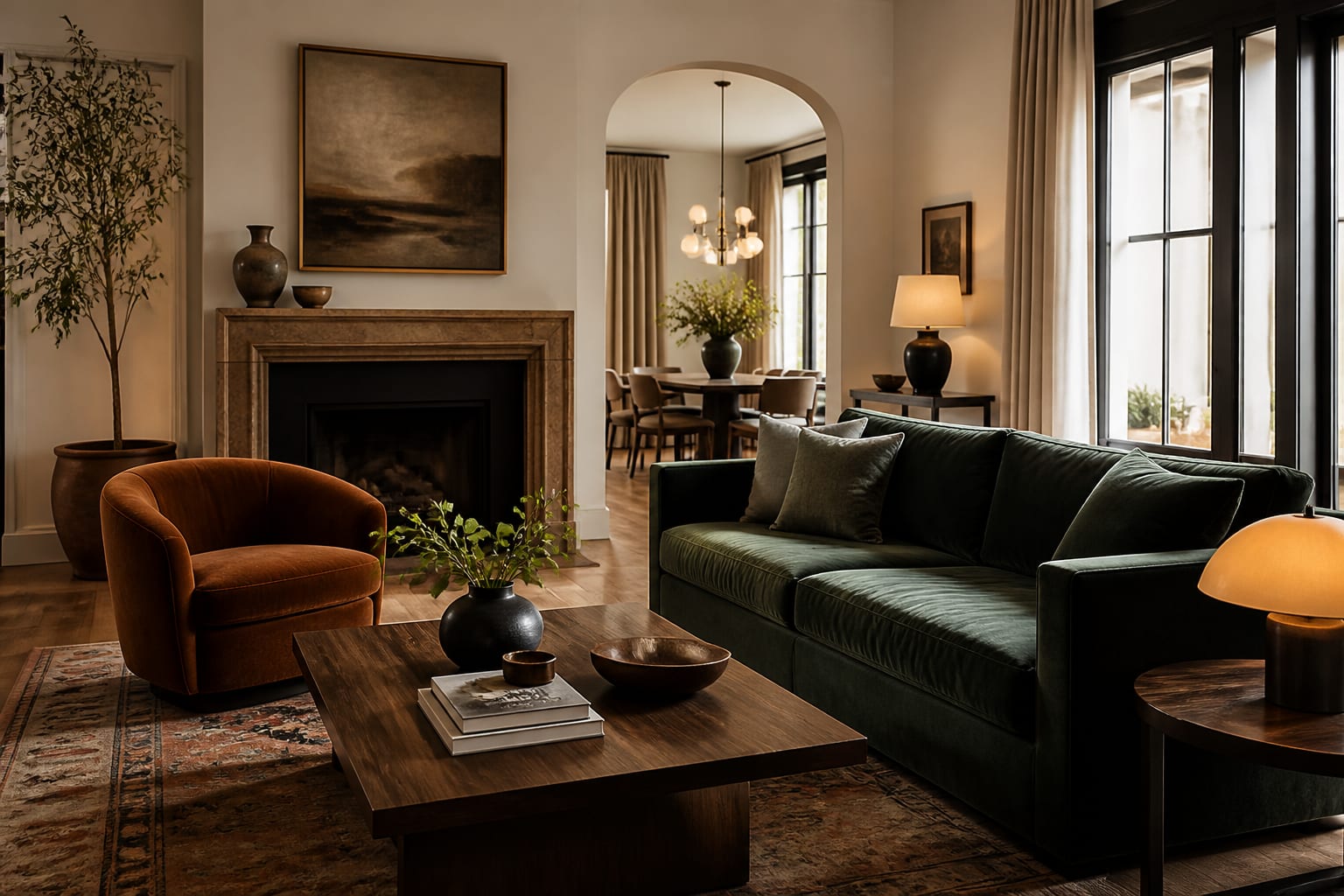
Velvet is a cut-pile fabric, which means thousands of short fibers stand upright and bend as you touch them. That structure is why a velvet cushion looks like two shades at once: the pile lying one direction reflects light, the other absorbs it. Designers lean on this. A single emerald velvet sofa in a room of linen and oak does more visual work than three patterned pillows ever could, because the surface itself changes through the day.
Treat velvet as your one shiny element in a space. If the walls are flat paint, the rug is wool, and the coffee table is raw oak, a velvet sofa becomes the thing your eye lands on. Add velvet drapery on top of velvet seating on top of a velvet ottoman and the room turns heavy and one-note. Restraint is what makes the fabric feel expensive instead of overdone.
The light in a room decides which velvet to buy. A north-facing space with flat, cool daylight mutes a jewel tone, so a saturated emerald or sapphire keeps its drama there without looking garish. A bright south-facing room floods the pile with warm light all afternoon, which can wash out a pale velvet and intensify a deep one, so test the fabric where it will actually live. Velvet near a lamp or sconce earns its keep at night, when the raking light skims across the nap and the seat glows. That interplay with light is exactly why a velvet piece looks different in the store than it does at home, and why so many people are surprised by the color they end up with.
Velvet by room: where it belongs
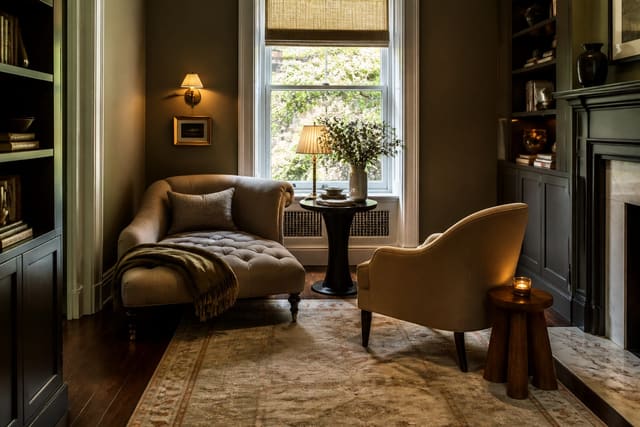
In a living room, a velvet sofa is the classic anchor. A 84-inch three-seat sofa in performance velvet costs roughly $1,800 to $3,500 and becomes the piece everyone notices. If a full sofa feels like too much commitment, a pair of velvet accent chairs at 28 to 30 inches wide flanking a fireplace delivers the same richness for $600 to $1,200 each. A reading nook is another natural home for velvet, where a single deep chair invites you to linger. Our guide to reading nook ideas walks through the chair-plus-light pairing that makes those corners work.
In a bedroom, an upholstered velvet headboard at 58 to 62 inches tall behind the pillows softens the whole room and gives you something to lean against. Velvet benches at the foot of the bed, usually 48 to 54 inches long, repeat the texture without overwhelming. A window seat cushioned in a sturdy performance velvet turns a bay into the most-used spot in the house, since the fabric feels warm against bare arms in a way that leather never does.
Choosing the right velvet so it lasts
Not all velvet survives real life. Cotton and silk velvet look gorgeous and crush permanently the moment someone sits on them, which suits a formal room nobody uses. For a sofa that takes daily wear, specify performance velvet woven from polyester or a poly blend rated at 50,000 double rubs or higher on the Wyzenbeek scale. That rating is the difference between a sofa that looks tired in eight months and one that holds up for a decade.
Color choice protects the fabric too. Deep, saturated tones hide the inevitable. Consider these specific pairings:
- Forest green velvet against warm white oak and a cream wool rug for a grounded, library feel.
- Rust or terracotta velvet with raw plaster walls and aged brass lighting for a warm, enveloping room.
- Navy velvet beside natural linen drapery and a jute rug for a calm, slightly nautical scheme.
- Cognac or caramel velvet with walnut furniture and black metal accents for a masculine study.
- Dusty rose velvet on a single accent chair, kept small so the pale tone does not show every crush mark.
- Charcoal velvet sofa under a statement ceiling in a deep contrasting color to pull the eye up and frame the seating.
Avoid pale velvets on anything that gets daily use. A blush or ice-blue velvet sofa marks with every body print and water ring, so reserve those tones for a bench or chair that stays mostly decorative.
Caring for velvet so it keeps its sheen
Velvet is less fragile than its reputation suggests, especially in synthetic blends. Vacuum weekly with a soft brush attachment to lift dust out of the pile, and brush the nap in one direction with a soft garment brush to keep it looking even. For spills, blot immediately rather than rub, since rubbing crushes the pile and grinds the stain deeper. Most performance velvets carry a W or W/S cleaning code, meaning you can spot-clean with water-based products.
Rotate and flip loose cushions every couple of weeks so the pile wears evenly across the seat. Keep velvet out of constant direct sun, which fades the dye and stiffens the fibers over a few years. A south-facing window with sheer shades is fine; bare glass blasting a sofa all afternoon is not.
Crush marks are the one quirk worth understanding before you buy. When the pile gets pressed flat, by a cushion, a bag, or someone sitting in the same spot every night, it can leave a lighter shimmer that looks like a watermark. On most performance velvets this lifts out with a gentle steam and a brush in the direction of the pile; a handheld garment steamer held a few inches away and a soft brush bring the nap back upright in a minute. Pressed-velvet and crushed-velvet finishes are designed to keep that texture permanently, so if you hate the marked look, choose a smooth, plush velvet instead and steam it occasionally. Knowing this in advance turns what feels like damage into routine upkeep.
Preview velvet in your room before you buy
Velvet is hard to judge from a tiny swatch, because a two-inch sample never shows how a full sofa's pile will play with your actual light. Re-Design solves that. Upload a photo of your living room or bedroom, then re-design it with a velvet sofa in forest, navy, or rust and watch how the tone sits against your existing rug, walls, and window light. You can swap a velvet headboard onto your bed or drop a pair of velvet chairs beside the fireplace in seconds, so you commit to a color and scale you have actually seen in the space rather than guessing from a fabric card.
Frequently Asked Questions
Is velvet furniture practical for homes with kids and pets?
Yes, if you choose performance velvet. A polyester or poly-blend velvet rated 50,000 double rubs or higher resists abrasion, and most carry a water-friendly cleaning code so spills wipe up. Pet hair brushes off the pile easily with a rubber brush. Skip cotton and silk velvet for high-traffic rooms, since they crush and stain permanently.
What colors of velvet hide wear best?
Deep, saturated tones win. Forest green, navy, rust, charcoal, and cognac all disguise crush marks, body prints, and minor stains because the eye reads them as rich rather than dirty. Pale velvets like blush, ice blue, and cream show every water ring and indentation, so keep light velvets to small accent pieces that see little use.
How do I keep velvet from looking matted?
Vacuum weekly with a soft brush head and brush the pile in one consistent direction with a soft garment brush. Rotate loose cushions every couple of weeks so no single spot crushes faster than the rest. Blot spills instead of rubbing. These habits keep the nap standing and the sheen even for years.