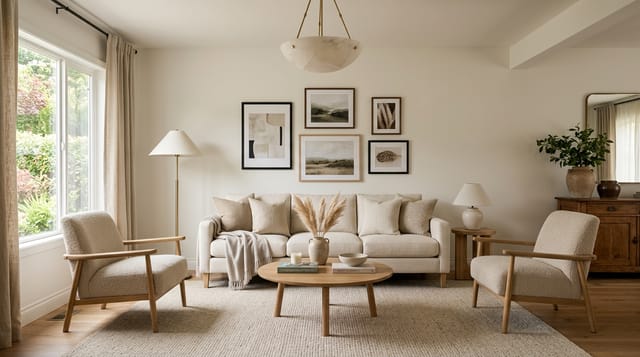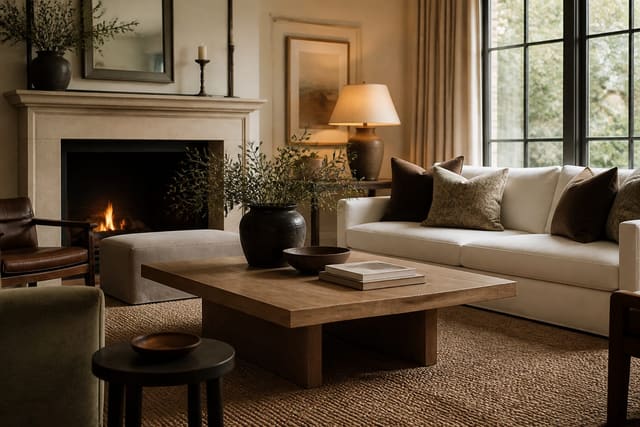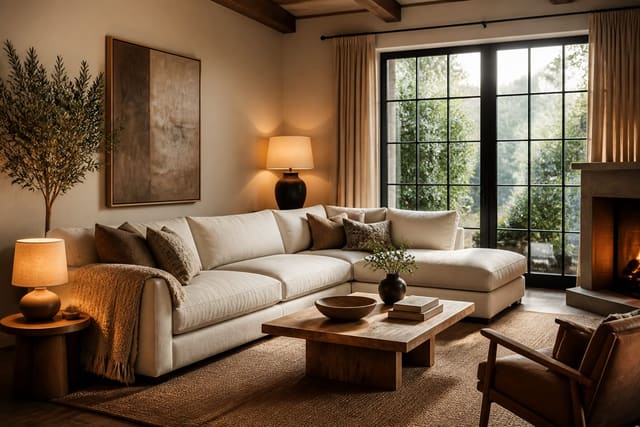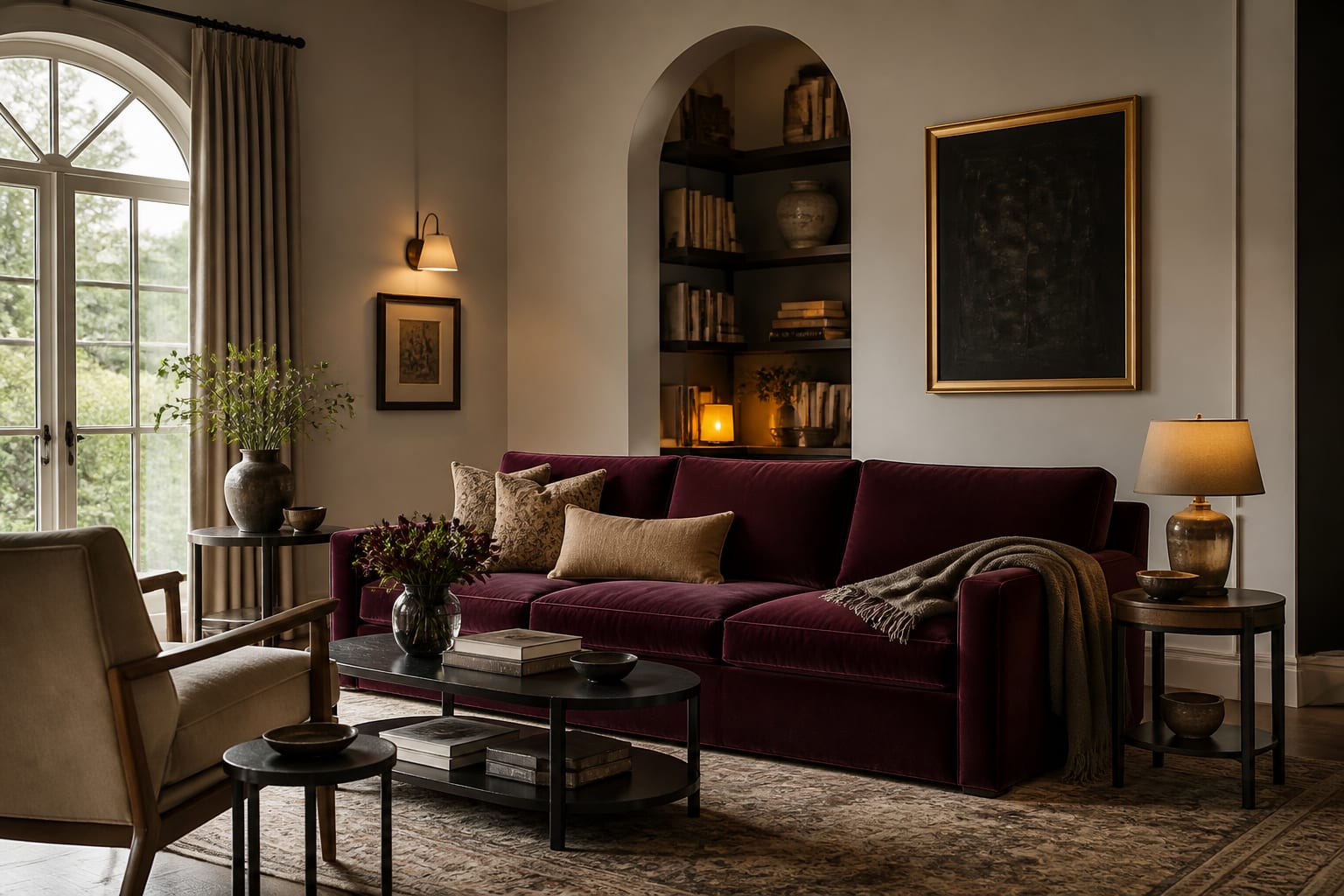
Let the velvet sofa be the loudest thing in the room and style everything else to support it, because a statement piece only works when nothing fights it for attention. The mistake I see again and again is people surrounding a bold emerald or navy velvet sofa with equally bold patterns and colors, and the whole room starts shouting. My read is that a velvet sofa is the soloist, and the rest of the room is the backing band. Keep the supporting pieces quieter and the sofa carries the space effortlessly.
Velvet brings two things to a room: a saturated color and a texture that catches light differently from every angle. Both are assets, but both demand restraint around them. Here is how I build a room that lets a velvet sofa look intentional and expensive instead of busy.
Let the sofa anchor the room
A velvet sofa is a commitment, so build the room outward from it. Keep the big surfaces, the walls and the largest rug, in neutral or muted tones so the sofa's color has room to sing. A deep teal velvet sofa against a warm white wall and a low-contrast oatmeal rug reads as deliberate; the same sofa against a busy patterned wallpaper and a clashing rug reads as a fight. The sofa should win every time, and the way you guarantee that is by quieting everything around it.
Scale matters too, because velvet tends to show on larger pieces. Make sure the sofa suits the room's footprint, leaving at least 18 inches between the front of the sofa and the coffee table so the anchor has space to breathe. If you are still working out the overall seating layout, the framework in my living room design ideas guide helps you place the sofa before you style it.
Light is part of the magic. Velvet's pile shifts color as light moves across it, so position the sofa where it catches both daylight and a lamp at night, and you get a piece that looks alive at every hour.
Build the color palette around it
Color is where a velvet sofa either sings or screams. Start from the sofa's hue and pull just 2 or 3 accent colors, using a color wheel to guide you. For a jewel-tone sofa, complementary accents add energy while analogous accents stay calm. A rust velvet sofa loves a few muted blue accents across the room; an emerald sofa pairs cleanly with warm woods and a touch of blush or brass.
Throw pillows are the easiest place to introduce those accents, and the rule I hold is to keep them to 3 or 5 pillows in an odd number, none of them matching the sofa exactly. A pillow in the same color as the sofa disappears against it; a pillow one or two steps away in the palette adds depth. Choosing the right surface to set those colors against matters too, and the pairings in my coffee table ideas guide help you anchor the palette with the right hard surface.
Keep the palette tight. Two or three accents around a bold sofa is plenty; a fourth and a fifth start to dilute the very statement you bought the sofa to make. Reserve the brightest accent for the smallest objects, a single 18-inch pillow or a 12-inch vase, so the punch of color stays in your control rather than spreading across half the room.
Balance the sheen with texture
Velvet has a soft sheen that reflects light, so the room needs matte textures to balance it or everything starts to feel slick. Surround the sofa with 2 to 3 contrasting textures: a nubby linen chair, a raw wood coffee table, a jute or wool rug underfoot. That contrast is what makes the velvet read as luxurious rather than costume-like. A rug that extends at least 8 inches beyond each end of the sofa keeps the whole grouping grounded instead of floating.
Here is the texture mix I aim for around a velvet sofa:
- A matte natural-fiber rug, like wool or jute, to ground the sheen.
- A wood or stone coffee table for a hard, non-reflective surface.
- A linen or boucle accent chair to echo softness without competing.
- One metal finish, brass or matte black, repeated at least twice.
- A few woven or knit throws to add tactile warmth.
Metal ties it together. Pick one finish, brass, chrome, or black, and repeat it across a lamp, a frame, and a table leg so the room feels coordinated rather than collected at random. Two repetitions is the minimum that registers as intentional, and three reads as fully resolved. Mixing finishes is fine once the room is established, but around a brand-new statement sofa I keep to a single metal until the space settles.
Common mistakes to avoid
The most common mistake is treating the velvet sofa like just another seat and surrounding it with equally bold competitors, so the room has no clear lead. Quiet everything else and let the sofa win.
The second mistake is matching the throw pillows exactly to the sofa, which flattens the whole arrangement into one blob of color. Step the pillows a shade or two away. A third is ignoring texture and pairing velvet with more shiny finishes, which makes the room feel slippery; add 2 to 3 matte surfaces. A fourth is overloading the palette with four or five accent colors until the sofa is just one loud voice among many; cap accents at 2 or 3. The last common mistake is crowding the sofa against the coffee table with no clearance, which robs the anchor of presence; hold that 18-inch gap.
Use AI design to test the styling before you commit
The tricky thing about a velvet sofa is that it is expensive and hard to return, and you cannot really know how a teal or rust will live in your room until it is sitting there. Re-Design solves that. Upload a photo of your living room and the AI design renders a velvet sofa in different colors right in your space, then lets you test the wall colors, rugs, and accent pieces around it.
Because you upload your actual room, the preview keeps your real wall color, window light, and floor in view, so you can judge whether an emerald sofa glows or clashes against what you already own. Try jewel tones against neutrals, swap accent palettes, and balance the sheen with different rugs before you spend serious money on the centerpiece. The same previewing trick helps if you are weighing a sectional in velvet and need to see how the larger footprint reads against a 12-by-15 room.