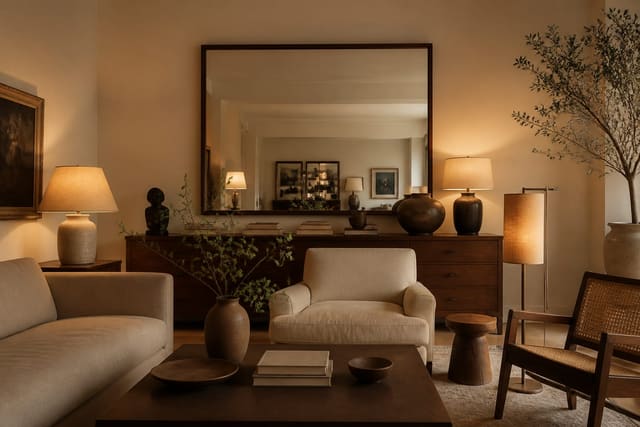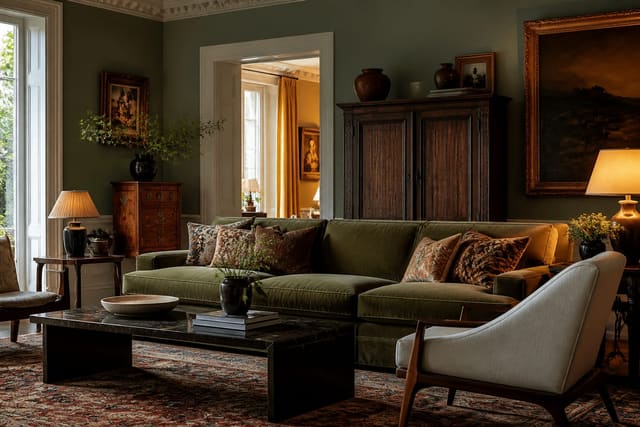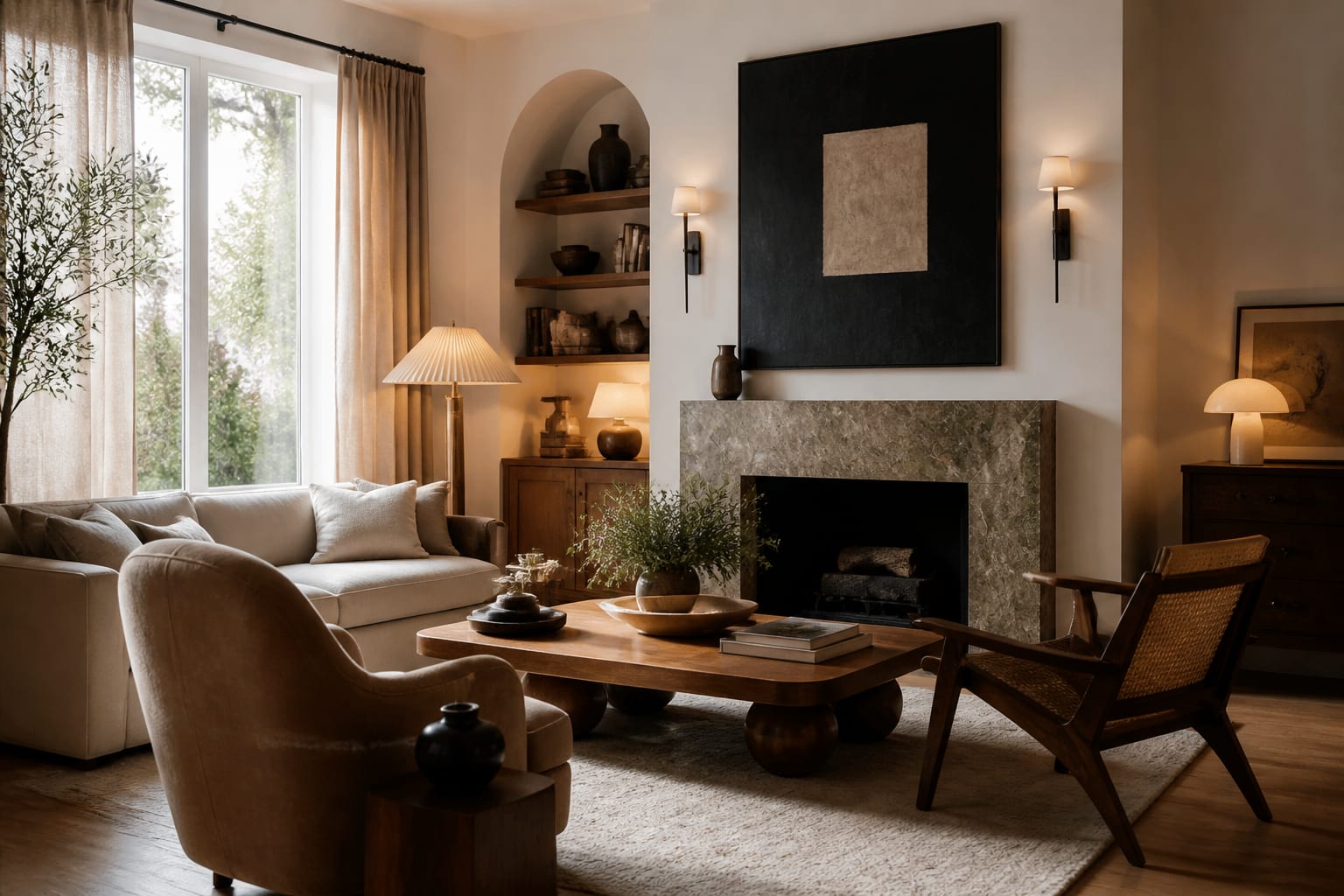
Vintage furniture goes wrong the moment a room tips into a costume, where every piece shouts the same decade and the space reads as a set rather than a home. The fix is restraint and ratio. Treat vintage as seasoning, not the whole meal: anchor a modern room with one or two characterful older pieces and let clean-lined contemporary furniture carry the rest. A 70-year-old walnut dresser earns its place beside a current platform bed precisely because it contrasts, not because it matches. The goal is a home that feels collected over time, with patina and provenance that mass-market furniture cannot fake.
How much vintage is the right amount?
The ratio is what separates a layered modern home from a themed one. A reliable starting point is 70/30: let modern, clean-lined pieces form about 70 percent of a room's furniture mass, and reserve the other 30 percent for vintage. In a living room that might mean a contemporary sectional and current lighting paired with one vintage leather club chair, a 40-inch reclaimed-wood coffee table, and a single piece of older art. The eye reads the modern pieces as the quiet backdrop and lands on the vintage ones as the story.
Push past 50 percent vintage and the room starts to feel like a period reproduction, which is a different design goal and a harder one to live with. The exception is a deliberately maximalist or antique-forward style, but even then the pieces should span several eras so nothing reads as a matched suite. Buying a vintage bedroom set with a matching headboard, two nightstands, and a dresser is the fastest route to a dated, hotel-from-1985 look. Break the set up instead, spread the pieces across rooms, or buy only the one piece that earns its keep.
If your room runs dark, an older piece in a lighter oak or a mirrored surface can lift it; our notes on AI design dark room solutions cover how reflective vintage finds bounce light.
Choosing one statement piece per room
The single most effective vintage move is the statement piece: one older item with enough presence to anchor the whole room. A 60-inch mid-century credenza under a television, a wrought-iron daybed, a marble-topped pedestal table, or a tall apothecary cabinet each give a modern room an instant center of gravity. Because it carries the load, you can keep everything around it current and inexpensive, which is also the budget-smart approach. One $900 vintage credenza does more for a room than a thousand dollars of small accent pieces spread thin.
Scale is the trap here. People fall for a charming small piece in a crowded shop and bring home something that disappears against an 8-foot wall. Measure the wall and the piece together: a statement console should fill 50 to 75 percent of its wall, and a focal cabinet should stand at least 40 inches tall to hold its own. Conversely, a hulking Victorian armoire can swallow a small modern bedroom, so respect the room's ceiling height and floor area before you commit. When in doubt, the statement piece should be the largest single object in the room or the most visually dense, never a timid middle.
For a deeper framework on combining periods and silhouettes, our guide on how to mix design styles pairs naturally with vintage layering.
Mixing wood tones, metals, and patina
The fear that wood tones must match is what keeps most rooms flat and matchy. The opposite is true: a room with a single wood tone everywhere looks like a showroom floor, while a room with two or three deliberate tones looks gathered over years. The rule that keeps it intentional is repetition. If you bring in a warm walnut credenza, echo that warmth somewhere else, in a picture frame or a chair leg, at least twice. Do the same for a cooler oak or a near-black wenge. Two to three wood tones, each repeated, reads as a plan; five random tones reads as a thrift haul.
Metals follow the same logic. A vintage brass lamp wants a second brass note nearby, even something as small as a drawer pull or a candlestick. Mixing brass with a darker iron or chrome is fine and often livelier than a single metal, as long as each finish appears more than once. Patina is the quality you cannot buy new, so protect it. A vintage table's worn edges and a leather chair's cracked seat are features, and over-sanding or over-polishing them strips the exact character that justified the purchase. Clean gently, wax rather than refinish where you can, and let the age show.
Restoring vintage safely without ruining value
A few common restoration mistakes destroy value, and they are simple to avoid once you know the warning signs. Restoration is where budgets and good intentions collide. Reupholstering a vintage armchair frequently costs $600 to $1,200 once you factor 5 to 7 yards of fabric at $40 to $90 per yard plus labor, which can exceed what the chair is worth unless the frame is genuinely good. Rewiring an old lamp to a safe modern cord and socket runs $40 to $90 and is almost always worth it for safety. Refinishing a solid-wood dresser can run $300 to $700 at a pro shop, so weigh that against simply waxing the existing finish.
Safety checks come before any of that. Look hard at the structure and the materials before you hand over money.
- Press on every joint and gently rock the piece; loose mortise-and-tenon or wobbling legs mean glue-up or dowel repair before use.
- Scan for active woodworm, where small fresh holes and fine powder signal live infestation that needs treatment before the piece comes inside.
- Treat any painted finish on furniture made before 1978 as possible lead paint, and avoid sanding it dry; encapsulate or have it stripped professionally.
- Pull out drawers to check that runners glide and the back panels are intact, since failing drawer boxes are tedious and costly to rebuild.
- Smell upholstery and inside cabinets for mildew, which signals water damage and possible mold that fabric alone will not cure.
Knowing when to stop is its own skill. Original hardware, intact veneer, and honest patina add value, while heavy refinishing and replaced parts often subtract it. If a piece has collectible provenance, a maker's mark or a recognizable mid-century designer, resist the urge to modernize it and consult a specialist first.
See it first in Re-Design
Because vintage pieces are usually one-of-a-kind and hard to return, previewing them in context saves expensive mistakes. Upload a photo of your living room or bedroom into Re-Design and re-design it with a vintage credenza, a leather club chair, or a marble pedestal table dropped into the scene, so you can judge whether the old piece's scale and wood tone work against your existing modern furniture. You can test that 60-inch credenza against your actual wall, swap a dark walnut finish for a lighter oak, and see how the patina reads beside your sofa before you drive across town to buy a piece you cannot bring back.
Frequently Asked Questions
How do I mix vintage and modern without it looking messy?
Use a ratio. Keep about 70 percent of a room modern and clean-lined, and reserve 30 percent for vintage accents. Anchor with one statement piece, repeat each wood tone at least twice, and avoid buying matched vintage sets, which read as dated period rooms rather than collected spaces.
Is vintage furniture better quality than new?
Often, yes, for solid-wood pieces. Older case goods were frequently built from solid hardwood with dovetailed joints, unlike much current particleboard furniture. The catch is condition: a beautifully built dresser with failing veneer or active woodworm can cost more to fix than its value, so inspect structure and materials before buying.
Should I refinish a vintage piece?
Usually less than you think. Original finish, intact veneer, and honest patina add character and often value, while heavy refinishing can strip both. Wax or gently clean where possible, and reserve full refinishing for pieces with damage too severe to live with. Never sand a pre-1978 painted finish dry.
Where do statement vintage pieces work best?
Wherever a room needs a center of gravity. A 60-inch credenza grounds a living room or media wall, a marble bistro table anchors a breakfast nook, and a tall cabinet adds height to a bedroom. Size it to fill 50 to 75 percent of its wall so it commands the space instead of floating in it.