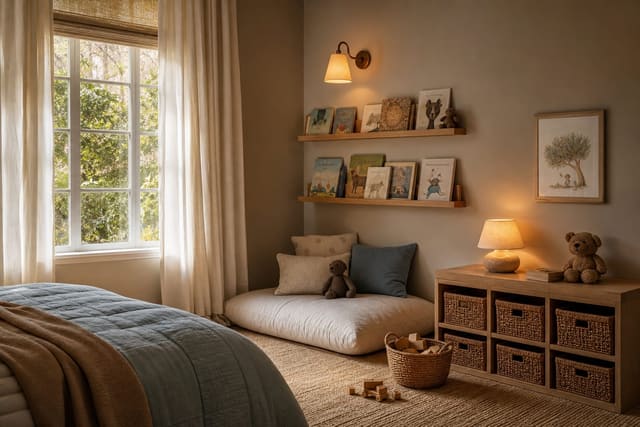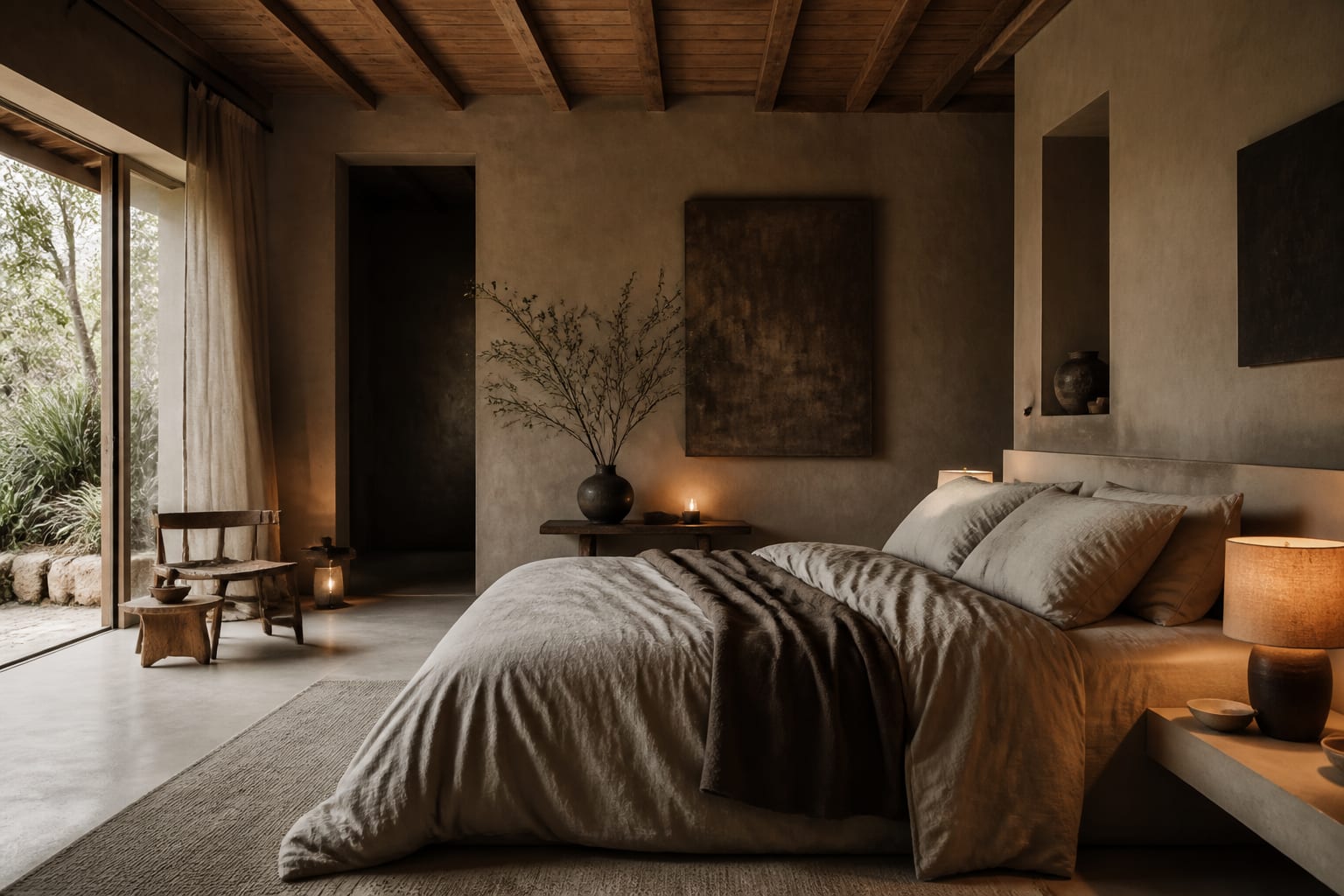
Your bedroom is the room that benefits most from a wabi-sabi approach, since rest depends on calm and calm depends on simplicity. By trading crisp, hotel-style perfection for soft linen, raw wood, and a few imperfect objects, you create a space that quiets the mind instead of demanding attention. Wabi-sabi bedrooms feel grounded and unhurried, with muted tones and warm light doing the work that bold décor would do elsewhere. These ideas focus on texture, restraint, and honest materials, so your bedroom becomes a retreat that looks better the more naturally it ages and softens.
Start With the Bed
The bed dominates a bedroom, so it sets the tone for the entire wabi-sabi scheme. Dress it in washed linen rather than crisp cotton percale, because linen wrinkles, softens, and fades in a way that suits this style perfectly. Stick to muted, earthy colors like oatmeal, clay, sage, or warm gray, and layer a few different textures instead of a matched bedding set. A nubby throw at the foot, a soft wool blanket, and a couple of imperfectly stuffed pillows give the bed an inviting, lived-in look. Choose a low platform or a simple wooden frame with visible grain, keeping the silhouette grounded and unfussy. Avoid tall, ornate headboards and glossy finishes, which fight the calm you are trying to build. Make the bed loosely rather than tucking everything tight; a slightly rumpled, relaxed arrangement reads as wabi-sabi while a hospital-corner finish does not. The point is a bed that looks like it welcomes you, softening visibly over months of use, rather than one that looks staged for a catalog photo and untouched by real life.
See also our guide to Small Master Bedroom Luxurious for more on wabi sabi bedroom ideas.
Quiet the Walls and Floor
Surfaces around the bed should recede so the room feels like a soft envelope rather than a busy gallery. Warm white, clay, or pale taupe walls work well, and a chalky matte or hand-troweled plaster finish adds subtle texture that flat paint cannot. If you can, choose a limewash for its gentle, cloudy variation that shifts with the light through the day. Underfoot, natural materials ground the space: wide-plank wood with visible grain, or a wool or jute rug placed where bare feet land first thing in the morning. Keep the floor mostly clear so the room breathes and feels restful. Avoid high-contrast patterns, shiny tile, and bright accent walls, all of which pull focus and disturb the calm. Window treatments should filter rather than block light, so unlined linen curtains or a simple woven shade let morning sun arrive softly. The aim is a backdrop so quiet that your linen bedding and few chosen objects become the only things the eye needs to settle on, which is exactly what helps the room feel like a place to rest.
For a related angle on wabi sabi bedroom ideas, read Reading Corner Kids.
Light for Winding Down
Lighting in a wabi-sabi bedroom should help you slow down, so warm and dim beats bright and even. Replace harsh overhead fixtures with several low sources you can control independently, such as a ceramic bedside lamp, a small paper lantern, or a candle on the dresser. Warm bulbs around 2700K cast an amber glow that relaxes the eyes and flatters the natural textures around the room. Dimmers are worth installing, because being able to lower the light gradually as bedtime approaches signals the body to wind down. The soft shadows that low light throws across plaster walls and linen folds add the quiet depth this style depends on. During the day, let filtered sunlight do the work, positioning the bed where it catches gentle morning light through a linen shade. Keep screens and cool blue light to a minimum near the bed, since they undo the calm mood and disrupt rest. By layering a few warm, low sources and skipping the bright ceiling glare, you turn the bedroom into a genuinely restful space that feels different and softer once the sun goes down.
Keep It Honest and Sparse
A wabi-sabi bedroom resists clutter, so restraint is the habit that keeps it calm. Keep nightstands nearly bare, with just a lamp, a small handmade dish, and perhaps a single book rather than a crowded surface. Display only a few meaningful objects around the room, choosing handmade or weathered pieces over glossy new ones. A single ceramic vase with one dried stem, a worn wooden tray, or an inherited box carries more weight than a dozen coordinated accessories. Bring in one living element, like a modest potted plant or a sprig of greenery, that changes slowly over time. Mix old and new so the room feels gathered rather than ordered from a single store, pairing a vintage stool with a contemporary lamp. Resist the urge to fill empty corners; the space you leave open is part of the design. Store clothing and clutter out of sight so the visible room stays serene. When something chips or fades, let it stay or mend it with care, since the marks of use are exactly what give this style its honest, restful character.
- Dress the bed in washed muted-tone linen layers
- Choose a low wooden platform frame with visible grain
- Finish walls in chalky limewash or matte plaster
- Keep nightstands bare except a lamp and dish
- Add one dried stem in a stoneware vase
- Light the room with warm dimmable bedside sources
Bring the look home with Re-Design
Wondering how a wabi-sabi makeover would suit your bedroom before you change anything? Upload a photo to Re-Design and the app reimagines it with washed linen bedding, a low wooden bed, chalky plaster walls, and the warm dim light that makes this style restful. You can preview a calmer, sparser arrangement against your actual room, then decide which muted tones and handmade pieces are worth adding for real.
Frequently Asked Questions
How do I design a wabi-sabi bedroom?
Build the room around rest and restraint. Dress the bed in washed linen that wrinkles naturally and skips crisp ironing. Set a low wooden frame close to the floor, add a clay lamp on a weathered nightstand, and keep walls bare except for one small handmade piece. Soft earth tones and uncovered timber floors complete a calm, grounding sleep space.
What bedding suits a wabi-sabi bedroom?
Reach for stonewashed linen and undyed cotton in oatmeal, clay, or soft grey. These fabrics soften with every wash and look better slightly rumpled, which suits the aesthetic perfectly. Layer a coarse wool blanket at the foot for cooler nights. Skip synthetic satin and bright patterns; the gentle creases and faded tones are meant to be seen, not smoothed away.
How can I add warmth without color?
Lean on texture and natural variation instead of bold paint. A jute floor mat, a rough plaster accent wall, and a hand-carved stool introduce depth while the palette stays quiet. Wood grain, woven fibers, and matte ceramic surfaces catch light differently throughout the day. This interplay of shadow and material gives the room richness that loud color could never match.
What should I put on wabi-sabi bedroom walls?
Keep walls mostly open and let negative space rest the eye. One framed ink sketch, a small hand-thrown ceramic hung on a peg, or a single dried branch is enough. Clay or lime plaster finishes add subtle movement without any artwork at all. The goal is a quiet backdrop that supports sleep rather than a gallery that demands attention before bed.