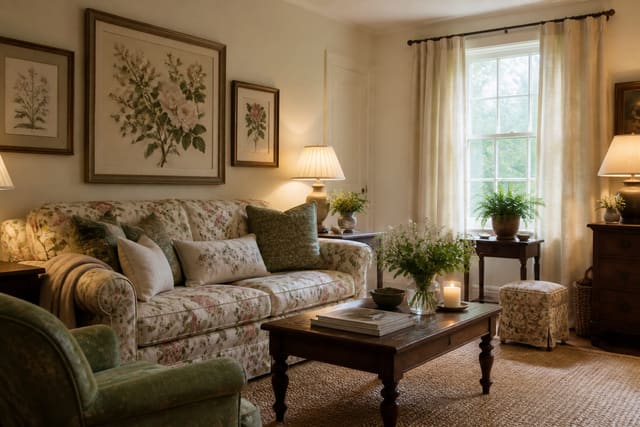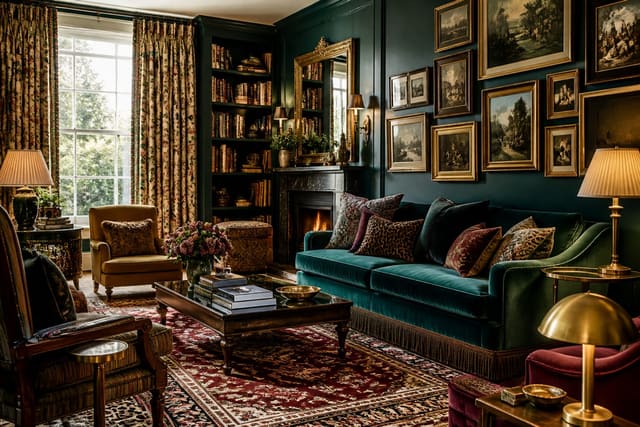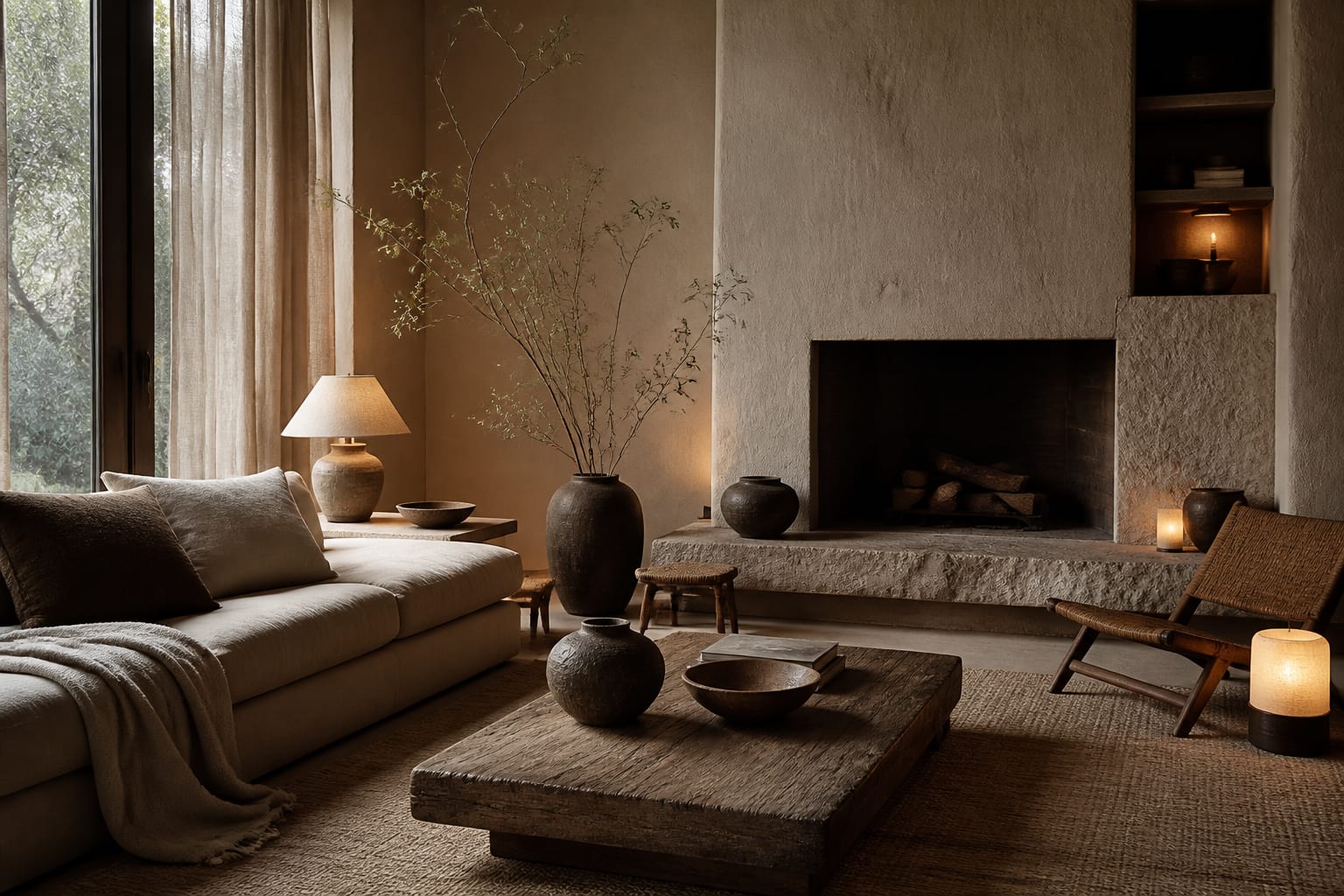
A wabi-sabi living room is the best antidote to the restless, over-decorated spaces most of us grow tired of. Rather than matching sets and showroom polish, this approach builds calm from worn wood, soft linen, and a few handmade objects that age gracefully. The living room is where it works hardest, because it carries daily wear and welcomes guests, so honesty in materials reads as warmth rather than mess. These ideas show how to layer texture, restrain your palette, and leave breathing room so the space feels collected over years instead of bought in an afternoon.
Build Around Honest Materials
The foundation of a wabi-sabi living room is material honesty, so let surfaces show what they are made of. A reclaimed wood coffee table with visible knots and old nail holes carries more presence than a flawless lacquered one. Choose a sofa upholstered in undyed linen or rough cotton that softens and creases with use rather than a tight synthetic weave that looks the same forever. Underfoot, a jute or wool rug with an irregular hand-knotted texture grounds the seating area without demanding attention. Stone, clay, and unfinished plaster all belong here, whether as a side table, a vessel, or a wall treatment. Avoid anything that mimics these materials in plastic or printed laminate, since the eye quickly reads the difference. The goal is a room where every surface invites touch and tells a small story about how it was made or where it came from. When you trust raw materials to carry the space, you need far less decoration to make it feel complete and quietly beautiful. Each surface earns its place by being genuine, so the room reads as honest rather than styled for show.
See also our guide to Cottagecore Living Room Ideas for more on wabi sabi living room ideas.
Keep the Palette Quiet
Color in a wabi-sabi living room stays soft, warm, and low in contrast so the room feels like a held breath. Build from a base of warm white, oatmeal, or pale clay on the walls, then layer muted greens, faded terracotta, soft charcoal, and natural wood tones through furniture and textiles. The trick is keeping everything within a narrow tonal range while varying texture, so the room reads as calm without becoming flat. A nubby wool throw, a slubby linen cushion, and a smooth ceramic lamp can all share the same dusty beige and still feel layered. Resist bright accent colors and high-gloss finishes, which break the spell and pull the eye into sharp focus. If you want a darker note, introduce it through a single charcoal vessel or a piece of aged blackened wood rather than a bold painted wall. The overall effect should feel like natural light moving across earth and stone, gentle and slightly faded. This restraint is what separates a serene wabi-sabi room from a busy, eclectic one that happens to use neutrals.
For a related angle on wabi sabi living room ideas, read Maximalist Living Room Ideas.
Layer Light and Shadow
Lighting shapes the mood of a wabi-sabi living room more than almost anything else, so treat it as a design element rather than an afterthought. Skip the single bright ceiling fixture and build several low, warm sources instead, such as a paper floor lantern, a small ceramic table lamp, and a couple of candles. Warm bulbs in the 2700K range cast an amber glow that flatters natural textures and lets surfaces throw soft shadows. Those shadows matter, because the play of dim light across rough plaster, linen folds, and uneven pottery is a large part of what gives the style its depth. During the day, filter sunlight through unlined linen curtains or a simple woven shade so the light arrives soft rather than harsh. Position seating where it can catch this changing daylight, since a wabi-sabi room is meant to look different from morning to evening. Dimmers on your lamps let you lower the mood further at night. By layering several gentle sources and avoiding flat overhead glare, you give the room the quiet, contemplative atmosphere this style is known for.
Curate, Then Leave Space
Restraint is the final and most overlooked step in a wabi-sabi living room, because empty space is what makes the chosen objects resonate. Pick a handful of meaningful pieces rather than crowding every shelf and tabletop. A single hand-thrown vase holding one bare branch says more than a row of matched accessories. Group objects in small odd-numbered clusters, and let some surfaces stay completely clear so the eye has somewhere to rest. Mix old and new so nothing feels like a coordinated set: a vintage stool beside a contemporary sofa, an inherited bowl on a new bench. Bring in living elements that change over time, like a modest potted plant, a bowl of seasonal fruit, or cut foliage that slowly dries. When something cracks, consider mending it visibly rather than tossing it, honoring the spirit of repair. Rotate a few pieces seasonally instead of constantly adding more. The discipline of subtraction is harder than decorating, yet it is exactly what gives the room its calm, uncluttered, lived-in feeling that no amount of shopping can replicate.
- Anchor seating with a reclaimed wood coffee table
- Slipcover the sofa in undyed wrinkled linen
- Ground the room with a hand-knotted jute rug
- Cluster handmade ceramic vessels in odd-numbered groups
- Light corners with warm paper lanterns and candles
- Display a single bare branch in a stoneware vase
Bring the look home with Re-Design
Want to see your own living room reimagined the wabi-sabi way before moving any furniture? Upload a photo to Re-Design and the app reworks the space with undyed linen seating, reclaimed wood, hand-thrown ceramics, and the warm layered lighting this style relies on. You can preview a calmer, lower-contrast arrangement against your real windows and walls, then decide which honest materials and handmade accents are worth bringing home.
Frequently Asked Questions
How do I create a wabi-sabi living room?
Start with a neutral foundation, then layer natural textures across seating, floors, and walls. A linen-covered sofa, a low solid-wood coffee table, and a hand-knotted wool rug set the tone. Add a few aged ceramic vessels and a dried branch instead of fresh-cut flowers. Keep surfaces mostly clear so each chosen piece can breathe and stand out.
What furniture works best in a wabi-sabi living room?
Pick low, sturdy pieces made from honest materials with visible grain. A reclaimed timber bench, a leather chair softened by use, and a rough stone side table all fit well. Favor rounded edges and slight asymmetry over sharp factory precision. One worn vintage armchair often anchors the room better than a matching set bought new from a single store.
How should I light a wabi-sabi living room?
Aim for soft, layered, warm light rather than one bright overhead fixture. Paper lanterns, clay table lamps, and candles cast a gentle glow that flatters rough textures and deep shadows. Let plenty of daylight enter through unlined linen curtains during the day. Dimmable bulbs help the space shift from active afternoon use to a quiet, restful evening mood.
How do I avoid clutter while keeping warmth?
Edit your accessories down to a small number of pieces that genuinely matter to you. Group three handmade objects on a shelf instead of crowding twelve. Choose storage in natural baskets or simple wooden cabinets to hide everyday mess. Warmth comes from texture and material, not quantity, so a single thick wool throw does more than a pile of cushions.