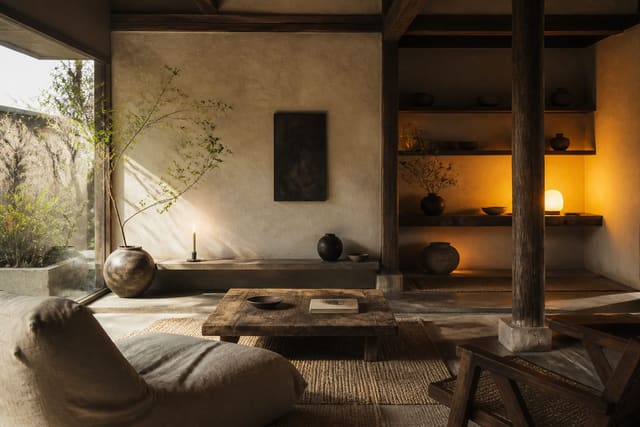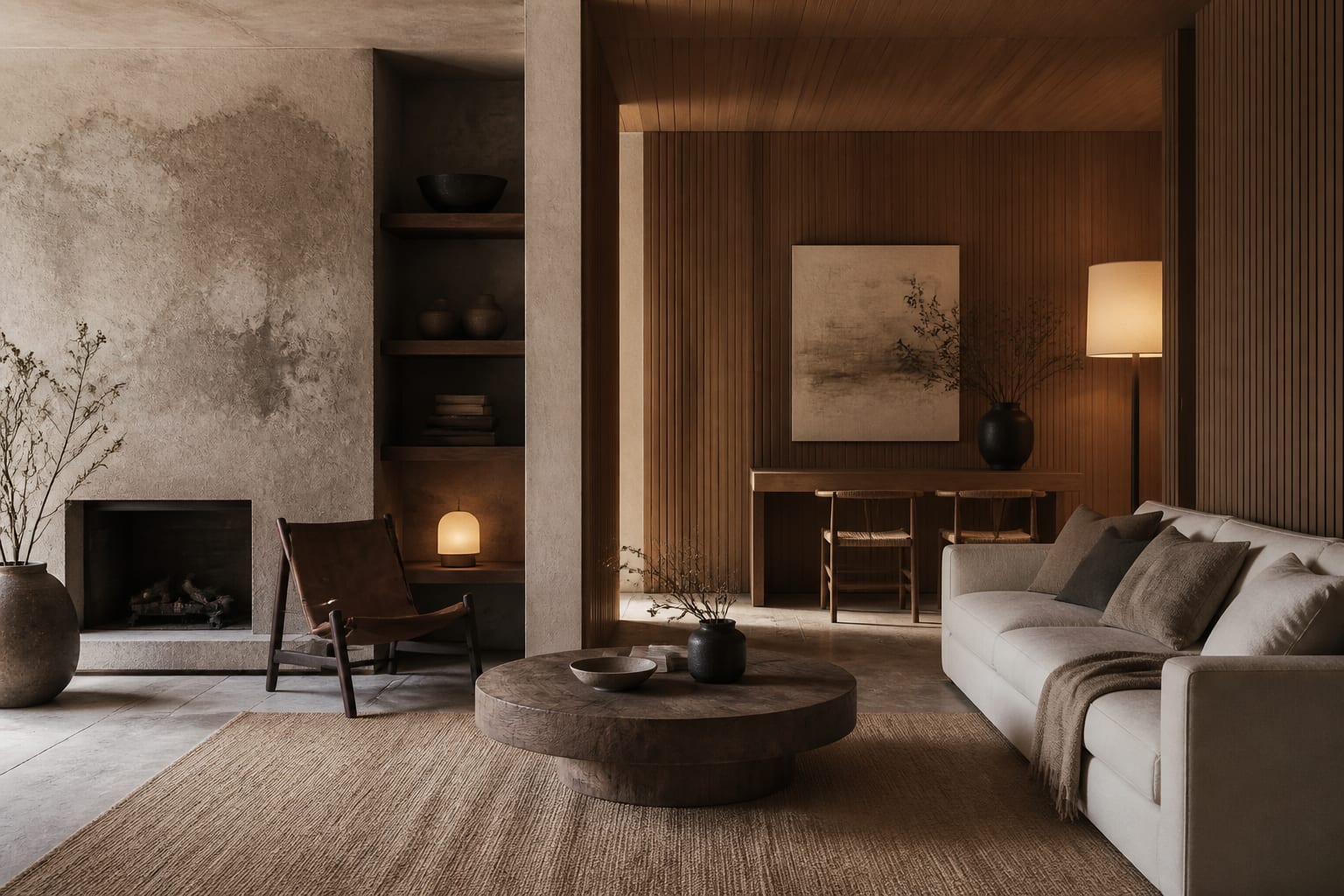
Wabi-sabi and Japandi are cousins, not twins, and confusing them leads to rooms that miss the mark. Both draw on Japanese aesthetics and a love of natural materials, calm palettes, and uncluttered space. The difference lies in attitude: wabi-sabi embraces imperfection, age, and rustic honesty, while Japandi blends that Japanese restraint with the clean lines and cozy warmth of Scandinavian design. One feels weathered and handmade; the other feels refined and intentional. Understanding where they overlap and where they part ways helps you choose the style that genuinely fits how you live and the mood you want at home.
Shared Roots, Different Spirits
Both wabi-sabi and Japandi grow from the same soil of Japanese aesthetics, which is why they look similar at a glance. Each favors natural materials, muted earthy colors, plenty of open space, and a calm that comes from owning less. Yet their spirits diverge once you look closely. Wabi-sabi is a philosophy before it is a style, centered on accepting imperfection and impermanence; it finds beauty in a cracked glaze, a worn beam, or an object that shows its age. Japandi is a hybrid design movement that pairs Japanese minimalism with Scandinavian hygge, prioritizing clean function, comfort, and a polished sense of balance. Where wabi-sabi welcomes the rough and irregular, Japandi tends to smooth and resolve. A wabi-sabi room might feature a hand-thrown bowl with an uneven rim, while a Japandi room would more likely show a precisely made ceramic with a matte, even finish. Recognizing this difference in spirit, rustic acceptance versus refined intention, is the key to telling the two apart and choosing the one that suits your temperament and home.
See also our guide to What Is Wabi Sabi Design for more on wabi sabi vs japandi.
Materials and Color
Material choices reveal the split between these two styles clearly. Wabi-sabi reaches for the raw and unfinished: undyed linen, unglazed pottery, rough plaster, reclaimed wood with knots and cracks, and stone left in its natural state. Its palette is warm and earthy, built on clay, oatmeal, faded green, and soft charcoal, often with low contrast so the room feels aged and quiet. Japandi keeps the natural materials but refines them. You will see light Scandinavian woods like ash and oak alongside darker Japanese tones, smooth ceramics, clean leather, and tightly woven textiles. Its palette mixes the warm neutrals of Scandi design with deeper accents such as ink black or muted indigo, creating a bit more contrast and crispness than wabi-sabi allows. Texture in wabi-sabi comes from irregularity and wear, while in Japandi it comes from carefully chosen, well-made surfaces. Both avoid bright synthetic colors and high-gloss plastics, but Japandi tolerates a sharper, more graphic look. If you love patina and the handmade, wabi-sabi fits; if you prefer clean, considered surfaces, Japandi is your match.
For a related angle on wabi sabi vs japandi, read Redesign App VS Competitors.
Lines, Form, and Function
The way each style handles form sets them apart as much as material does. Japandi prizes clean lines, low horizontal furniture, and a strong sense of function inherited from Scandinavian design. Pieces are intentional and balanced, with a place for everything and an emphasis on comfort and usability. Symmetry and tidy geometry feel right at home here, and storage is often built in so the room stays serene and clutter-free. Wabi-sabi is looser and more organic. It embraces asymmetry, irregular shapes, and arrangements that look gathered over time rather than planned. A wabi-sabi room might have a wonky handmade stool or an off-center grouping of vessels, and that imperfection is the point. Function still matters, but it bends to mood and authenticity rather than driving every decision. Japandi rooms tend to feel resolved and ready, while wabi-sabi rooms feel quietly in progress, as if still settling into themselves. If you want order and ease of use, lean Japandi; if you want soul and a sense of natural evolution, lean wabi-sabi in your forms and layout.
Pick based on these priorities: - Choose wabi-sabi for handmade patina and rustic soul - Choose Japandi for tidy function and refined calm - Blend both for warmth with a polished edge
Which Should You Choose?
Choosing between the two comes down to the mood you want and how you like to live. Pick wabi-sabi if you are drawn to handmade objects, visible age, and a rustic calm that feels deeply personal and unhurried. It rewards people who enjoy collecting slowly, mending what breaks, and living with imperfection rather than chasing a finished look. It also tends to be forgiving on budget, since secondhand and weathered pieces fit the aesthetic naturally. Pick Japandi if you value tidy function, comfort, and a slightly more polished, modern feel while still keeping things warm and natural. It suits households that want serenity without rough edges, and it pairs minimalism with the coziness that makes a home easy to live in daily. Many people blend the two, using wabi-sabi accents like a hand-thrown vase within an otherwise clean Japandi room, which is perfectly valid. There is no wrong answer; both deliver calm, natural, clutter-light spaces. The honest question is whether you find more peace in weathered imperfection or in refined, functional order, and your answer points you to the right style.
| Aspect | Wabi Sabi | Japandi | | --- | --- | --- | | Core idea | Beauty in imperfection and age | Japanese minimalism meets Scandinavian warmth | | Finishes | Raw, weathered, handmade, irregular | Clean, refined, smooth, intentional | | Color palette | Warm earth tones, low contrast | Neutrals with crisp darker accents | | Lines and form | Organic, asymmetrical, gathered over time | Clean lines, balanced, function-first |
Bring the look home with Re-Design
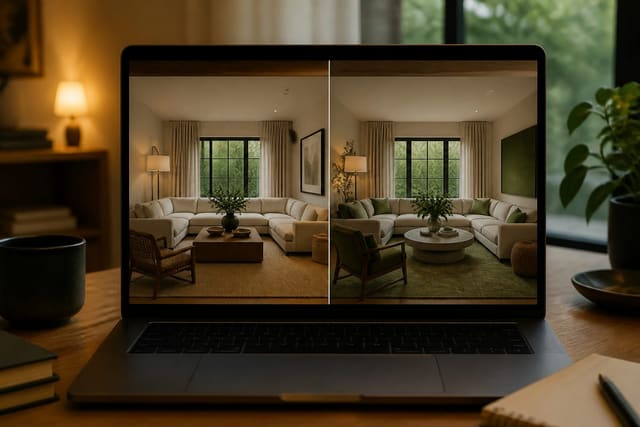
Still unsure whether wabi-sabi or Japandi suits your room? Upload a photo to Re-Design and the app can render the same space both ways, one rustic and weathered, the other clean and Scandinavian-warm. Seeing your actual living room or bedroom styled in each direction makes the choice obvious far faster than mood boards. You can compare materials, palettes, and lines side by side, then commit to the look that feels most like home.
Frequently Asked Questions
What is the difference between wabi-sabi and japandi?
Wabi-sabi is a Japanese philosophy celebrating imperfection, age, and natural wear. Japandi is a design style blending Japanese minimalism with Scandinavian function and warmth. Wabi-sabi feels rougher and more rustic, embracing cracks and asymmetry. Japandi leans cleaner and more refined, pairing sleek Nordic furniture with Japanese restraint. One is a mindset about beauty; the other is a practical decorating approach.
Do wabi-sabi and japandi share any traits?
Yes, both prize natural materials, muted palettes, and uncluttered rooms. Each rejects mass-produced gloss in favor of wood, stone, linen, and craft. Both value calm, intentional spaces where every object earns its place. The overlap is large enough that many japandi interiors carry strong wabi-sabi undertones, especially when they include handmade ceramics or visibly aged timber alongside cleaner Scandinavian forms.
Which style is better for a modern home?
Japandi usually suits a contemporary home more easily because its crisp lines and tidy storage match modern architecture. Wabi-sabi works beautifully too, though its rough, organic character can feel deliberately undone against sharp new surfaces. If you want polish with soul, choose japandi. If you prefer a weathered, soulful, lived-in atmosphere, wabi-sabi rewards the commitment with deeper warmth.
Can I combine wabi-sabi and japandi in one room?
Absolutely, and the pairing is common. Use japandi as the structural base with its low-profile furniture and balanced layout, then add wabi-sabi soul through chipped pottery, a frayed linen runner, or a knotted reclaimed shelf. Keep the shared earthy palette consistent so the two read as one idea. The clean framework keeps the imperfect pieces feeling chosen rather than careless.