A walk-in closet should function like a small boutique, not a glorified storage cave where clothes vanish into a black hole. The difference comes down to engineering the layout around what you own rather than installing a generic rod-and-shelf kit and hoping. The best walk-ins mix hanging zones, drawers, open shelving, and a touch of display so everything is visible and reachable. Lighting and a center surface push the space from purely useful to genuinely enjoyable. These walk-in closet ideas focus on the layout choices and finishing details that make a closet you actually look forward to using each morning.
Planning the Layout Around What You Own
The fastest way to waste a walk-in is to install a standard kit before counting what actually hangs in it. Start by inventorying your wardrobe in categories: how many long dresses and coats you own, how much you fold versus hang, how many pairs of shoes need a home. Those numbers dictate the ratio of long-hang to double-hang to drawers, and getting that ratio right is what separates a closet that breathes from one that bursts at the seams.
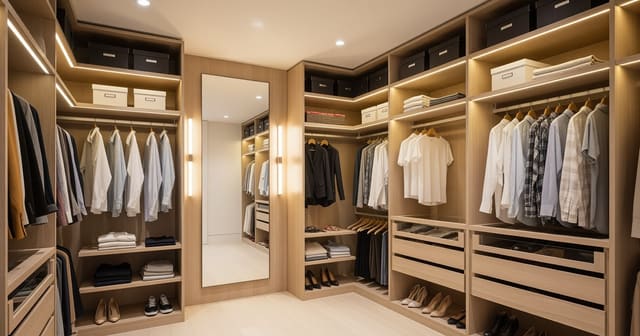
Double-hung rods are the single biggest capacity gain. Most shirts, jackets, and folded-over pants only need about 40 inches of vertical space, so stacking two rods in a section nearly doubles what one wall can hold. Reserve a single tall rod, around 64 inches of clearance, for dresses, coats, and gowns that need the full drop. Mixing these zones rather than running one rod height everywhere is how you fit far more into the same footprint.
The shape of the room steers the layout. A narrow walk-in suits a single-wall or galley arrangement with storage facing each other, while a square room can support a U-shape that wraps three walls and leaves the center open. Always preserve a comfortable clearance, ideally 36 inches, in front of any hanging section so you can pull garments without bumping the opposite wall. Sketch the zones before buying a single component, because the layout decided on paper governs how the closet performs for years. A walk-in planned around your real wardrobe always outperforms a prettier one built from a generic template.
See also our guide to Small Closet Ideas for more on walk in closet ideas.
Maximizing Storage With Zones and an Island
A walk-in works best when it is divided into clear zones rather than treated as one undifferentiated wall of rods. Group hanging clothes by type and length, dedicate a bank of drawers to folded items and delicates, and give shoes their own angled or flat shelving so pairs stay visible. When everything has a category, putting things away becomes automatic and the closet resists the slow slide into chaos.
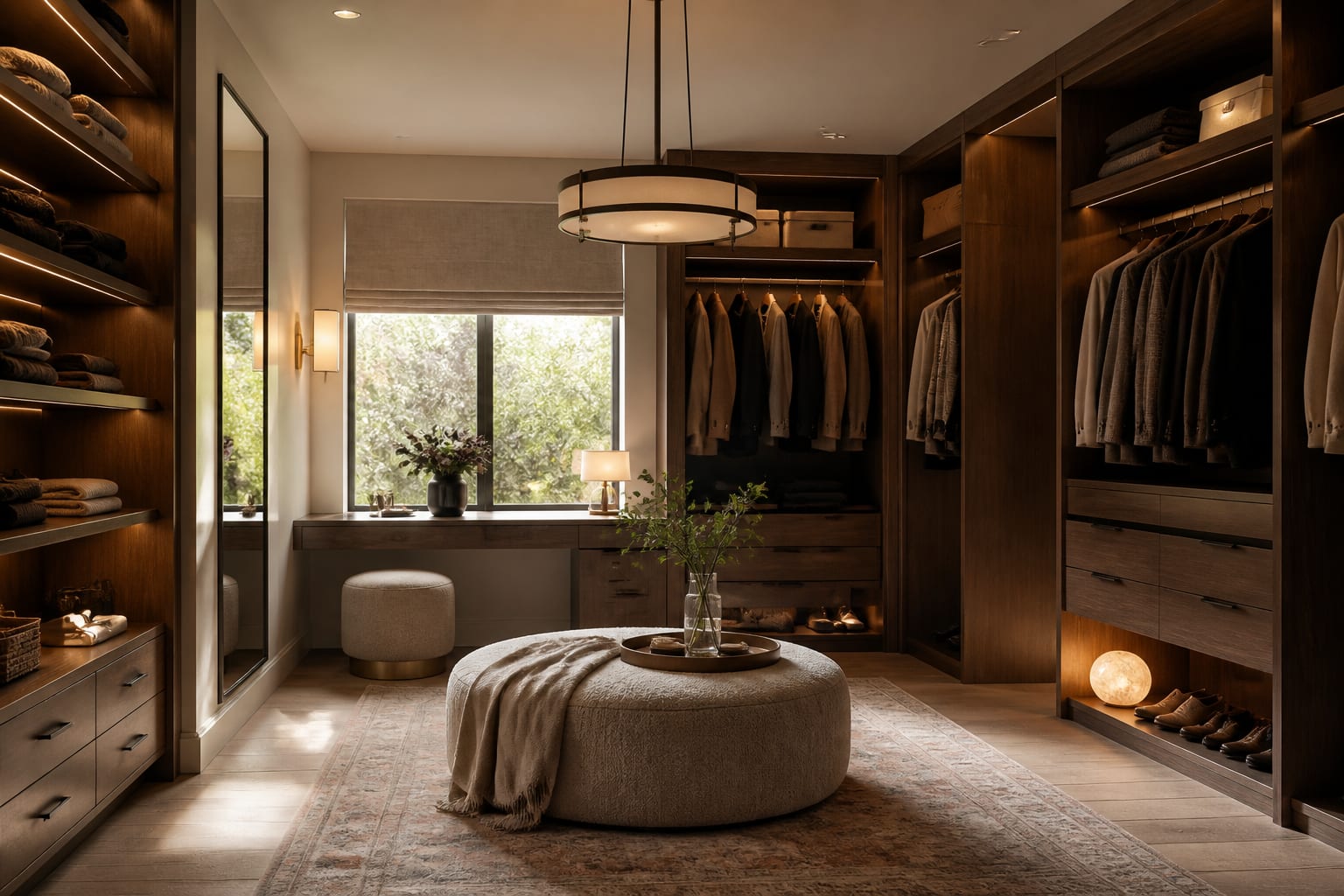
A center island is the upgrade that changes how a larger walk-in functions. The top becomes a folding and packing surface, the drawers below hold accessories or out-of-season pieces, and a glass-topped section can display jewelry like a retail case. An island needs at least 36 inches of clearance on every side to circulate comfortably, so it only suits rooms with real square footage, but where it fits it transforms the room into a true dressing space.
Don't let vertical space go to waste. Shelving that runs to the ceiling, with the top tier holding luggage, hats, or bins of seasonal gear, captures storage that would otherwise evaporate. A rolling library ladder or a sturdy step stool keeps those high shelves usable rather than decorative. Pull-out accessories, like a valet rod for planning outfits, a tie rack, or a slide-out hamper, squeeze function from narrow gaps between cabinets. Adjustable shelving beats fixed shelving because your wardrobe shifts over the years, and a system that flexes will keep serving you long after a rigid one has stopped fitting your life.
For a related angle on walk in closet ideas, read Closet Lighting Ideas.
Lighting That Shows Off Your Wardrobe
Bad closet lighting hides the clothes you paid for, casting shadows that make navy read black and turning a careful wardrobe into guesswork. A single overhead bulb is never enough in a walk-in, because the rods and shelves block it and create dark caves exactly where you need to see. The answer is layered, well-placed light that reaches into every zone.
Start with bright, even ambient light from recessed fixtures or a central flush-mount, and choose lamps that render color accurately so you can trust what you see. Then add LED strips under shelves, along the top of hanging sections, and inside drawers so no garment sits in shadow. Motion-activated strips inside cabinets feel genuinely luxurious and save you fumbling for a switch with an armful of clothes.
Color temperature is the detail people get wrong. Around 3000K to 3500K reads crisp and clean while still flattering, whereas very warm light can muddy whites and very cool light feels clinical. Aim for output that lights the space generously, since a closet is one place where more light almost always helps. Backlit mirrors or a sconce flanking the dressing mirror give even, shadow-free light for checking an outfit. If the closet has a window, treat it as a bonus rather than the main source, and add a shade so direct sun does not fade fabrics over time. Lighting is what tips a walk-in from a storage room into something that feels like shopping your own collection every morning.
Finishing Touches That Feel Like a Boutique
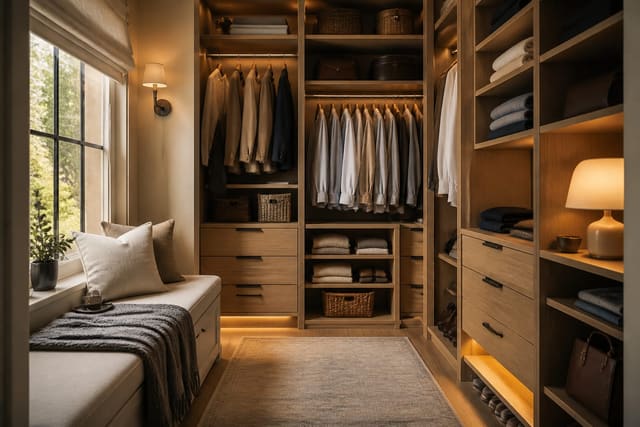
The details are what make a walk-in feel like a destination rather than a utility room. A seat is the first thing to add, whether an upholstered bench at the island, a small stool, or a built-in window seat. It gives you somewhere to sit while putting on shoes and instantly raises the room from functional to inviting. A full-length mirror is non-negotiable, positioned so you can step back and see the whole outfit in good light.
Display turns storage into style. Open shelving and glass-front cabinets let you showcase handbags, folded knits, and shoes like merchandise, which both looks intentional and keeps favorite pieces in view so you actually wear them. Matching hangers in a single material are a small change with an outsized effect, since uniform hangers make any closet look organized and let clothes hang at the same level.
Little comforts complete the picture. A soft rug underfoot warms the floor and quiets the room. A scented diffuser or cedar blocks keep the space smelling fresh and protect natural fibers. A charging station tucked into a drawer means your watch and earbuds live with the rest of your daily wear. Even the cabinet hardware matters, since brass or matte black pulls signal a finished, considered space. Treat the closet to the same care you would a main room, and it stops feeling like a back-of-house zone and starts feeling like the most personal, polished corner of the entire home.
- Stack double-hung rods for shirts and jackets to nearly double the hanging capacity of each wall
- Add a center island with drawers for folding surface, accessory storage, and a striking anchor
- Run LED strips under shelves and inside cabinets so no garment sits in shadow
- Devote open shelving and glass fronts to displaying bags and shoes like a boutique
- Use adjustable shelving so the system flexes as your wardrobe changes over the years
- Include a seat and a full-length mirror so dressing happens entirely in the closet
- Switch to matching hangers in one material for an instantly organized, uniform look
- Reserve top shelves for luggage and seasonal bins, with a step stool to keep them usable
Bring the look home with Re-Design
Designing a walk-in is a big commitment, and built-in systems are expensive to redo. With Re-Design you upload a photo of the room or closet and preview different layouts, an island, lit shelving, or a paint and hardware combination before you order a single cabinet. Re-Design lets you test whether a U-shaped wrap or a galley run suits the footprint, and whether warm or crisp lighting flatters the space, so you invest in the configuration that actually works.
Frequently Asked Questions
How big does a room need to be for a walk-in closet?
A functional walk-in starts around 6 by 6 feet, which fits hanging on two walls with room to turn around. To add a center island you generally need at least 7 by 10 feet, since an island wants 36 inches of clearance on every side. Smaller footprints still work beautifully with a galley or single-wall layout.
How do I fit more clothes into a walk-in closet?
Double-hung rods are the single biggest gain, since most shirts and jackets need only about 40 inches of drop, so stacking two rods nearly doubles capacity. Reserve full-height hanging for dresses and coats, use vertical shelving to the ceiling, and add pull-out accessories to capture narrow gaps between cabinets that would otherwise sit empty.
What lighting is best inside a walk-in closet?
Layer bright ambient light from recessed fixtures with LED strips under shelves and inside cabinets, and choose lamps that render color accurately. A temperature around 3000K to 3500K reads clean while still flattering. Motion-activated strips inside cabinets add real convenience, and a sconce beside the mirror gives shadow-free light for checking outfits.