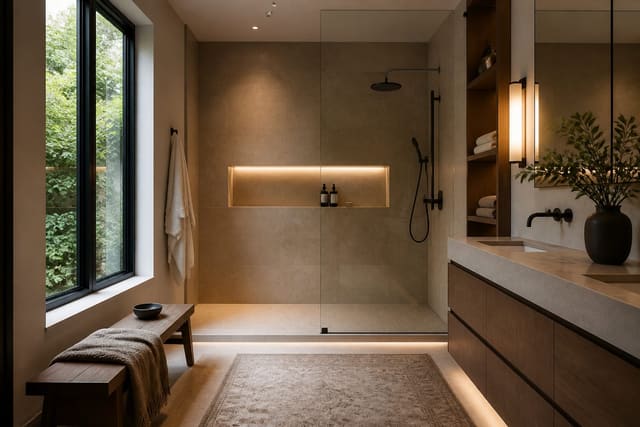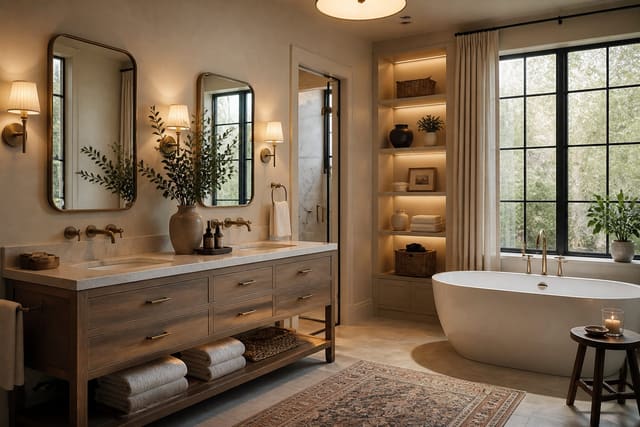
A wet room is not just a shower without a tray, and treating it like one is how people end up with a soggy bathroom. The defining idea is that the entire floor is tanked and waterproofed, sloped to a drain, so the shower has no curb, no tray, and often no enclosure at all. That openness is the whole appeal: a wet room makes a small bathroom feel larger, eliminates the lip you trip over, and reads as a single calm surface. But it only works if the waterproofing and slope are done right, which is exactly where the budget and the planning need to go first.
What makes a wet room different from a standard shower?
The core difference is waterproofing scope. In a normal bathroom, only the shower enclosure is tiled and sealed; the rest of the floor stays dry. In a wet room, the entire floor and the lower walls are tanked, meaning a continuous waterproof membrane runs under the tile across the whole room. That membrane is what lets water land anywhere and still drain safely. Skip it or do it cheaply and water finds the subfloor, which is the single most expensive mistake you can make here.
Because the room is fully sealed, you lose the curb, the shower tray, and usually the door. Water runs to a drain set into a gentle slope and the floor dries on its own between uses. This is why a wet room feels so open: there is no glass box, no step, and no visual interruption. If a fully open layout feels like too much, a walk-in shower with a low curb and a single screen gives you most of the seamless look with simpler waterproofing. But the true wet room earns its keep in tight or oddly shaped spaces where a conventional enclosure would never fit.
How do you get the drainage and slope right?
Drainage is the engineering heart of a wet room, and it is unforgiving. The finished floor must slope toward the drain at a minimum of 1/4 inch per foot so water moves decisively instead of sitting in low spots. A central point drain needs the floor to fall from all four directions, which means cutting tile into small pieces around it. A linear drain, set along one wall or at the shower threshold, lets the floor slope in a single plane, so you can use larger-format tile and get a cleaner look. For that reason most designers now prefer linear drains in wet rooms.
Get the tile size right for the slope. Large tiles cannot conform to a four-way fall, so a central drain pushes you toward mosaic or small-format tile that flexes across the gradient. With a linear drain and a single-direction slope, 12-inch or larger tiles lay flat and clean. Whatever you choose, the substrate must be a waterproof, sloped panel or a properly formed mortar bed under the membrane. Our notes on bathroom tile choices cover slip ratings and grout that matter even more in a room where the whole floor gets wet. Aim for tile with a slip-resistance rating of R10 or higher underfoot.
How do you keep the dry zones dry?
The fear with a wet room is a wet toilet seat and a puddle at the vanity, and good layout solves it before glass does. The principle is distance and direction: place the showerhead in the corner farthest from the door, slope the floor away from the toilet and sink, and let the natural fall carry water to the drain on the shower side. A room arranged this way stays mostly dry on its own, with a fixed glass screen handling the splash rather than containing a full enclosure.
A single panel of frameless glass, even a half-height or partial screen, blocks the direct spray while preserving the open feeling. Position it to shield the toilet roll and any open shelving from overspray. Wall-hung fixtures help too, since a floating vanity and toilet leave the floor clear for water to run and for you to mop. Heated floors are close to mandatory in a wet room because they dry the surface fast between showers and stop that cold, perpetually damp feeling. Towel storage belongs outside the splash zone or behind glass so you always reach for something dry.
Wet room ideas that sharpen the look
Once the waterproofing is handled, the design payoff is a room that feels like a single sculpted surface. Running the same tile across the floor and up the walls makes the space read as one continuous material, which is the signature wet-room effect. Microcement or large-format porcelain takes this further with almost no grout lines. A few directions worth borrowing:
- Continue one stone-look porcelain across floor and walls so the room reads as a single carved block with a hidden linear drain.
- Use a frameless half-height glass screen instead of a full enclosure to shield the toilet while keeping the open sightline.
- Wall-mount the vanity and toilet so the floor runs unbroken to the drain and the room feels to float.
- Add a teak or stone bench in the shower zone for a spa feel that handles constant wetness without warping.
- Set a linear drain flush at the room's threshold so the whole floor slopes in one clean plane toward the door wall.
Pair any of these with a floating vanity and the room gains storage without breaking the seamless floor. The goal throughout is fewer interruptions: one tile, one slope, one drain line, and glass only where physics demands it.
Preview your wet room in Re-Design before you gut anything
A wet room is one of the most committing bathroom projects there is, and graph-paper plans rarely convey how open the finished room will feel. Take a photo of your current bathroom and upload it to Re-Design to visualize the curb gone, the tray removed, and a single tile carried floor to ceiling. You can test a frameless screen versus a fully open layout, or swap a busy mosaic for a continuous large-format stone look, and judge the sightlines before a contractor ever quotes the tanking. Seeing the borderless result against your real room makes the investment far easier to commit to, because you know what you are buying before the demolition starts.
Frequently Asked Questions
How much does a wet room cost?
A proper wet room typically runs $8,000 to $15,000 or more, well above a standard shower replacement. The premium comes from tanking the entire floor and lower walls, forming the slope, and installing a quality drain, all of which must be done correctly to prevent leaks. Cutting corners on the waterproofing is what leads to costly subfloor damage later, so this is the part of the budget to protect.
Will a wet room make the rest of the bathroom wet?
Not if it is laid out well. Placing the showerhead in the far corner, sloping the floor away from the toilet and vanity, and adding a single glass screen keeps the dry zones dry. The whole floor is waterproof, so the occasional splash is harmless and simply runs to the drain. Heated floors dry the surface quickly between uses so the room never feels perpetually damp.
What slope does a wet room floor need?
The finished floor should fall toward the drain at a minimum of 1/4 inch per foot so water moves decisively instead of pooling. A linear drain lets the floor slope in one direction, which works with large-format tile and looks cleaner. A central point drain needs a four-way fall, which forces smaller mosaic tile that can conform to the gradient around the drain.
Are wet rooms good for small bathrooms?
Yes, small bathrooms often benefit most. Removing the curb, tray, and shower enclosure clears the visual clutter that makes a tight room feel boxed in, so a 40-square-foot bathroom can feel noticeably larger and more open. The continuous floor and lack of a step also make the space more accessible, which is a real advantage for aging-in-place planning.