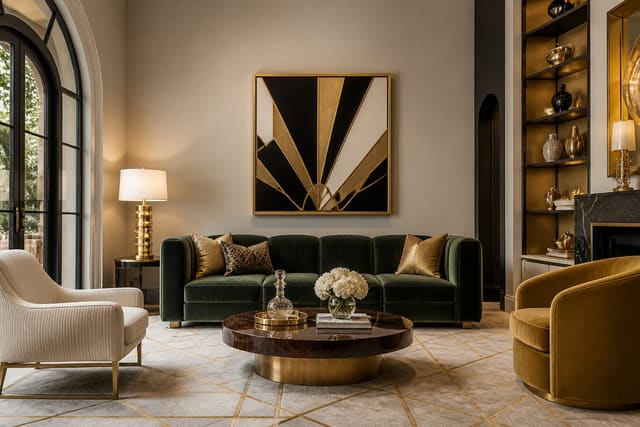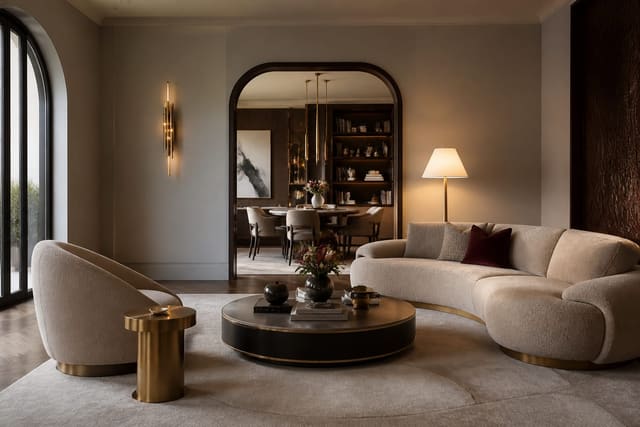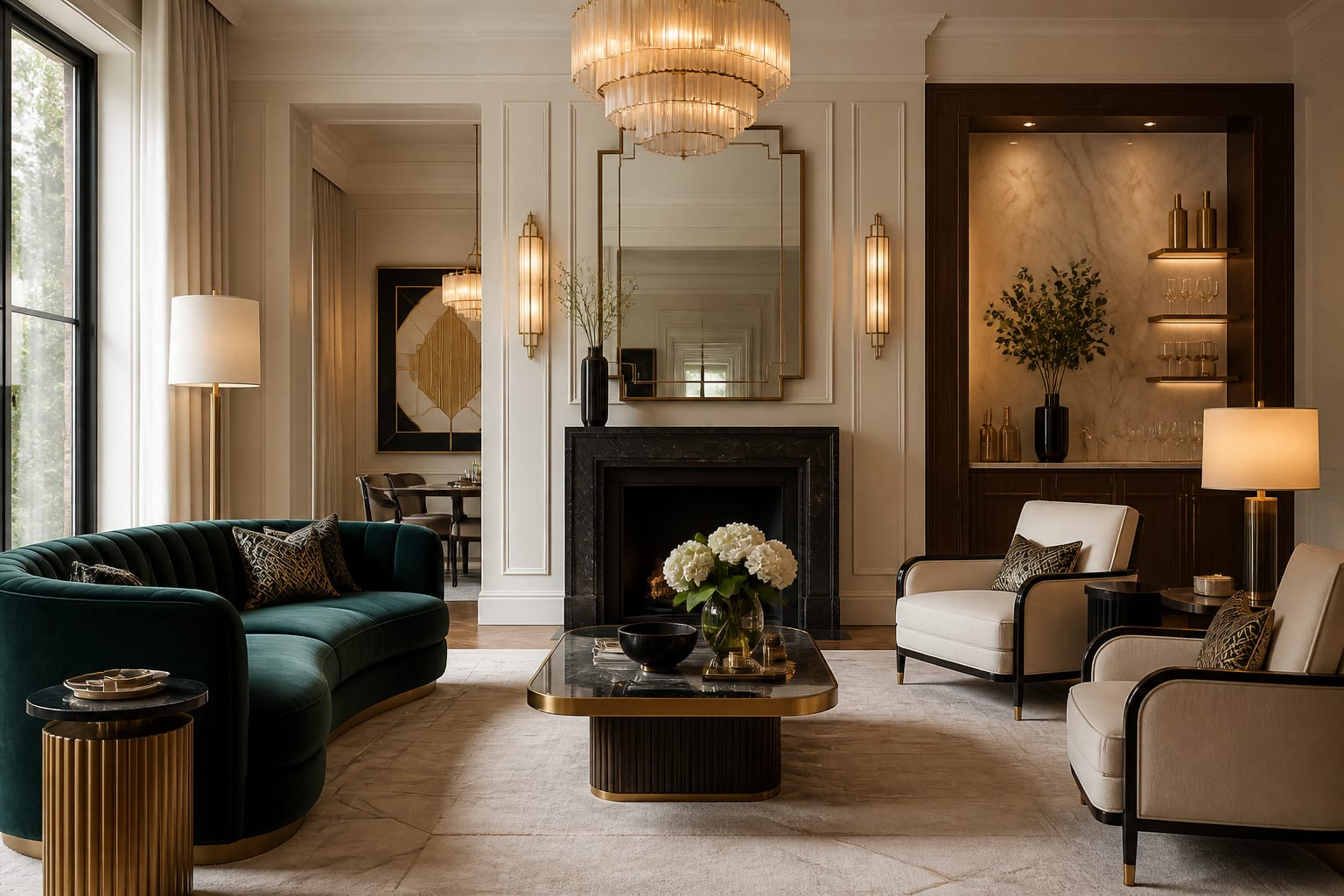
Art deco is the most quietly influential style in modern interiors, shaping everything from cinema lobbies to your grandmother's vanity. Born in 1920s Paris, it celebrated machine-age optimism with bold geometry, luxe materials, and unapologetic glamour. Unlike the fussy ornament before it, deco prized clean repeating shapes and rich contrast. The style spread fast across architecture, furniture, fashion, and graphic design, leaving a vocabulary we still recognize a century later. Understanding its core elements helps you bring authentic character into a room rather than a costume-party version. This guide explains where the look came from and how to reproduce it.
Where Art Deco Came From
Art deco took its name from the 1925 Exposition Internationale des Arts Decoratifs et Industriels Modernes held in Paris, a fair that showcased a sleek new design language to the world. The style answered the ornate curves of art nouveau with crisp geometry and a confident embrace of the machine age. It flourished through the late 1920s and 1930s, a roughly 20-year window when skyscrapers, ocean liners, and movie palaces all adopted its vocabulary. The Chrysler Building in New York, completed in 1930, remains its most famous architectural ambassador. Deco was inherently optimistic, reflecting a postwar appetite for luxury, speed, and modern living. It borrowed motifs from ancient Egypt, Aztec stepped pyramids, and African art, blending them into something distinctly forward-looking. Because it appeared across furniture, jewelry, fashion, and graphic design simultaneously, the style created a unified aesthetic that touched nearly every part of daily life. Even after its peak faded around 1940, its influence never fully disappeared, resurfacing in waves of revival ever since. Knowing this history helps you distinguish genuine deco character from the vaguer glamour it sometimes gets confused with in casual conversation.
See also our guide to Art Deco Color Palette for more on what is art deco design.
The Hallmarks of the Style
A handful of recognizable traits separate art deco from neighboring styles. Geometry leads the way: chevrons, zigzags, sunbursts, stepped silhouettes, and concentric arcs appear everywhere from rugs to door handles. Symmetry is nearly always present, with matched pairs of lamps, chairs, or sconces creating balanced compositions. Materials run rich and tactile, favoring high-gloss lacquer, polished brass and chrome, marble, mirrored glass, and exotic wood veneers like macassar ebony. Furniture tends toward streamlined curves and bold scale rather than delicate proportions, a sofa might run a full 90 inches with a sweeping rounded back. Color leans dramatic, whether stark black and white or saturated jewel tones warmed by metallic gold. Pattern shows up in repeating geometric form rather than the floral motifs of earlier eras. Lighting becomes sculptural, with fixtures treated as focal points in their own right. The overall effect aims for curated luxury, where a few striking pieces carry the room instead of clutter. When you spot two or three of these traits working together, you can be fairly confident you are looking at genuine deco influence rather than a passing resemblance.
For a related angle on what is art deco design, read Modern Art Deco Style.
Materials and Finishes That Define It
Material choice does enormous work in selling the deco look. Lacquered surfaces in glossy black or deep color give furniture a mirror-like sheen that reads instantly as period-correct. Brass and chrome supply the metallic gleam, used on hardware, table bases, and light fixtures to catch and throw light. Marble, especially dramatic veined varieties, appears on tabletops, vanities, and fireplace surrounds. Mirrored and antiqued glass multiply light and add Hollywood sparkle, often covering whole console fronts. For wood, the era favored richly figured veneers, with grain patterns laid in symmetric, sunburst-like arrangements rather than plain planks. Upholstery turns to velvet, mohair, and other plush textiles in jewel tones that add softness against all the hard, shiny surfaces. A typical accent wall might be papered in a metallic geometric print that costs around $150 per roll, an investment that pays off in immediate impact. The general principle is contrast between gleaming and matte, hard and soft, dark and light. Aim to mix at least three of these materials in a single room, and the space will start to feel layered and authentically luxurious rather than thin or one-note.
Common Mistakes to Avoid
The biggest pitfall is mistaking glamour alone for art deco. Adding gold accents to an otherwise contemporary room does not make it deco without the underlying geometry and symmetry that define the style. A second common error is overcrowding; the period prized curated luxury, so cramming a 12-foot room with eight statement pieces reads as chaos rather than elegance. Watch your color temperature too, since cool white bulbs around 5000K drain the warmth the style depends on, while a softer 2700K glow flatters the metals and jewel tones far better. Many people also skip symmetry, scattering objects asymmetrically when the era nearly always worked in balanced pairs. Another misstep is using flimsy reproduction hardware that looks plated rather than solid, undercutting the sense of quality the whole look trades on. Finally, beware mixing in floral or rustic elements that belong to other movements, as they dilute the geometric clarity at deco's heart. Stay disciplined: choose strong shapes, keep proportions generous, light the room warmly, and let a few well-made pieces breathe. Get those fundamentals right and the glamour follows naturally without any single element having to shout.
Here are the common mistakes to avoid: - Treating gold accents as deco without supporting geometry - Overcrowding rooms instead of curating a few pieces - Lighting with cool white bulbs that kill warmth - Ignoring symmetry that the period almost always used - Using flimsy plated hardware that looks cheap up close - Mixing in floral or rustic elements from other styles
Bring the look home with Re-Design
Reading about deco is one thing; seeing it on your own walls makes the style click. Upload a photo of any room to Re-Design and watch it reimagined with art deco geometry, lacquered furniture, and brass accents in seconds. Test a sunburst-papered accent wall, a black lacquer console, or a symmetric pair of sconces, all rendered onto your actual space. It is the fastest way to learn what genuine deco character looks like before you spend on a single piece.
Frequently Asked Questions
What defines art deco interior design?
This style emerged in the 1920s and 1930s, celebrating glamour, symmetry, and bold ornamentation. Rooms feature streamlined furniture, lacquered surfaces, and repeating geometric motifs like sunbursts, zigzags, and stepped forms. Luxe materials such as marble, chrome, lacquer, and exotic wood veneers signal craftsmanship. The overall effect balances sleek modern lines with theatrical, opulent detailing drawn from the machine age.
How is art deco different from art nouveau?
Art nouveau, which came earlier, favors flowing organic curves, vines, and botanical forms inspired by nature. The deco movement that followed swapped those soft lines for hard geometry, symmetry, and angular repetition. Where nouveau feels handcrafted and whimsical, deco reads structured and machine-influenced. The later style also embraced industrial materials like stainless steel and Bakelite that the earlier one largely avoided.
What materials are typical in art deco interiors?
Designers paired rich and reflective surfaces to convey luxury. Common choices include polished chrome, mirrored glass, black lacquer, marble, and inlaid wood veneers such as ebony, walnut, and zebrawood. Velvet and shagreen upholstery added tactile depth, while mother-of-pearl and brass accents supplied shimmer. The contrast between cool metals and warm exotic timbers gives the look its signature richness.
How can I bring art deco style into a modern home?
Introduce the era gradually through statement pieces rather than a full period recreation. A fan-back velvet chair, a sunburst mirror, or a geometric area rug instantly references the look. Add brass or chrome lighting with stepped shades and a lacquered console. Keep walls calm so bold patterns and metallic accents stand out, blending vintage drama with contemporary restraint and comfort.