Transitional design is the most livable style most people have never been able to name. It is the deliberate marriage of traditional comfort and modern clarity, taking the warmth and craftsmanship of classic interiors and pairing it with the clean lines and restraint of contemporary rooms. The result feels timeless rather than trendy, which explains its enduring popularity. Unlike strict styles with rigid rules, transitional design rewards balance and personal judgment. This guide breaks down where it comes from, how to recognize it, and the easy mistakes that keep a room from clicking into place.
Where Transitional Design Comes From
Transitional design emerged as a response to two extremes that left many homeowners cold. Traditional interiors, with their ornate moldings, heavy drapery, and matched furniture suites, often felt formal and overstuffed. Strictly modern rooms, by contrast, could read as stark, cold, or unwelcoming to anyone who valued comfort. Designers began blending the two in the late twentieth century, keeping the cozy familiarity of classic style while shedding its fussiness. The approach gained momentum because it solved a real problem: people wanted rooms that felt current without sacrificing warmth. Today it remains one of the most requested looks precisely because it forgives a mix of inherited pieces and new purchases. A grandmother's wooden chest can sit comfortably beside a simple modern sofa. That flexibility is the entire point. Rather than asking you to discard everything and start fresh, transitional design invites you to curate across eras. It is less a rigid set of rules than a sensibility, one that prizes harmony, comfort, and a sense that a room came together gradually over years rather than being installed all at once from a single catalog.
See also our guide to Transitional VS Contemporary for more on what is transitional design.
The Core Elements to Recognize
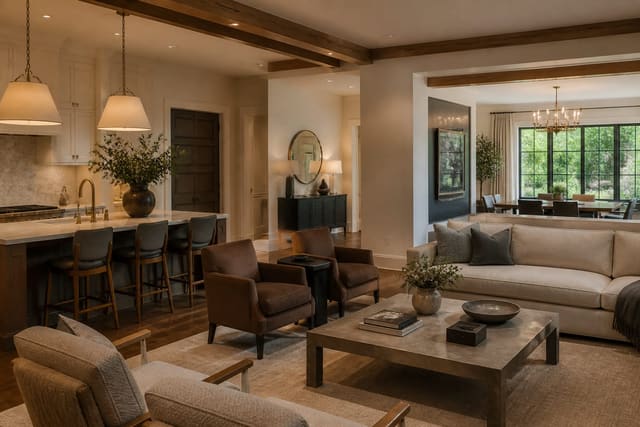
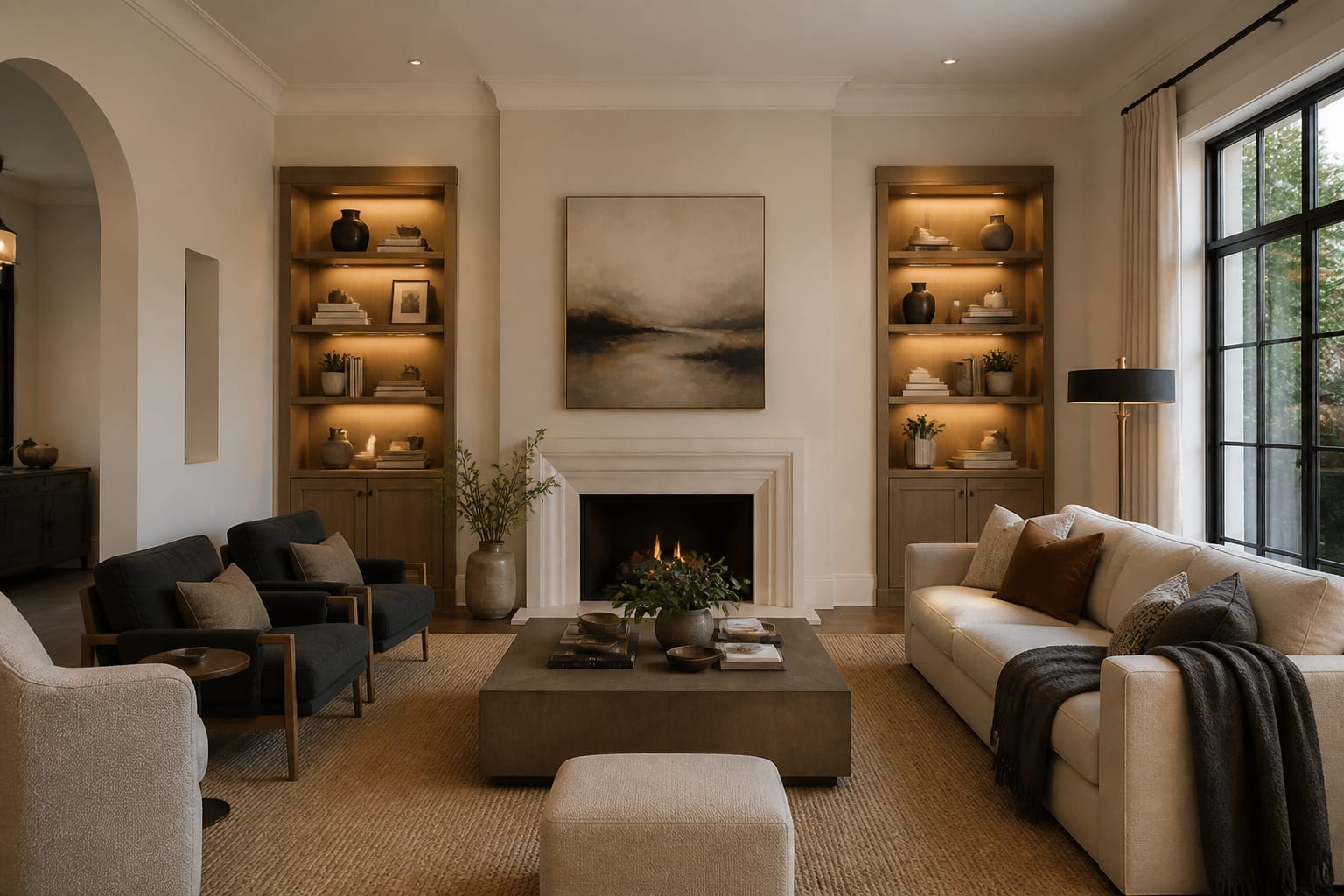
You can spot a transitional room by a handful of consistent signals. First, the palette stays neutral and warm, typically built from whites, beiges, greiges, and soft grays, with color introduced only in small, muted doses. Second, furniture marries forms: a sofa with simple modern lines might pair with a classic upholstered chair, creating gentle tension between old and new. Third, texture does heavy lifting, since linen, wool, leather, wood, and natural fibers add depth where bold color is absent. Lighting tends toward warm bulbs around 2700K, which flatters the neutral scheme and keeps the mood soft rather than clinical. Metals lean warm too, with brass and bronze appearing more often than polished chrome. Decor is restrained, with surfaces kept relatively clear and a few meaningful objects given room to breathe. Window treatments are simple, often floor-length linen panels rather than elaborate swags. Architectural details exist but stay understated, like clean crown molding instead of heavy ornamentation. Recognizing these markers helps you understand why a transitional room feels calm and cohesive even when its individual pieces span very different design traditions and decades.
For a related angle on what is transitional design, read How AI Search Cites Interior Design.
Building a Transitional Room Step by Step
Start with the envelope: paint walls in a warm neutral and keep flooring in a mid-tone natural wood or a quiet large-format tile. With the backdrop calm, choose two anchor pieces that bridge eras, such as a streamlined sofa and a more traditional accent chair. Aim for a coffee table that leaves roughly 18 inches of walking clearance on each side so the room breathes. Layer in texture next, adding a wool rug, linen drapery, and a few woven or leather accents. Keep your wood finishes limited to two tones to avoid visual chaos. For lighting, plan three layers: an overhead fixture, a couple of table lamps, and a floor lamp, all using warm 2700K bulbs. Budget realistically; a well-chosen anchor sofa often runs $1,500 to $2,500 and is worth prioritizing over trendy extras. Finish with restrained accessories grouped in small vignettes, leaving plenty of empty surface. Step back frequently and ask whether the room feels balanced between classic and modern. If one side dominates, swap a piece. This measured, layer-by-layer method is how transitional rooms achieve their effortless, collected appearance without feeling like a single shopping trip.
Why the Style Endures
Transitional design has outlasted countless passing trends for reasons that are practical as much as aesthetic. Because it avoids the signature flourishes of any single era, it rarely looks dated, which protects your investment over time. A room built on neutral foundations and quality silhouettes can absorb new accessories every few years without a full overhaul, so updates cost far less than a wholesale redesign. The style also suits real life. Families appreciate forgiving fabrics and comfortable seating, while the calm palette creates a restful backdrop after busy days. It photographs beautifully, which matters for resale, since neutral, balanced interiors appeal to the widest pool of buyers. Perhaps most importantly, transitional design tolerates imperfection and personality. Inherited pieces, travel finds, and practical purchases all coexist when the underlying balance holds. That generosity makes it accessible to people who feel intimidated by stricter styles. You do not need a decorator's eye to succeed, only a willingness to edit and a preference for harmony over drama. For all these reasons, transitional design continues to feel relevant, comfortable, and quietly sophisticated decade after decade.
Here are the common mistakes to avoid: - Leaning too modern with stark white and cold chrome - Overcrowding surfaces instead of leaving negative space - Mixing more than two competing wood tones - Choosing cool bulbs that wash out the warm palette - Matching every piece into one boring furniture suite
Bring the look home with Re-Design
Understanding transitional design on paper is one thing; seeing it in your own room is another. With Re-Design, you upload a photo of your living room or bedroom and watch the space reimagined in true transitional style, complete with warm neutrals, mixed furniture eras, and layered texture. Re-Design lets you test the balance between traditional and modern before spending a dollar, so you can confirm a streamlined sofa or classic accent chair suits the room you actually live in.
Frequently Asked Questions
What defines transitional design?
Transitional design blends the comfort and warmth of traditional rooms with the clean lines of modern interiors. It favors neutral palettes, balanced proportions, and a restrained mix of curved and straight forms. Ornamentation stays minimal, and texture replaces bold pattern as the main source of interest. The result feels timeless, calm, and adaptable rather than tied to one specific era or passing trend.
How does transitional style differ from traditional style?
Traditional rooms lean on rich detail, dark woods, symmetry, and ornate moldings drawn from historical periods. Transitional keeps the cozy spirit but strips away much of the heaviness, swapping fussy carvings for simpler silhouettes and lighter neutral tones. You still find classic shapes, yet they feel updated and less formal. Think of it as traditional comfort given more breathing room and edited restraint.
What materials are common in transitional interiors?
Expect natural wood in medium tones, linen and cotton upholstery, brushed metal accents, and stone surfaces like marble or quartz. Leather appears in moderation, often on a chair or bench. Glass adds lightness without coldness. These materials repeat across the room in a tight range, creating cohesion while letting subtle texture differences supply the visual interest this understated style depends on.
Is transitional design hard to maintain over time?
No, and that durability is part of its appeal. Because the look avoids loud trends and bold patterns, it ages gracefully and accepts swaps easily. Replacing a pillow, rug, or lamp refreshes the room without a full redo. Neutral foundations let you fold in new pieces as tastes shift, so the space stays current with only small, occasional updates.