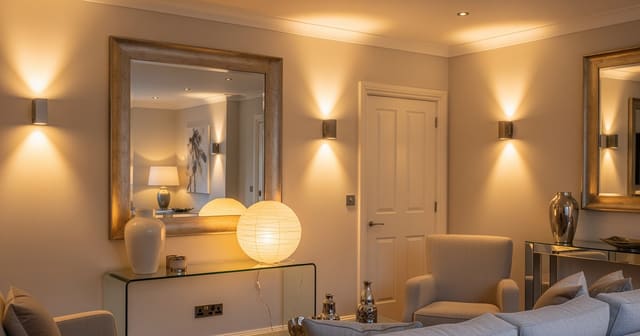
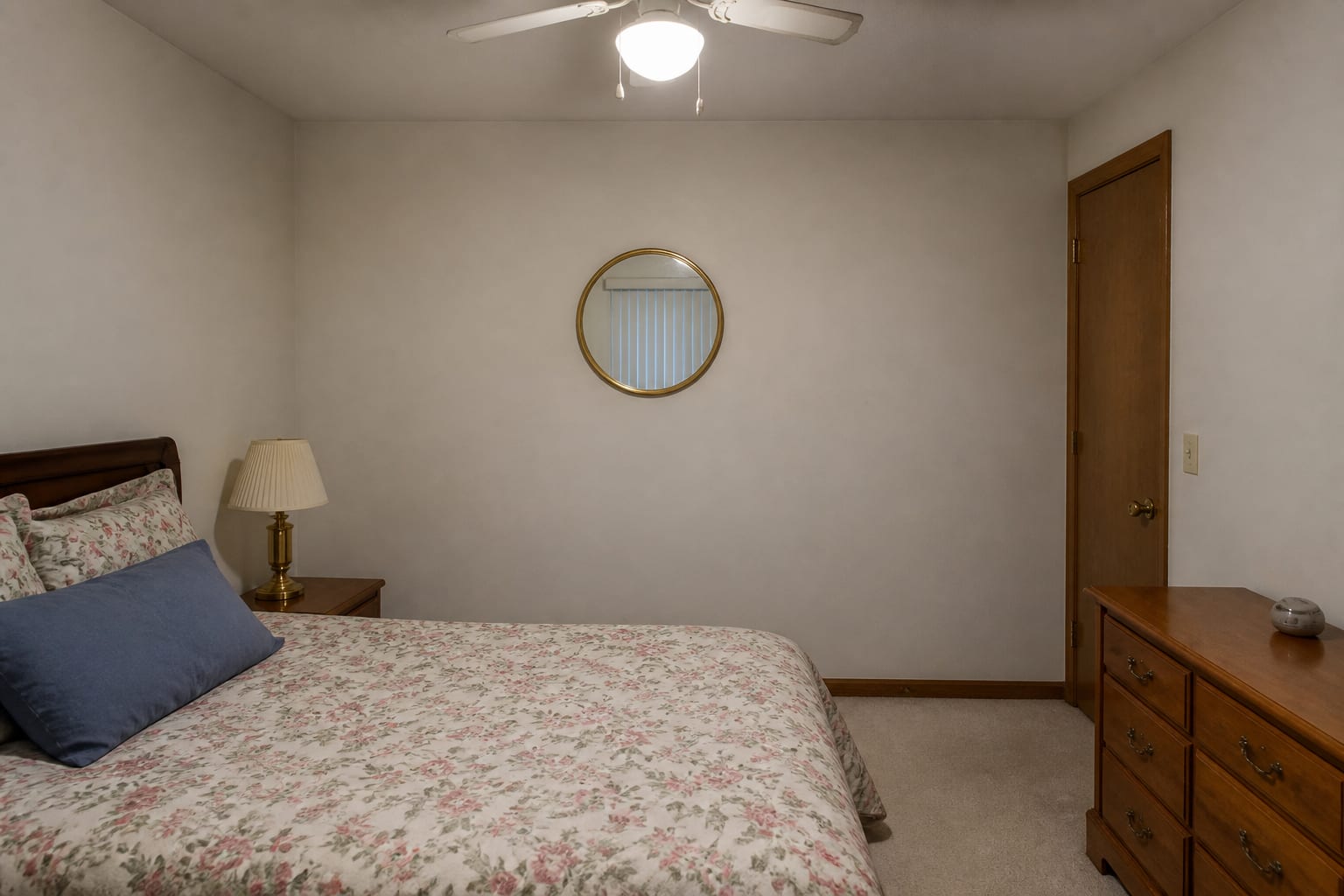
The best windowless room mirror ideas place a large mirror opposite an existing light source, such as a lamp or sconce, rather than on a blank wall. A mirror only fakes daylight when it reflects brightness and depth; without a warm light source behind it, it functions as wall art, not a window replacement.
Why most mirror tricks fail in windowless rooms
A mirror on a blank wall just reflects a blank wall, which is why many dark rooms stay dark after the mirror goes up. A useful mirror faces a doorway, lamp, sconce, pale wall, or high-contrast art so the reflection reads as depth, not repetition. The broader planning discipline in Small Bathroom Design applies here too: name what stays, what changes, and what needs measuring before you shop.
Check the sight line from the doorway, the daily walking path, the main light source, and any fixed surfaces before committing. Keep clearances honest: 30 to 36 inches for a main path where possible, and 16 to 18 inches between seating and a table if the plan includes sitting. Photograph the room straight on and change one thing at a time.
Which placements actually open the room
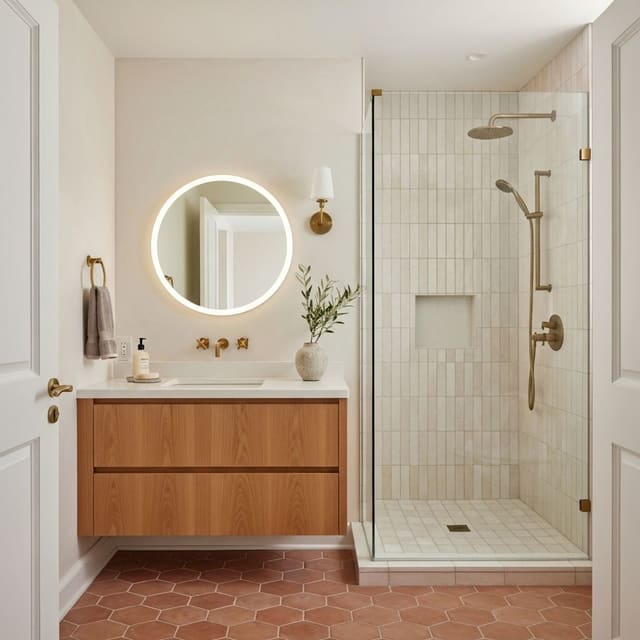
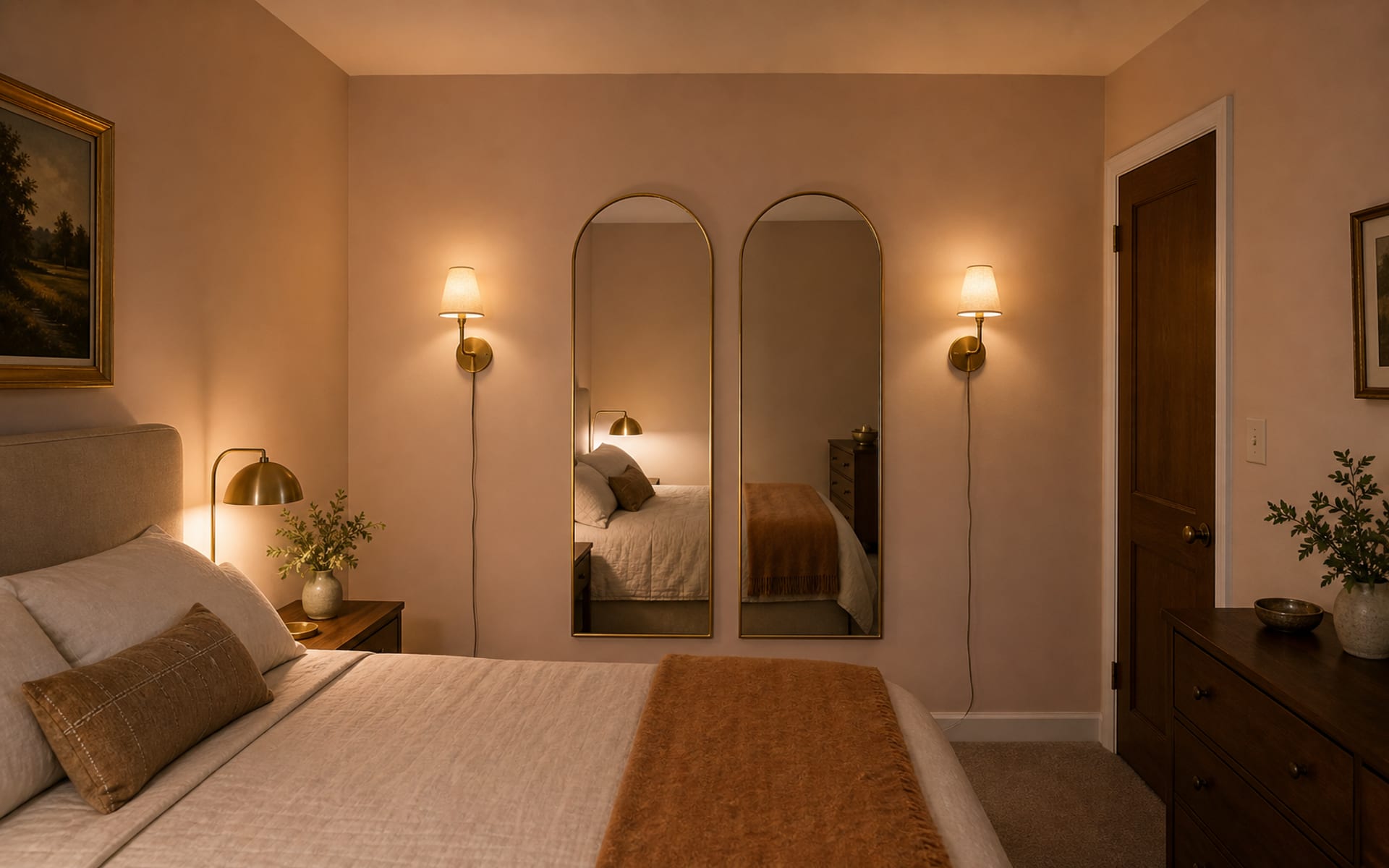
Put the largest mirror opposite a lamp, opposite a doorway, or beside a sconce so light and depth land together. In a bedroom, paired vertical mirrors behind warm plug-in sconces can suggest windows. In a powder room, the mirror should catch the fixture or a pale wall, not the toilet or towel clutter. For style direction that still respects small-space constraints, see AI Interior Design Small Spaces: Getting More From Every Square Foot.
- Powder room: use a taller mirror and side sconces instead of one cold ceiling fixture.
- Interior bedroom: pair two arched mirrors flanked by plug-in sconces.
- Closet alcove: lean one full-height mirror where it catches the door opening.
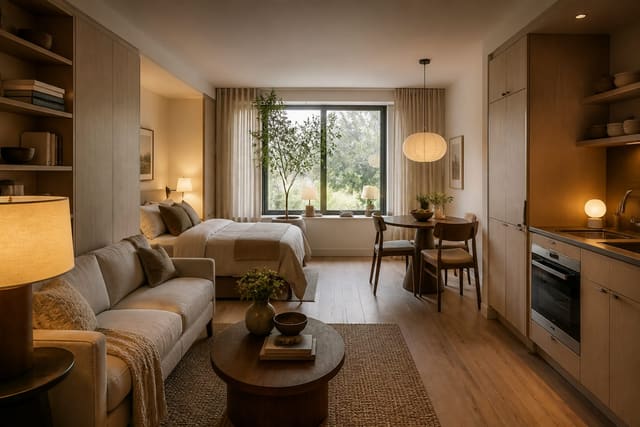
- Dining alcove: mirror a warm lamp or art wall, not the blankest side of the room.
Run any idea past this filter before buying anything custom. If it blocks a door, steals the only bright wall, makes a cabinet unusable, or needs a fixture you can't install, it isn't ready. The better version usually changes fewer things and makes those few things more precise.
How should light and room type change the approach?
Start with 2700K bulbs in bedrooms and living spaces; use 3000K only where the room needs task clarity. A 60-watt equivalent lamp reflected in a tall mirror often feels better than one brighter overhead source because the light lands at face height. For photographing and prompting the space, keep Fake Natural Light Any Room open as a reference.
The same principle plays out differently by room. A bedroom wants quieter light since rest is the priority; a kitchen needs to keep task light and cleanup workable; a bathroom punishes extra depth faster than a living room does. Pick the one viewpoint that matters most — the doorway view, your daily seat, or the mirror view at the sink — and judge the idea by whether it improves that view without creating a worse problem outside the frame.
What mistakes make these ideas fail?
- Hanging one small decorative mirror far from any light source adds shape but not brightness.
- Using cold bulbs makes the reflection feel clinical in rooms with no daylight to balance it.
- Placing a mirror opposite clutter doubles the exact thing the room needs less of.
The deeper mistake is ignoring the room's existing evidence — floor, window placement, ceiling height, outlets, and door swings already tell you what the room can become. A single inspiration photo hides the boring constraints: the outlet location, the radiator, the wet zone, the awkward window height. Translate inspiration into measurements and materials before you translate it into a cart.
How can you preview a mirror plan before buying?
Re-Design starts from your actual photo instead of a mood board. Upload a straight, well-lit image that shows the floor, ceiling line, windows, doors, fixed fixtures, and the wall you're unsure about, then ask for a controlled version that keeps the room's architecture and daily path intact.
Try three focused prompts instead of one fantasy renovation:
- Preview paired vertical mirrors in a windowless room
- Test a leaning mirror beside warm lamps
- Compare a powder room mirror opposite a sconce
Judge results by usefulness, not drama. Did the preview keep the same window, floor, and doorway? Did it respect a 30 to 36 inch route? Did it preserve the storage, sink access, or clearance that matters most? If the output invents architecture or hides the hard part, rerun it with stricter instructions before spending money.
Frequently Asked Questions
How big should a mirror be for a windowless room?
Use the largest mirror the wall can hold without crowding trim or furniture. In many small rooms, a 30-inch-wide mirror or a 5-foot-tall leaning mirror is a good starting point.
Can a mirror really replace a window visually?
It can suggest a window when it's tall, vertical, framed, and paired with warm light. It cannot replace daylight if it only reflects darkness.
What paint works best with mirrors?
Use a shade lighter than the room seems to need, with enough warmth to avoid a cold cast under artificial light.
Should I lean or hang the mirror?
Hang where safety, children, or narrow paths matter. Lean when you need scale quickly and can secure the top with proper hardware.
Will an antique mirror still bounce light?
Yes, but aged glass softens the reflection. Use it for mood, not as your only brightness strategy.