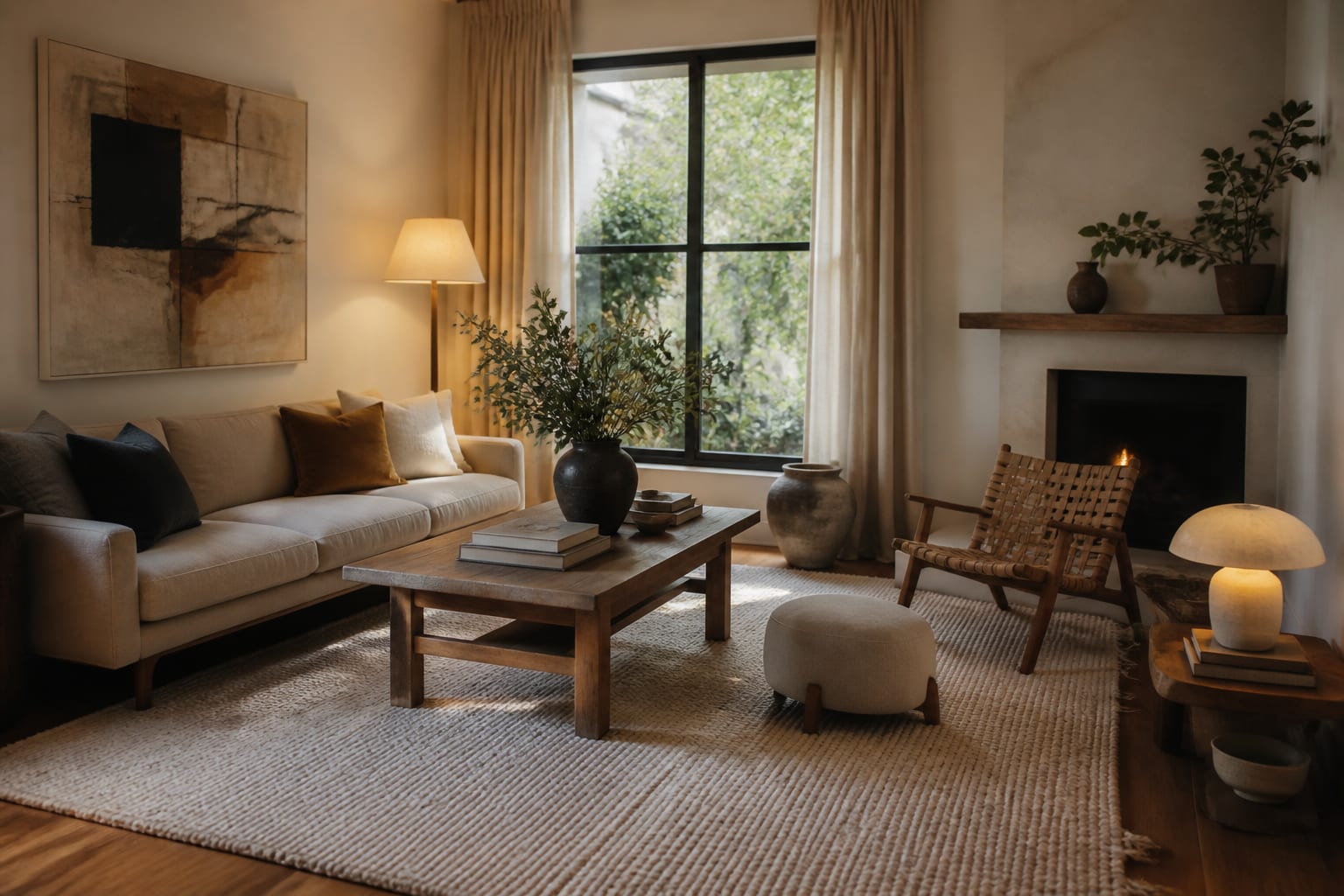
Ask whether wool rugs are worth it and you will get marketing on one side and price shock on the other. My honest answer: yes, for most rooms a good wool rug is worth it, because it lasts decades, springs back from foot traffic, naturally resists stains and flame, and ages better than any synthetic. The catch is a higher upfront cost and a break-in period of shedding you have to accept.
I have lived with wool rugs that outlasted three sofas and synthetic rugs that looked tired in two years. The fiber is the difference, and once you understand how wool behaves, the premium starts to look like the cheaper choice over time.
What makes wool perform
Wool's advantage starts at the fiber. Each strand has a natural crimp and elasticity, so it compresses under a foot and springs back instead of staying flattened. That resilience is why wool keeps its look in hallways and living rooms where polyester rugs go matte and shiny. The fiber also holds a meaningful amount of moisture inside its structure, which makes it naturally flame-resistant and helps it resist static.
The protein structure and natural lanolin give wool genuine stain resistance without chemical treatment. Spills tend to bead on the surface long enough to blot before they soak in, which is a real advantage in a rental where you cannot replace the flooring and need the rug to take abuse and still photograph well at move-out. Wool also dyes richly and holds color, so a good wool rug reads deeper and more saturated than the flat tones of a cheap machine-made synthetic.
Construction matters as much as the fiber. A hand-knotted wool rug, where each knot is tied individually, can carry 100 to 400 or more knots per square inch and will outlast a tufted rug by decades, but it costs accordingly. A hand-tufted wool rug, where loops are punched into a backing and glued, is far cheaper and still gives you wool's feel underfoot, though the latex backing eventually breaks down and it sheds more. Flatweave wool, like a kilim or dhurrie, has no pile at all, lies thin under doors and furniture, and is reversible. Knowing which construction you are buying explains most of the price gap between two rugs that both say wool on the label.
A common living-room wool rug measures 9 feet by 12 feet, resists crushing for decades, and quality hand-knotted pieces start around $8 per square foot.
Wool versus synthetic, honestly
Synthetics have real strengths, and I will not pretend otherwise. Polypropylene is cheap, fully stain-proof against most spills, and easy to hose off, which makes it sensible for a kid's playroom or a covered porch. Nylon is genuinely tough and a fair compromise. But none of them match wool's combination of resilience, warmth underfoot, and the way it ages into something that looks better, not worse.
Where wool earns its keep is the rooms you live in most and keep longest. In a small space where the rug does a lot of visual work, the depth and texture of wool reads as quality in a way thin synthetics cannot fake. A few honest trade-offs to weigh before you buy:
- Wool sheds loose fiber for the first several months, so it is not ideal if shedding will bother you immediately.
- Wool absorbs moisture, so it dries slowly and is a poor choice for bathrooms or damp basements.
- Wool is sensitive to high-alkaline cleaners and harsh chemicals, which can strip its lanolin and dull the fiber.
- Wool carries a higher sticker price, so the value shows up over years, not on the receipt.
Address pulls and sprouts the right way and they stay minor. If a single loop or tuft works its way up above the pile, snip it flush with scissors rather than pulling it, which can run the weave like a snagged sweater. Crush marks from heavy furniture lift with a light misting of water and a gentle brush along the pile direction, or a few passes of a steam iron held above, not on, the fibers. These are five-minute fixes that keep a wool rug looking cared-for, and they are part of why the same rug can carry a room for twenty years instead of five.
Caring for wool so it lasts
Wool is low-maintenance, not no-maintenance. Vacuum regularly without a hard beater bar at full power, which can pull and fuzz the fibers; use suction or a gentle setting. Rotate the rug every 6 to 12 months so traffic and sunlight wear it evenly rather than carving a path down the middle.
Blot spills immediately with a clean cloth and cool water, working from the outside in, and avoid soaking the backing. Skip the bleach and high-alkaline cleaners entirely. For deep cleaning, a wool-safe specialist every few years preserves the lanolin that makes the fiber resilient. Treated this way, the same wool rug that looks great in a staged home photo will still look great a decade after the photos are taken.
Two small habits extend a wool rug's life more than any cleaner. Use a quality rug pad underneath, which cushions the fibers from the hard floor, stops the rug sliding, and lets air move so the underside does not trap moisture. And keep wool out of harsh, all-day direct sun where possible, since prolonged UV will fade even colorfast wool over years; a sheer on a south-facing window or a seasonal rotation handles it. None of this is demanding, which is the point: wool asks for gentle, occasional attention rather than constant babysitting, and it pays that attention back in longevity.
Common mistakes to avoid
The most common mistake buyers make is panicking over early shedding and assuming the rug is defective. New wool sheds loose fibers for 3 to 6 months; that is the fiber settling, not a flaw, and it slows steadily. A second common mistake is over-wetting a spill, which pushes moisture into the slow-drying backing and can cause odor or mildew. Blot, do not drench.
Other mistakes to avoid: running a powerful beater-bar vacuum that fuzzes the pile, using bleach or alkaline cleaners that strip the lanolin, and placing wool in a damp bathroom where it cannot dry. Treat wool like the natural fiber it is and it rewards you for twenty years; treat it like indestructible synthetic and you will dull it fast.
Size and placement decide as much as fiber does. A wool rug that is too small makes a living room feel cramped no matter how good the weave is, so aim to get at least the front legs of your sofa and chairs onto the rug, and leave a consistent border of floor around the edges. In a dining room, size the rug so the chairs stay on it even when pulled out, which usually means going a size larger than feels intuitive. Wool's cost makes these proportions worth getting right the first time, because returning an oversized hand-knotted rug is not a casual errand.
Use AI design to preview a wool rug before you commit
A wool rug is a several-hundred-dollar decision, and the swatch in your hand never tells you how the color and scale will land in the room. Before you spend, it helps to see the rug at full size against your sofa, your floor, and your light. With Re-Design you upload a photo of your living room or bedroom and re-render it with different wool rug colors, patterns, and sizes so you can judge the proportion and tone in place.
That preview settles the questions a small sample cannot answer: whether a warm undyed wool grounds the room or a patterned wool competes with your furniture. Upload your space, try a neutral flatweave against a deeper patterned pile, and commit to the wool rug once you have seen it filling your actual floor rather than guessing from a corner swatch.