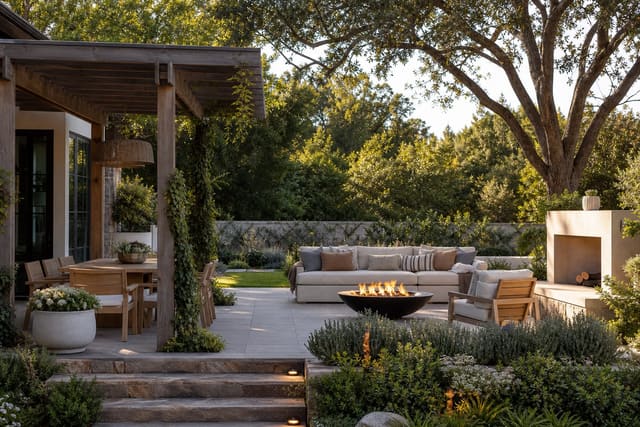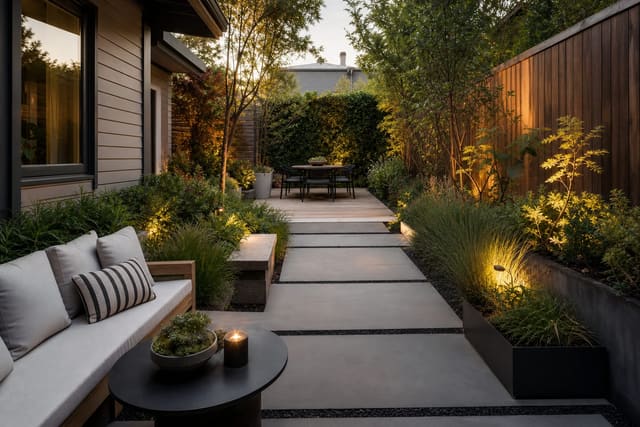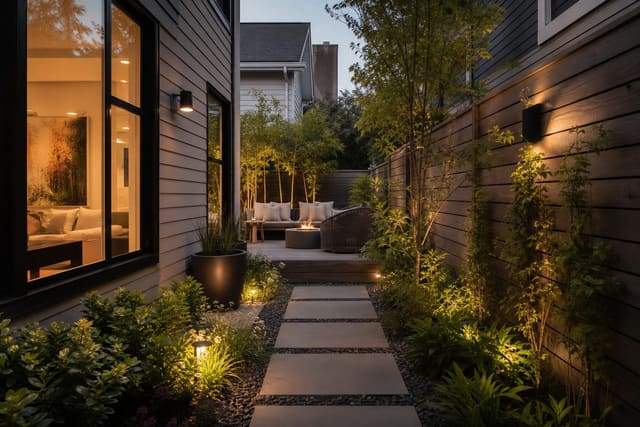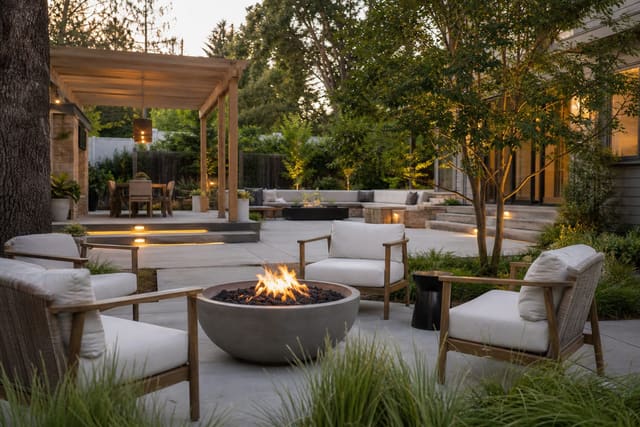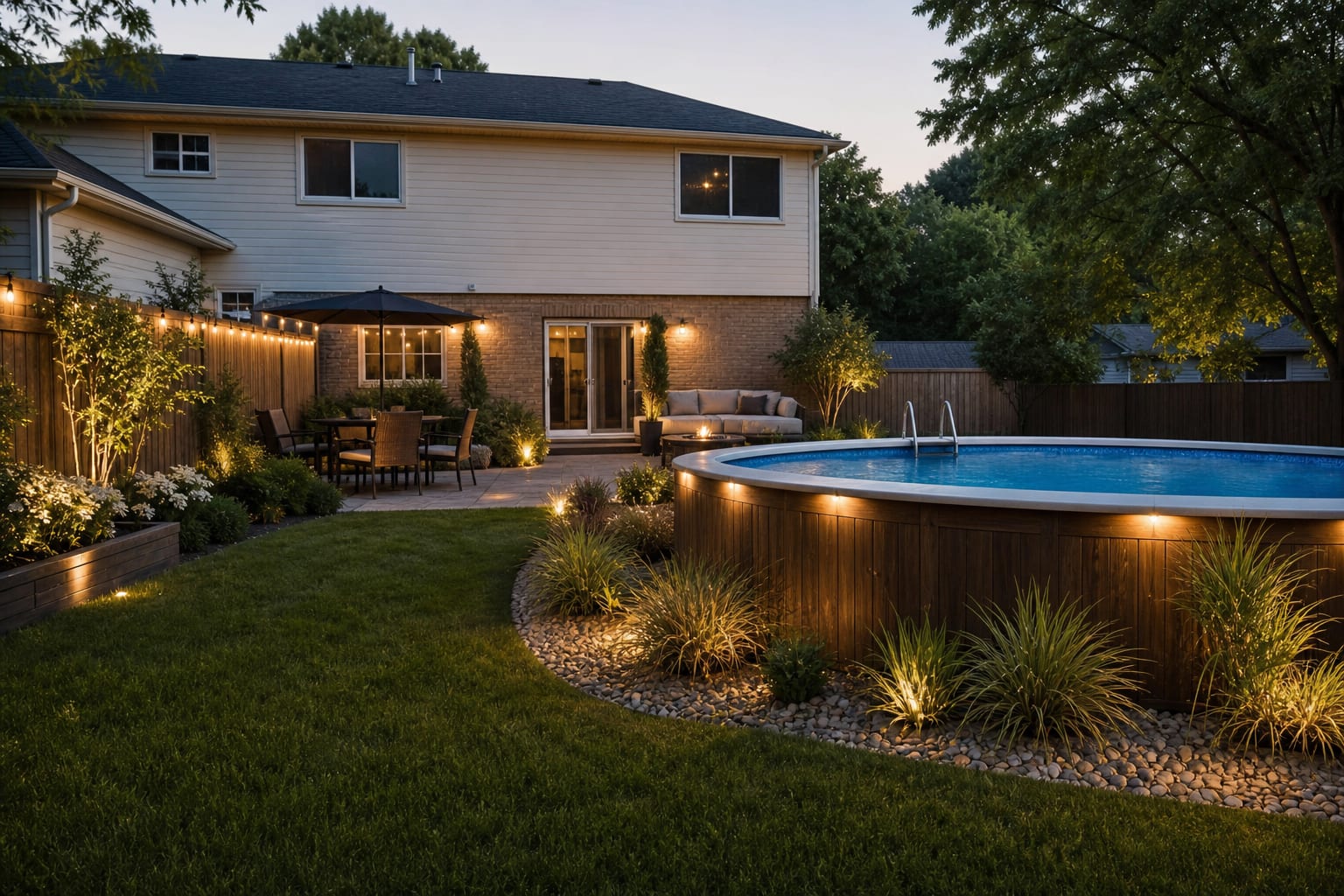
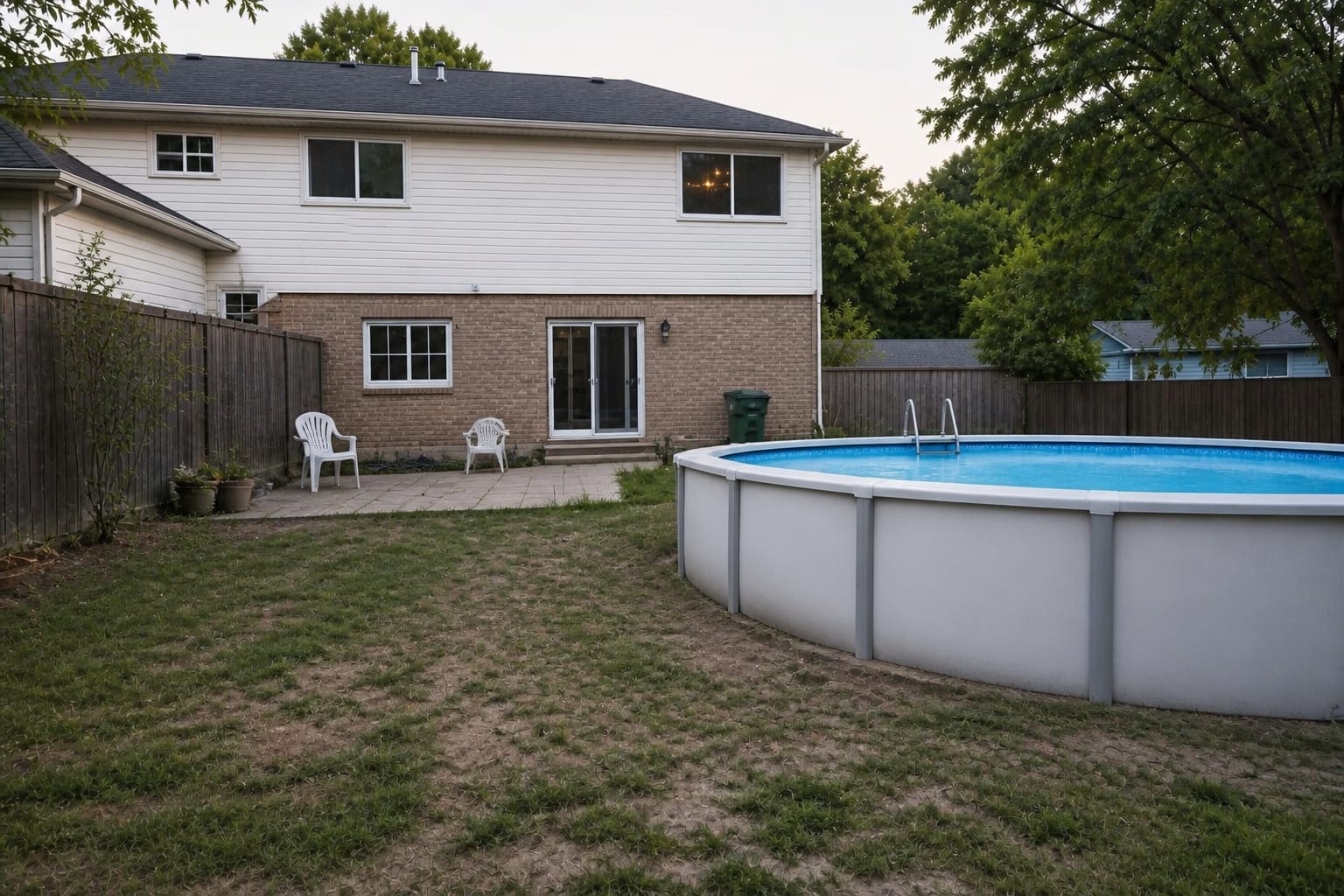
An above-ground pool looks intentional when you screen the exposed wall with a deck, skirt, or planting, add one real landing at water level, and repeat materials already used elsewhere in the yard. Skip pool toys and umbrellas until the wall, circulation, and edge condition are solved — design the perimeter first, like a small outdoor room, and the rest of the backyard falls into place.
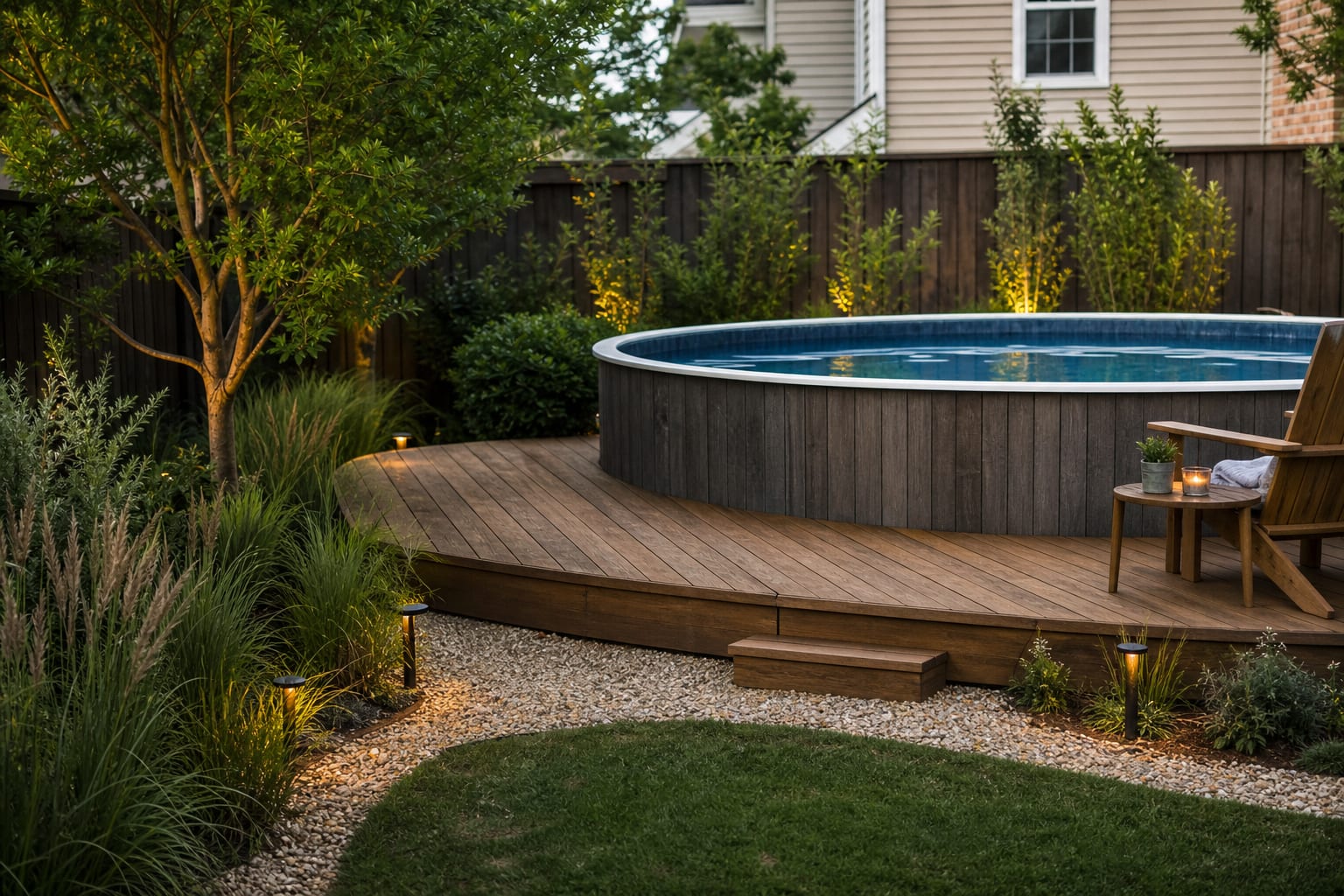
What makes an above-ground pool feel designed instead of parked?
Don't try to disguise the pool as inground — that usually leads to overbuilt decks and awkward retaining walls. Instead, make it look deliberate from the viewpoints people actually use: the back door, the kitchen window, the patio chair.
Start with the sightline that bothers you most:
- If the pool dominates the view from the house, use a low deck, slatted timber screen, or planted berm to cut the visible wall height.
- If it sits in a corner, pull the design outward with gravel, stepping stones, and furniture so it connects to the rest of the yard.
- Keep the first material palette to three finishes — one floor, one vertical edge, one repeated accent — and test the layout from the house door and the main seat before buying anything.
On small lots, borrow discipline from narrow backyard design: keep the main path straight and put the widest activity zone at one end instead of scattering small features along both fence lines.
Full deck, partial deck, or planted edge — which one fits?
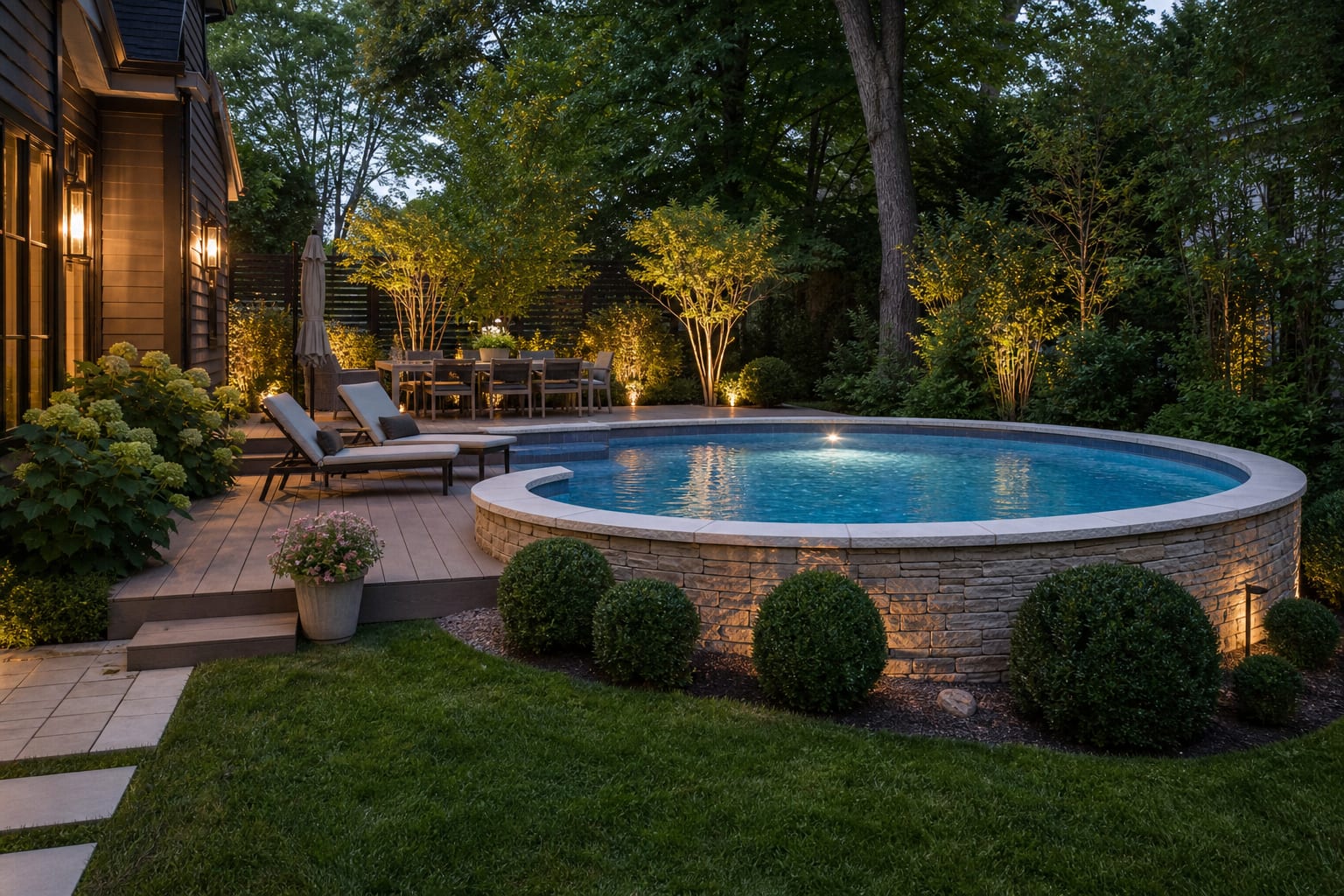
A full deck works when the pool sits close to the house with room to spare. Keep the deck surface within an inch of the pool coping, and around a round pool, choose a rectangular or L-shaped deck over a ring deck — straight lines give usable furniture space instead of a narrow donut of boards.
A partial deck suits most backyards: it delivers the built-in feel without turning the whole yard into structure. Aim for a landing at least 6 feet deep for chairs, or 4 feet deep if it's mainly for entry and towels. An 18-inch-high built-in bench along one side gives the platform a reason to exist even when no one's swimming.
A planted edge needs the least construction but still needs geometry. Lay a 24-to-36-inch gravel border before planting — mulch against a pool wall gets kicked into the water and holds moisture you don't want there. Good choices near water include ornamental grasses, compact hydrangeas, dwarf yaupon holly, rosemary, and lavender; skip thorny plants and heavy leaf droppers within 3 feet of the pool.
If the pool shares a side yard path with bins or a gate, protect circulation first — the same logic covered in side yard design for tight passages applies: one clean route beats three decorative interruptions.
Above ground pool ideas that make it feel permanent
- Build one deck bay, not a skinny wraparound. A 6-by-10-foot platform with steps and a bench beats a 30-inch catwalk — people need somewhere to pause and set a drink down.
- Skirt the most visible wall. Horizontal boards with 1/4-to-1/2-inch gaps let air move; leave a removable panel near the pump so equipment stays accessible.
- Add a gravel maintenance ring. A 24-inch band of pea gravel or decomposed granite stops grass from reaching the wall and gives a clean zone for brushing and hose checks.
- Separate seating from splash traffic. Leave 4 to 6 feet between the ladder and lounge chairs, and only use an outdoor rug where it can dry quickly.
- Light at knee height. Low-voltage path or step lights at 2700K read as safer and softer after dark than tall floodlights, which flatten the yard.
- Echo one nearby finish. A deck stained to match a fire pit seating area looks planned even if the two spaces were built years apart.
- Plan shade clearance. A cantilever umbrella needs about 8 to 10 feet of swing room; a shade sail needs anchors set above the pool wall so fabric drains instead of sagging.
How can I preview my pool surround before building?
Upload a straight-on photo from the back door and test a partial deck, gravel ring, planting band, and seating layout from the same angle. AI previews won't replace code checks or manufacturer clearances, but they show whether a deck eats too much yard or whether planting alone does enough work.
Work in rounds: test massing first (full deck vs. partial deck vs. planted edge), then finishes (cedar, black-stained timber, pale gravel, pavers), then furniture and lighting last. For renters, this is especially useful — gravel, planters, and freestanding steps create most of the built-in feel without permanent construction.
Common above-ground pool mistakes to avoid
- Building the deck too small. A 3-foot platform handles entry but not a chair, cooler, and towel hooks. If you can't go at least 4 feet deep, make it a clean landing and put lounging on nearby pavers or gravel.
- Planting too close to the wall. Dense shrubs against the pool look lush for one season, then block access. Keep an 18-inch service gap or use movable containers.
- Choosing decor that doesn't match the yard. Tiki torches and bright umbrellas often make the pool look more temporary. Use the yard's existing palette first, then add one playful color in towels or planters.
- Leaving equipment exposed. Screen pumps and filters with a ventilated enclosure, keeping manufacturer clearance and obvious access for maintenance.
- Letting grass meet the pool wall. A ragged grass line complicates trimming and throws clippings into the water. A gravel or paver border is one of the cheapest ways to make the pool look intentionally placed.
Frequently Asked Questions
How long do above-ground pools last?
Steel-walled above-ground pools typically last 10–15 years, resin-walled pools last 15–20 years, and liners usually need replacing every 5–9 years regardless of wall material.
Can I build a deck around an above-ground pool?
Yes. Keep a 36-inch walkway minimum, support the deck on posts independent of the pool wall, and leave about a 2-inch gap around the shell so seasonal movement doesn't stress the framing.
What's the cheapest above-ground pool that still looks good?
A 15-foot round resin-walled pool with a cedar slat skirt and a planted edge often comes in under $5,000 installed. The skirt and planting are what hide the "kit pool" look, not the pool itself.
Do above-ground pools need a fence?
Most municipalities require a fence around any pool over 24 inches deep, including above-ground models; some accept the pool wall plus a lockable ladder as the barrier. Check local code before installing.
Can I leave an above-ground pool up over winter?
Yes in most climates. Install a winter cover, lower the water below the skimmer, blow out the lines, and use a pillow under the cover to prevent ice damage; deep-freeze regions may require a hard-cover model.
Three transformations to try
- Above-ground pool with cedar deck wrap
- Above-ground pool with planted screen
- Above-ground pool with paver patio surround