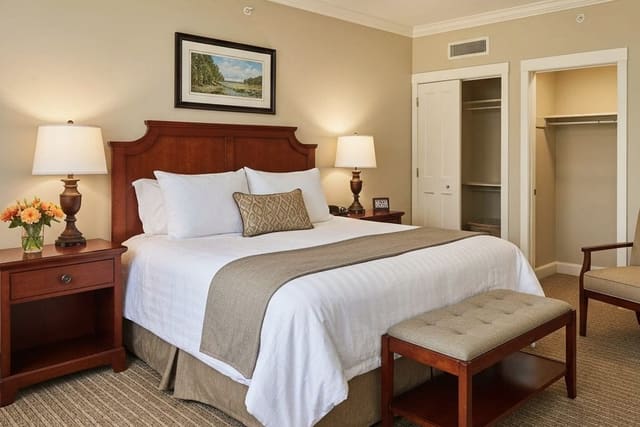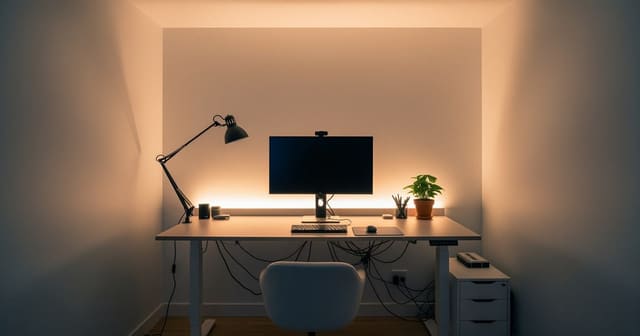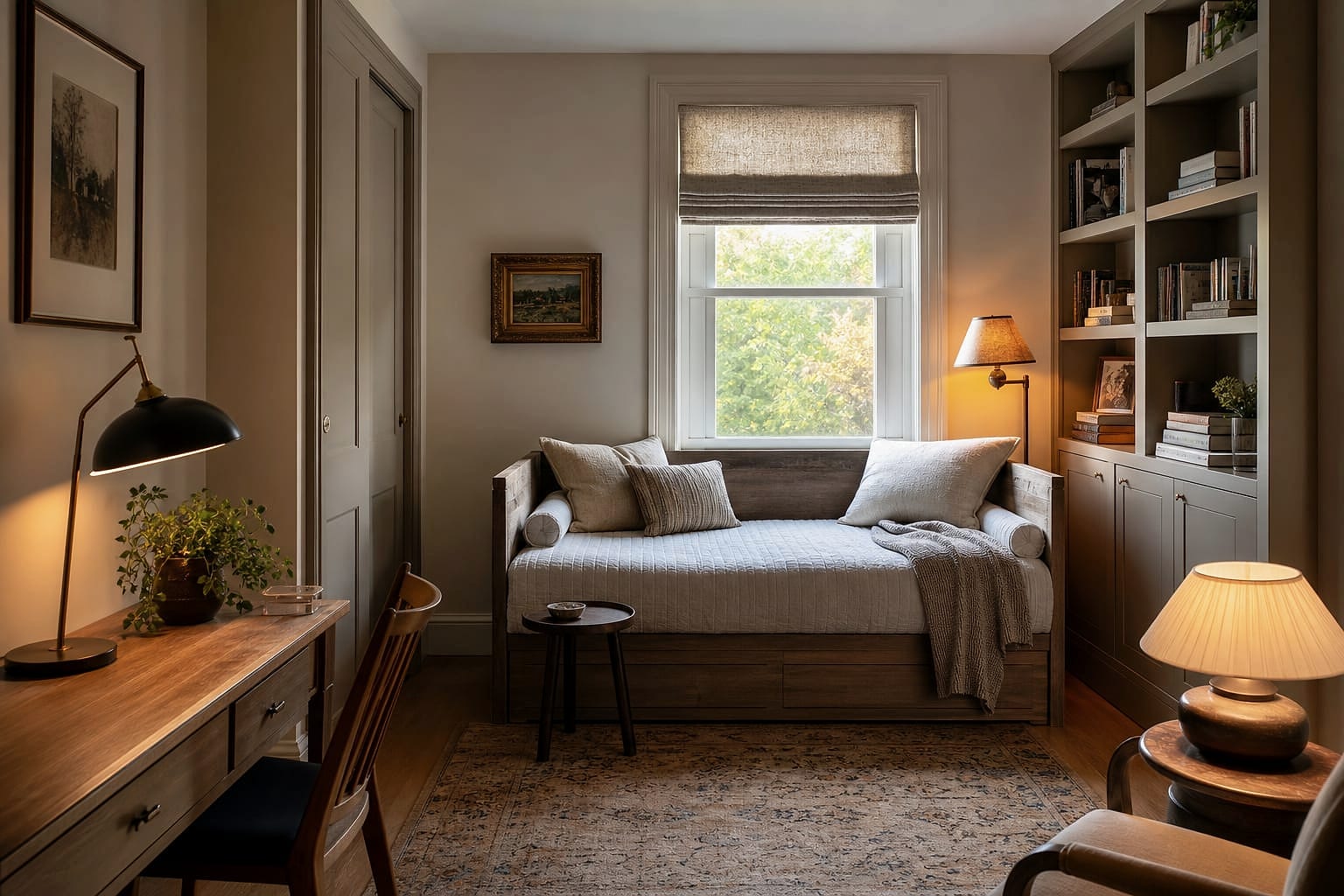
AI bonus room design ideas turn one uploaded photo into competing previews — office, guest room, craft studio, media lounge, playroom — so you can choose the room's real weekly job before buying furniture. The goal is one dominant use and one honest backup use, tested against your actual windows, ceiling line, and storage before you spend a dollar.
Can AI help you figure out what to do with a bonus room?
Re-Design turns one bonus room photo into previews of guest room, office, craft studio, media lounge, playroom, workout corner, or hybrid layouts. The options compete against the same window, ceiling slope, door swing, and wall length, so you're testing furniture and layout, not fantasy rooms.
Start with a photo from the doorway or widest corner, showing the floor, ceiling line, windows, closet doors, knee walls, and any pile-up alcove. If the room sits over a garage or has a sloped ceiling, add a second angle so the tool doesn't flatten the awkward part into a normal rectangle.
Write the prompt like a decision brief: keep the carpet, trim, sloped ceiling, window, and ceiling fan; test the room as a guest room, home office, craft room, media lounge, and family flex space with closed storage and warm lighting. If guests are part of the plan, compare results with guest room layout ideas for spare spaces so the sleeper setup doesn't block everyday use.
Which job should the bonus room have first?
The first job should be whatever the room performs weekly, not the fantasy use that happens twice a year. Rank functions by frequency, mess, privacy, and furniture depth:
- Office: needs a 48–60 inch desk surface for a monitor, lamp, and keyboard.
- Guest room: needs a real sleeping surface, side light, and 24 inches of walking room beside the bed.
- Craft space: needs a wipeable table, shallow drawers, and lighting aimed at the work surface, not just the ceiling center.
- Media room: needs seating distance and glare control.
The AI preview should make the tradeoff visible — a full guest suite may look calm but sit empty most weekdays, while a full office may feel rude when family visits. The best bonus room usually has one clear identity and one honest secondary use. Test this on your own room photo with Re-Design, keeping the room structure, daylight, and main path visible so the preview solves the space you actually have.
What changes in a believable bonus room before and after?
A believable before-and-after fixes the room's hierarchy before its style. The "before" is usually leftover furniture lining every wall — an old loveseat, folding table, plastic bins, treadmill, and a mismatched rug. The "after" gives the room one anchor wall, one open path, and one storage system that absorbs the messy categories.
For an office hybrid, place the desk where glare and outlets make sense. A 24-inch-deep desk works in narrow rooms; a 30-inch desk suits drawing or dual monitors. Leave 30 inches behind the chair to pull out freely. For more on this, see AI home office design ideas for real rooms.
For a guest hybrid, choose the sleeping piece carefully — a queen sleeper sofa can eat the whole floor when opened, while a daybed, Murphy bed, or sleeper chair preserves daily use. Measure the open position, not the closed one. Use closed cabinets, not decorative baskets, for board games, documents, craft refills, bedding, and holiday wrap.
How should a flex room handle hobbies, guests, and work at once?
A flex room works when secondary uses fold away physically, not just emotionally. A craft table always covered in supplies won't become a guest room just because someone adds pillows; the room needs switchable zones.
For craft-heavy rooms, treat the work surface like a kitchen prep zone: about 30 inches high for seated work, or 36 inches for standing projects. Keep drawers within one step of the table and use shallow trays instead of one deep mystery bin. Compare results with craft room storage and layout ideas before buying another basket.
For office-plus-guest rooms, keep the bed and desk from facing off — a daybed along the long wall with a slim desk perpendicular to the window feels calmer than a queen bed dominating the center. Use a rug edge, bookcase, or color shift to mark where work stops and rest begins.
For media-plus-play rooms, keep the middle of the floor open; reserve at least 30 inches for the main route through the room. Lighting should shift with the job: warm bulbs around 2700K–3000K for lounging, plus task lighting at the desk or craft table. One centered ceiling fixture makes every use feel temporary — a floor lamp, sconce, or under-shelf strip makes the room feel ready for different modes.
Common bonus room mistakes to avoid
- Designing for the rarest use. If guests visit twice a year, don't let a giant bed hurt the other 363 days — use a daybed, sleeper sofa, or Murphy bed instead.
- Treating all storage as equal. Odd categories like luggage, files, instruments, and fitness gear need specific homes: drawers for small items, tall cabinets for bulky ones.
- Ignoring awkward architecture. Sloped ceilings and knee walls are clues for a reading nook or low drawers, not defects to hide. Reject any AI plan that erases the slope or invents full-height walls.
- Choosing style before function. A library, studio, office, or den can all be beautiful, but each needs different lighting, surfaces, and storage — ask AI for function first, style second.
- Buying furniture from the closed position. Sleeper sofas, drop-leaf tables, and storage ottomans change size in use — measure the open bed, extended table, and pulled-out chair before ordering.
Use AI design to preview your bonus room before you commit
Use AI as a rehearsal for the choices that are annoying to reverse: primary function, sleeper type, desk wall, storage depth, rug size, lighting plan, and how much open floor to keep. "Bonus room" can mean a finished attic, over-garage room, basement corner, or awkward landing, so the upload-photo loop is especially useful here.
Run the first set wide: a guest room with office corner, a workroom with sleeper chair, a craft studio with closed storage, a media lounge with toy storage, and a reading room with occasional guest use. Pick the version where the door opens cleanly, the window still matters, storage has a real job, and the room no longer looks like household overflow.
In round two, keep the best function and vary the expensive decisions: daybed vs. sleeper sofa, 48-inch vs. 60-inch desk, 15-inch cabinets vs. 24-inch wardrobes, a 5x8 vs. 8x10 rug. If previews improve as furniture shrinks and storage closes up, believe the room. For the broader workflow, see the AI design complete guide before returning here for scale and layout.
Frequently Asked Questions
Can AI redesign a bonus room from one photo?
Yes — upload a doorway photo and ask for office, guest, craft, media, and playroom previews on the same image; the AI keeps the windows, sloped ceiling, and closet doors fixed while testing furniture and layout. Treat the preview as a scale and circulation test, not a shopping command.
What is the best primary use for a bonus room?
Pick the weekly use, not the rare one — a daily office or playroom plus a daybed for occasional guests beats a queen guest suite that sits empty 363 days a year. Door swing, chair pullout, walkway width, and evening light matter more than a perfect catalog angle.
How big should a bonus room desk and daybed combo be?
A 48–60 inch desk along the long wall and a queen daybed perpendicular fits most bonus rooms; leave 30 inches of pull-out clearance behind both pieces. Test a conservative and a bolder version, then choose whichever still works with your existing windows, trim, and floor color.
How do I store the messy categories in a bonus room?
Closed 15–18 inch cabinets handle wrapping paper, files, sports gear, and craft refills; open baskets become guilt zones within a month. Use the AI preview to narrow measurements and priorities, then confirm final dimensions and outlet locations before ordering anything custom.
Does a bonus room need a separate bathroom or closet?
No — a 12-inch-deep wardrobe and access to a nearby bathroom is enough for occasional guests. A full ensuite changes the room's resale category but isn't required to make it useful.
Ready to see this on your own room? Open Re-Design and run the preview before you buy, paint, drill, or move furniture.
Three transformations to try
1. Office-plus-guest pass with 48-inch desk and queen daybed 2. Craft-plus-overflow pass with 30x72 worktable and shallow drawers 3. Media-plus-play pass with wall-mounted screen and storage ottomans