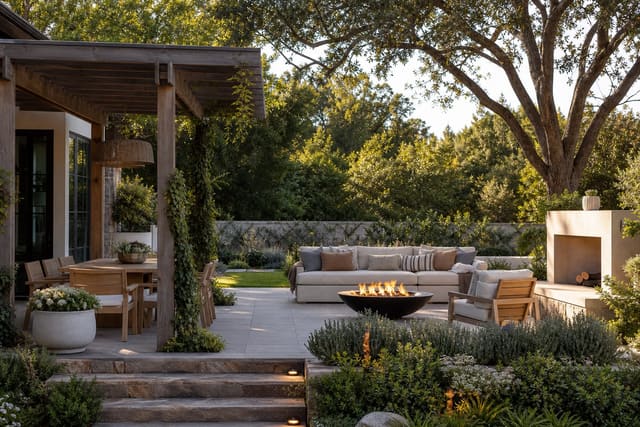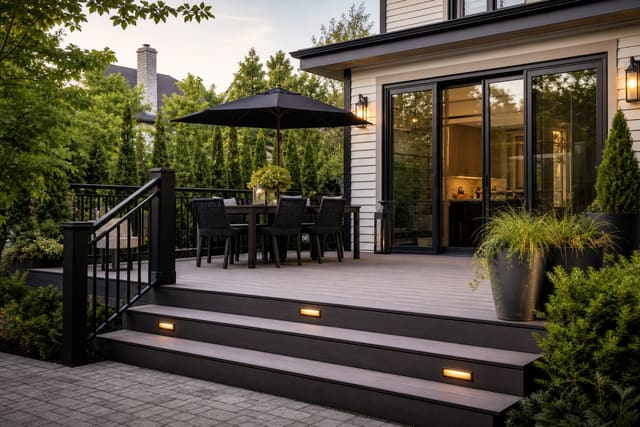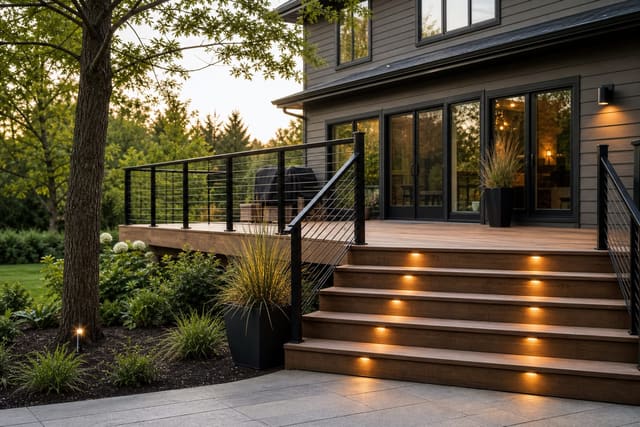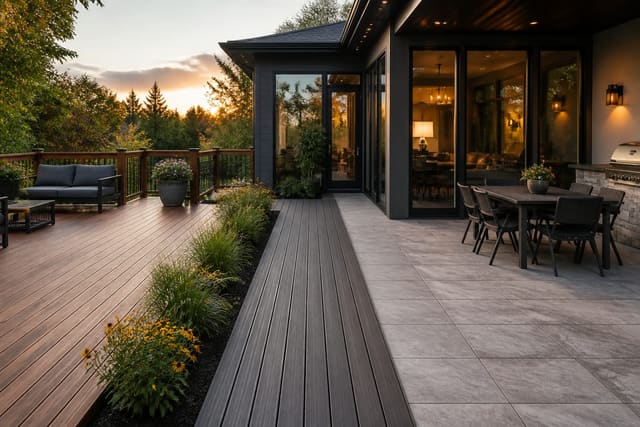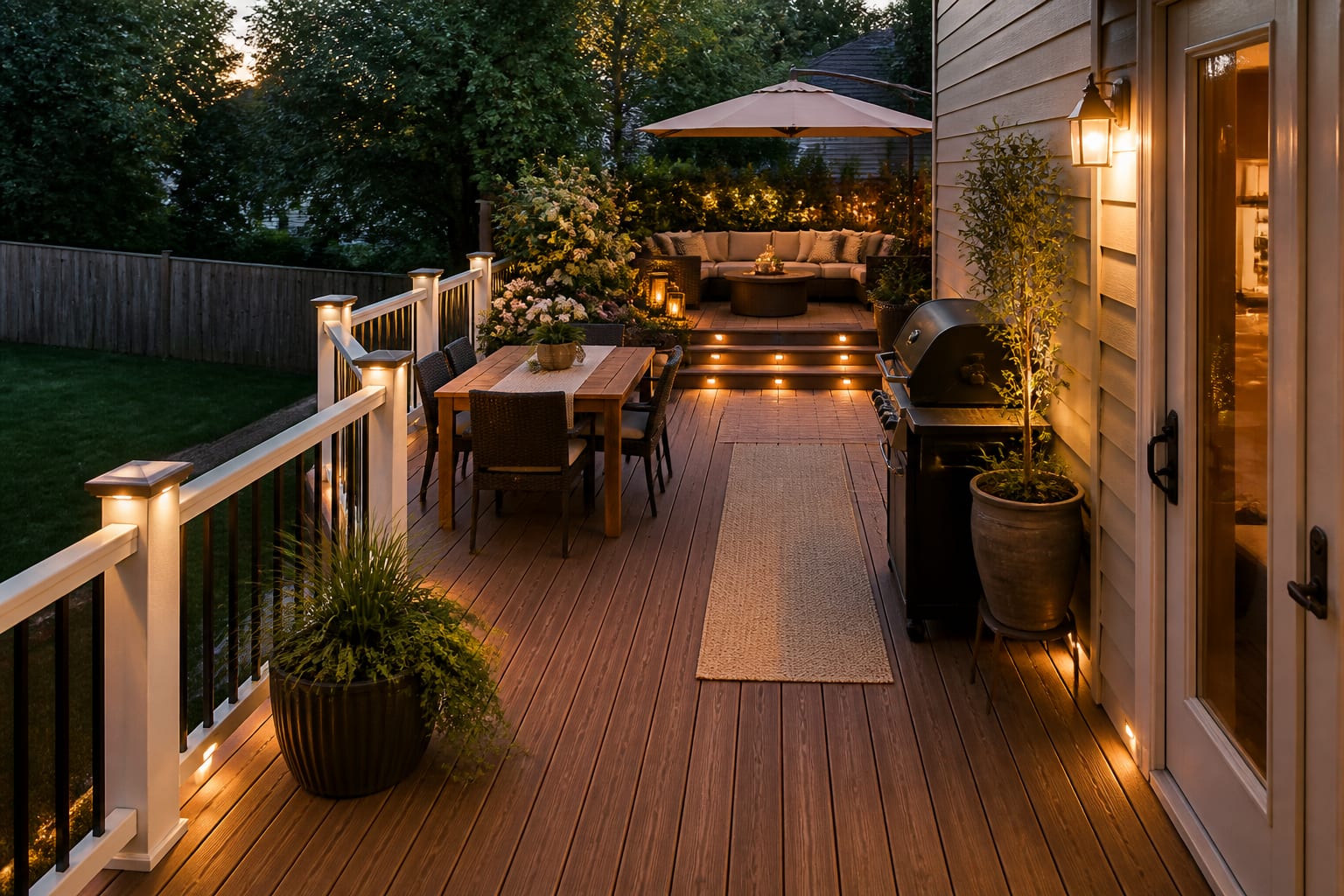
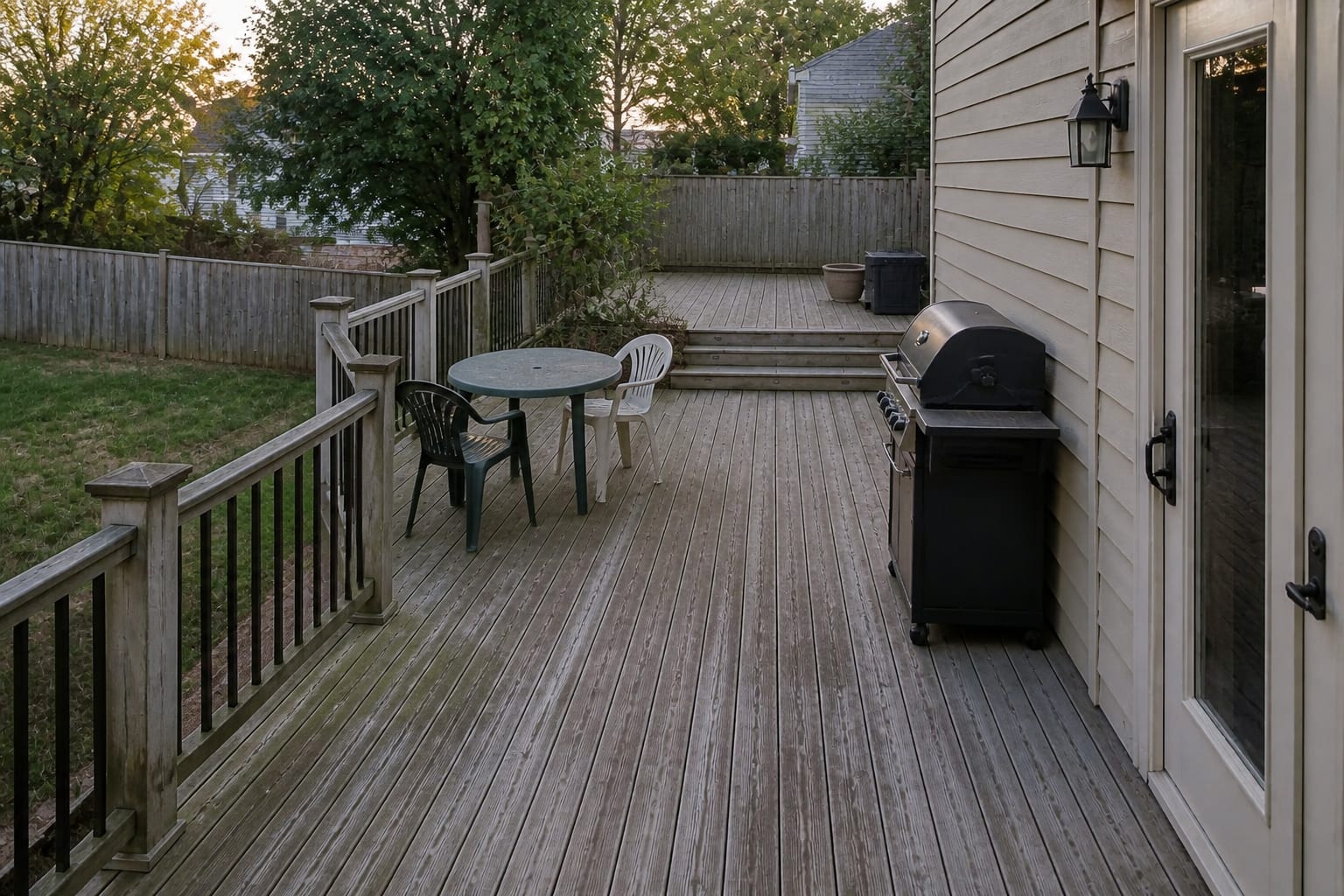
An AI deck design app for outdoor decks turns a single photo of your deck into multiple layout, railing, board, shade, and lighting concepts, so you can compare dining-first, lounge-first, or mixed-use plans before committing to permanent materials. The strongest previews respect your existing stairs, railings, and door swing rather than replacing them with generic renders.
Can AI Help Design a Deck From a Photo?
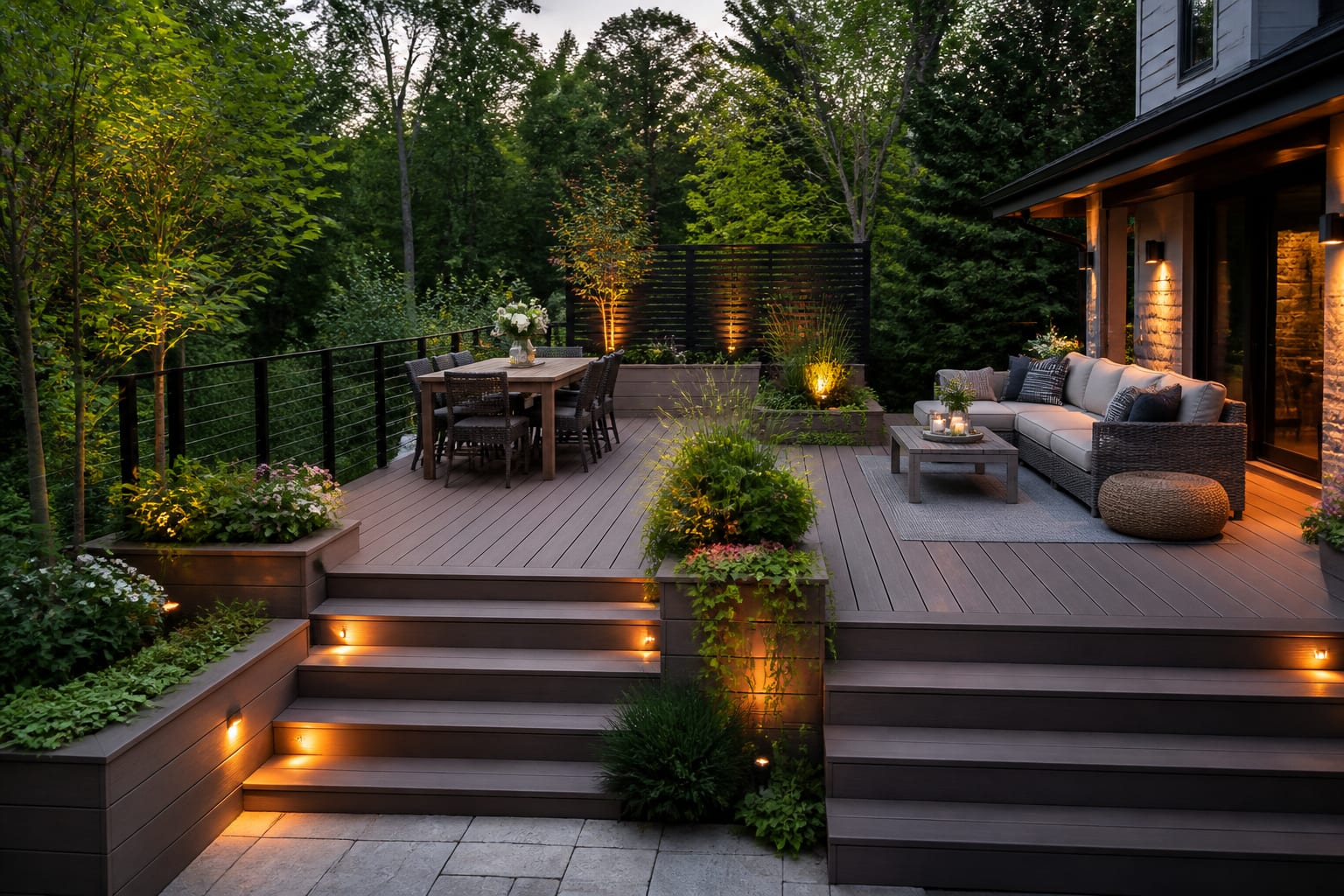
Yes. AI can preview layout, railing, flooring, shade, seating, planting, and lighting ideas from your uploaded deck photo before you commit to permanent work. It's strongest at showing direction: whether your deck wants a dining-first plan, a lounge-first plan, a cleaner railing, a warmer board tone, or more privacy along one edge.
Standard deck framing uses 2x8 joists at 16" centers for spans up to 12 feet, with posts about 8 feet above grade and 48" footings below the local frost line in cold climates. The photo matters because a deck is tied to real stairs, railing height, sun exposure, and awkward corners a text-only prompt would simply invent around.
Use the first preview to answer one question: what is this deck supposed to do? A 10' by 14' deck probably can't be a dining terrace, outdoor kitchen, fire lounge, and container garden at once. For more starting points, compare results against practical deck design ideas for real outdoor living before locking in finishes.
What Should You Decide Before Choosing Finishes?
The first decision is use, not style. A deck that hosts dinner for six needs different clearances than one built for two lounge chairs and morning coffee. On a small rectangular deck, one clean zone usually beats three cramped ones; on a larger deck, separate cooking, eating, and lounging zones so guests aren't routed through the grill every trip outside.
Furniture depth is the hidden problem. A 36"-deep lounge chair can block a modest deck, while two chairs around 28"-32" deep may leave room to move. A 72" dining table sounds generous, but a 42"-48" round table often works better on a compact deck.
Once the layout is set, preview the expensive, hard-to-reverse choices before accessories:
| Element | What to Check | Example Spec |
|---|---|---|
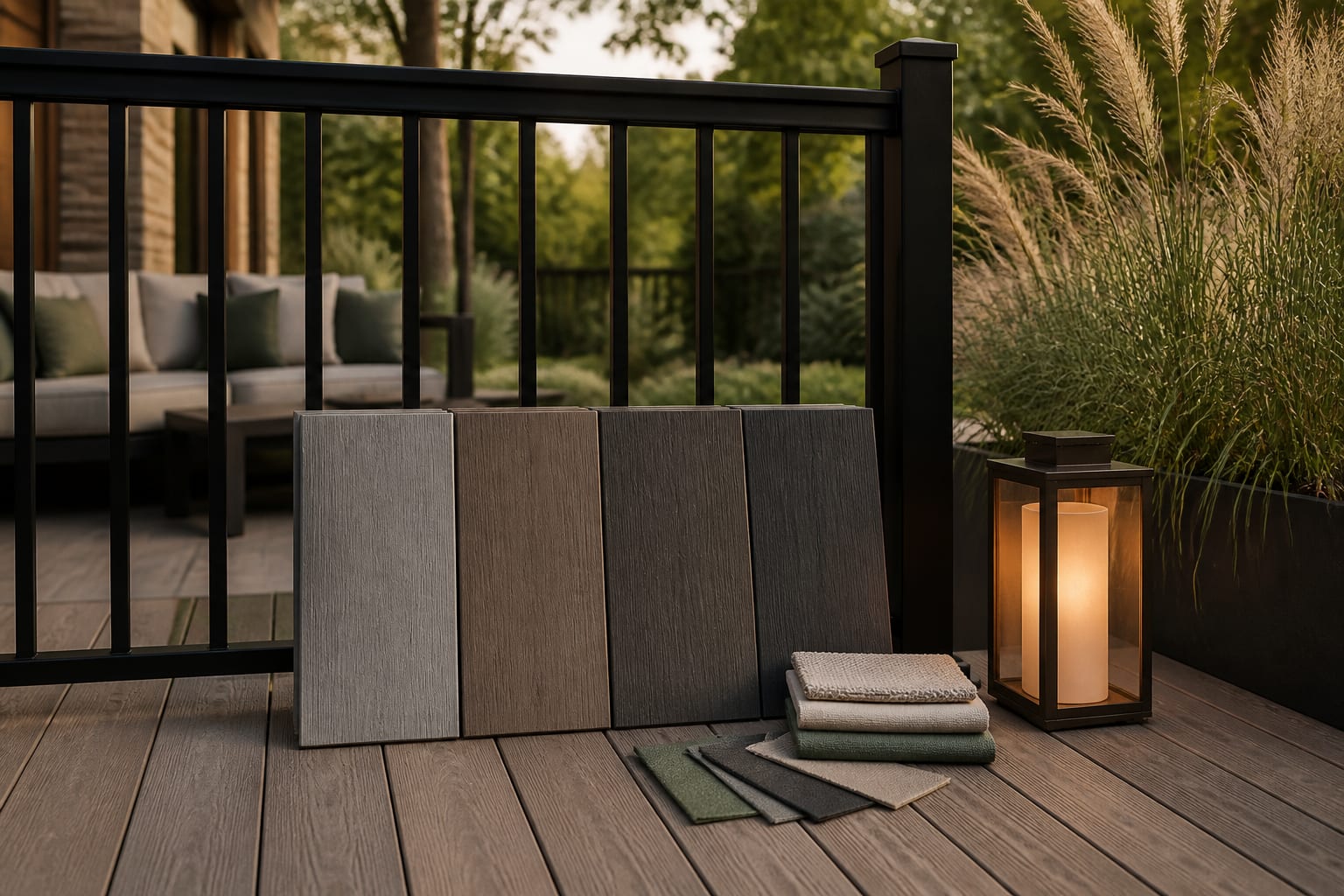
| Board tone | Compare against siding in sun, shade, and after rain using physical samples | Warm brown vs. cool gray boards |
| Railing | Match style to the house and confirm local code height | Black metal, cable, or wood post |
| Rug | Size to the seating group and confirm outdoor rating | Covers front chair or sofa legs |
| Shade | Cover where people actually sit; plan attachment points | 7.5'-9' market umbrella or sail |
| Lighting | Keep low and warm along paths, not one bright wall fixture | 2700K step and post-cap lights |
For railing options that hold up beyond a single render, see deck railing ideas that match real houses. If the current boards are tired or slippery, compare stain, composite, painted decking, and tile in deck flooring ideas for weather and maintenance before assuming furniture will distract from a weak surface.
How Do You Use an AI Deck Design App the Right Way?
- Photograph the deck from the angle you use most, keeping the full railing line, stairs, house wall, door swing, and grill in frame.
- Generate controlled versions: one dining-focused layout, one lounge-focused layout, one mixed-use layout, keeping deck size, stairs, and siding color constant.
- Run a second pass on the winning layout that changes only railing, board tone, shade, and lighting.
- Translate the favorite preview into physical checks: deck width and depth, stair clearance, door swing, railing height, chair depth, table diameter, umbrella base size, grill clearance, and board sample.
- Bring in a licensed pro before any structure, electrical, gas, or guardrail change moves from concept to construction.
Changing boards, rails, furniture, screens, and lights all at once makes it impossible to tell which move actually fixed the deck. If every believable version improves once the traffic path opens and the railing gets visually lighter, test those moves first.
What Deck Design Mistakes Should You Avoid?
The most common mistake is shopping for furniture before the plan has earned the space. Decks punish wishful thinking because there are edges, railings, stairs, and weather on every side.
- Treating the deck like an indoor room. A deep sofa, coffee table, two chairs, and planters may fit a showroom but still need clear access to the door, stairs, grill, and rail; tape furniture footprints on the boards before ordering bulky pieces.
- Ignoring the view from inside the house. The deck is visible through glass doors year-round; railings, furniture backs, and tall planters should frame that view instead of blocking it.
- Choosing railing from a close-up photo. Cable rail looks clean but needs periodic tensioning, wood feels warmer but heavier, and glass preserves views but shows marks and fingerprints.
- Forgetting storage and maintenance. Cushions, covers, lanterns, and planters need a plan; a storage bench or fewer, heavier planters often beats a prettier image full of loose accessories.
Before buying, walk the route from house to stairs, grill to table, and chair to view with the preview open. If it still works with the door open, chairs pulled back, and sun on the worst corner, it's ready for samples and pricing.
Frequently Asked Questions
Can AI actually design my specific deck, not just a generic one?
Yes, when you upload a clear photo of your own deck. The AI works from your real stairs, railings, house wall, and door swing rather than inventing a layout, though you should still verify dimensions and code before building anything permanent.
What size table fits a small deck?
A 42"-48" round table usually fits compact decks better than a 72" table, since it needs less pullback room. Measure the deck and leave 30"-36" behind each chair before finalizing table size.
How do I keep the grill from blocking traffic?
Keep the grill away from railings, siding, cushions, and the main path between the door and stairs. If an AI preview hides the grill in a pretty corner with no working space, revise the prompt so it stays visible and reachable.
Should I pick railing style before or after furniture?
Pick railing first, since it frames the whole view and must meet local code height requirements. Furniture is easier to adjust later than a railing that's already installed.
Do I need a contractor if I like the AI preview?
Yes, for anything structural, electrical, or code-related. Treat the preview as a starting point for conversations with a licensed pro, not as approval to build.