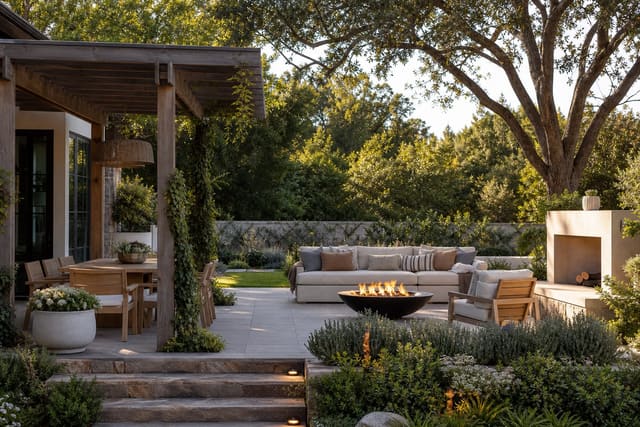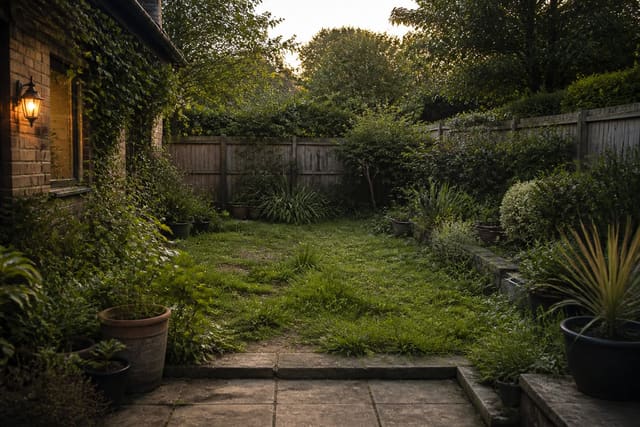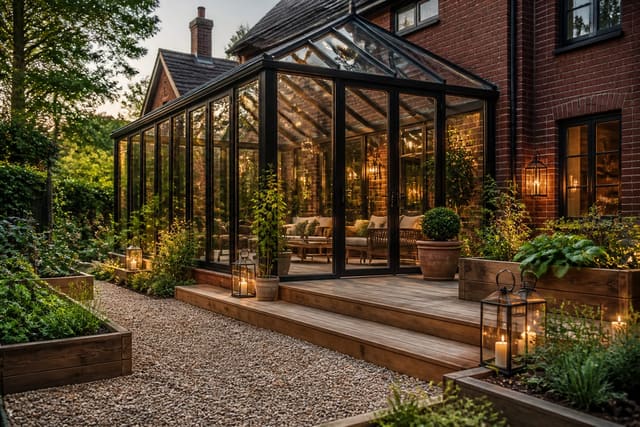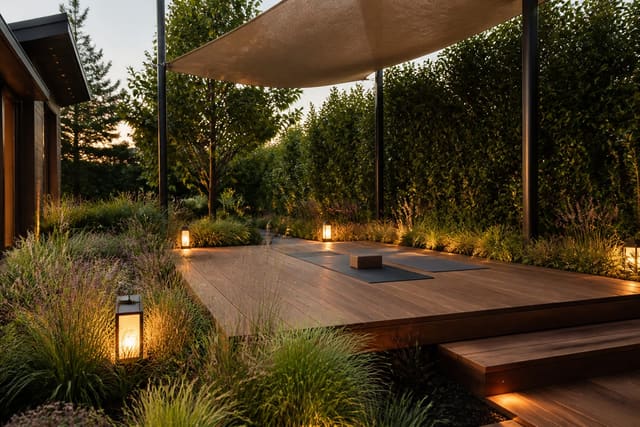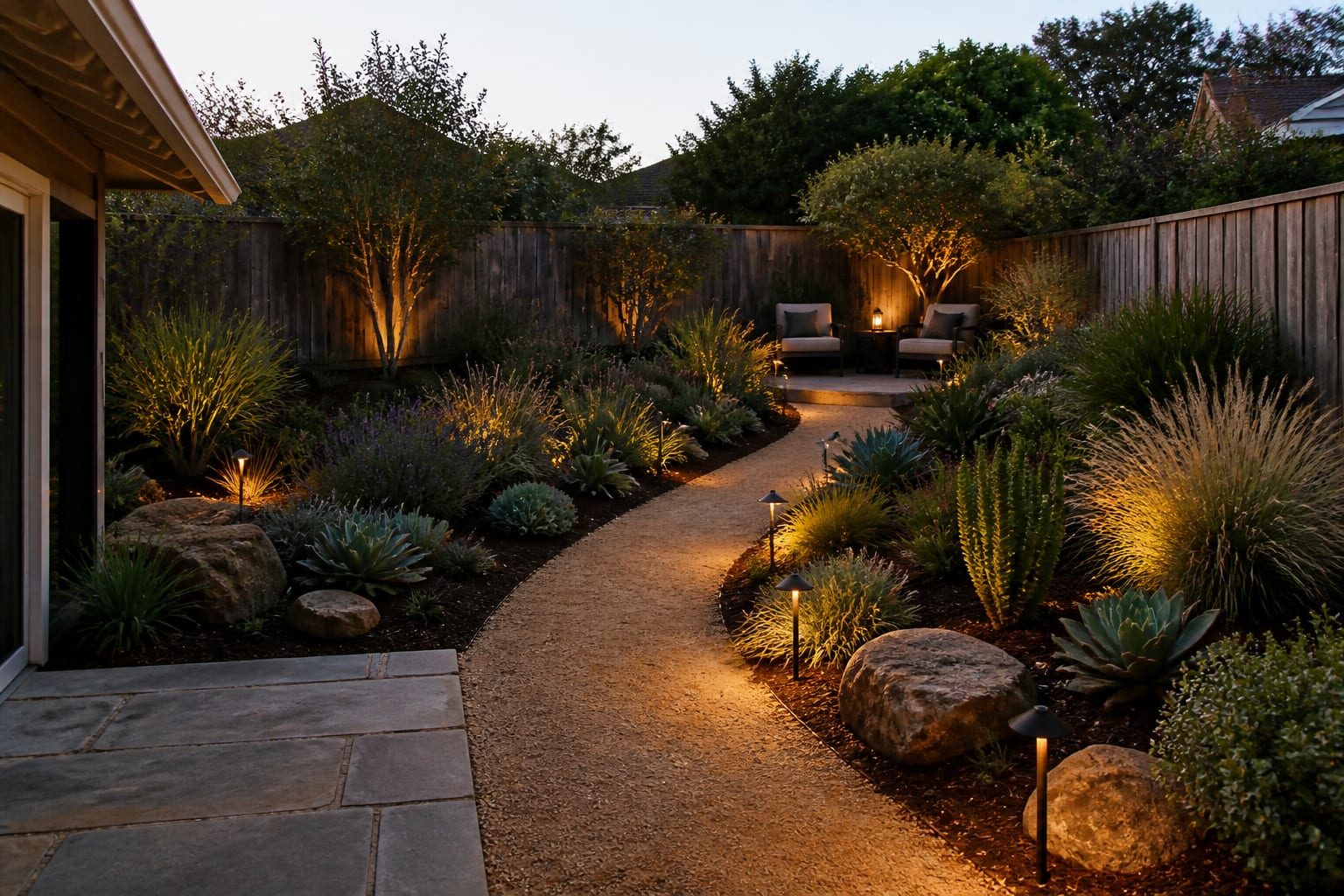
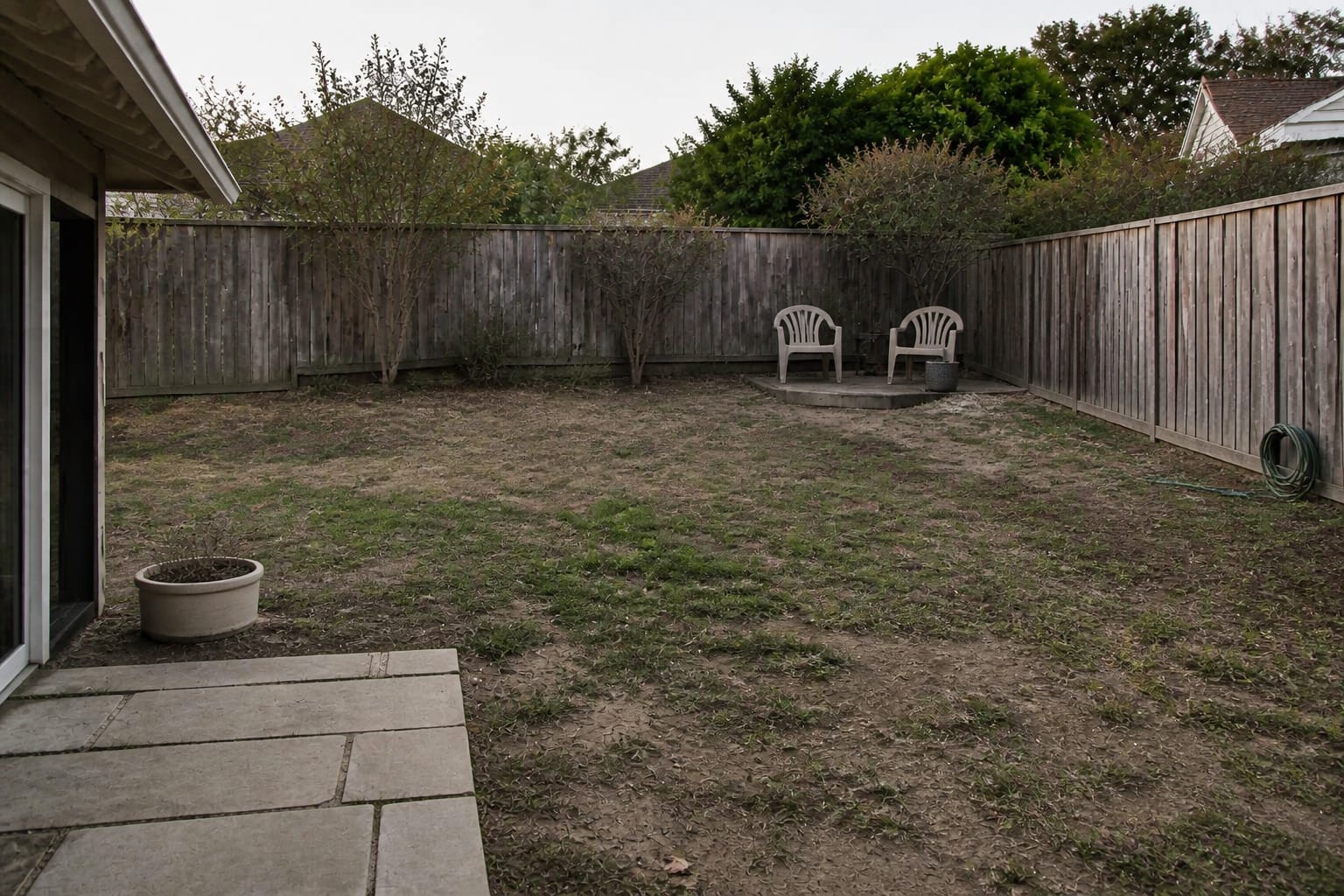
Yes, AI can design a drought-tolerant xeriscape garden by previewing gravel, planting masses, shade, paths, and seating in a photo of your actual yard. Use the preview to make the garden feel intentional before you remove lawn, order gravel, or buy plants that don't belong together. The best xeriscapes are edited harder than typical flower beds, since every plant, stone, and shadow is visible.
What makes a drought-tolerant garden feel designed, not deprived?
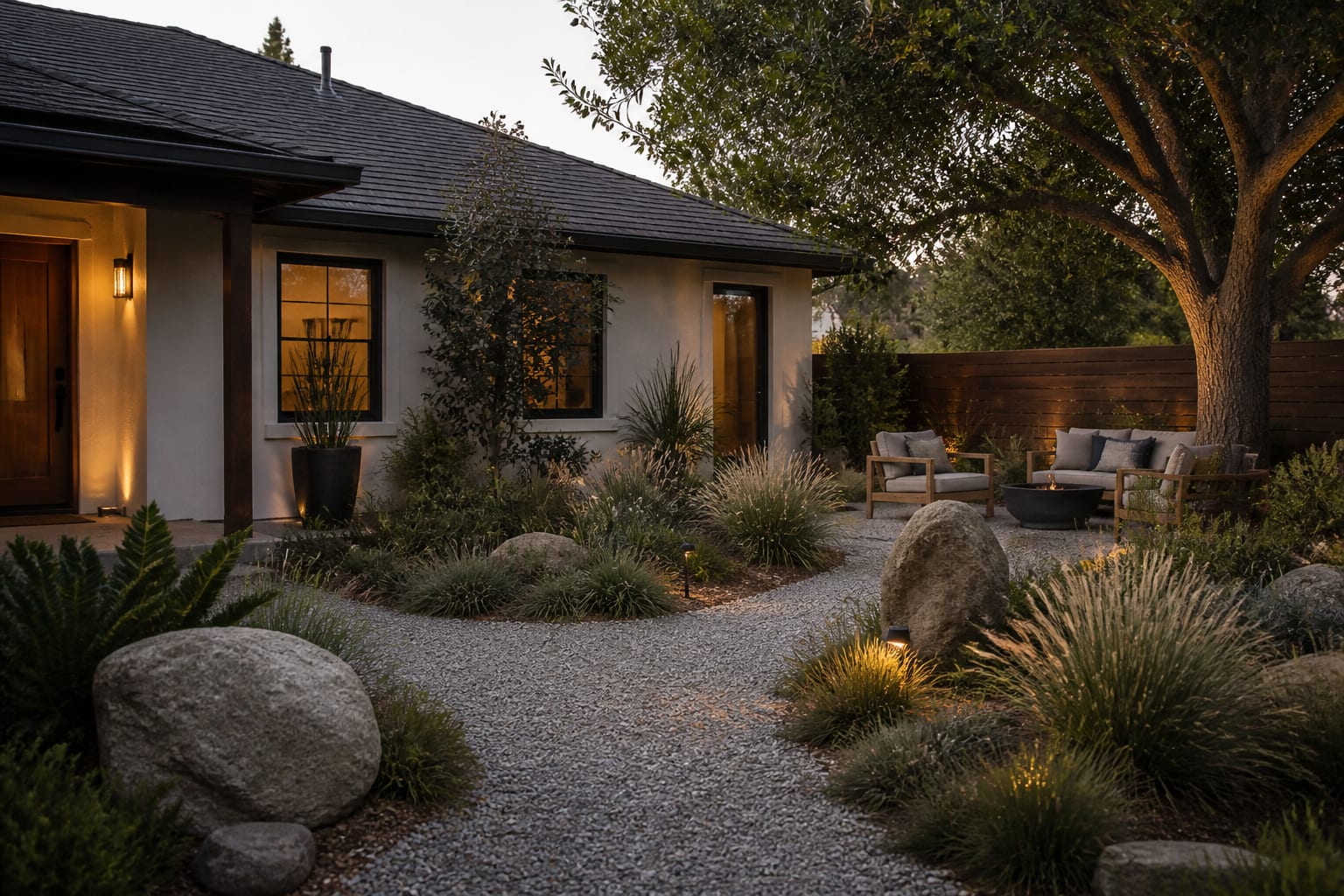
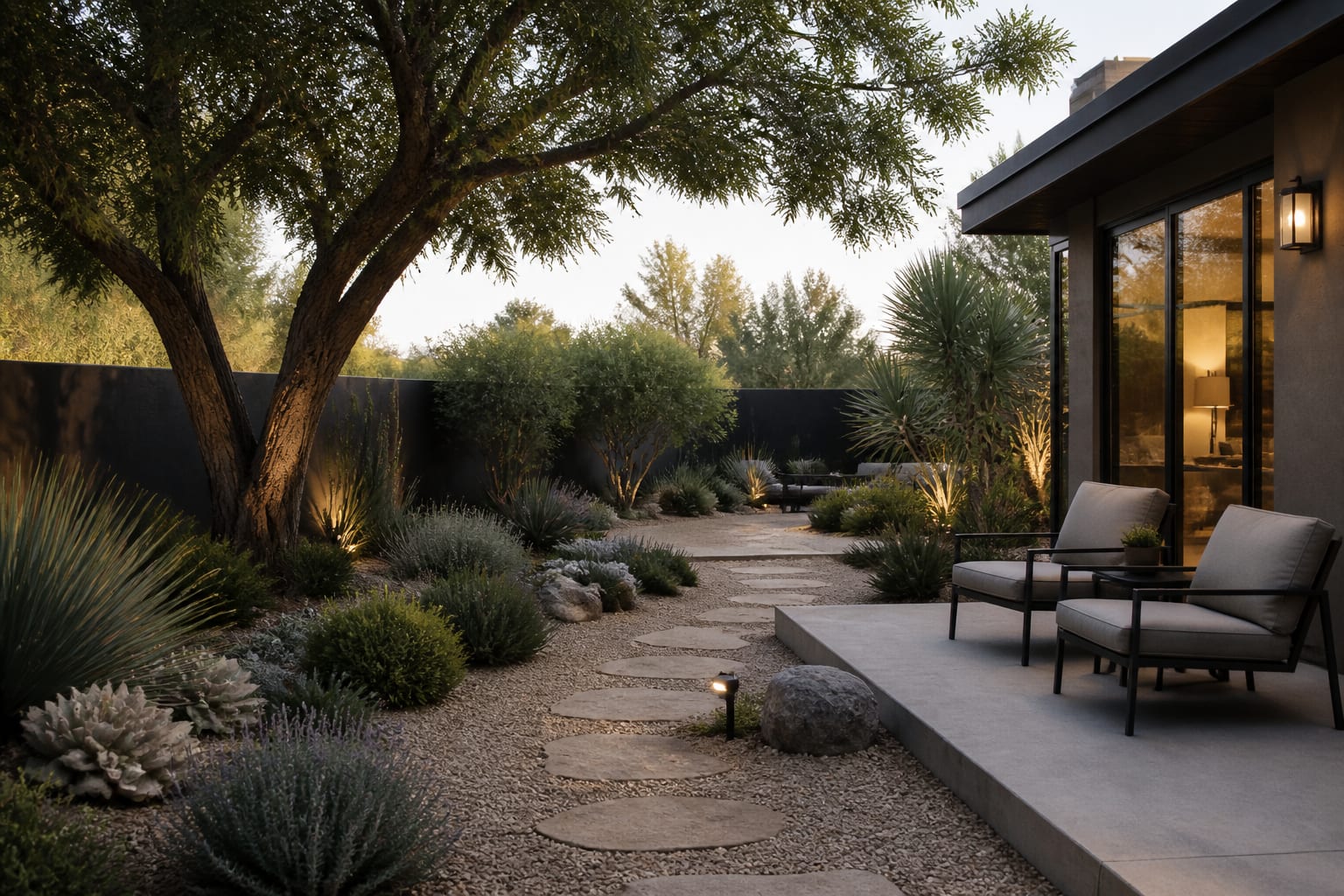
A drought-tolerant garden feels designed when empty space has a job. Bare gravel around lonely plants is landscaping that forgot composition. A strong low-water design uses fewer materials, repeats them confidently, and gives circulation the same weight as planting.
Decide what replaces the lawn visually. In a small yard, one gravel field with a clean edge often beats five patches of mulch, stone, and bark. Use 36-inch paths for daily routes to a gate or shed; 30 inches only where space is tight. Planting beds need depth too — a 24-inch strip suits lavender or compact grasses, but a layered border needs 3 to 5 feet so plants can stagger instead of lining up.
Gravel color matters more than expected. Pale gravel glares in full sun and can feel hotter; dark rock can look heavy against light stucco. Mid-tone decomposed granite or warm buff gravel usually relates better to soil and house. For a plain yard photo, an AI garden design from photo workflow keeps the preview tied to your real fence lines, slope, and trees.
Which before-and-after moves change the garden first?
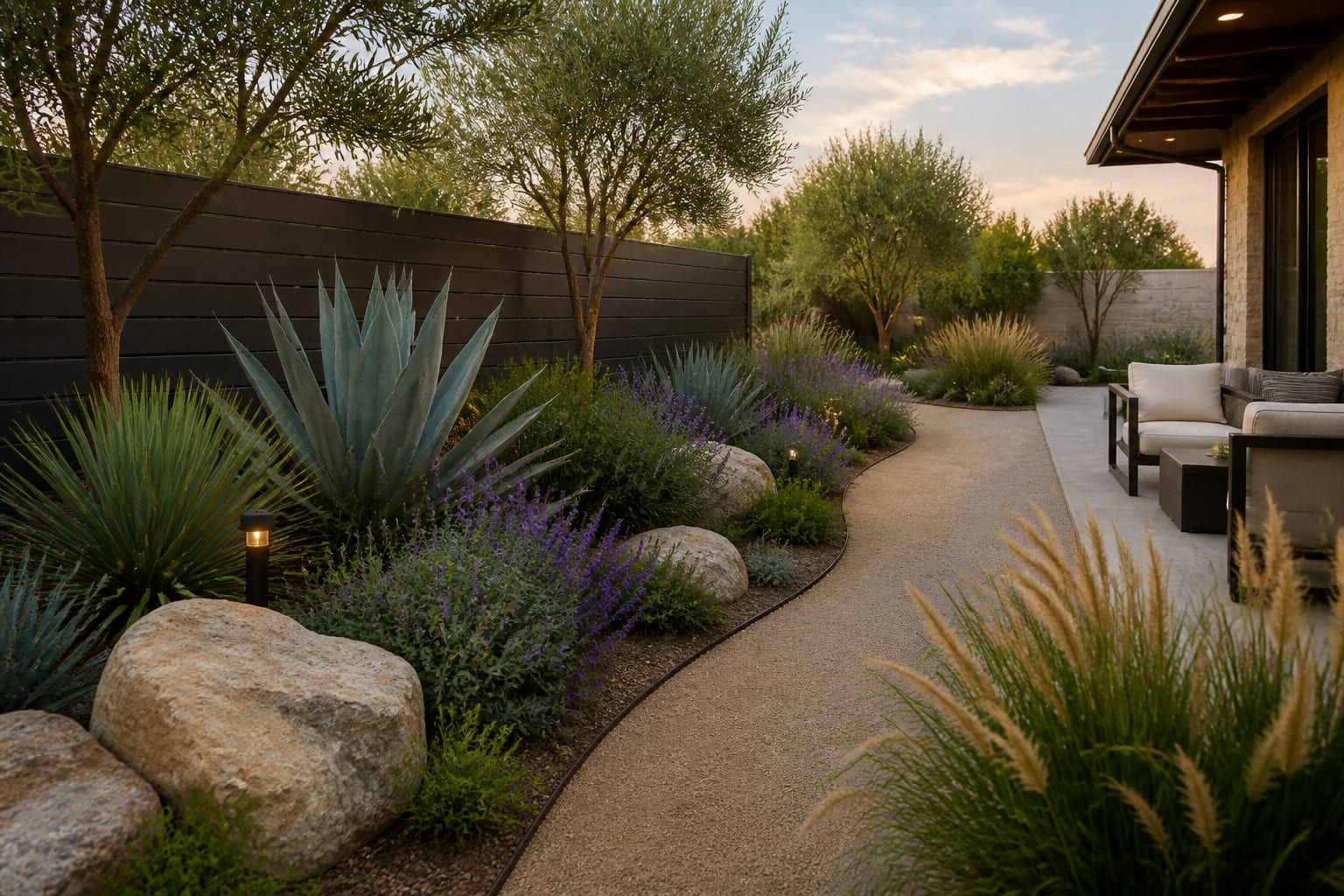
The strongest xeriscape transformations start with the bones: path, bed line, shade source, and repeated masses that make the yard readable from the house.
- Replace a shapeless lawn edge with a deliberate path. Keep it about 36 inches wide with steel, brick, or stone edging, and let plants soften it by 4 to 8 inches.
- Convert a skinny border into a real planting band. A 3-foot bed holds compact shrubs and grasses; a 5-foot bed layers a small tree, shrubs, perennials, and groundcover.
- Add one shade decision early. A small tree, pergola, or shade sail should relate to an actual seating zone, not sit randomly over gravel.
- Repeat three plant shapes across the yard — one upright, one mounding, one loose grass — in odd-numbered groups for rhythm.
- Use boulders only where geologically plausible. Sink them slightly into the grade near slope changes or path bends, in a color close to the local stone.
These moves are easiest to judge in a before-and-after preview, which shows whether a curve feels graceful and whether the planting looks lush enough without pretending the yard has unlimited water.
How do you choose low-water plants without a cactus museum?
Low-water does not have to mean agave in every corner. A modern stucco home may suit agave, yucca, desert spoon, and boulders; a cottage or craftsman house may look better with rosemary, lavender, ceanothus, manzanita, yarrow, salvia, and ornamental grasses.
Plant in layers, not categories. Start with the toughest ground plane — gravel, decomposed granite, mulch, or permeable pavers — then add evergreen or woody structure so the garden keeps shape in dry months. Add grasses and flowering perennials last for movement; aim for roughly 60 percent quiet structure to 40 percent seasonal drama.
Mature size ruins more xeriscapes than drought does. A one-gallon plant looks tiny at install, so homeowners crowd it and the bed becomes a thicket within two summers. Give a shrub that matures at 4 feet wide close to that space, and keep spiky plants 18 to 24 inches back from paths or seating.
Watch microclimates too: a west-facing wall is harsher than a bed with morning sun, and space under an eave gets almost no rain. For a protected growing space for seedlings or tender plants, see AI greenhouse garden room design to separate production space from the ornamental xeriscape outside.
How do you use AI to preview a xeriscape before you dig?
Upload a straight photo from the main viewing point — patio door, kitchen window, or driveway — including the fence, slope, trees, irrigation heads, and hardscape edges. The less you hide, the more useful the preview.
Write the prompt like a landscape brief: a drought-tolerant garden with a 36-inch decomposed granite path, 4-foot planting beds, repeated low-water shrubs, ornamental grasses, two boulders near the path bend, a small shade tree, warm gravel, no new pool, and no fence changes. If the result invents a larger yard or removes real features, tighten the prompt and rerun it.
Use the preview for composition, not plant survival guarantees — it can show whether a curved path beats a straight one or whether a bench belongs under the tree, but it can't know local water rules, soil, or mature root spread. For a quiet outdoor retreat, an AI outdoor yoga space design pass can also test privacy, shade, and soft ground surfaces first.
What xeriscape mistakes waste water and money?
The most common mistake is treating low-water as a style instead of a system. A convincing dry garden needs drainage, mulch, grouped irrigation, mature spacing, and shade — the photo may be beautiful on day one, but the garden has to survive August.
- Planting one of everything makes a yard look busy yet thin. Repeat fewer plants in larger groups instead.
- Using only gravel worsens heat and glare. Add shrubs, small trees, or a pergola where people actually sit.
- Ignoring water zones defeats the point of xeriscaping. Group plants with similar needs so a new tree isn't irrigated on the same schedule as established rosemary or agave.
- Placing spiky plants beside narrow paths creates daily irritation. Keep agave, yucca, and thorny shrubs away from high-traffic edges.
- Forgetting maintenance access ends the tidy season fast. Leave stepping stones or an 18-inch gap behind deep borders for pruning and repairs.
A drought-tolerant garden is ready to build when path width, bed depth, gravel color, shade plan, irrigation zones, and mature plant spacing all agree in the same preview.
Frequently Asked Questions
Does AI drought tolerant garden design know which plants survive in my climate?
No. AI can preview composition — path width, gravel color, shade, and plant massing — but it doesn't verify hardiness zones, local water rules, or soil type. Cross-check any AI-suggested plant list with a local nursery or extension office before buying.
How wide should paths and planting beds be in a xeriscape?
Make the main path about 36 inches wide for comfortable daily use; 30 inches works only in tight spots. Planting beds should run 3 to 5 feet deep so shrubs, grasses, and perennials can stagger in layers instead of lining up in a single row.
Is gravel enough for a low-water garden?
No. Gravel is a ground surface, not shade or structure. Pair it with evergreen shrubs, ornamental grasses, and at least one small tree or pergola near seating so the space doesn't bake in full sun.
How many plant types should a xeriscape use?
Fewer types repeated in larger groups look more designed than many types scattered thinly. Aim for one upright form, one mounding shrub, and one loose grass or perennial, repeated in odd-numbered clusters across the yard.
Can AI show a before-and-after of my actual yard?
Yes. Upload a straight-on photo showing your fence, slope, and existing trees, then prompt for specific changes like path width, bed depth, and plant type. Keeping real features in the prompt prevents the AI from inventing a different yard.