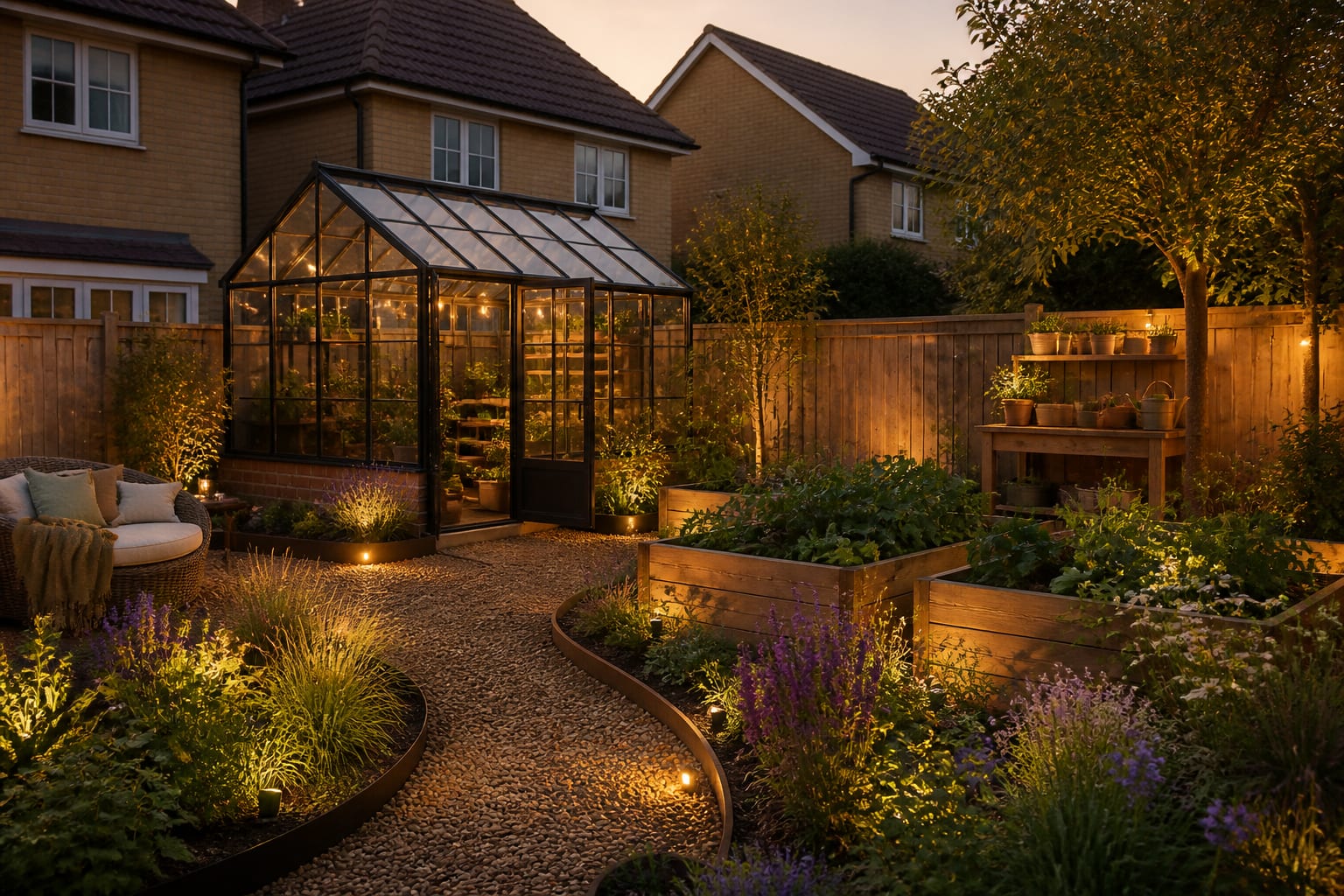
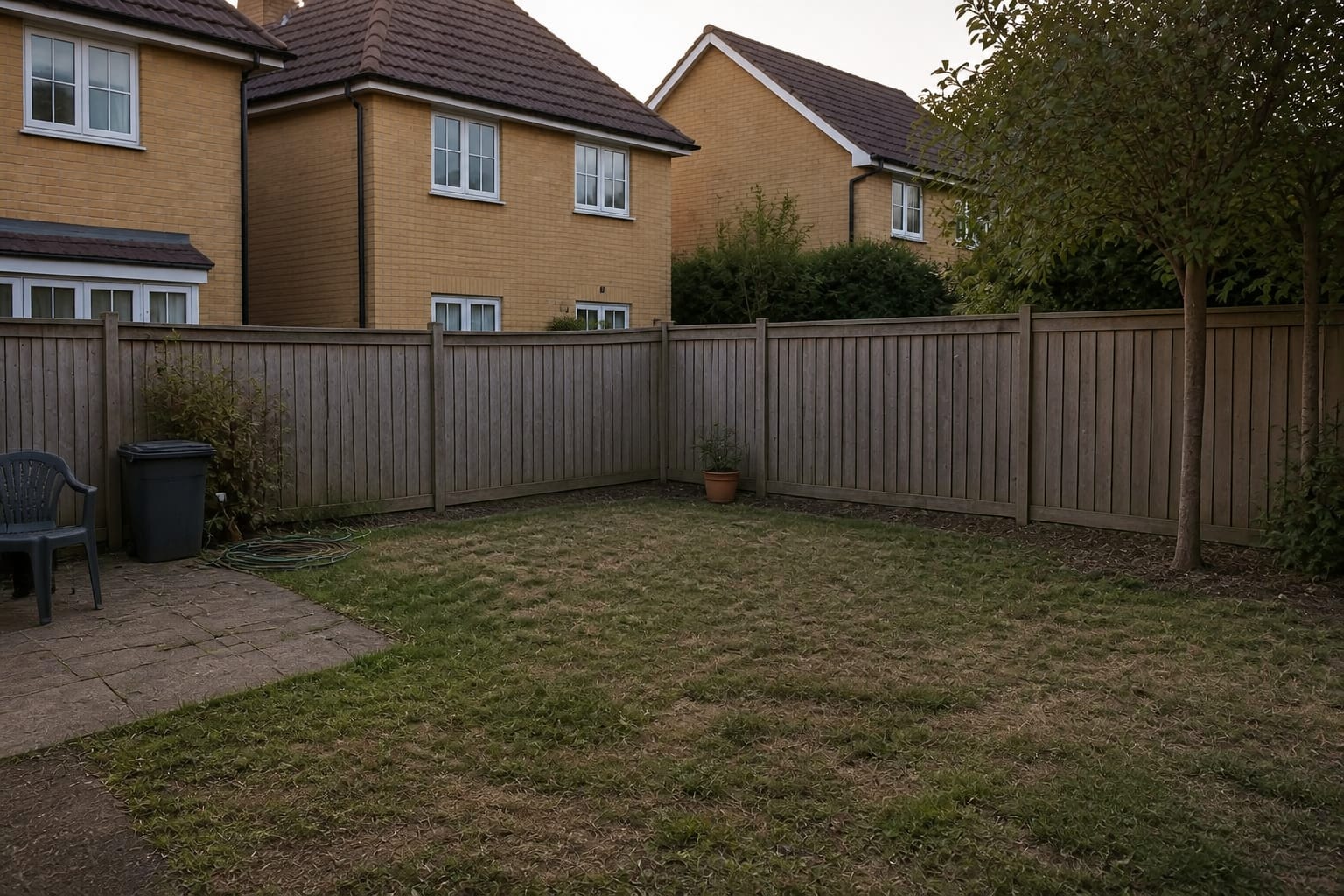
AI greenhouse garden room design turns one yard photo into a concept for the structure, path, planting, seating, and light before you commit to a kit or custom build. Start with placement and use, not the prettiest frame, since glass exposes every weak decision about sun, access, drainage, and the view from the house.
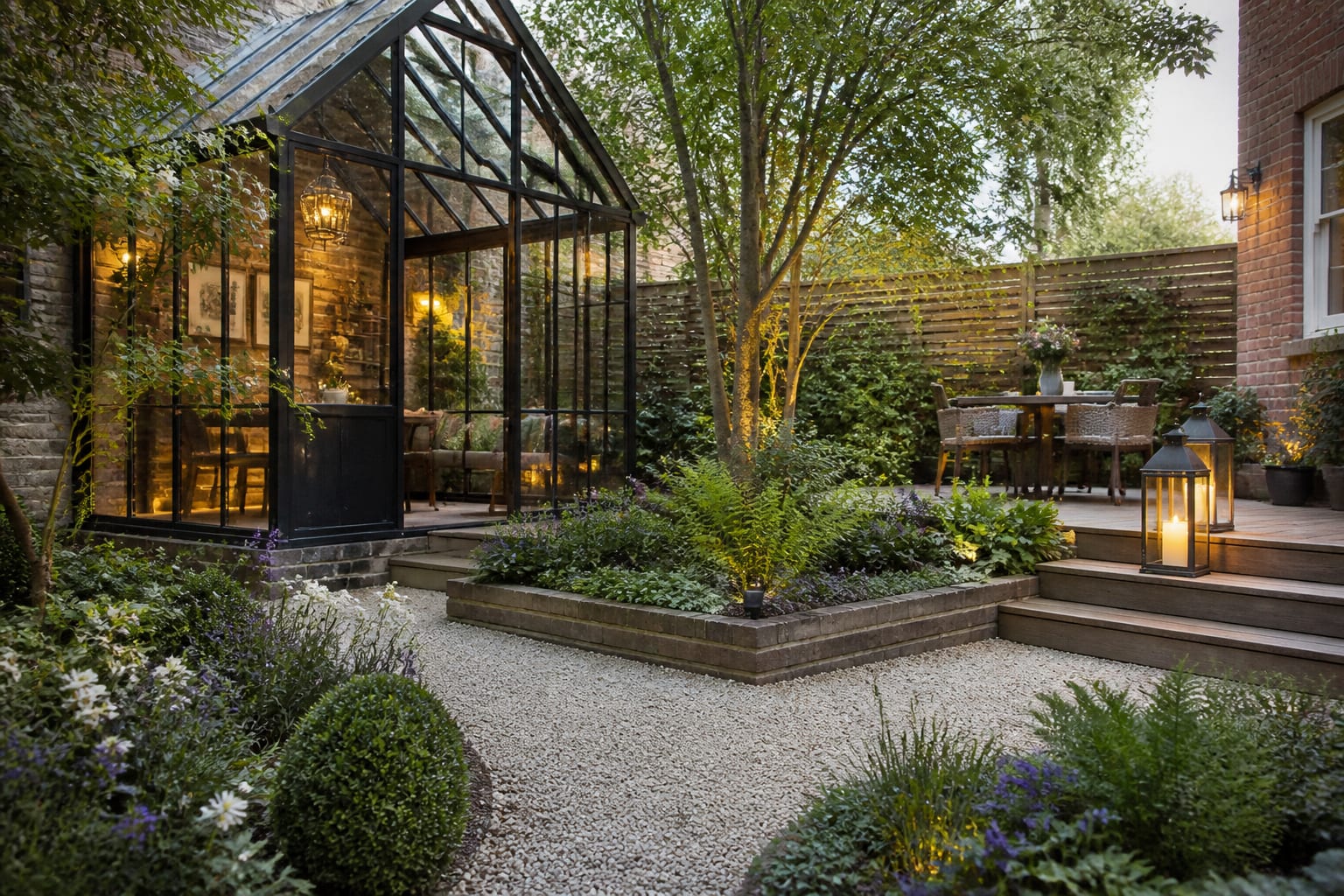
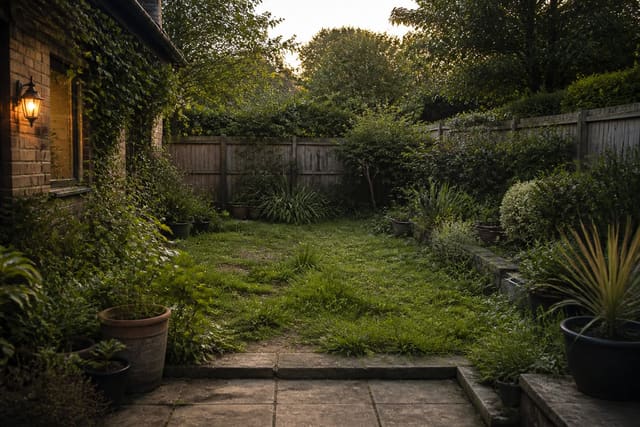
Use a straight photo from the house door or main garden approach, not a close-up of an empty corner. Include the fence, patio edge, trees, slope, shed, gate, hose bib, and any view you want to keep or hide. If the glass room is really an all-season extension, compare it with an AI sunroom design from a photo to separate insulated indoor comfort from a garden structure that still behaves like outdoor architecture.
What makes a glass garden room belong in the garden?
A glass garden room belongs when it connects to the paths, beds, and house materials already on site. A freestanding greenhouse dropped onto lawn looks like packaging that hasn't been removed. Give it a reason to be there: a gravel walk from the kitchen door, a potting zone near vegetable beds, or a quiet seating pocket at the end of a border.
Start with the approach. A 30 inch path is the tight minimum for carrying a tray of seedlings, but 36 inches is better for a daily route. If the door swings outward, keep the landing clear by at least 36 inches so it doesn't fight pots, boots, or a chair.
| Footprint | Best for | Notes |
|---|---|---|
| 6 x 8 ft | Seed trays, tool storage | Fits a slim bench; too tight for seating |
| 8 x 10 ft | Potting plus a small table and two chairs | Comfortable minimum for a dual-use room |
| 10 x 12 ft | Seating, lounging, entertaining | Leaves room for citrus pots and winter coffee |
Leave 18 to 24 inches around the outside for planting or maintenance where the structure meets a fence or bed. Match the frame color to the house: dark green, black, bronze, natural cedar, and off-white all work, but should relate to window trim, fence stain, or nearby furniture. If the broader yard plan is still loose, run the image through an AI garden design from photo workflow before judging the greenhouse on its own.
Which before-and-after moves change the concept first?
The strongest concepts change the garden bones before the accessories. Test these moves before comparing frame colors or finials.
- Set the axis from a real door or path. A greenhouse reached across wet lawn gets used less; keep the main route 36 inches wide and the landing large enough for the door swing and a boot tray.
- Add a working edge inside the glass. Plan at least one 18 to 24 inch deep staging bench plus a lower shelf or closed box for tools, gloves, and plant food.
- Wrap the outside with planting, not paving. A 3 foot deep border on the public side can hold herbs, grasses, roses, or pollinator planting, leaving one side clear for maintenance.
- Choose one seating moment. A 30 inch round table with two narrow chairs fits many 8 by 10 foot layouts; lounge chairs usually need a larger room or a separate patio nearby.
- Plan shade and ventilation early. Roof vents, louvered windows, shade cloth, exterior blinds, or deciduous cover can moderate heat without pretending the structure is fully conditioned.
How do glass, planting, and hardscape work together?
Glass makes every nearby material more visible, so the palette needs editing. Repeat a black metal frame once in a gate latch, lantern, or chair; let timber framing echo in the path or potting bench.
Hardscape should feel durable. Gravel drains well and suits working gardens but needs metal, brick, or stone edging to stop it creeping into beds. Brick paths feel older and more architectural; large concrete pavers feel cleaner. Avoid mixing gravel, stepping stones, brick, decking, bark, and patterned tile around one small glass room unless the garden is large.
Planting has two jobs: settle the greenhouse into the yard and reward the view from inside. Use low plants near the door so nothing snags clothing, and repeat plant groups along the sides so the structure feels nested. In a hot, dry garden, AI drought tolerant garden design can help test gravel color, shade, and low-water planting before the glass room becomes a heat trap.
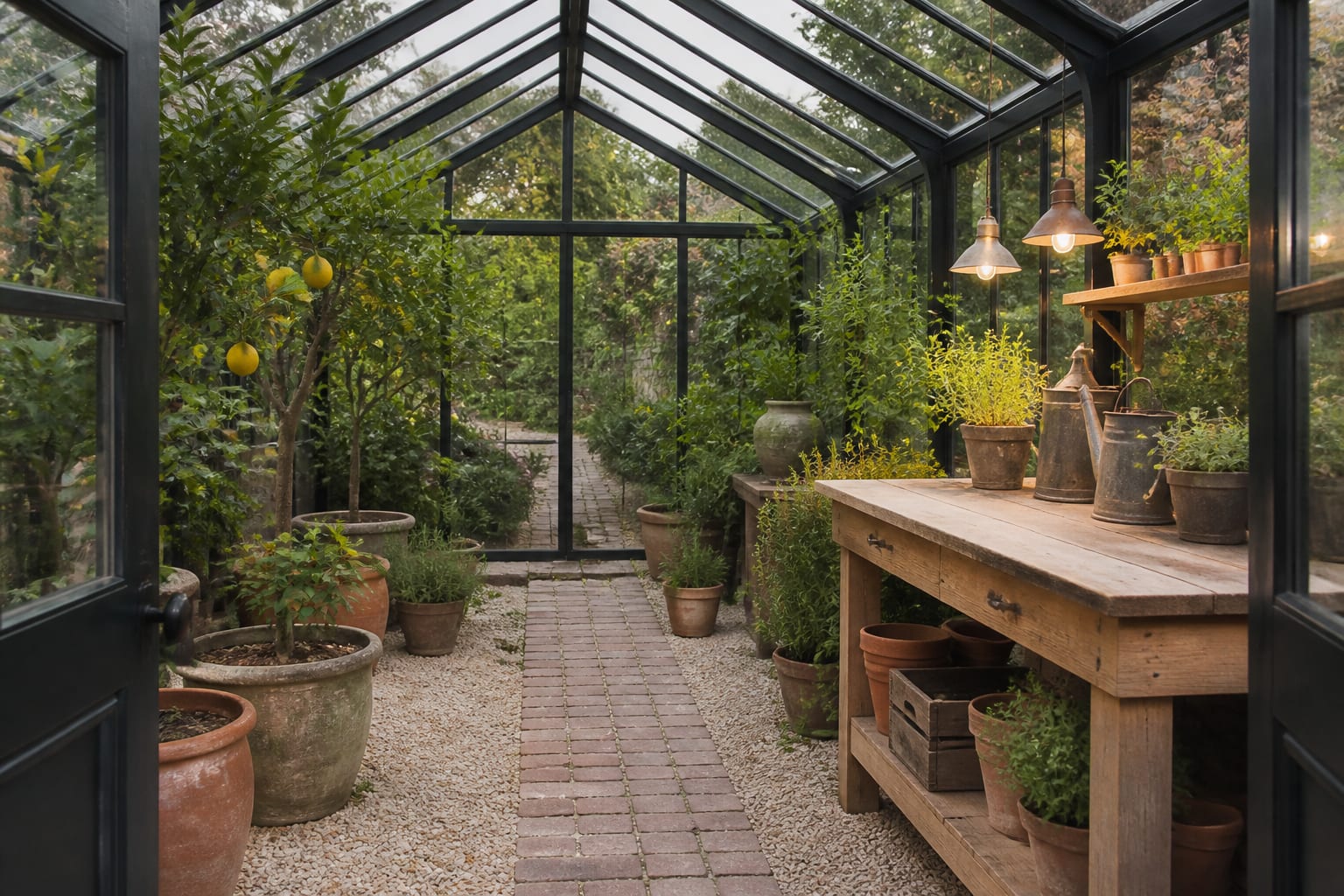
At night, keep lighting low and warm. Exterior-rated 2700K path lights, shielded sconces, or small lanterns inside the glass are usually enough; bright floodlights reflected in panes expose every fingerprint and plastic tray.
How do I preview my own greenhouse garden room?
Treat the AI preview as a concept rehearsal, not a supplier drawing. Upload a photo from the angle you'll see most often - kitchen door, patio chair, side gate - and request one design direction at a time.
A strong prompt sets limits: "design a small glass garden room in this corner with a black metal frame, an 8 by 10 foot footprint, a 36 inch gravel path from the patio, one 24 inch deep potting bench, two cafe chairs, layered planting around the front, warm 2700K lantern light, no change to the fence, and no removal of the mature tree."
Run at least three passes: a practical working greenhouse with staging and tool storage, a softer garden room with seating and lamps, and the most restrained version you can imagine. Judge each against sun direction, winter access, water supply, door swing, and glazing maintenance. If the image widens the yard, removes the neighbor's fence, or puts glass under a fruiting tree, keep the mood and reject the logistics.
What mistakes should I avoid with a greenhouse garden room?
The most common mistake is buying the greenhouse before designing the garden around it. A lovely kit still feels wrong if the path is stingy, the door faces the dullest view, or the beds are too shallow to root the glass into the yard.
Underestimating heat is another. A south-facing glass room may need roof vents, automatic openers, shade cloth, or deciduous planting nearby; without airflow, the prettiest summer image becomes a place where seedlings scorch.
Don't stack every charming accessory at once - checkerboard pavers, string lights, scalloped edging, and ornate finials turn a small greenhouse into a stage set. Choose one romantic note and let structure, plants, and honest tools do the rest.
Skipping storage is the quiet failure. Soil bags, labels, ties, and watering equipment appear immediately, so include a bench, shelf, or lidded box. Finally, don't let the AI image sell impossible lushness - treat thriving tomatoes, orchids, and roses together as atmosphere, then choose plants suited to your climate and habits.
Frequently Asked Questions
Can AI design my greenhouse or garden room from a photo?
Yes. Upload a straight photo of the yard, and AI can preview structure placement, path width, planting, seating, and lighting. Use it to test composition and mood, then verify glazing, drainage, ventilation, and structural details with a supplier or builder before ordering.
How big should a glass garden room be if I want to sit in it?
An 8 by 10 foot footprint is the practical minimum for a small table and two chairs alongside a potting bench. A 6 by 8 foot greenhouse works for seed trays and tools but feels cramped once seating is added.
How wide should the path to a greenhouse be?
Thirty inches is the tight minimum for carrying a seedling tray, but 36 inches is more comfortable for daily use. Keep the landing at the door clear by at least 36 inches so the swing doesn't fight pots or boots.
How do I stop a greenhouse from overheating in summer?
Plan ventilation early: roof vents, louvered windows, automatic openers, shade cloth, exterior blinds, or deciduous tree cover nearby. Without airflow and shade, a south-facing glass room can scorch plants and become unusable on hot afternoons.
What's the biggest design mistake with garden rooms?
Buying the structure before planning the garden around it. A path that's too narrow, a door facing the wrong view, or shallow surrounding beds can make even a well-built greenhouse feel disconnected from the yard.