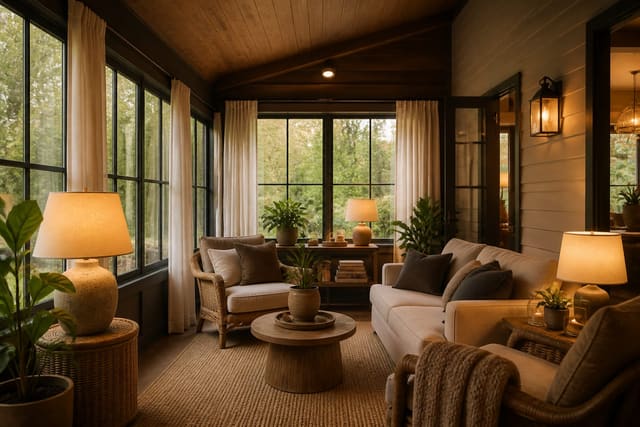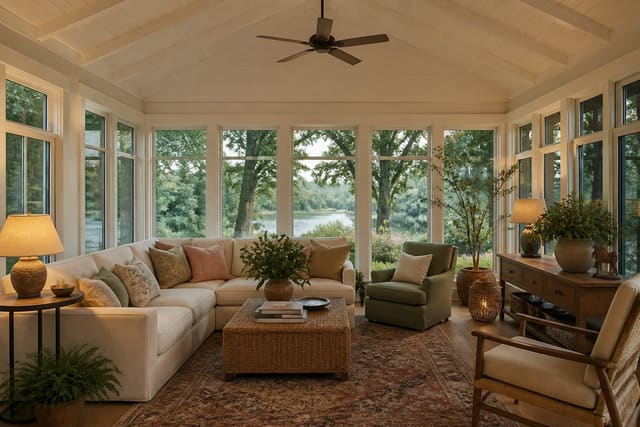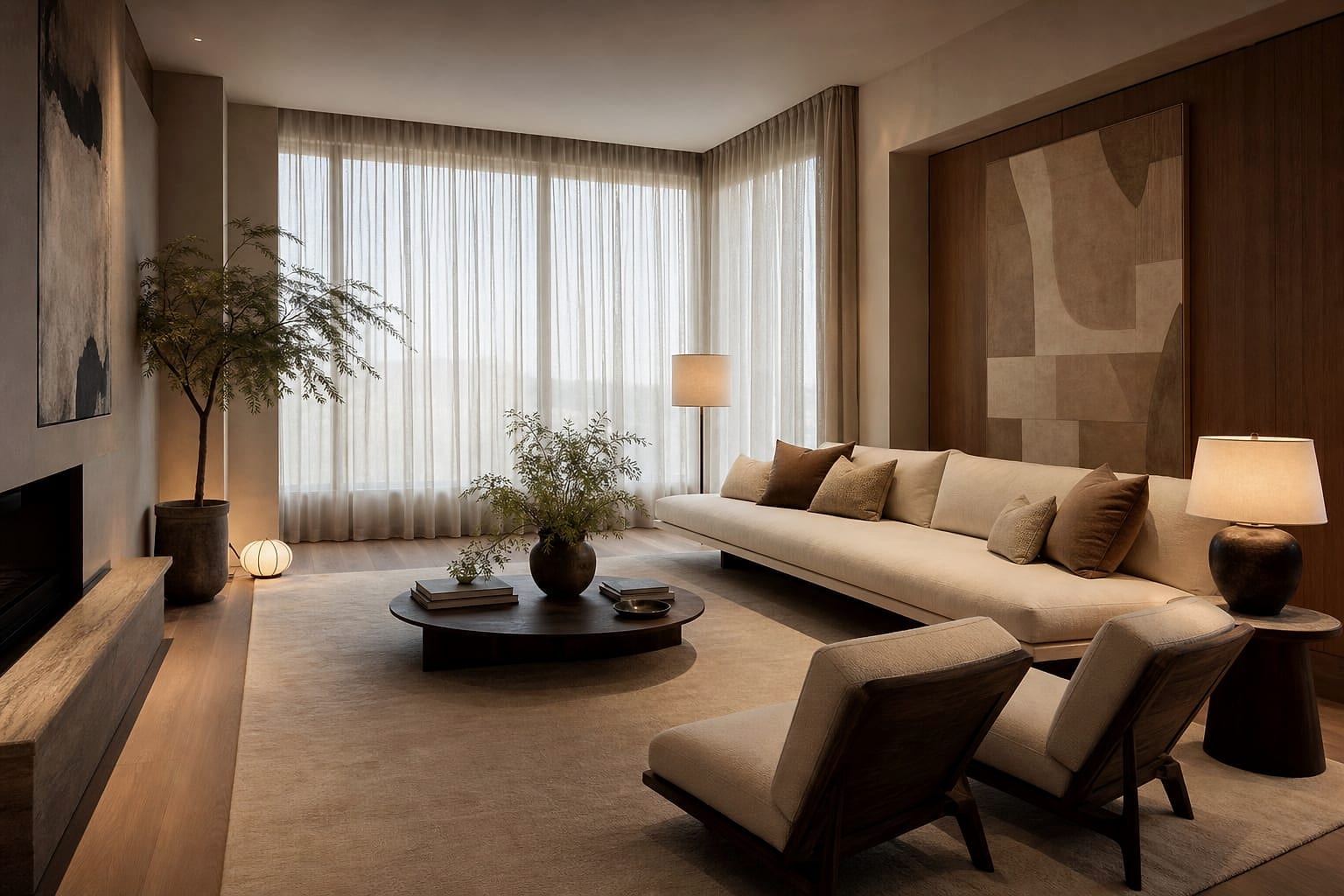
AI sunroom design previews seating, fade-resistant fabric, shading, and indoor-outdoor planting on one uploaded photo, so a sunroom works in July heat and January cold without melting the fabric or freezing the residents. The best sunrooms get edited harder than living rooms because every chair, shade, and finish sits against the outdoor view. Treat the space as a transition, not a fully indoor or fully outdoor room, and preview it before buying anything that fades, crowds the doors, or fights the garden.
Can AI help design a sunroom or conservatory?
A sunroom preview tests furniture layout, flooring, window treatments, plant placement, wall color, lighting, and the visual link between interior and outdoor view. It cannot replace a permit drawing, a glazing calculation, or a check for leaks and heat gain. Its value is showing whether the room wants a dining table, reading chairs, a plant room, or a quieter extension of the living room.
Photograph the room from the interior doorway, not the prettiest corner, so the tool sees the threshold, ceiling line, floor material, window rhythm, and outdoor sightline. Upload a second angle if the room wraps a corner or has French doors to a deck. A protective prompt works best: keep the brick wall, white window frames, slate floor, exterior doors, and garden view; redesign with durable seating, warm texture, layered shade, plants, a small table, and a calmer indoor-outdoor connection.
If the room currently feels like a patio pretending to be a living room, compare results against an AI outdoor-indoor conversion design workflow so the threshold gets solved, not just the furniture.
What makes a sunroom feel like a bridge, not a porch with furniture?
A good sunroom borrows comfort from the house and resilience from the garden. The sofa can't be precious, the rug can't be delicate, and the palette should respond to what's outside the glass: warmer woods and clay tones for brick or gravel views, calmer neutrals for lush greenery.
Circulation comes first. Keep at least 30 inches of walking path between the interior and exterior doors, 36 inches if people pass through with trays, pets, or gardening supplies. Match seating to real use:
- Two lounge chairs and a 24-30 inch round table for a narrow conservatory.
- A 72 inch sofa for a wider room, as long as the back clears windowsills, heaters, and hardware.
- A washable cushion and sturdy side table if the room doubles as a plant-care station.
The threshold should hand off visually from the interior room: repeat the living room's wood tone in a tray table, echo the kitchen's black hardware in door handles, or carry a curtain color through from next door. Browse sunroom ideas for real houses for direction, then check every reference against your own window pattern.
Test this on your own room photo with Re-Design, keeping the room structure, daylight, ceiling line, and main path visible.
The glass, shade, and flooring decisions that control the result
Sunrooms rise or fall on glare. Preview woven shades, linen-look curtains, solar shades, and shutters before assuming darker paint is the fix; the goal is softened light, not a room that loses its reason to exist. Hang curtain rods 4 to 8 inches above the casing and extend panels beyond the glass so they clear the view when open; in a window-wall conservatory, shades are often cleaner than fabric that collects in corners and door swings.
Flooring must tolerate sun, dirt, and temperature swings:
| Flooring | Works well in sunrooms | Avoid |
|---|---|---|
| Porcelain tile | Yes, sun and moisture proof | -- |
| Sealed brick or stone | Yes, durable underfoot | -- |
| Painted concrete | Yes, low maintenance | -- |
| Indoor-outdoor rug (5x8 or 8x10) | Yes, softens cold floors | Keep flat near door swings |
| Wool rug | -- | Fades and stains easily |
| Untreated wood finish | -- | Warps with sun and moisture |
Plants should look intentional: one tall plant (48-72 inches), two medium plants (18-30 inches), and smaller pots grouped on a shelf. All-floor pots read cluttered; all-tiny pots get swallowed by the glass. At night, use warm 2700K-3000K bulbs in lamps or sconces; cold daylight bulbs turn every leaf and cushion slightly blue after dark.
Common sunroom AI redesign mistakes
- Ignoring heat and glare. A pale linen sofa in direct afternoon sun will fade and sweat; keep the mood but swap in performance fabric, washable slipcovers, or solar shades.
- Overfurnishing the glass. Mullions, shadows, plants, and the view already create visual activity. Choose one strong pattern or plant moment and let the windows breathe.
- Treating the room like a formal parlor. Sunrooms handle damp feet, potting soil, pollen, and pets, so choose washable covers, wipeable tables, and baskets over delicate upholstery.
- Ignoring the adjacent room. A conservatory off a traditional dining room shouldn't suddenly become a beach cabana. See conservatory interior design ideas for style cues matched to architecture, not climate-mismatched inspiration.
- Letting AI invent construction. If a preview removes radiators, resizes windows, or adds skylights, treat it as fantasy. Check floor slope, outlets, leaks, and whether the room is heated or seasonal before pricing furniture.
Use AI design to preview your sunroom before you commit
Use AI previews to rehearse decisions that are expensive to reverse: seating scale, rug size, shade type, floor finish, plant density, and lighting. Start with one honest photo, keep the walls, windows, doors, and view fixed, and generate several functional versions: reading room, breakfast conservatory, plant room, family lounge, quiet patio transition. Pick the version that makes the path from house to outside feel easiest, not the most dramatic image.
In a second round, vary the costly choices within the winning layout: woven shades versus linen panels, tile versus sealed brick, two chairs versus a compact sofa, black metal versus warm wood. If lighter furniture and warmer shade consistently improve the preview, that's a real signal.
Renters should test reversible moves: outdoor-rated rugs, freestanding plant stands, plug-in lamps, no-drill shades, and a folding bistro table. Owners can explore new flooring, hardwired sconces, built-in banquettes, or upgraded glazing, but let the image lead to measurements and contractor questions, not final purchases.
For the broader workflow, see the AI design complete guide as the parent checklist, then return here for sunroom-specific scale, light, and layout choices.
Frequently Asked Questions
Can AI design a sunroom from one photo?
Yes. Upload a wide-frame photo showing the glass walls, ceiling, and floor, and the AI will test sofa arrangement, table scale, shading, and planting while preserving the glazing pattern and any structural mullions. Treat it as a scale and circulation test, not a shopping command, and keep the ceiling line and daylight visible in the photo.
What fabric survives a sunroom?
Solution-dyed acrylic and other outdoor-rated performance fabrics resist fade and mildew, while conventional cotton, linen, and silk can break down within one summer in a south-facing room. Prioritize fabric durability over pattern when the room gets direct sun most of the day.
Do sunroom plants need special care?
Yes. Plants that thrive in May can burn by August without sheer blinds or shade cloth. Succulents, citrus, and tropicals tolerate direct sun well, while broad-leaf greens need filtered light to avoid scorching.
Should a sunroom be insulated for four-season use?
Yes, if you want to use it in December. Single-pane glass makes a sunroom summer-only, while double-pane glass, an insulated roof, and a mini-split or radiant floor turn it into a livable four-season room. Confirm real dimensions and outlet locations before ordering custom glazing or heating.
How do I block heat in a south-facing sunroom?
Exterior shade works better than interior shade: an awning, pergola, or solar screen blocks heat before it reaches the glass. Inside, cellular shades and a ceiling fan handle the remaining heat load.
Ready to see this on your own room? Open Re-Design and run the preview before you buy, paint, drill, or move furniture.
Three transformations to try
1. Four-season living pass with sectional, fireplace, and double-pane glass 2. Reading pass with chaise, side table, and filtered light 3. Plant-room pass with planters, hanging shelves, and humidity control