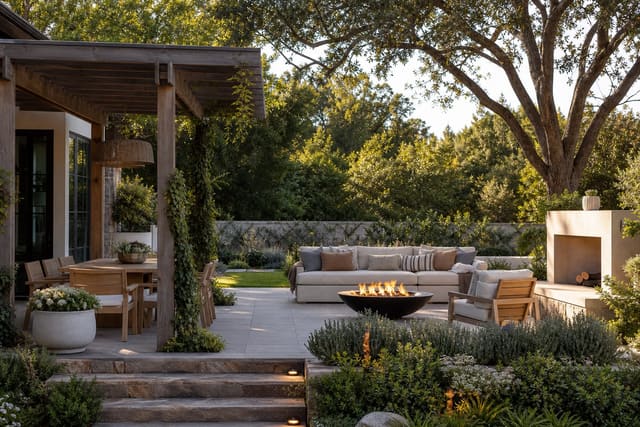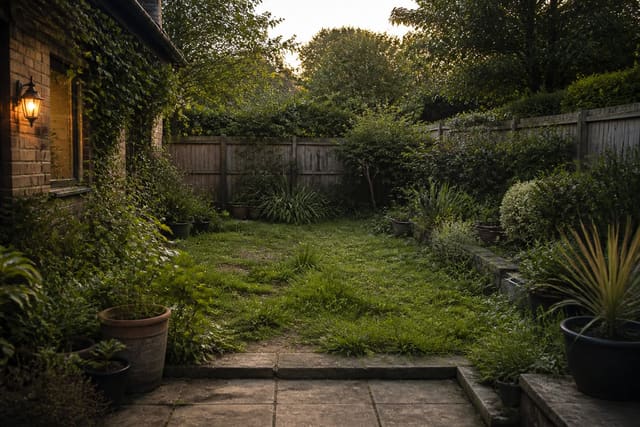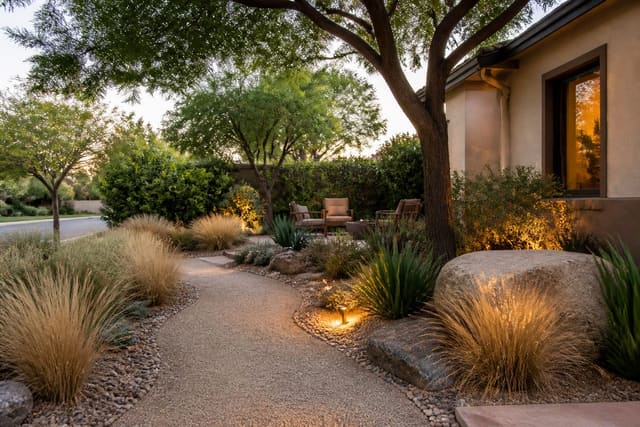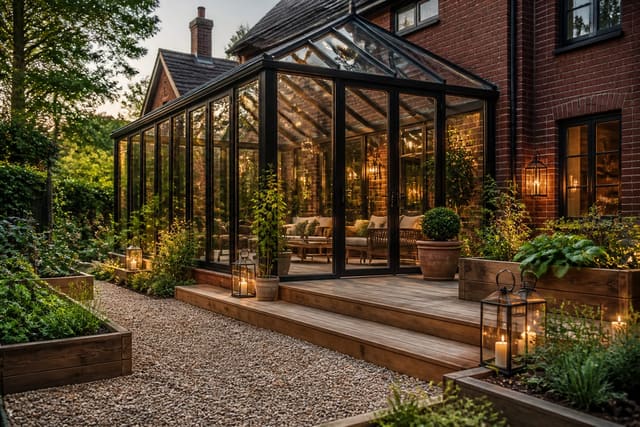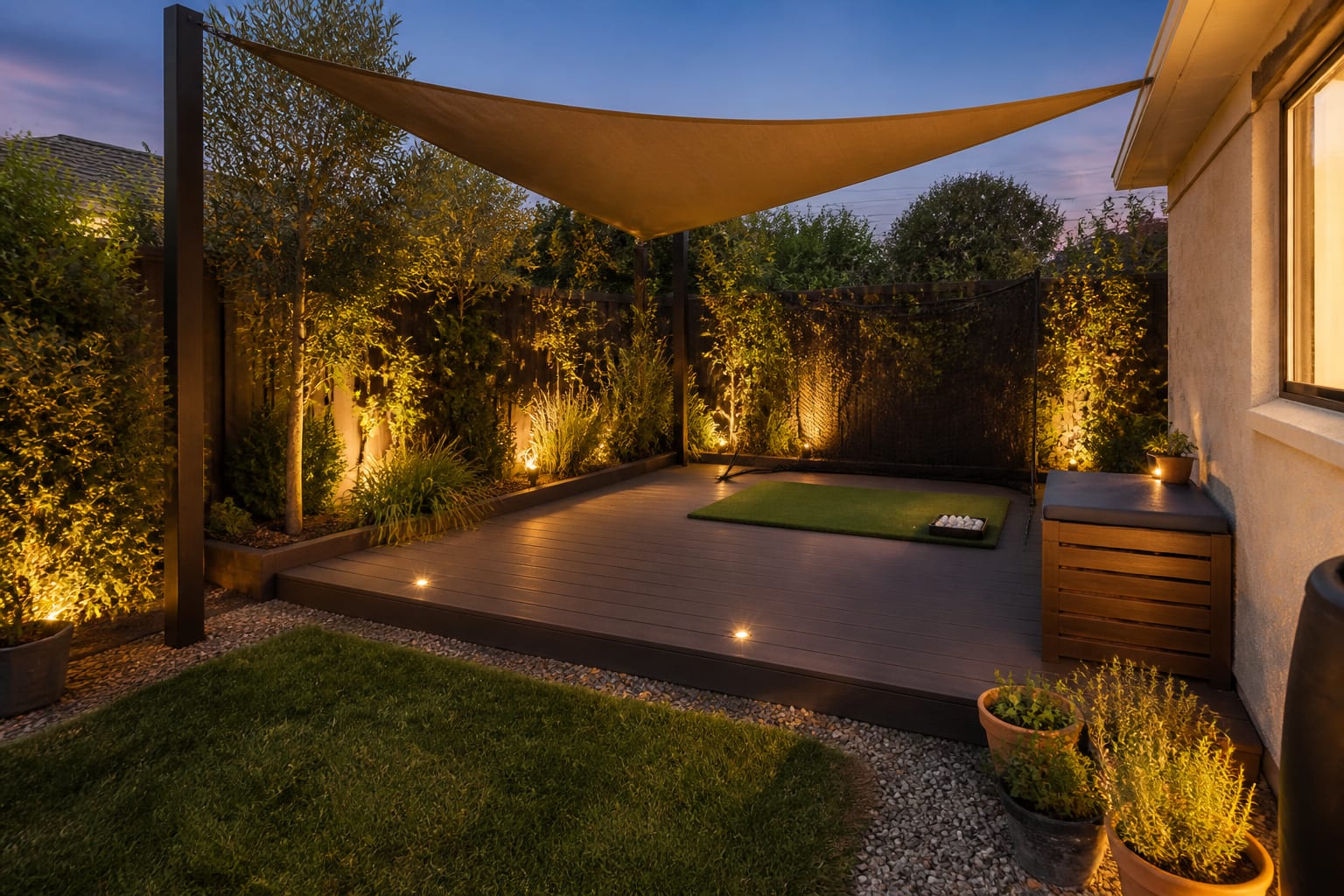
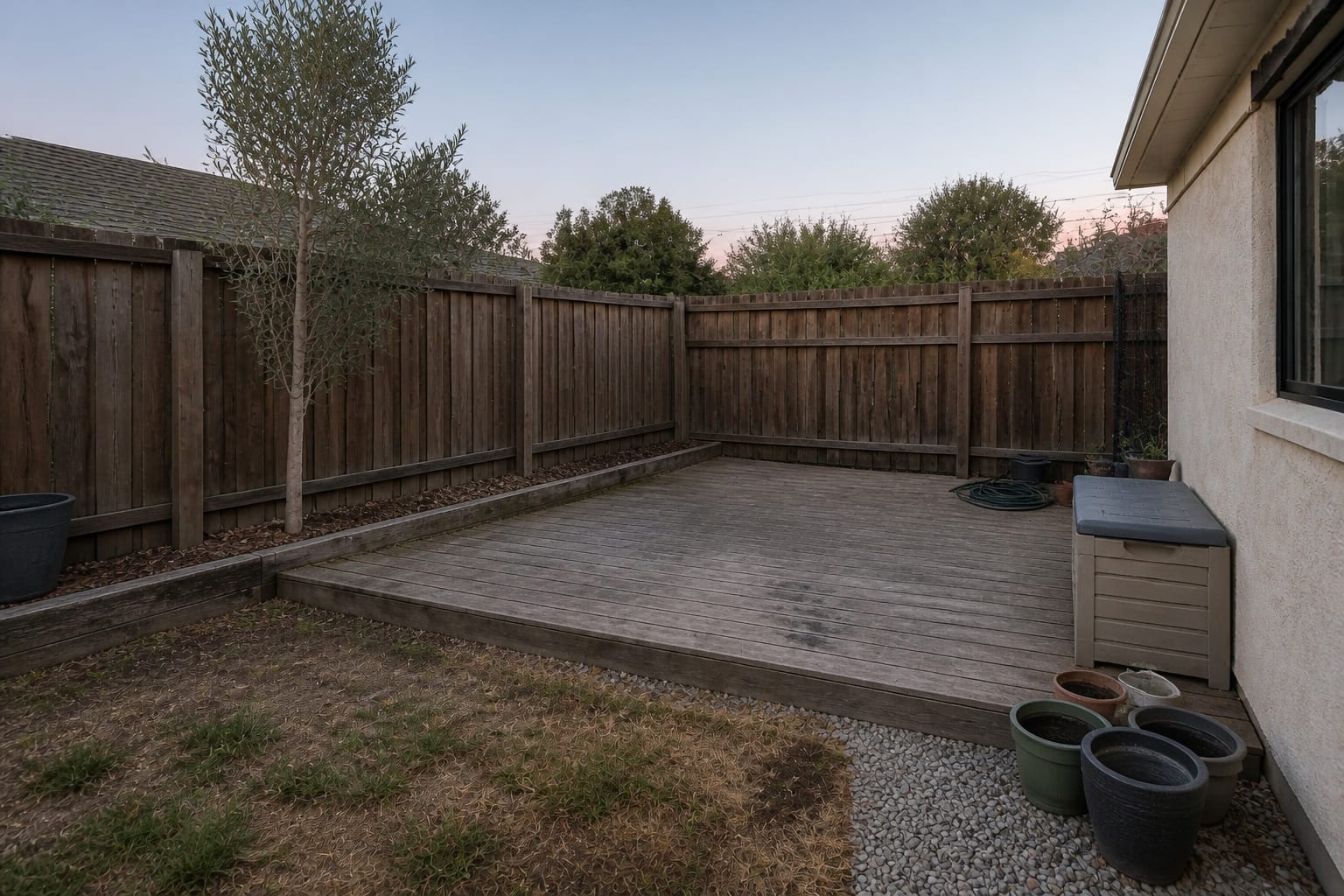
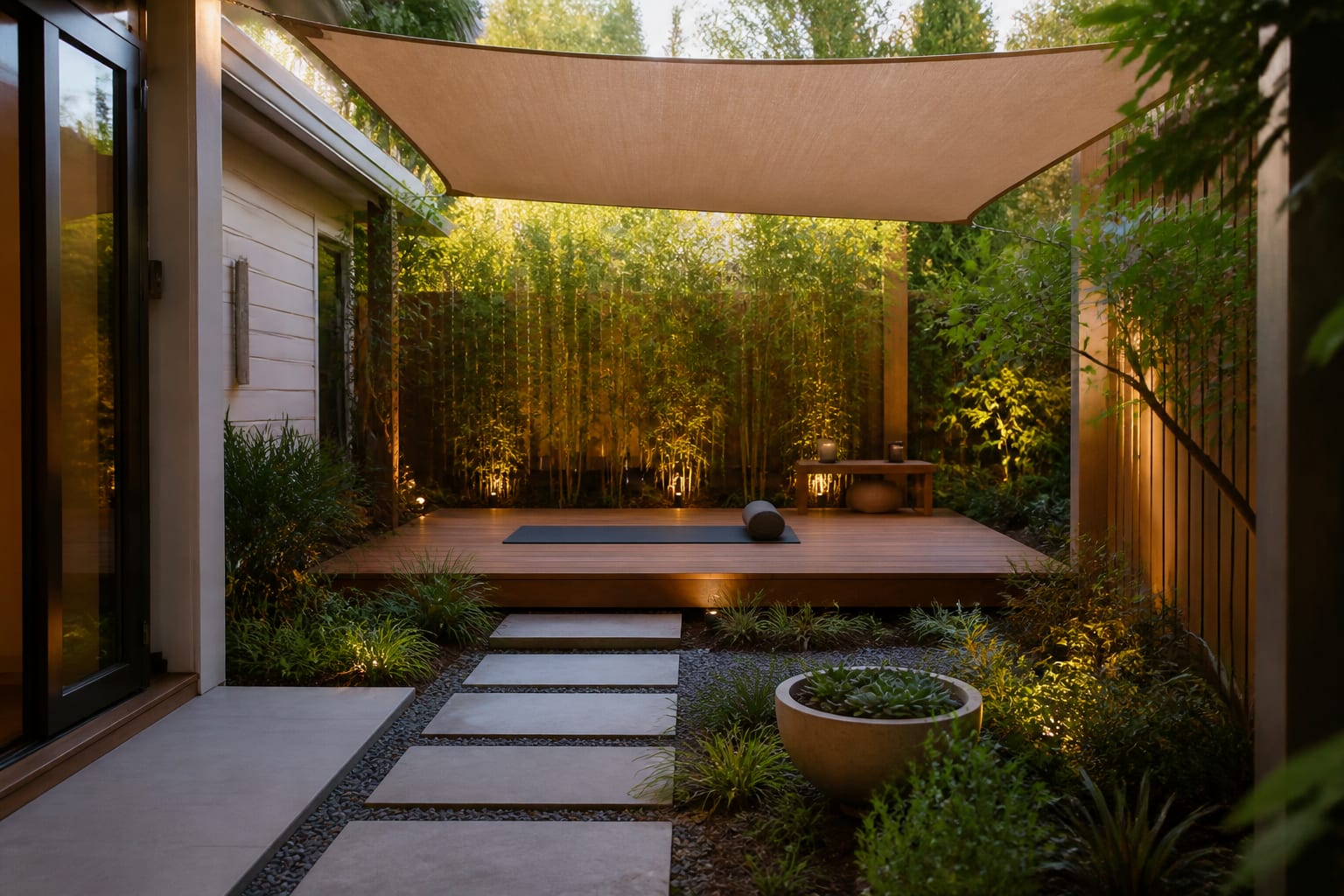
AI can design an outdoor yoga or meditation space by previewing surface, shade, privacy, planting, and atmosphere directly on a photo of your real garden. A mat on damp grass, tilted stone, or blazing paving is a landscaping mistake, not a retreat. Good AI outdoor yoga space design keeps the pad level, shaded at body height, and calm from every angle.
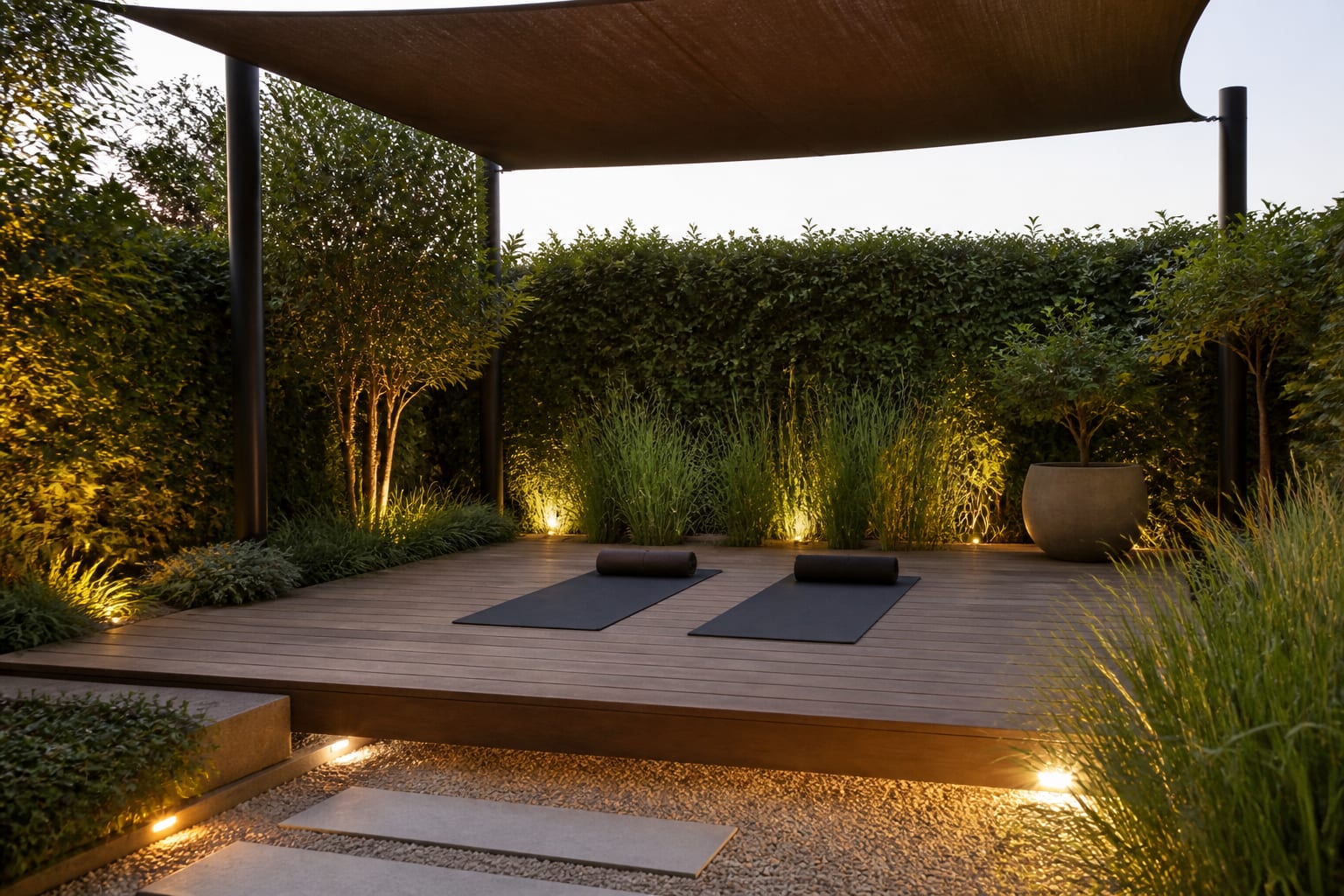
What makes an outdoor yoga space feel calm instead of staged?
A calm space starts with a stable ground plane, a softened edge, and one controlled focal point, not a mat floating on lawn. For solo practice, build a clear zone of at least 6x8 feet with 24 inches of open edge around it for reaching, twisting, or lying down. Add one quiet focal point, such as a stone bowl, low bench, or single shrub, instead of stacking multiple "zen" objects.
If the whole yard still needs planning, start with a broader AI garden design from a photo pass so the yoga area ties into paths, beds, and seating instead of sitting apart.
Which surface should go under the mat?
Grass looks natural but turns slippery, uneven, or muddy fast. The right surface supports wrists and knees and drains quickly after rain.
| Surface | Key Spec | Note |
|---|---|---|
| Timber decking | 1/4-3/8 in drainage gaps | Warm, clean platform; seal for exterior use |
| Stone/concrete pavers | 24x24 in pavers, tight joints | Matches existing patio; avoid tiny joints under the mat |
| Decomposed granite | Stabilized mix, steel or brick edging | Soft look; edging stops it migrating into beds |
| Loose gravel | Use as border or path only | Bad under balancing poses; keep outside the mat zone |
| Outdoor rug | Flatweave, quick-dry fabric | Only works over a stable base, not a lumpy lawn |
Slope the pad gently away from the house so water never traps against fencing or posts. In dry climates, borrow planting and gravel strategy from AI drought tolerant garden design to keep the retreat soft without thirsty borders.
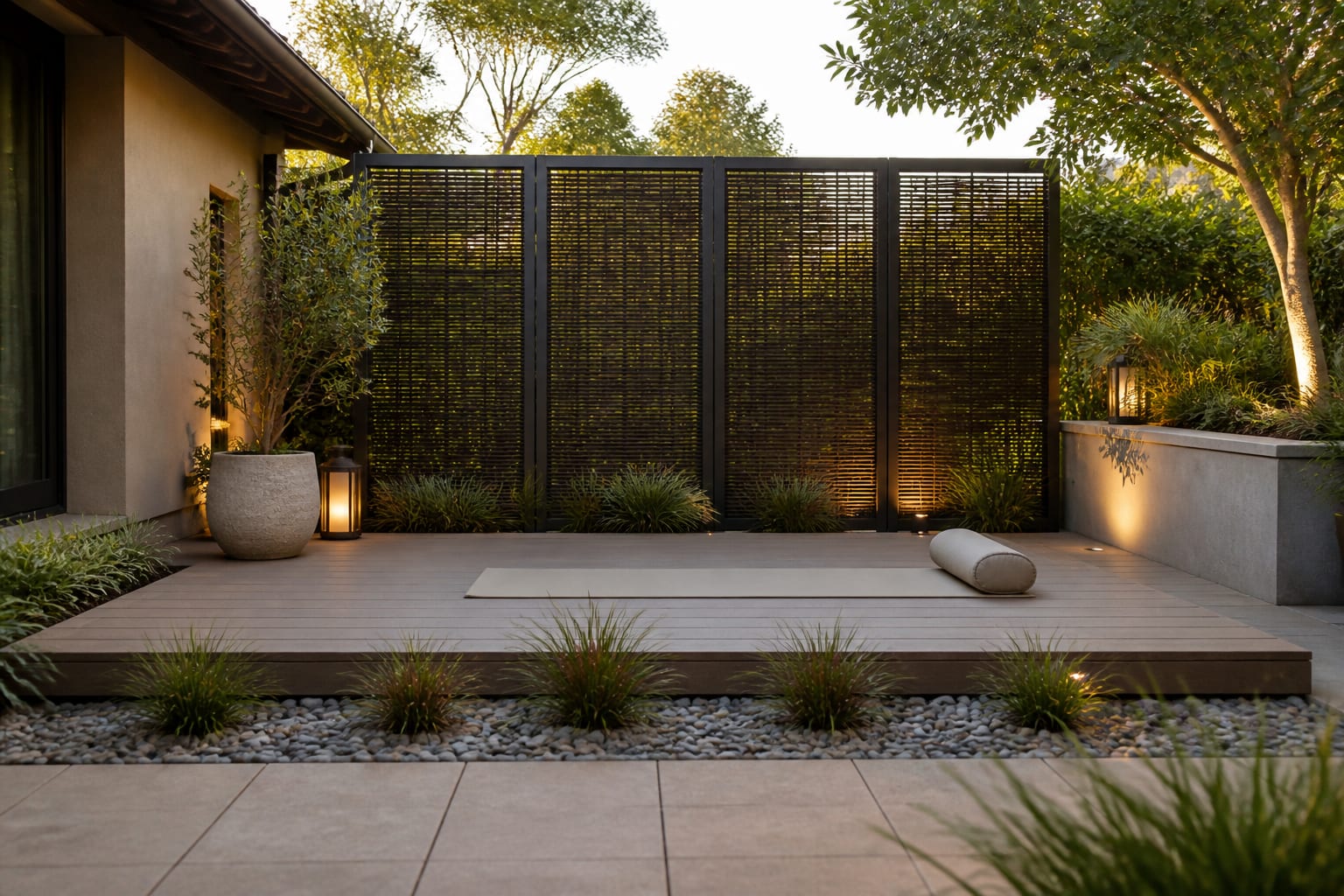
How do shade, privacy, and atmosphere make the space usable?
Shade decides whether a mat gets used or stays rolled up. Morning practice may only need a tree's shadow; midday practice needs a pergola, shade sail, umbrella, or dense planting positioned over the actual mat, not just nearby furniture.
Test coverage from the practice position: a 9-foot umbrella can still miss a 6x8 foot pad if the sun angle is low, and a pergola needs real density, whether slats, fabric, or vines, rather than decorative stripes of heat.
Privacy is about eye level, not fence height. A 6-foot fence may block a neighbor's patio but miss an upstairs window, so sit in meditation position and check sightlines from that height.
Keep atmosphere restrained: 2700K exterior lighting tucked near paths or benches, gentle scent from lavender or rosemary kept clear of the mat edge, and a small covered basket for props instead of extra decor.
For shoulder-season options, compare an open-air deck with a covered structure using AI greenhouse garden room design.
Use AI to preview your outdoor yoga space before you commit
Photograph the space from the route you'll actually take, whether the back door, side gate, or kitchen window, including fences, slopes, trees, drains, and any fixed utility covers.
Prompt example: design a calm yoga space with a level 8x10 foot timber platform, a 36-inch path, filtered shade overhead, privacy planting along the fence, low 2700K lighting, one prop bench, no pool, no new walls, and no change to the existing tree.
Generate a few versions, one deck-based, one stone, one gravel-edged with denser planting, and judge each on surface size, shade coverage, privacy, path width, storage, and connection to the rest of the yard.
AI can invent mature bamboo, erase a neighbor's window, or flatten a slope that doesn't exist. Keep the useful composition, reject the fake geography, and build only what matches your real fence, tree, and corner.
Common mistakes that ruin a quiet garden practice
- Treating the yoga area as decor instead of a body-based surface: a tilted, tiny, or blazing-hot pad won't be saved by lanterns.
- Using leftover space near bins or gates: screen, pave, and path it properly or the spot will always feel temporary.
- Overplanting the edge: keep an 18 to 24 inch buffer of clear ground around the mat so wet foliage and thorns stay away from hands and feet.
- Ignoring upkeep: timber needs sealing, pavers need joint care, gravel needs edging, and cushions need dry storage.
- Designing for one season only: check sun, wind, drainage, and leaf drop across the year before ordering materials.
Confirm pad size, slope, path width, shade anchor, privacy height, planter distance, lighting, and storage before digging. The space is ready when it reads calm from the house, the path, and the mat itself.
Frequently Asked Questions
How big should an outdoor yoga space be?
Build at least 6x8 feet for one person, with 24 inches of clear edge around the mat for reaching and twisting. Choose 8x10 feet if you want room for a cushion, stool, small table, or a second mat during shared sessions.
What is the best surface for an outdoor yoga mat?
Sealed timber decking, large-format stone or concrete pavers, or stabilized decomposed granite work best because they stay level and drain fast. Avoid loose gravel and untreated grass directly under the mat; use them only as borders or paths around the practice pad.
How much shade does an outdoor yoga area need?
Enough to cover the mat itself, not just nearby furniture, during the hours you actually practice. Morning sessions may only need a tree's natural shadow, while midday practice usually requires a pergola, shade sail, or umbrella sized and positioned for the mat's exact footprint.
Can AI design tools show me a realistic yoga garden before I build it?
Yes. Upload a photo of your actual garden with a specific prompt covering platform size, path width, shade, privacy planting, and lighting, then reject any renderings that invent trees, remove windows, or flatten slopes that don't exist on your property.
How do I keep an outdoor yoga space private?
Match privacy height to eye level from a seated position, not just fence height at ground level. A 6-foot fence can block a neighbor's patio but miss an upstairs window, so check sightlines from the mat before adding trellis, taller planting, or a pergola return.