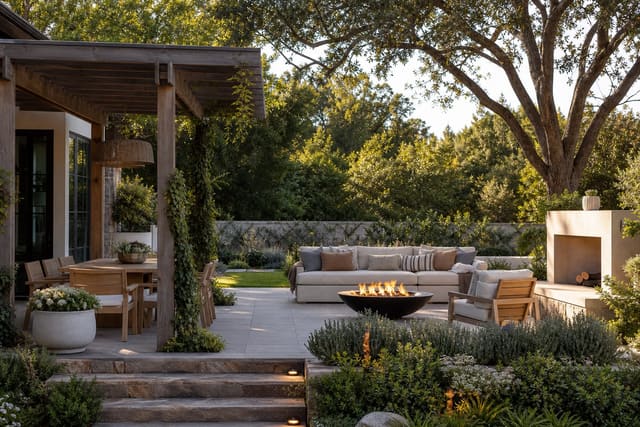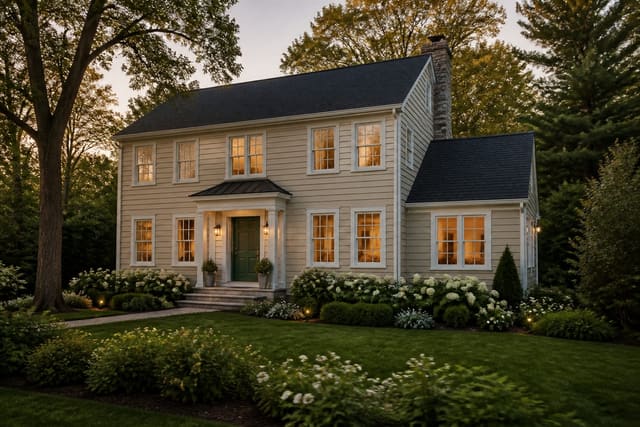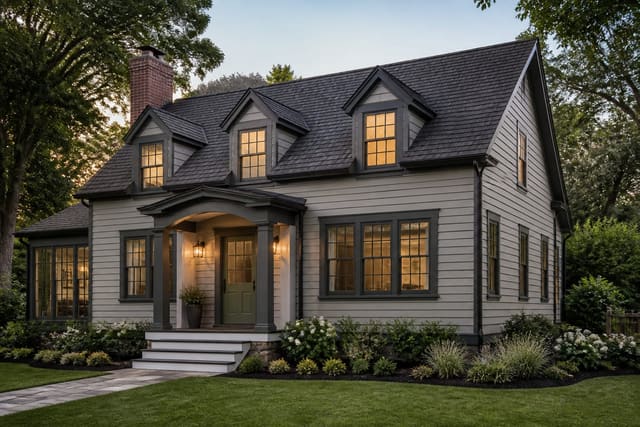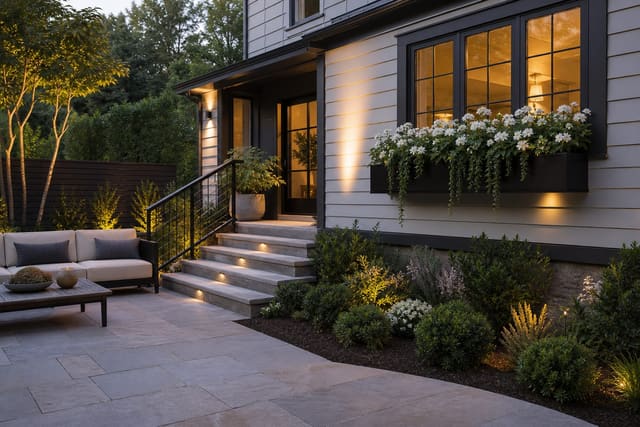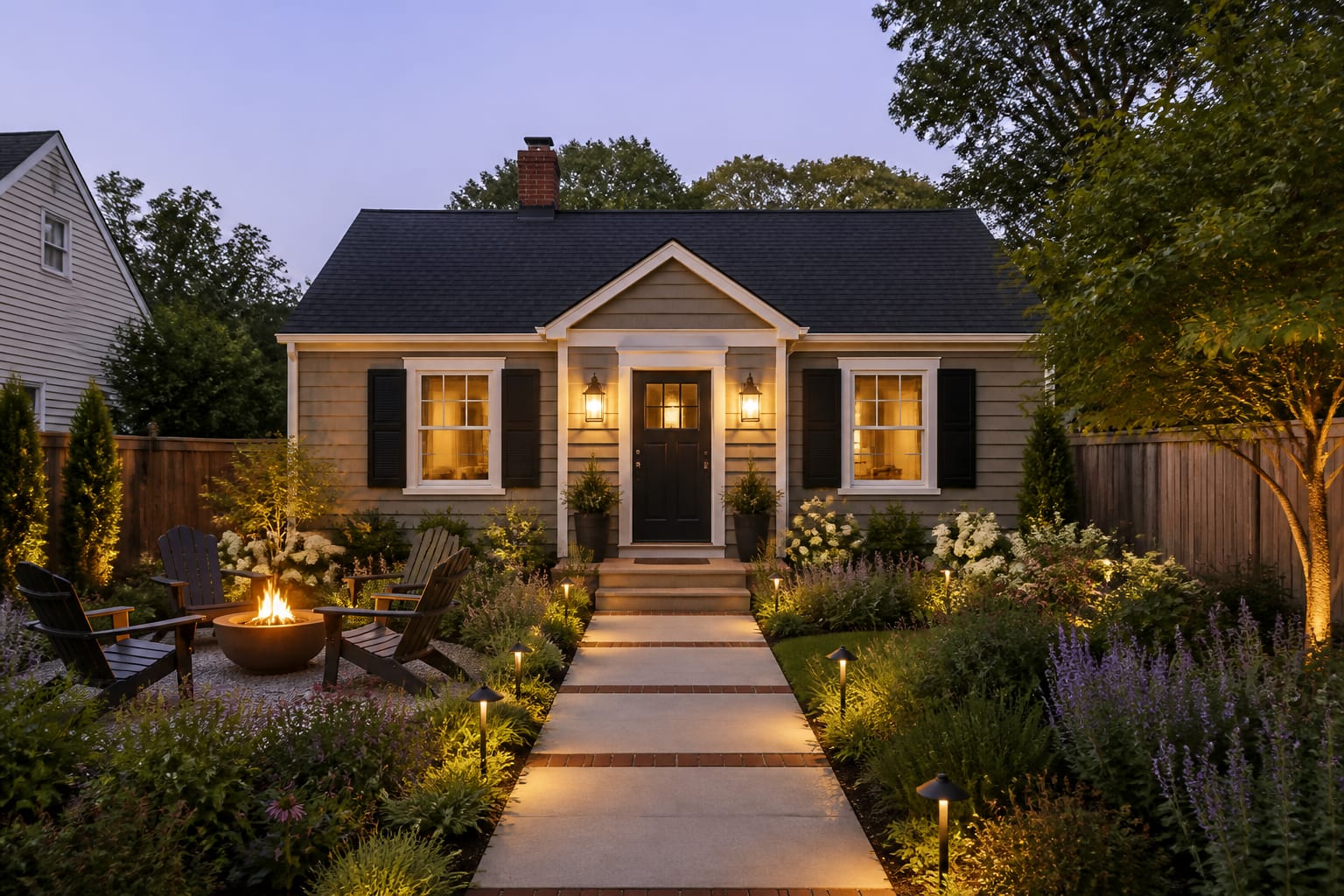
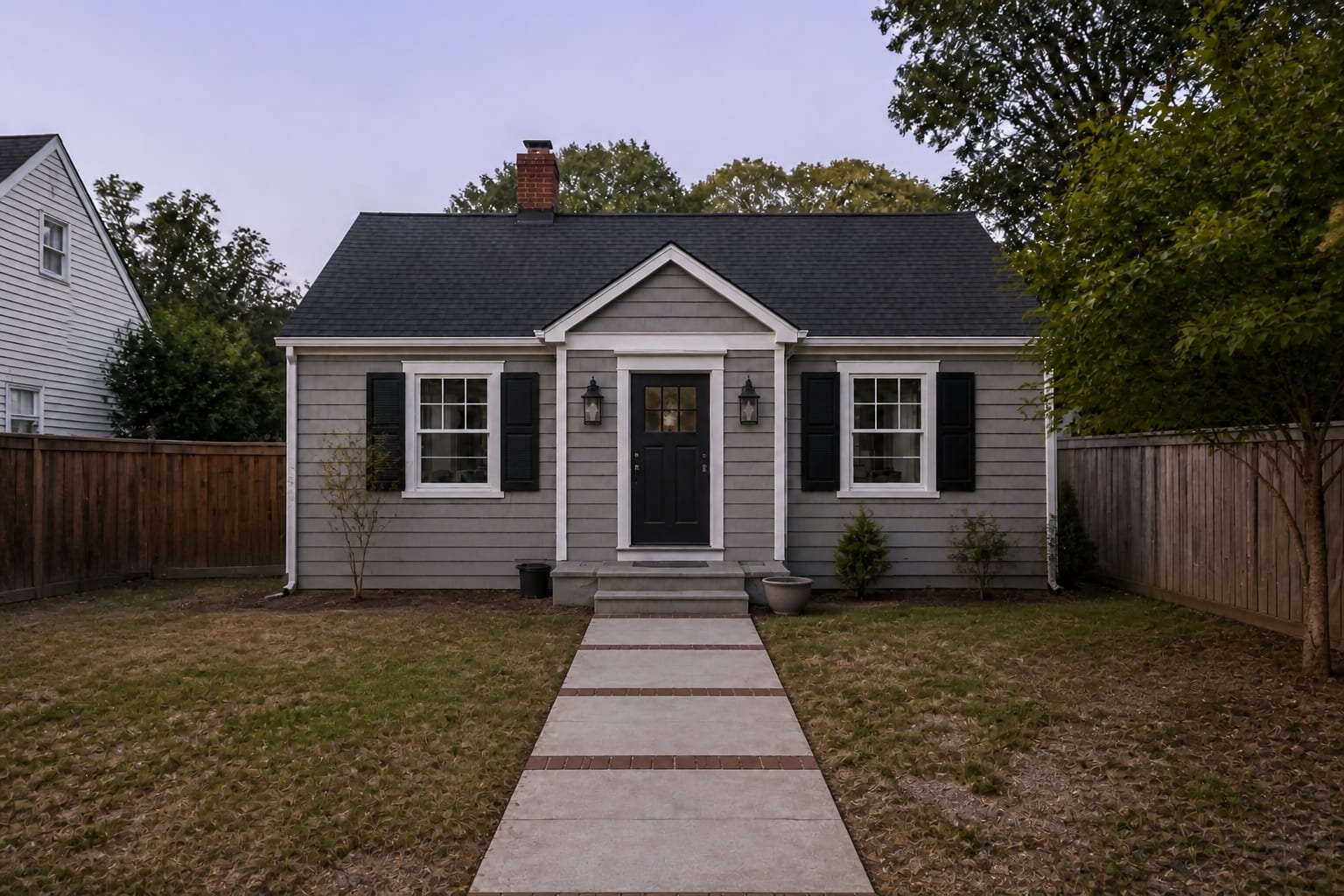
AI exterior house design works by generating realistic paint, siding, trim, and lighting options on a photo of your actual home, so you can compare curb appeal moves before hiring anyone. The best results come from treating the preview as a direction-finder, not a construction document, since a good facade update has to make the whole house look intentional.
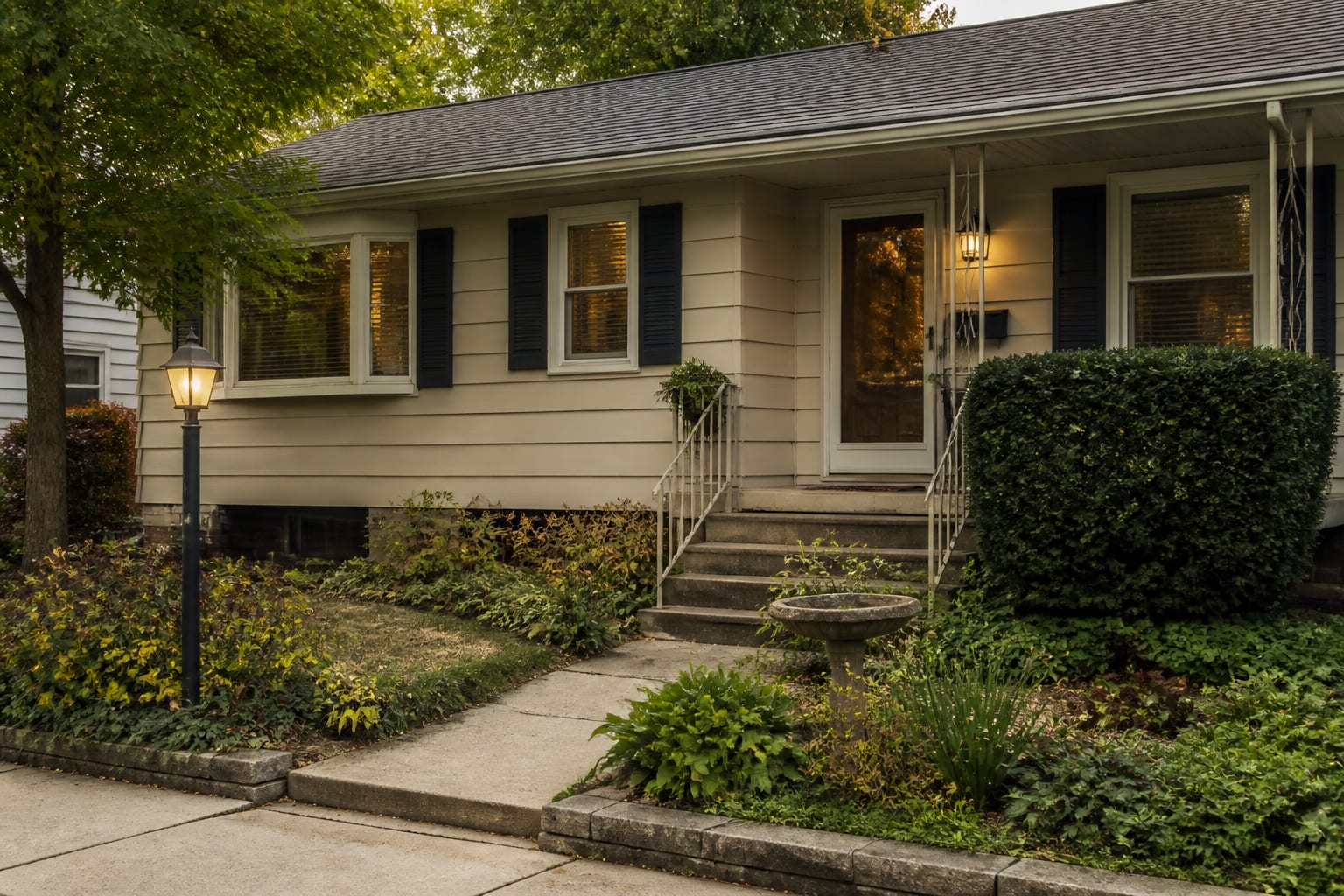
What makes an exterior look redesigned instead of just repainted?
A redesigned exterior has hierarchy: the eye knows where to land first and which details support that focal point. Repainting every surface one trendy color rarely fixes a house with weak trim, tiny lights, undersized plants, or an entry that disappears in shadow.
Start with the permanent colors, since roof shingles, brick, stone, and window frames set the palette. A charcoal roof can handle sharp white trim and a deep green door; orange brick often wants warm cream, taupe, olive, or bronze instead of cool gray. If the decision is mainly color, compare your preview against exterior paint color ideas for real houses before ordering gallons.
Scale matters as much as palette. A 30-inch lantern reads as generous beside a tall door, while a 12-inch fixture looks forgotten. House numbers should be 4 to 6 inches tall on smaller homes, larger with a deep setback, and planting should step up toward the architecture: low edging near the path, 24-to-36-inch shrubs, and vertical accents only where they won't block windows.
Which exterior changes improve curb appeal fastest?
The best before-and-afters aren't always the most expensive; they correct scale, contrast, and approach.
- Choose body color after the roof. The roof is the largest fixed surface above eye level, so test at least two warm options and one deeper option on 12-by-12-inch boards beside the brick or siding.
- Add trim contrast where the house lacks definition. A soft white, deep bronze, charcoal, or muted green trim outlines windows and fascia without touching the structure.
- Make the front door the focal point. A deeper door color, cleaner hardware, a 30-to-36-inch doormat, and symmetrical planters give visitors a clear destination.
- Size lighting to the architecture. A porch lantern should measure roughly one-quarter to one-third the height of the door beside it.
- Layer planting by height. Combine low groundcover, 24-to-36-inch shrubs, and one taller accent near a blank wall or corner instead of a single row.
One architectural fix, like wider shutters, a cleaner porch column, or a bolder garage door, can also settle a plain facade. If the whole front elevation feels weak, try a more specific AI house facade redesign workflow before chasing decorative details.
How should you use AI to preview your exterior?
Upload a straight, daylight photo showing the full front elevation, roof edge, driveway, porch, walkway, and beds. Skip a dramatic angled shot for the first pass, since it can distort siding proportions and window spacing.
Run three controlled versions: one changing only paint and trim, one testing entry details (door color, lights, house numbers, planters, mailbox), and one testing larger moves like cladding tone, porch posts, or a wider walkway. Keeping the same camera angle across versions makes it clear which move actually improves the house. The preview shouldn't invent a new roof pitch, resize windows, or replace a walkway unless that's genuinely part of the project; its job is to narrow the direction before you check samples in morning sun, afternoon glare, and shade.
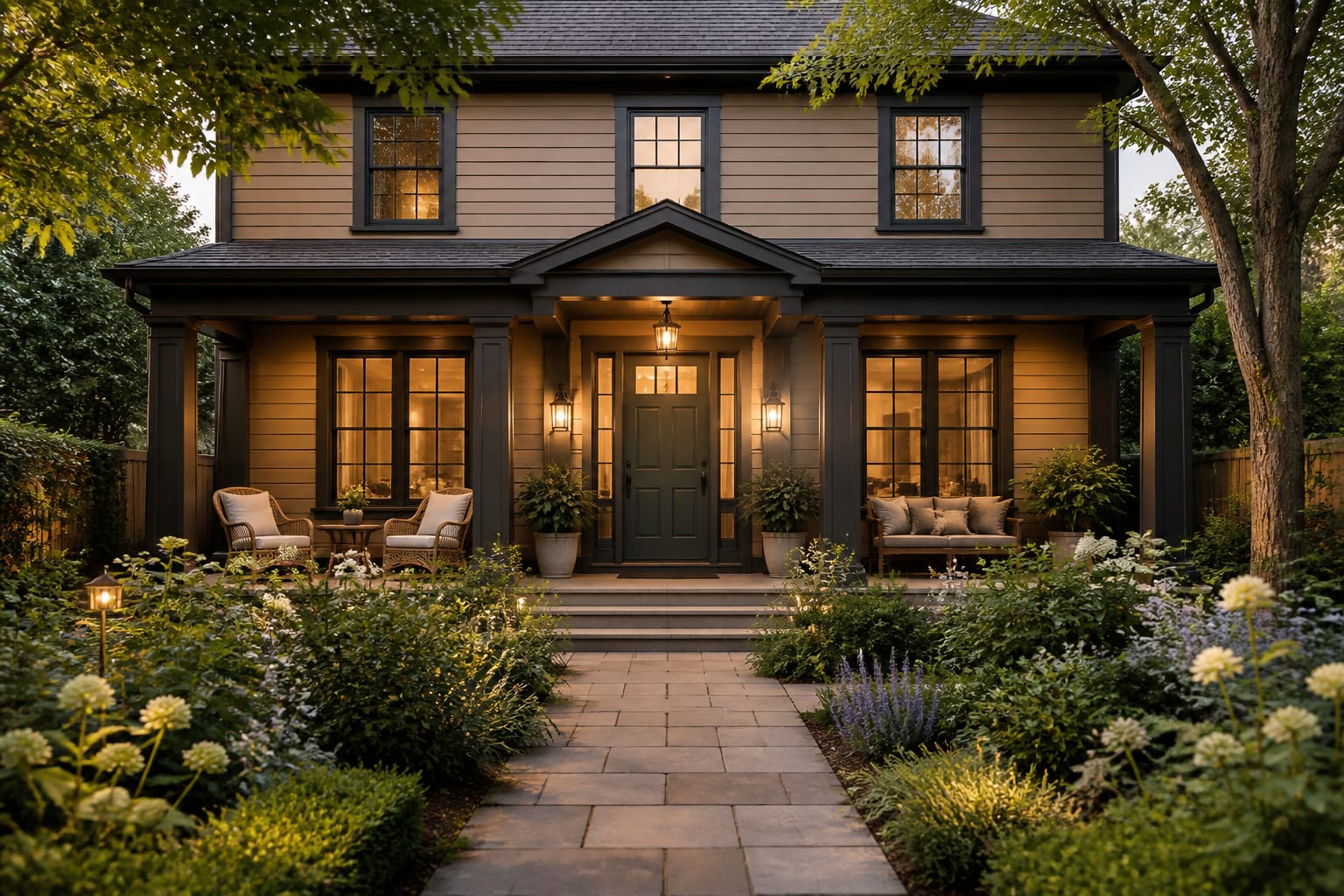
What exterior makeover mistakes should you avoid?
Exterior mistakes are expensive because they're public and weather-exposed. The common failure is choosing a detail that doesn't belong to the actual house.
- White paint without checking the roof. Exterior whites shift dramatically in daylight, so compare warm white, cream, and greige samples against the roof, masonry, and concrete.
- Keeping tiny original lights. Fresh paint makes undersized fixtures look smaller, so scale porch and garage lights to the door and walkway width.
- Shutters on the wrong windows. Shutters should look wide enough to cover the window if closed, or the house may be better without them.
- One narrow planting row against the foundation. It flattens the elevation; curve the bed edge and layer plants that mature below sill height.
- Window boxes sized wrong for the facade. Small boxes on a large front look fussy; check window box ideas that fit the house and match box width to the window.
Don't let an AI image talk you into maintenance you'll resent. Black doors show dust and pollen, and fast-growing shrubs can swallow windows if planted too close. A curb appeal plan should still look good in six months.
How do you turn a preview into a real project?
Save the strongest preview, then translate it into a checklist: body color, trim color, door color, shutter plan, light height, house number size, planter diameter, walkway width, bed depth, and any cladding changes. Paint large sample boards and move them around the house, since a color calm on a shaded porch can turn harsh on a west-facing garage door.
Check samples against the roof, brick, stone, gutters, and concrete, not just against each other. Bring in the right professional before the image becomes a bid if cladding, railings, electrical work, or drainage changes are involved. The winning version isn't the most dramatic one; it's the one where the roof, windows, driveway, porch, and planting all look like they belong to the same house.
Frequently Asked Questions
Can AI actually redesign my house exterior from a photo?
Yes. Upload a straight daylight photo of the front elevation and an AI tool can generate realistic paint, siding, trim, lighting, and landscaping options while keeping the roof, windows, and driveway intact, giving you a direction to test before buying materials.
What's the fastest way to improve curb appeal?
The fastest gains usually come from trim contrast, a stronger front door color, larger porch lighting, and planting layered by height. These moves correct scale and focus without requiring structural changes or a full repaint.
Should I trust the AI preview's exact paint color?
No. Use the preview to pick a direction, such as warmer or darker, then test physical 12-by-12-inch samples against your actual roof, brick, and concrete in morning, afternoon, and shaded light before ordering paint.
Do shutters help every house?
Only if they're sized correctly. Shutters should look wide enough to cover the window when closed; undersized decorative shutters read as fake and can hurt curb appeal more than help it.
How do I know if a preview is realistic?
A realistic preview keeps the house recognizable: the roofline, window spacing, driveway, and lot grade stay the same. If those fixed features change, the image is no longer a useful planning tool.