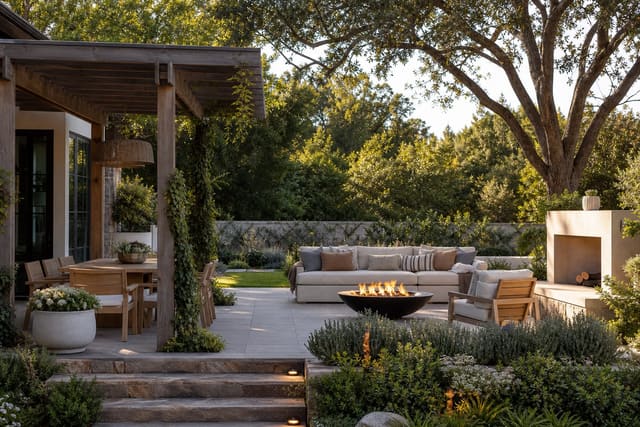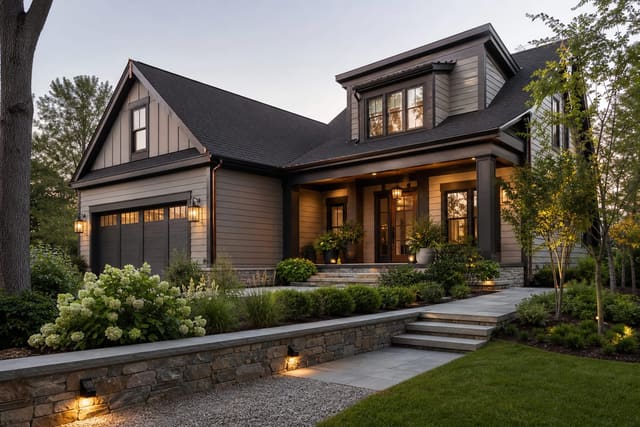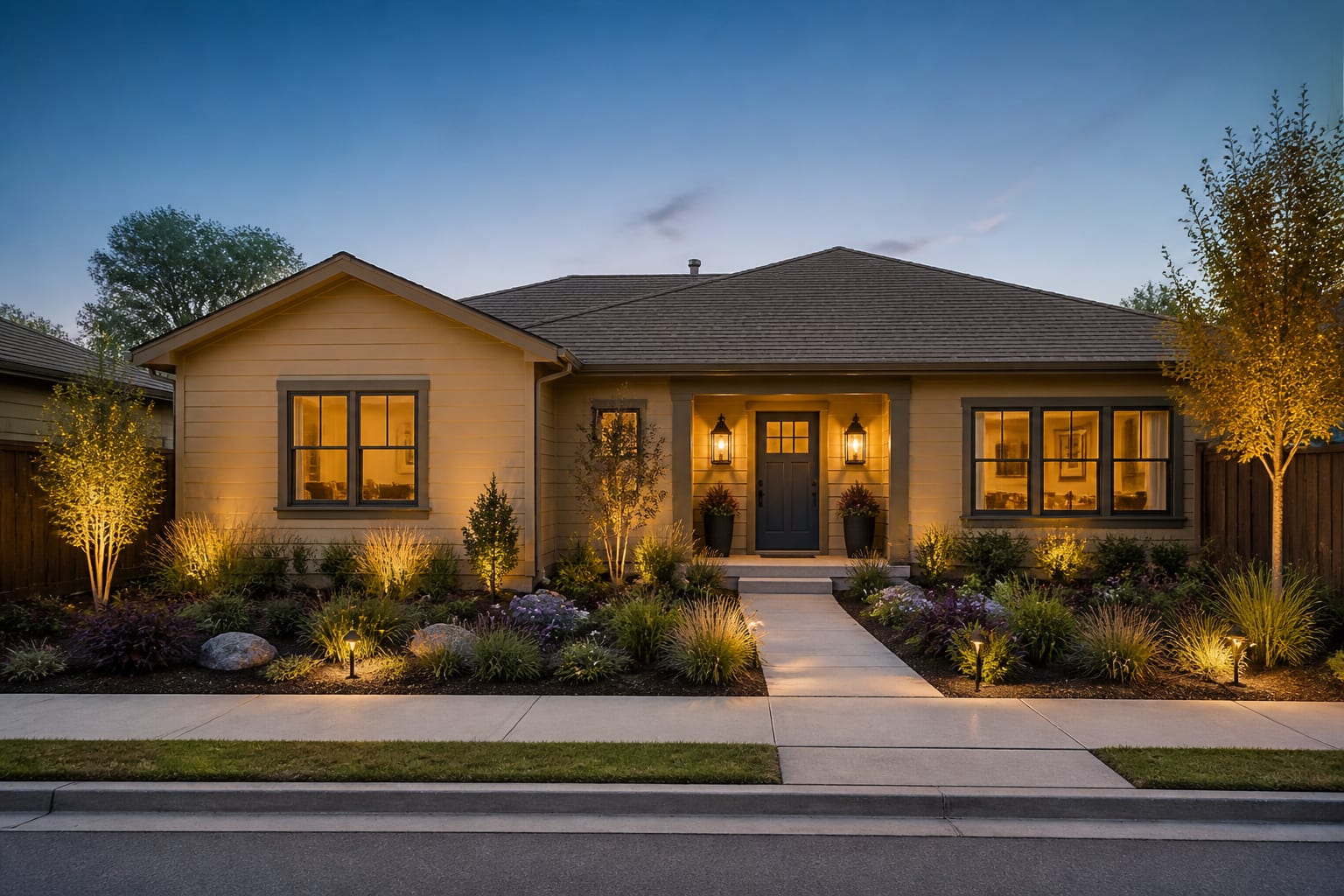
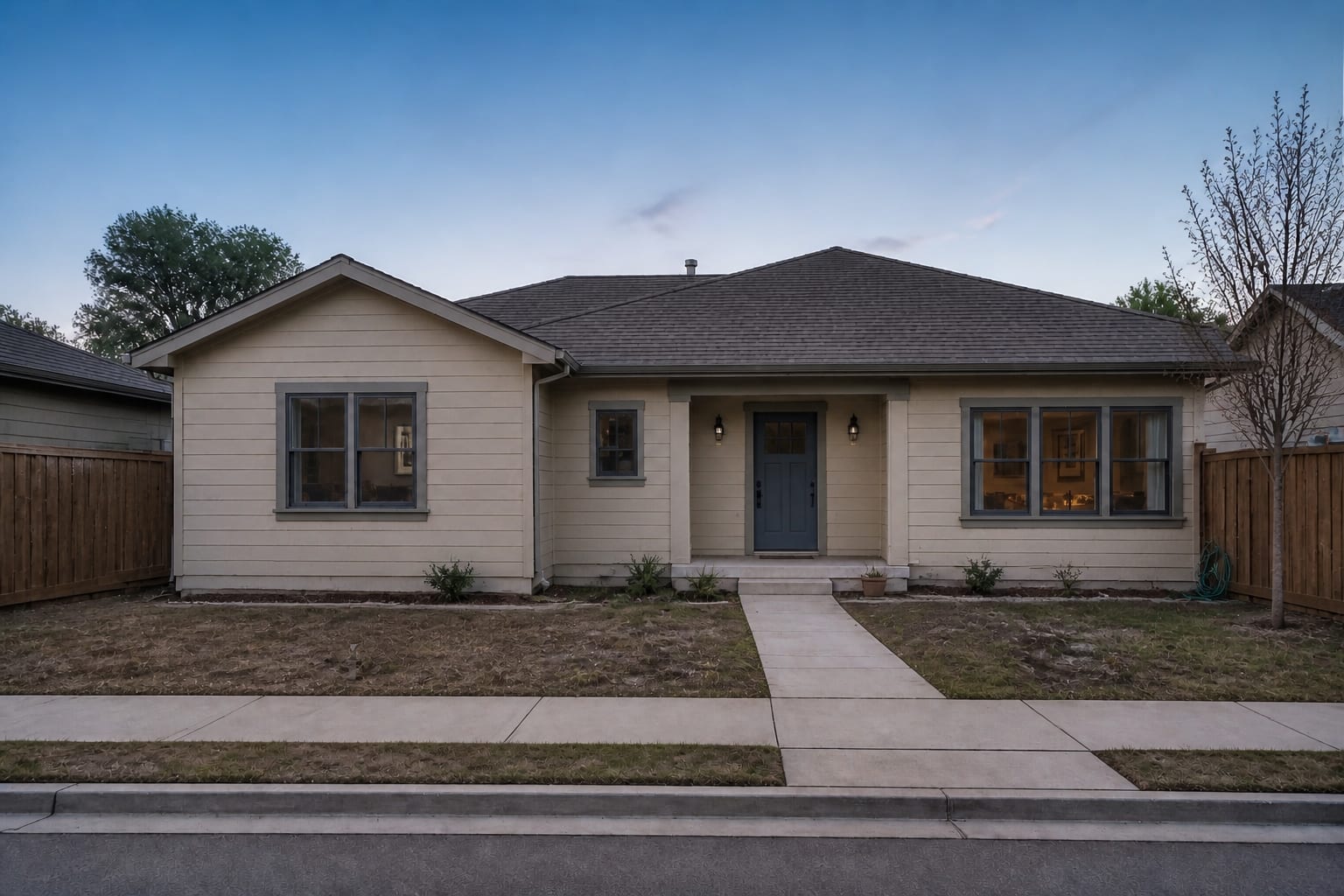
An AI exterior house facade redesign lets you preview siding, trim, doors, windows, lighting, and planting as one composition on your own home photo before hiring a contractor or buying paint. Because a front facade is judged from the street with zero forgiveness, seeing the whole look together beats testing one product at a time.
Can AI design the exterior of a house?
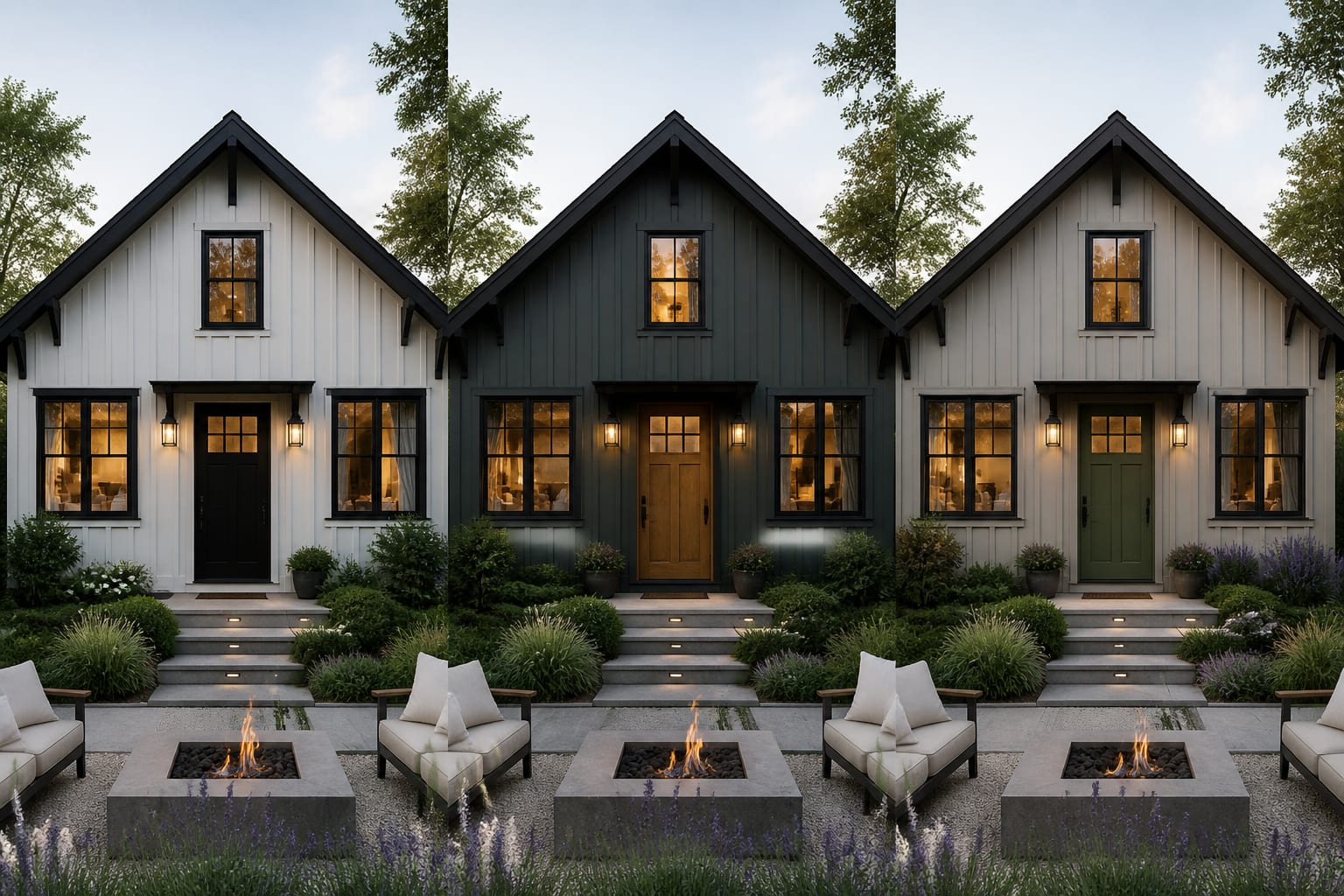
Yes. AI can design the exterior of a house by using a clear photo of the actual facade to preview siding colors, trim contrast, front door options, window details, lighting, porch changes, and planting. You can test a creamy white body with black trim against a warm taupe body with bronze lights without buying five gallons of paint.
A good exterior preview keeps the roofline, window locations, porch depth, steps, garage door, driveway, and mature trees unless you're deliberately exploring a renovation concept. If the image deletes your downspouts, widens your porch, or invents a fantasy gable, treat it as inspiration, not a plan. Name the fixed pieces in your prompt and ask for realistic surface-level changes: paint, siding, trim, door color, shutters, house numbers, sconces, walkway edging, and foundation planting.
What makes a facade feel intentional from the curb?
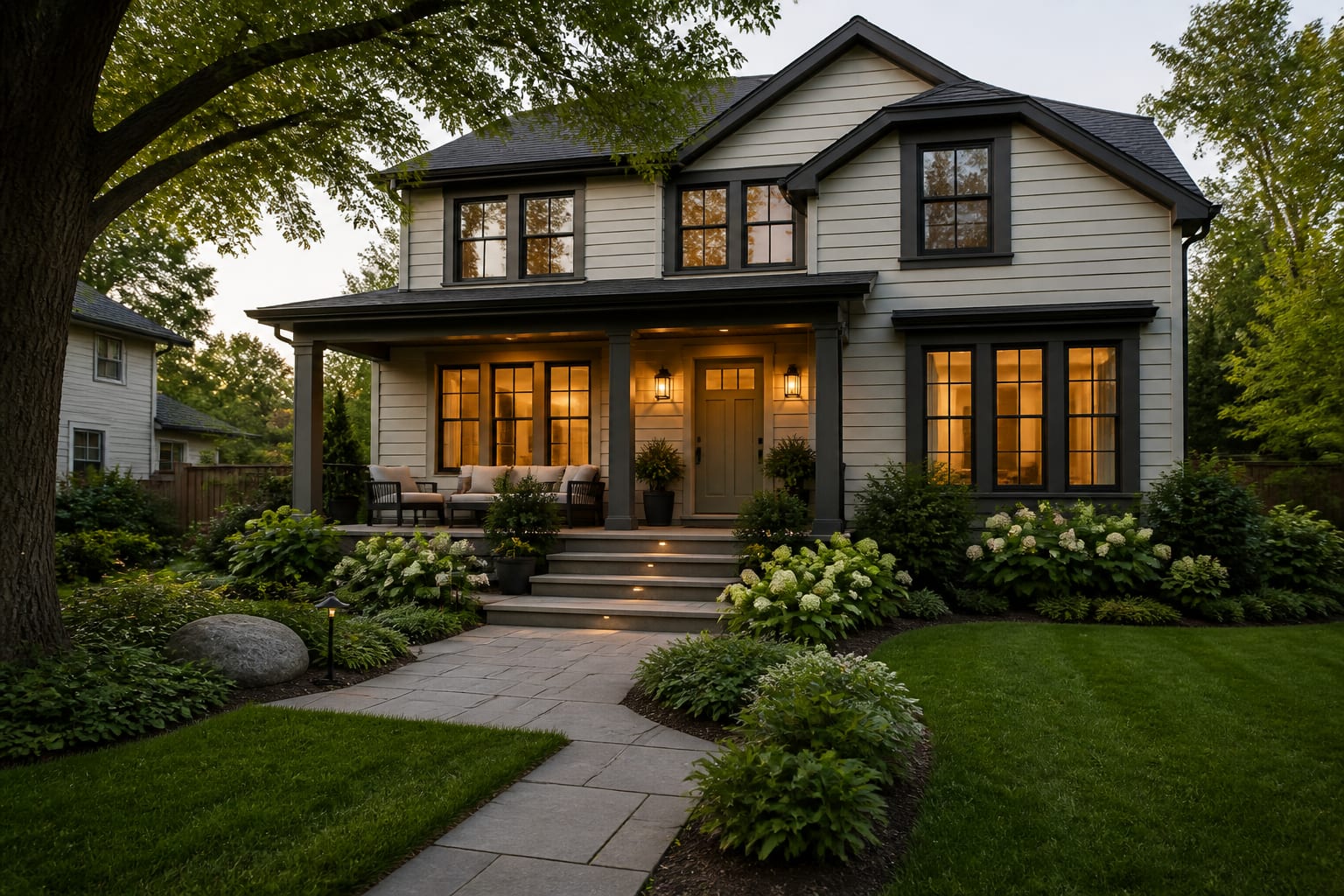
A facade feels intentional when the eye reads one clear hierarchy: main body, trim, entry, and landscape. Most weak exteriors fail not because the color is ugly, but because every element competes at the same volume — white windows, black shutters, red brick, a blue door, brass numbers, and six kinds of shrubs all shouting at once.
Start with the surface you can't easily change. A brown roof needs a warm body color; orange-red brick often fights cool gray siding; bright white vinyl windows can make deep black trim look harsher in a rendering than on your block. Test paint samples at least 2' x 2' on two sides of the house, since exterior color shifts hard between morning shade and afternoon sun. Compare palettes against practical house exterior color ideas before requesting a dramatic redesign.
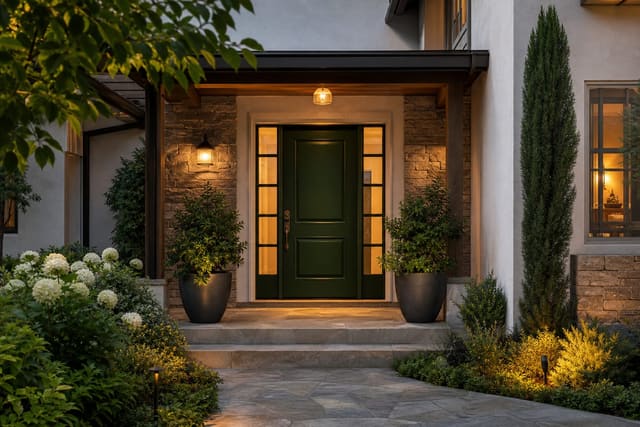
The entry should be a focal point, not the only point. A door color works best when something else repeats its temperature: black lanterns with a black door, brass numbers with a terracotta door, olive planting against a green door. Scale sconces to roughly 1/4 to 1/3 the door height, mounted around 66"–72" from the porch floor — tiny lanterns make a freshly painted door look underfed.
Which exterior changes earn their cost first?
The best updates change how the whole house reads from 30 feet away. A pricey detail hidden behind an overgrown shrub isn't a priority; a cleaner color scheme, better entry lighting, and a defined path usually beat scattered decorative buys.
- Rework the color hierarchy before replacing materials. Paint and stain can make existing siding, brick, railings, and doors feel related; keep visible finishes to three or four colors and test samples in daylight.
- Size entry lighting to the doorway. Undersized sconces make a porch look temporary; fixtures around 18"–24" tall usually read better than 10" lanterns on standard doors and wide porch columns.
- Define the path from street to door. A front walk feels comfortable at 36" wide, more generous at 42"–48", with low planting kept back from foot traffic.
- Upgrade the door color only after checking the trim. A strong door against weak trim looks like makeup without tailoring — see front door color ideas that work with exterior materials and match undertones.
- Layer foundation planting in height bands. Mix low edging (12"–18"), mid shrubs (30"–48"), and one vertical accent, leaving 18"–24" of clearance near siding for maintenance.
If the garage door dominates the street view, either quiet it to match the body color or make it intentionally handsome with carriage panels, dark paint, or better hardware. Don't let the front door and garage door compete in two different accent colors — one star is enough.
What are the most common facade redesign mistakes?
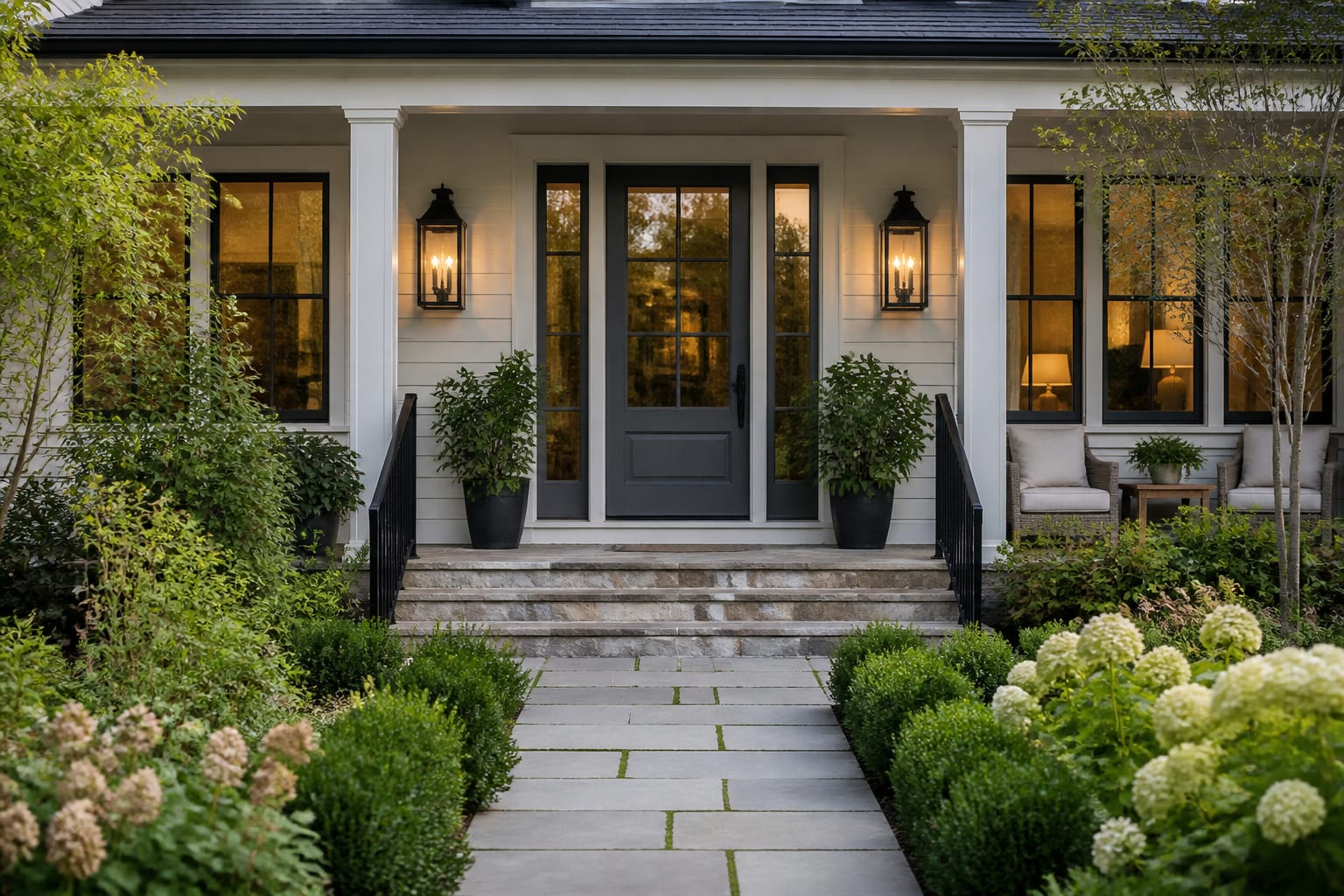
Most mistakes come from treating the facade as a shopping list instead of a composition. The house doesn't care that each item looked good online; it cares whether roof, walls, openings, path, and planting agree.
- Painting the door first fails when the body color or trim is still wrong. Set the facade palette first, then let the door carry the strongest accent.
- Adding shutters that don't fit reads as fake proportion; a shutter should look wide enough to cover the window if closed.
- Ignoring the roof undertone causes clashes even when siding and trim samples look fine alone, since the roof is one of the largest colors on the house.
- Planting too close to the foundation costs later — leave 36" of maintenance space and avoid dense shrubs near hose bibs, meters, or window wells.
- Choosing lights by style alone creates glare and scale problems; use warm 2700K bulbs, shield the source, and light where people step and unlock the door.
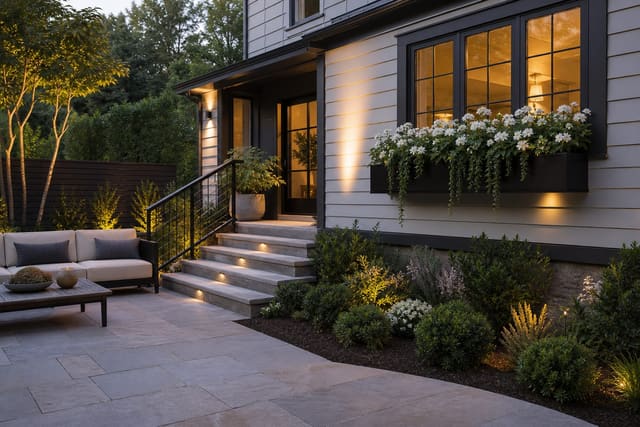
Window boxes deserve a specific warning: they charm a plain facade only when sized to the window and planted with restraint. A box that's too short or overplanted makes the house look fussier. Check window box ideas for curb appeal to size boxes to window width and keep planting from swallowing the trim.
How do you use AI to preview your exterior before committing?
Upload a straight daylight photo from the curb or driveway showing the full roofline, front door, garage, windows, porch, steps, and planting. Cloudy-bright light works better than harsh sun since it reduces shadow drama and makes siding color easier to judge.
A useful prompt: "Keep the existing roof, brick chimney, white vinyl windows, driveway, and porch shape. Redesign the facade with warm greige siding, charcoal trim, a deep green front door, larger black porch lanterns, 6" gutters, simple black house numbers, a 42" clear walkway, and layered low-maintenance planting with no construction." Boundaries like these keep the visualization tied to your actual house.
Run three versions: one safest palette, one stronger contrast, and one lower-cost cosmetic update. Favor the concept that makes the house read clearer, not the one with the most dramatic landscaping. Then do the unglamorous checks: paint swatches on two elevations, fixture dimensions, railing height, drainage near the path, plant mature size, HOA rules, and installer feasibility.
A facade preview isn't a construction document, but it can prevent the worst exterior regret: realizing after installation that the door, trim, lights, and shrubs belong to four different houses.
Frequently Asked Questions
Can AI actually redesign my house's exterior from a photo?
Yes. Upload a clear daylight photo showing the full facade, and AI can preview new siding color, trim, doors, windows, lighting, and planting while keeping the roofline, structure, and driveway intact. Treat the result as a visual direction, not a construction plan, and verify materials and code details before hiring anyone.
What's the first thing to change on a tired-looking facade?
Start with the color hierarchy, not individual products. Fix the body, trim, and door colors together, since paint is the cheapest way to make mismatched siding, brick, and railings feel related before you spend money on materials or landscaping.
How do I stop my front door color from looking random?
Match it to something else on the house. Repeat the door's temperature or contrast in the lighting, house numbers, or planting so the color reads as a decision rather than an isolated splash against weak trim.
How close should shrubs be planted to the house foundation?
Leave 18"–24" of clearance for smaller plants and up to 36" of maintenance space overall. This protects siding from moisture and growth damage and keeps hose bibs, meters, and window wells accessible.
What size should porch lighting be for a standard front door?
Aim for fixtures roughly 1/4 to 1/3 the height of the door, mounted around 66"–72" from the porch floor, generally 18"–24" tall on standard doors. Undersized 10" lanterns are one of the fastest ways to make a porch look unfinished.