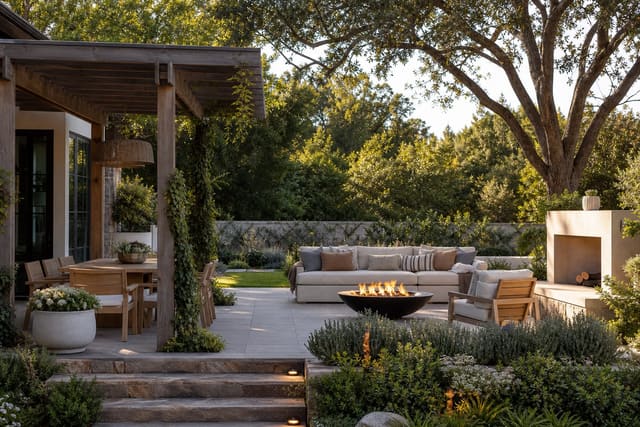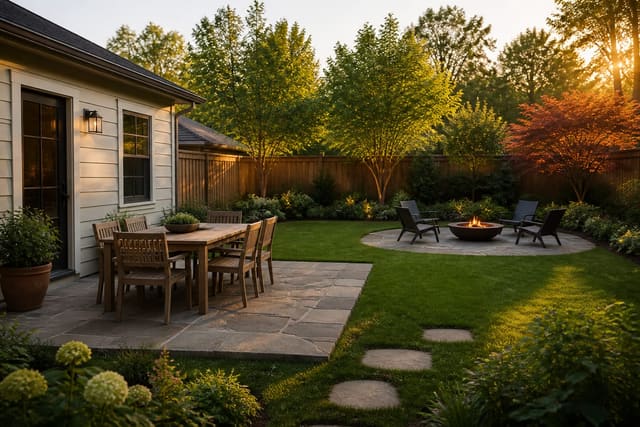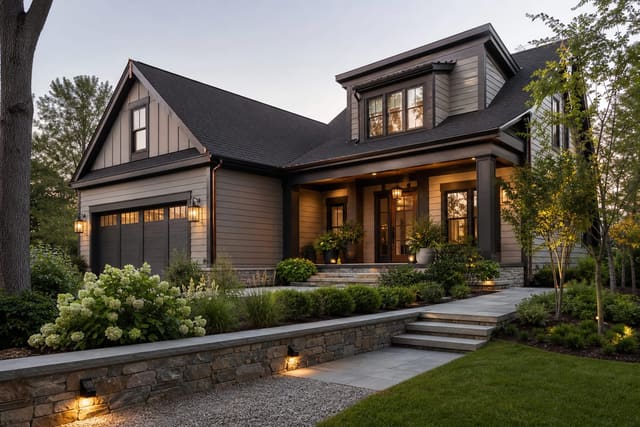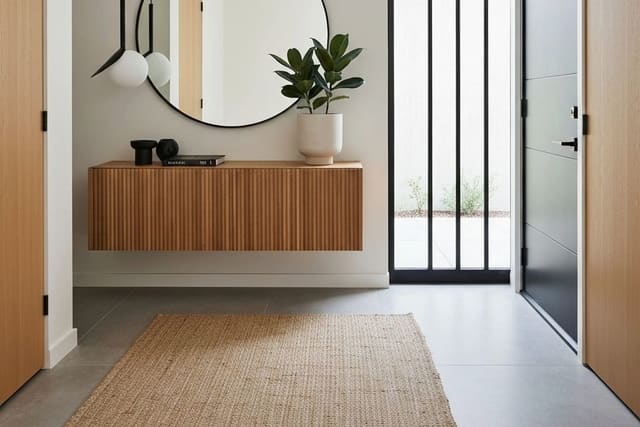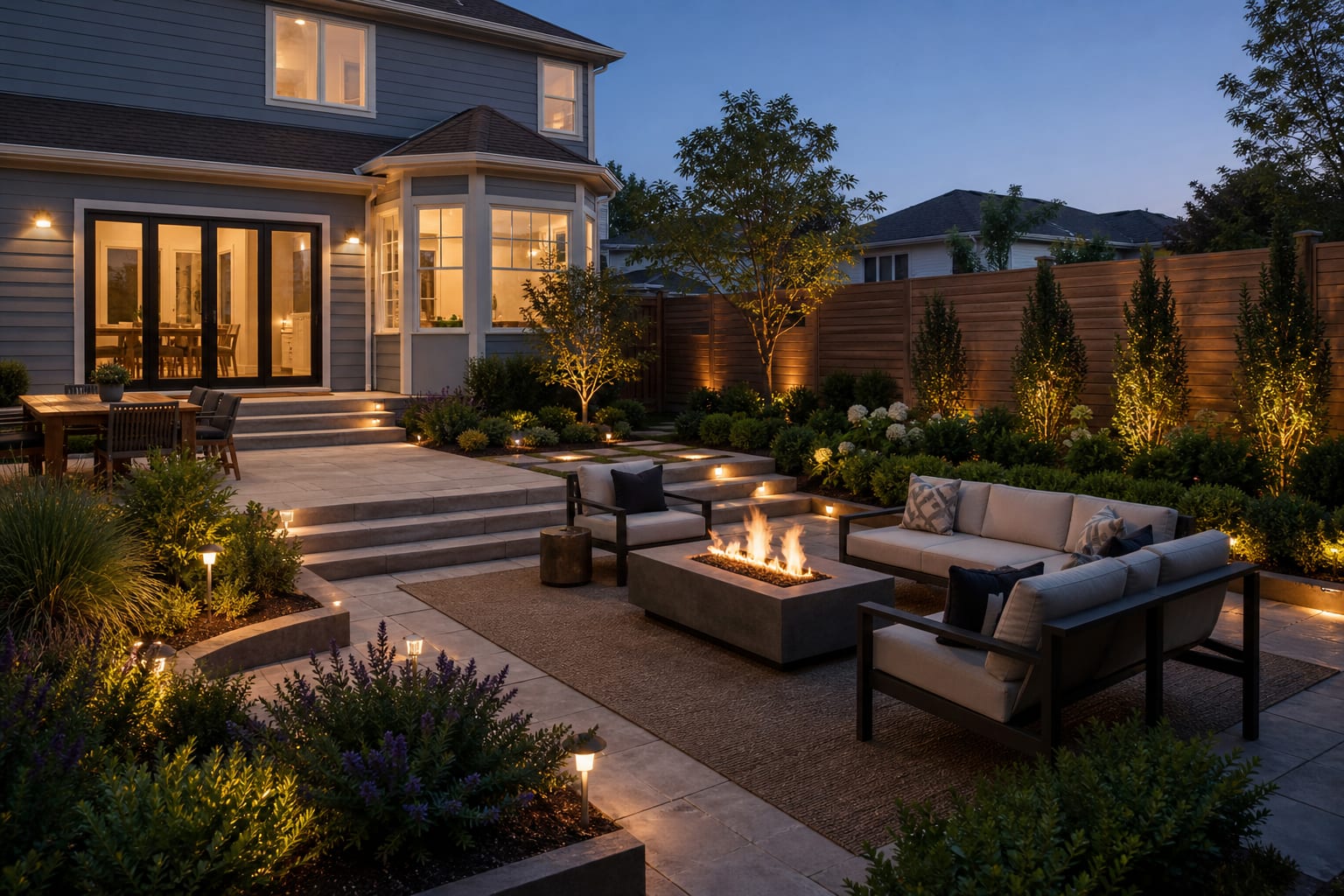
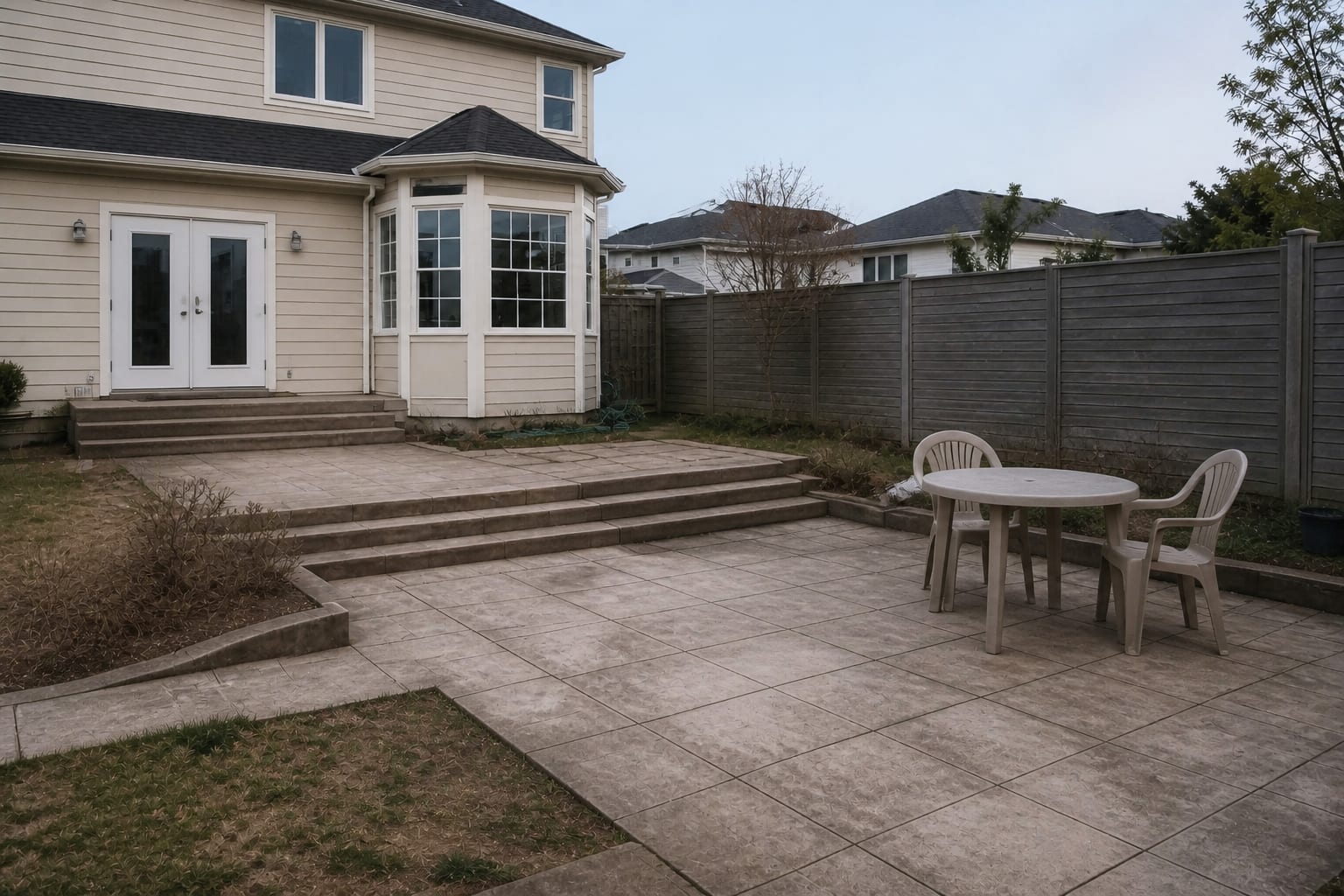
The best front door color contrasts the siding by two clear value steps, shares the house's warm or cool undertone, and repeats something already outside — trim, roof, brick, or planting. A warm house body (cream, tan, red brick) needs a warm door like red, terra cotta, or warm black; a cool house body (gray, white-blue, charcoal) needs navy, forest green, or cool black. Keep the door one to two values darker than the trim so it anchors the entry instead of competing with it.
What is the best front door color for your house?
Name your siding color honestly — warm white, cool gray, beige vinyl, red brick, cedar, or painted black — then pick a door color that deepens that palette or adds one controlled contrast.
- On white or cream siding, saturated color works: deep green, oxblood, navy, black, or glossy yellow all have enough contrast to define the entry.
- On red brick, skip clean primary red unless the brick is muted; try forest green, black, deep teal, or aubergine so the masonry stays dominant.
- On gray houses, charcoal can disappear into the siding — plum, moss, rusty orange, or blue-black gives more presence.
- On dark exteriors, a black door can vanish from the street; bronze, dark olive, burgundy, or a stained wood tone reads better against dark facades.
If the whole facade needs work, coordinate the door with broader moves from house exterior color ideas rather than treating it as an isolated project.
What makes curb appeal look intentional
Check the door from the curb, the driveway, and the porch step. If it disappears from any of those views, the color is too close to the siding or the trim is stealing focus.
Contrast comes first: pale houses want a deeper door, dark houses need warmth or gloss. Keep surrounding trim calmer than the door unless historic casing deserves emphasis.
Undertone comes second: cream siding likes soft black, olive, and terracotta over icy blue; cool gray siding takes navy, plum, and crisp black better than mustard. With stone veneer, pull from the darkest fleck, not the lightest, so the door feels grounded.
Scale comes third: a small cottage door can carry a cheerful color, but a double-height modern entry in saturated red can look like signage. On restrained facades like those in modern house exterior ideas, deep mineral tones — black-green, rust, bronze, graphite blue, warm walnut — work best.
Test this on your own photo with ReDesign before committing — keep the house edge, hardscape, and planting beds visible so the preview solves your actual space.
Which front door colors actually work outside?
- Deep olive — pairs with cream siding, tan brick, cedar, or warm stone; test it beside brass or black hardware since it can turn muddy in shade.
- Blue-black — gives more depth than plain navy from 30 feet away on gray, white, or pale blue houses; pair with a 2700K porch bulb so it doesn't go cold at night.
- Oxblood or burgundy — richer than red on brick houses; go darker and browner than the brick and keep the mat and planters restrained.
- Warm clay or terracotta — suits stucco, desert modern, and cream cottages; repeat it in roof tile or pavers and keep a clean 3" to 5" trim edge.
- Glossy black — best on symmetrical, well-maintained doors since black shows every dent and fingerprint; sand, prime, and use an exterior enamel in satin or semi-gloss.
- Saturated yellow — works on charcoal, white, or soft gray houses when the rest of the facade is disciplined; keep the undertone golden rather than lemon in strong sun.
- Smoky teal — bridges blue and green near gray stone or white siding; a strong choice for porches that connect to patio design ideas with blue-green accents.
What front door color mistakes should you avoid?
- Picking color from an indoor chip. Exterior light and gloss shift color; test on the door or a large board for a full day.
- Matching the door too closely to the siding. A slightly darker version of the same beige makes the entry vanish — go for real contrast.
- Ignoring the hardware. Brushed nickel can look thin on deep green; unlacquered brass warms up black, burgundy, navy, and clay.
- Painting a damaged door glossy. Fill dents, sand peeling edges, and prime before the finish coat — bold color won't hide a tired surface.
- Over-accessorizing the entry. One strong door color is enough; the mat, planters, and wreath don't need competing colors.
How can AI help you preview a front door color?
Upload a straight photo from the sidewalk or driveway and ask for versions that change only the door color, keeping siding, roof, trim, and landscaping the same. Compare one dark option, one warm option, and one colorful option before buying a quart.
Keep prompts practical — "deep olive satin front door with existing beige siding and black planters," not a full renovation fantasy. If the preview only looks good after the lighting and landscaping change too, the door color is doing more work than paint can realistically deliver.
Frequently Asked Questions
What front door color adds the most curb appeal?
Deep navy, forest green, and true black add the most curb appeal because they read as intentional against nearly any siding color and photograph well in every lighting condition, unlike trendier or paler shades.
Should the front door match the shutters?
Not necessarily. The door and shutters can match exactly, differ by two tone values, or contrast on purpose, such as black shutters with a red door on white siding — the only real mistake is pairing uncoordinated colors with no relationship.
What sheen level is best for a front door?
Semi-gloss or full gloss reads richer and wipes clean easier than satin or eggshell. Use the same sheen on the door frame and trim so the whole entry looks unified rather than mismatched.
How many test colors should I try on a front door?
Test 2 to 3 large 12" x 12" samples directly on the door and check them at three times: morning sun, afternoon shadow, and dusk with the porch light on. A color only qualifies if it reads well in all three.
Can I paint a fiberglass or steel door?
Yes. Clean with a TSP substitute, sand lightly to scuff the factory finish, apply a bonding primer, then two coats of exterior alkyd or water-borne enamel. This finish typically lasts 5 to 8 years before it needs a recoat.
> Try this: Ready to see this on your own outdoor space? Open ReDesign and run the preview before you buy materials, plant, drill, or move furniture.
Three transformations to try
1. Deep navy door on white colonial 2. Forest green door with black hardware 3. Matte black door with warm stone facade