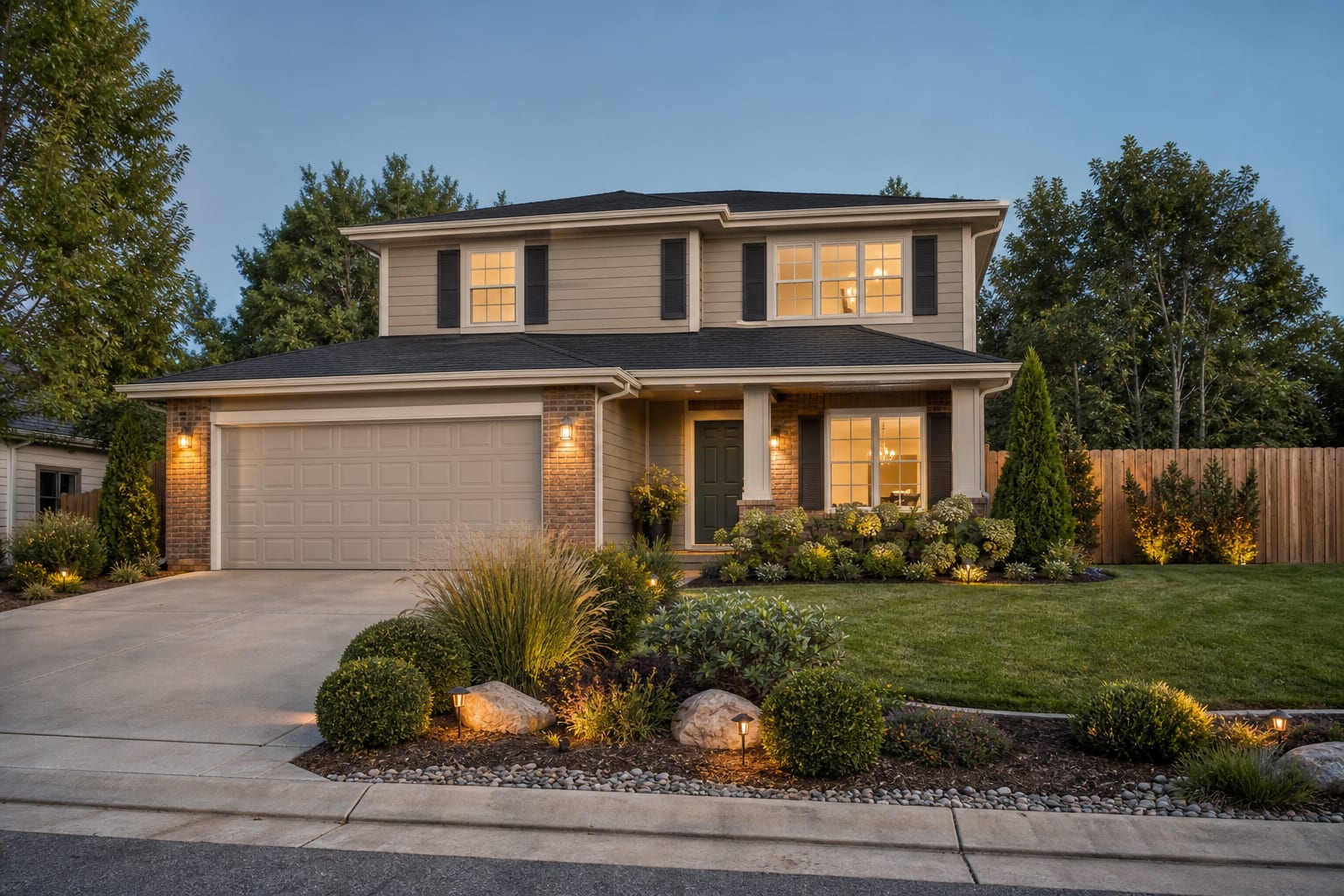
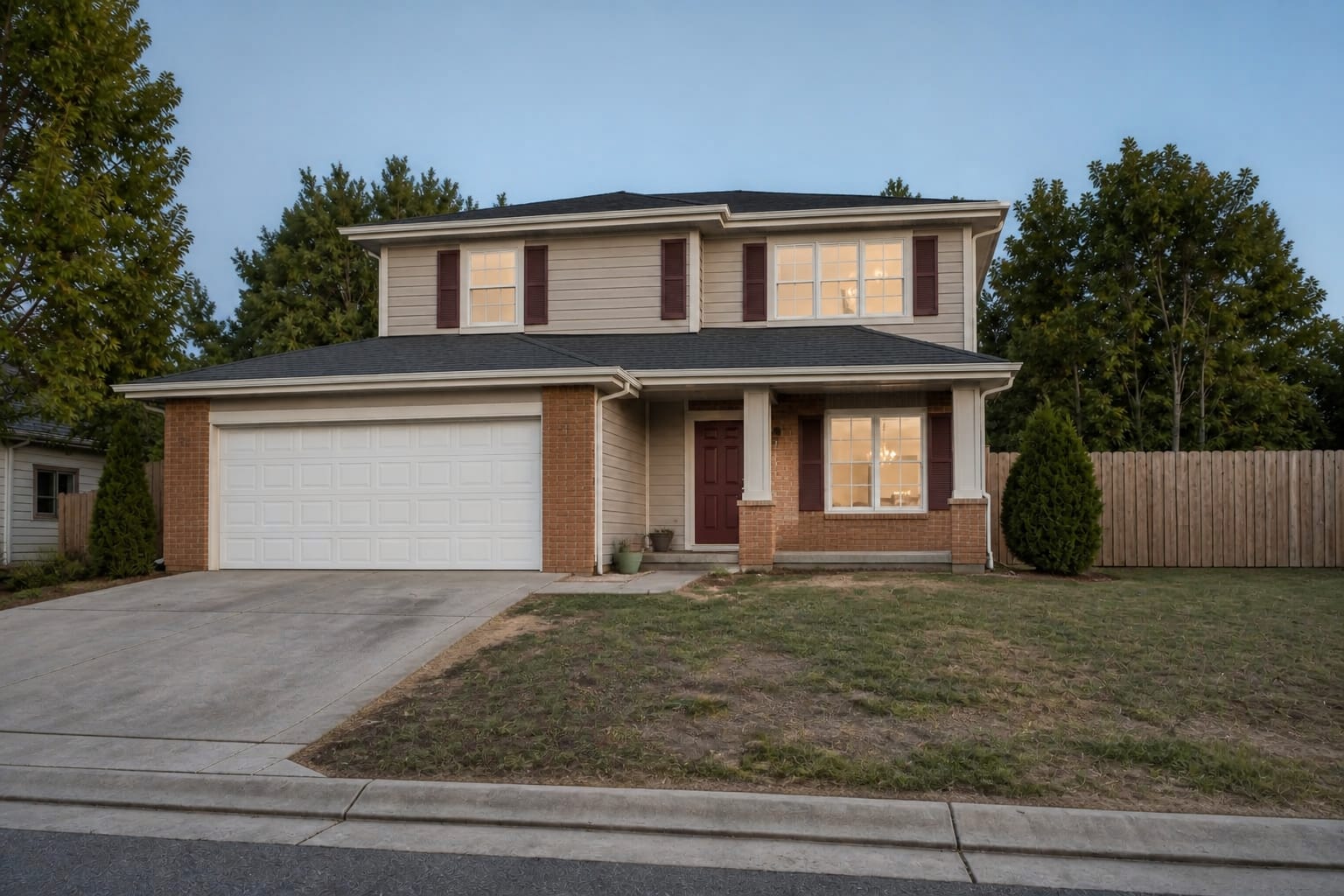
Choose house exterior color ideas by locking in fixed materials first (roof, brick, stone, driveway), then picking a body color, a trim color 2-3 values darker or lighter for contrast, and one accent that covers roughly 10% of the facade. Keep all three colors in the same warm or cool undertone family. The front door is the last decision, not the first.
What fixed materials decide before paint does
A black or charcoal roof handles cooler whites, slate blues, deep greens, and crisp taupes. A brown roof wants cream, olive, mushroom, tan, or warm greige. Red brick pulls many "safe" grays purple, so test grays against the brick in person, not from memory.
Driveways and walkways matter too. Cool concrete or blue-gray pavers can make yellow-beige siding look tired; warm limestone or tan aggregate can make stark white feel disconnected. If you have stone veneer, pull one color from the stone's middle range rather than its lightest or darkest fleck, so the house doesn't look striped.
Trim width changes how much contrast you can carry. A house with 6-inch fascia and chunky porch posts can handle high contrast because the trim reads intentional. A house with skinny aluminum trim usually looks better with only a 10-to-20 LRV point gap between siding and trim, since softer contrast hides awkward details instead of spotlighting them.
Which siding, trim, and accent combinations work
Siding sets the temperature of the house, trim sharpens or softens the architecture, and the accent rewards the walk to the door. If your exterior mixes siding types, such as lap siding with shingles in a gable, stay in the same color family and shift one step lighter or darker instead of introducing a new hue.
| House condition | Strong color direction | Why it works |
|---|---|---|
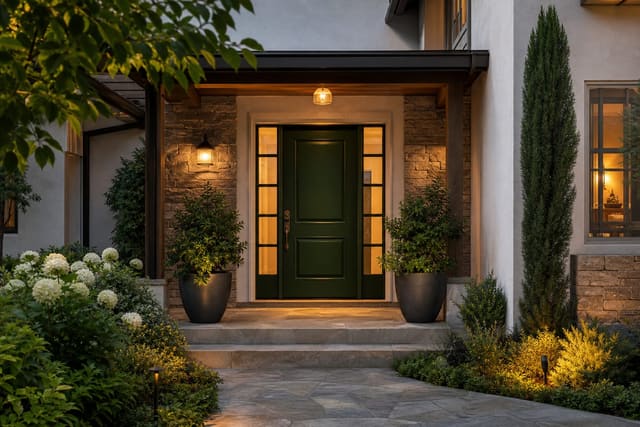
| Red brick with dark roof | Warm white trim, mushroom siding, deep green door | Green cools the brick without fighting its warmth |
| Low ranch, shallow roofline | Soft taupe siding, near-matching trim, charcoal door | Low contrast calms a long, flat facade |
| White farmhouse | Creamy white siding, black or bronze accents, stained wood door | Warm white avoids glare; dark hardware adds structure |
| Coastal or lake house | Weathered blue-gray siding, soft white trim, navy or coral door | Echoes water and sky without a theme-y look |
Don't scatter accent color across every small piece. If the door is the hero, keep shutters and railings quiet in charcoal, bronze, or the trim color. For bolder entry energy, see front door color ideas once body and trim are settled.
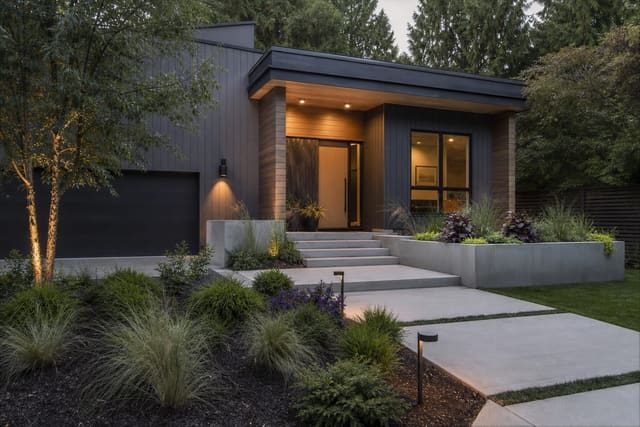
Modern homes can go darker than most owners expect. Deep charcoal, olive-black, or espresso siding works when texture, glass, and landscaping keep the facade from reading as a flat block, a direction covered further in modern house exterior ideas.
Test this on your own photo with ReDesign before committing; keep the roofline, hardscape, and planting beds visible so the preview reflects the space you actually have.
Exterior color combos with specs you can copy
- Warm greige siding, creamy white trim, black-green door. Best on red-brick or brown-roof homes where pure white looks too sharp; keep trim near 6 inches wide so the cream reads deliberate.
- Soft white siding, pale stone trim, stained wood door. Choose a warm-undertone white for cottages and farmhouses; a semi-transparent stain on the door adds depth without a new paint color.
- Sage green siding, off-white trim, bronze hardware. Works when mature evergreen shrubs or trees already surround the house; bronze keeps things softer than black.
- Charcoal siding, warm wood, bone trim, amber lighting. Use 2700K sconces so dark paint doesn't turn cold at night; repeat the wood at the door or porch ceiling.
- Blue-gray siding, bright white trim, red-orange door. Test the blue-gray on the north side first; shaded walls can read cooler and heavier than the chip suggests.
- Garage door painted the body color. If the garage covers more than a third of the facade, matching it to the siding reduces bulk and lets the entry become the focal point.
Dark siding needs contrast from pale grasses, boxwood, hydrangea, or light concrete. Pale siding needs depth from evergreen shrubs, dark mulch, or iron planters. If a patio refresh is happening alongside the repaint, coordinate hardscape undertones early, using material logic from patio design ideas.
Common exterior color mistakes to avoid
- Choosing paint indoors under warm bulbs. A color that looks soft in a kitchen can bleach on south-facing walls or turn flat on shaded north walls.
- Defaulting to bright white trim. Against beige stone, red brick, or cream vinyl windows, a softer white, bone, or linen usually belongs better with the fixed materials.
- Painting shutters that are architecturally too narrow. High-contrast paint only advertises the mismatch; match them to the siding or remove them instead.
- Ignoring the garage door. A bright white garage on the front elevation can overpower the porch and landscaping; paint it the body color instead.
- Going dark without enough relief. Dark siding needs visible texture, window depth, planting contrast, and a lit, 36-inch-minimum walkway so the facade doesn't flatten.
Use AI to preview your exterior before you commit
Upload a straight-on photo of the house and test three disciplined palettes: one light, one mid-tone, one dark. Keep the roof, brick, driveway, and windows unchanged in each preview so you're judging paint, not a fantasy renovation.
Be specific in prompts: "warm greige lap siding, creamy white trim, charcoal shutters, deep green front door, existing red brick retained, same roof color," then compare it against a cooler or darker version. If a preview makes the roof look wrong, that's a warning sign worth respecting.
Frequently Asked Questions
How many colors should I use on a house exterior?
Three: body (60%), trim (30%), and an accent like the door, shutters, or front step (10%). Four is acceptable on Victorian or Craftsman homes with a belly band; two is cleanest on modern homes.
How do I choose exterior paint colors that won't fade?
Deep tones like navy, forest green, and dark red fade faster than light neutrals. Use 100% acrylic exterior paint rated for 15-year fade resistance and avoid deep colors on south-facing walls, which get the most UV exposure.
Should exterior trim be lighter or darker than the body?
Trim lighter than the body is most common and reads crisper. Trim darker than the body works well on contemporary homes. Matching body and trim reads flat and hides architectural detail.
What exterior colors make a house look larger?
Light body colors, such as off-white, pale gray, or warm greige, paired with trim in the same family make a house recede and read larger. Dark body colors make a house look smaller but more dramatic and grounded.
How do I test exterior paint colors?
Apply 12in x 24in swatches to north- and south-facing walls and observe them at three times of day. The right color reads well in morning shadow, afternoon direct sun, and overcast light.
> Try this: Ready to see this on your own outdoor space? Open ReDesign and run the preview before you buy materials, plant, drill, or move furniture.
Three transformations to try
1. Warm greige body with white trim and navy door 2. White body with black trim and green accent 3. Dark gray body with lighter trim and brass fixtures