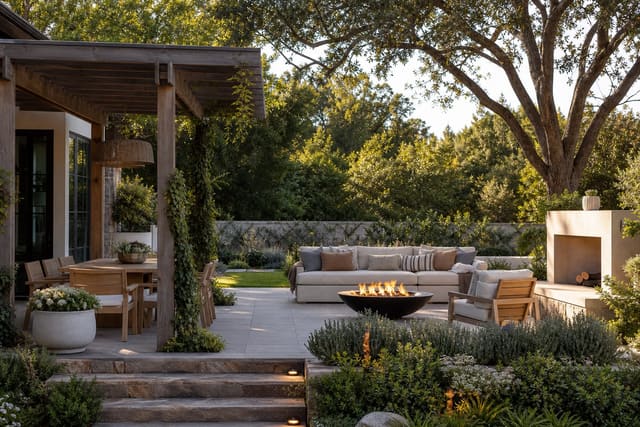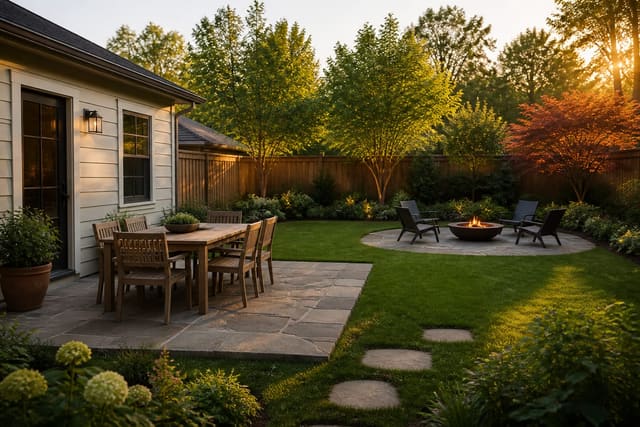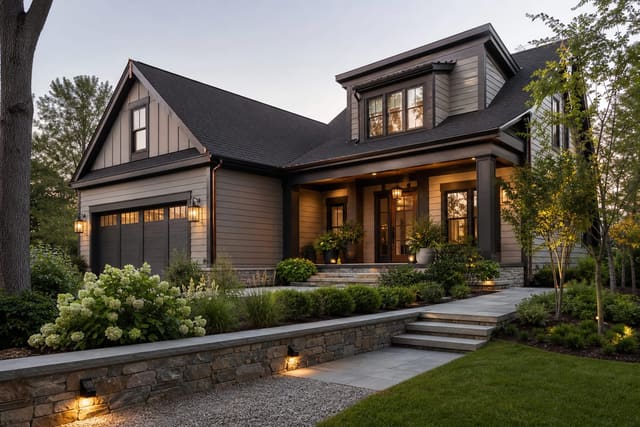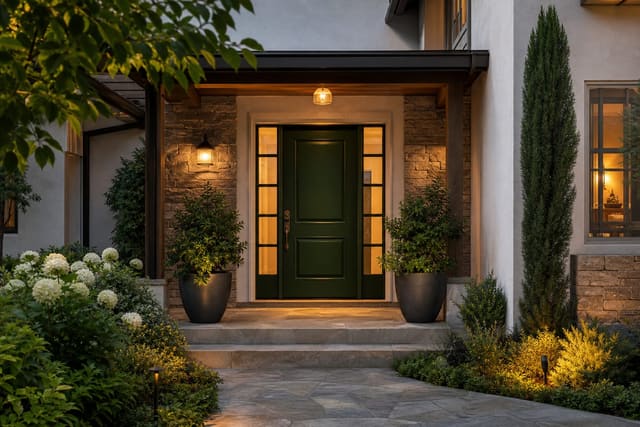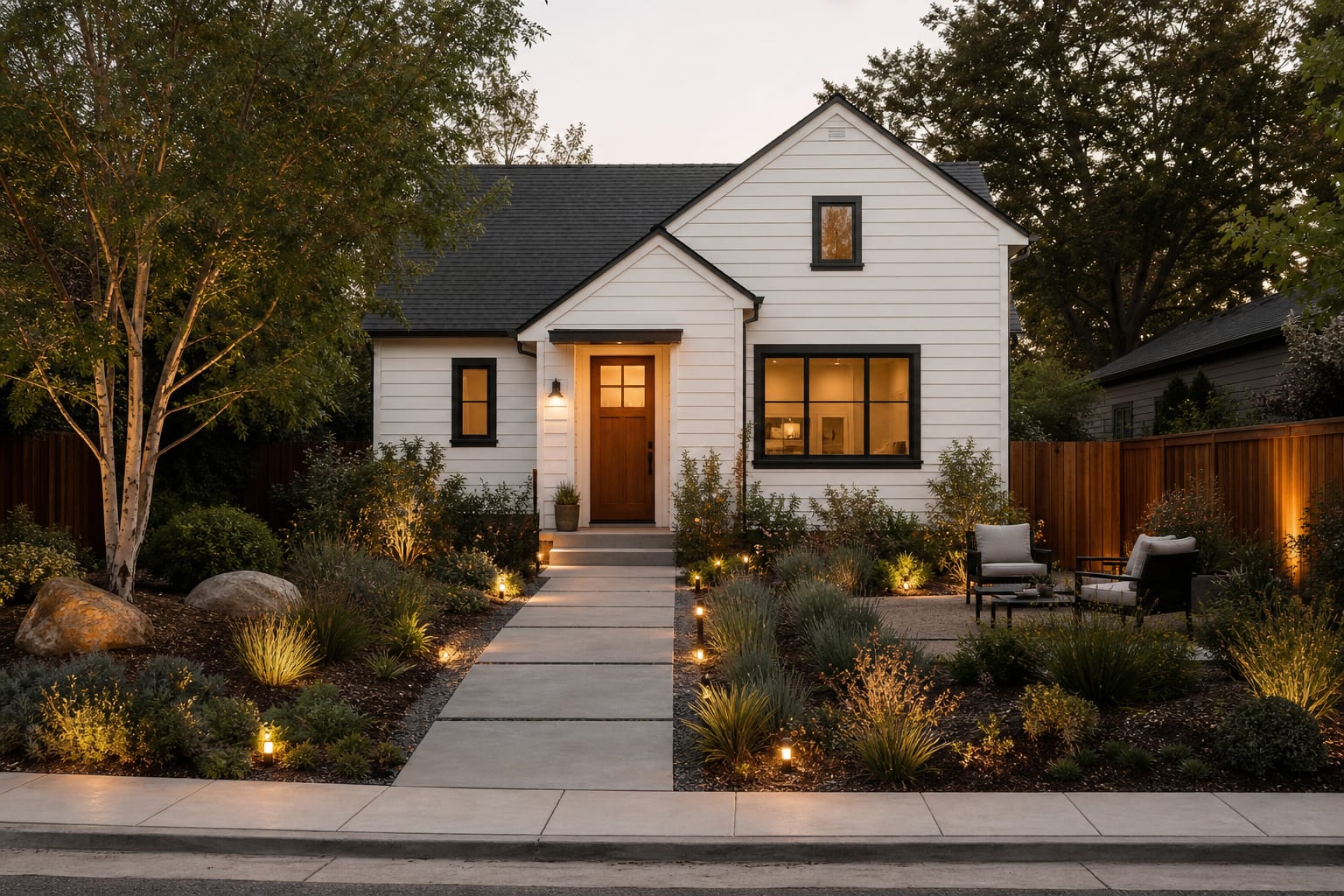
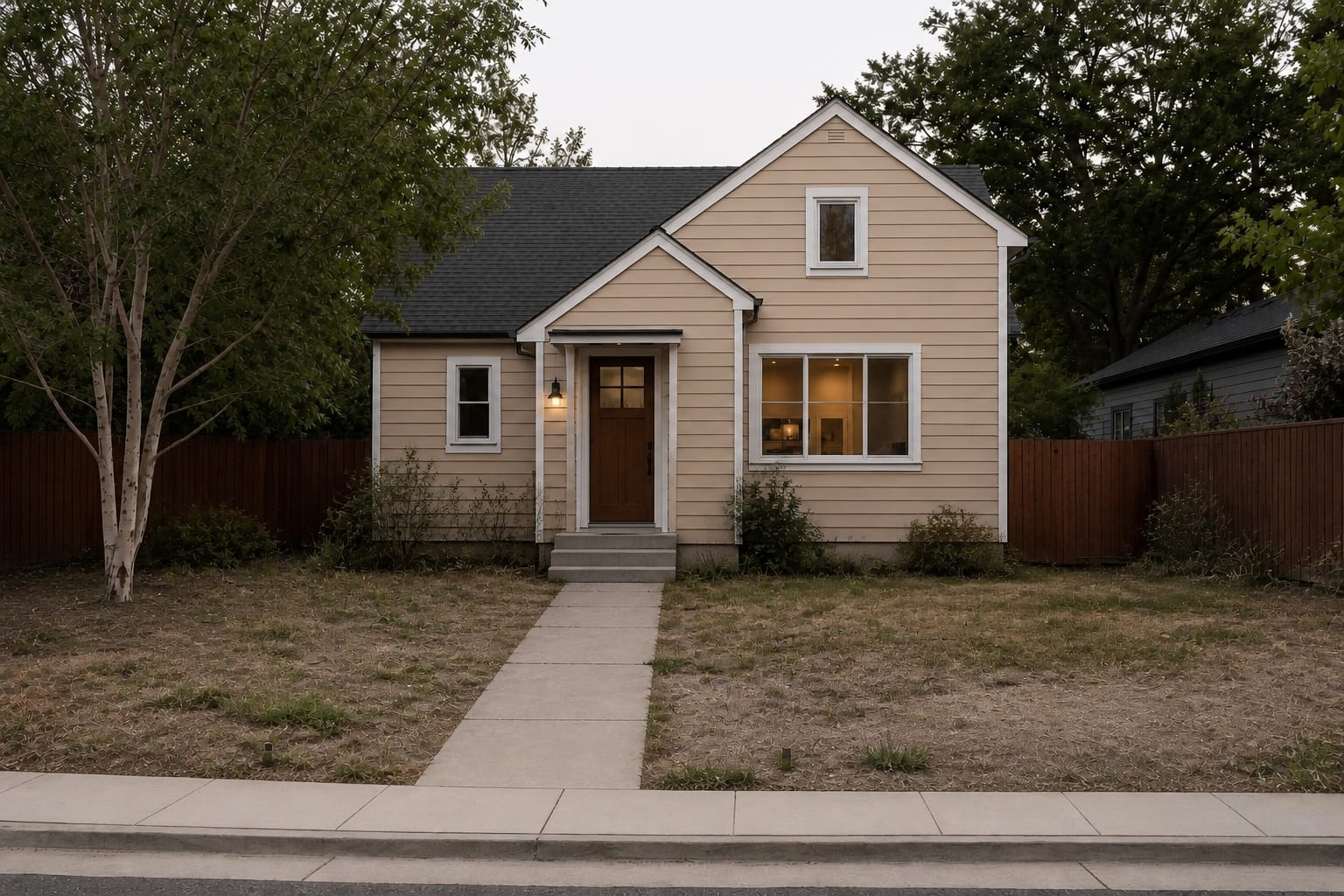
Modern house exterior ideas focus on subtraction: simplify the roofline, limit cladding to two or three materials, unify hardware in one metal finish, and enlarge the look of windows with flush or minimal trim. A calm palette, a confident entry, and structured landscaping do more for curb appeal than any single trendy material or color choice.
What Makes a Modern House Exterior Look Modern?
A modern facade has simple geometry, restrained ornament, broad uninterrupted surfaces, intentional contrast, and lighting that clarifies the entry after dark. That doesn't require a flat roof or a glass wall — a 1990s builder home, a small ranch, or a brick colonial can all move contemporary by reducing visual noise.
- Repeat one visual cue three times (a metal finish, planter shape, paving joint, or trim color) to tie the facade together.
- Solve the layout problem first — a clear path, a defined entry — before buying accessories to cover for weak planning.
- Start with the silhouette: if the roofline is busy, keep walls to one body color, one trim color, and one accent material.
Windows are the second signal. Painting thick trim to match the body color, simplifying divided-light grids on replacement windows, and using shades sparingly make openings feel larger without changing the actual size. A 3-inch trim board reads traditional when it outlines every window in bright contrast, but nearly disappears painted to match the siding.
The ground plane carries equal weight. A narrow 30-inch walk with mulch on both sides fights a minimalist design by default; a 42- to 48-inch walk with rectangular pads, gravel joints, and low plant masses gives the approach more authority. If the front door is doing too much visual work, see modern front door color ideas before repainting the whole house.
Test this on your own photo with ReDesign — keep the house edge, horizon line, hardscape, planting beds, and main path visible so the preview solves the space you actually have.
Which Exterior Changes Make a Traditional House Read Modern?
Proportion, not paint, is why one facade looks expensive and another looks like a weekend project. Stand across the street and identify the three loudest elements — an oversized garage door, undersized shutters, skinny porch posts — before choosing finishes.
Garage doors are a common offender. If the garage covers more than a third of the front elevation, paint it close to the body color instead of contrasting it, choose a smooth slab or narrow horizontal-panel style, and keep hardware minimal.
Trim needs discipline. Remove nonworking shutters narrower than half the window width; if removal leaves paint ghosts or scars, use a darker window trim or a vertical siding panel to reset the composition. Color deserves a full-facade decision, not a swatch taped by the door — taupe-gray, mushroom, deep olive-gray, and charcoal often suit older brick or stone better than stark white. Compare full palettes in whole-house exterior color ideas before buying gallons.
Watch for these common mistakes:
- Bright white brick with an unsolved roof color. Test wall color against the roof, gutters, and driveway in morning and afternoon light first.
- Black windows on an otherwise traditional house. Repeat black in at least two other spots, like sconces and address numbers, so it looks intentional.
- A small porch light replacing a small porch light. Size the new fixture to roughly a quarter to a third of the door height, or use a linear ceiling fixture under a shallow overhang.
- Five materials competing on one facade. Give stone, brick, siding, wood, and metal a clear hierarchy: one dominant material, one accent.
Five Modern House Exterior Ideas You Can Copy
- Narrow the body-to-trim contrast. A 1- to 2-step contrast softens chopped-up windows and multiple gables on busy suburban roofs.
- Use one warm wood door. A walnut, cedar, or teak-tone slab door paired with matte black hardware, 5-inch numbers, and a 48-inch-deep landing carries the whole entry.
- Repeat plant masses instead of scattering shrubs. One upright evergreen, one grass, one groundcover, repeated in drifts, kept below the window sill unless screening a wall.
- Upgrade the walkway before the facade materials. Rectangular pavers at least 24 by 36 inches with gravel or planted joints make a modest house feel architectural.
- Layer exterior lighting. Warm 2700K–3000K lamps, downward-aimed path lights, and sconces mounted 66–72 inches above the porch floor keep faces, numbers, and steps readable at night.
If there's a side patio, borrow layout logic from modern patio design ideas so the front and outdoor living areas match. The best modern exteriors keep one moment of warmth — a stained soffit, a clay planter, bronze hardware, or grasses that move — otherwise minimalist design can turn sterile on cloudy lots or concrete-heavy streets.
How Do I Preview a Modern Facade Before Committing?
Upload a straight-on photo of the house and test a few controlled directions against the same camera angle before buying paint, lighting, plants, or doors. Keep prompts specific — warm white siding, black-framed windows, a wood door, low grasses, a wider walk, 3000K lighting — rather than asking for a vague "modern makeover."
Shoot from across the street or driveway at chest height with the roofline in frame, and add a closer shot of the entry if the porch is the problem area. Avoid a fisheye lens, which distorts the garage, path, and windows.
Compare three levels of change: light (paint, lighting, numbers, planting), middle (new door, garage paint, simplified trim), and heavy (new siding, windows, canopy, walkway). Then check the preview in black and white — if it still shows a clear entry, balanced windows, and a calm material hierarchy without color, the design is strong.
Frequently Asked Questions
What materials make a house look modern?
Fiber cement board-and-batten, smooth lap siding in dark colors, corrugated or standing-seam metal panels, and painted concrete block are the four materials that most reliably deliver a modern exterior look.
What colors work best for a modern house exterior?
Near-black, deep charcoal, and warm off-white are the three most-used modern palettes. The key is keeping the body color consistent across all planes and pairing it with black hardware throughout.
How do I modernize a traditional house exterior without a full remodel?
Paint the body a deep solid color, remove all shutters, install a solid flush entry door, swap brass fixtures for matte black, and trim hedges into a geometric form. These five changes deliver most of the modern effect for under $5,000.
Do modern houses need landscaping?
Yes. A modern exterior reads incomplete without structured geometry — square-clipped hedges, one species repeated in rows, or a gravel garden with specimen grasses. Avoid cottage-garden massing in front of a contemporary facade.
What windows are best for a modern house exterior?
Casement or fixed windows in aluminum or dark-painted wood frames with no grilles read most modern. Double-hung windows with grilles or divided-light patterns undercut the contemporary look.
> Try this: Open ReDesign and run the preview before you buy materials, plant, drill, or move furniture.
Three transformations to try
1. Board-and-batten in near-black with matte hardware 2. Dark fiber cement with metal panel accent 3. White stucco with black steel windows