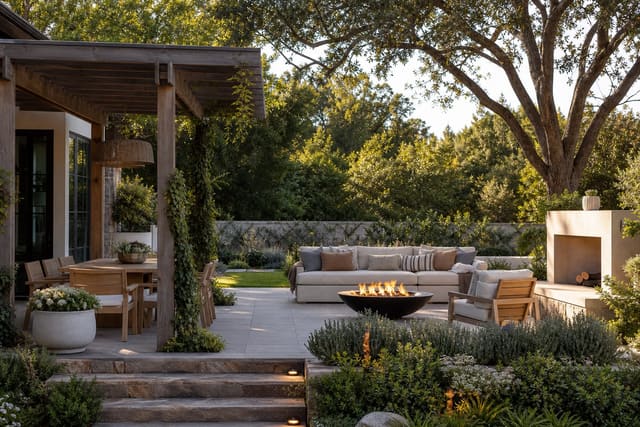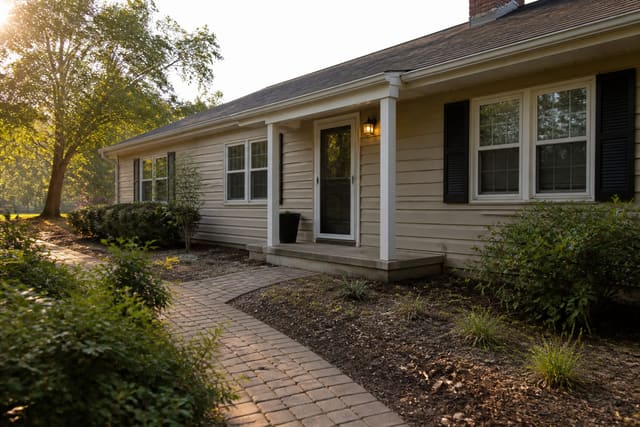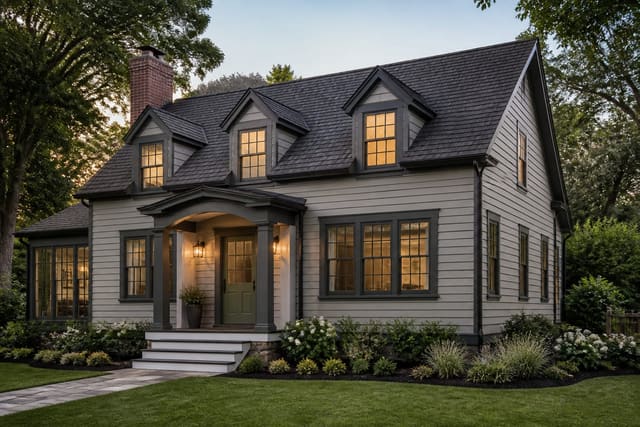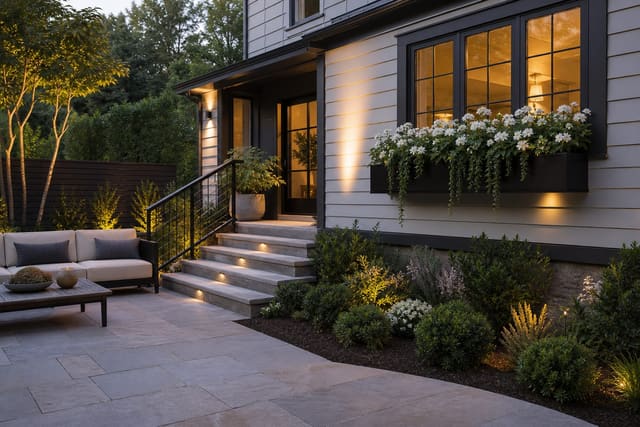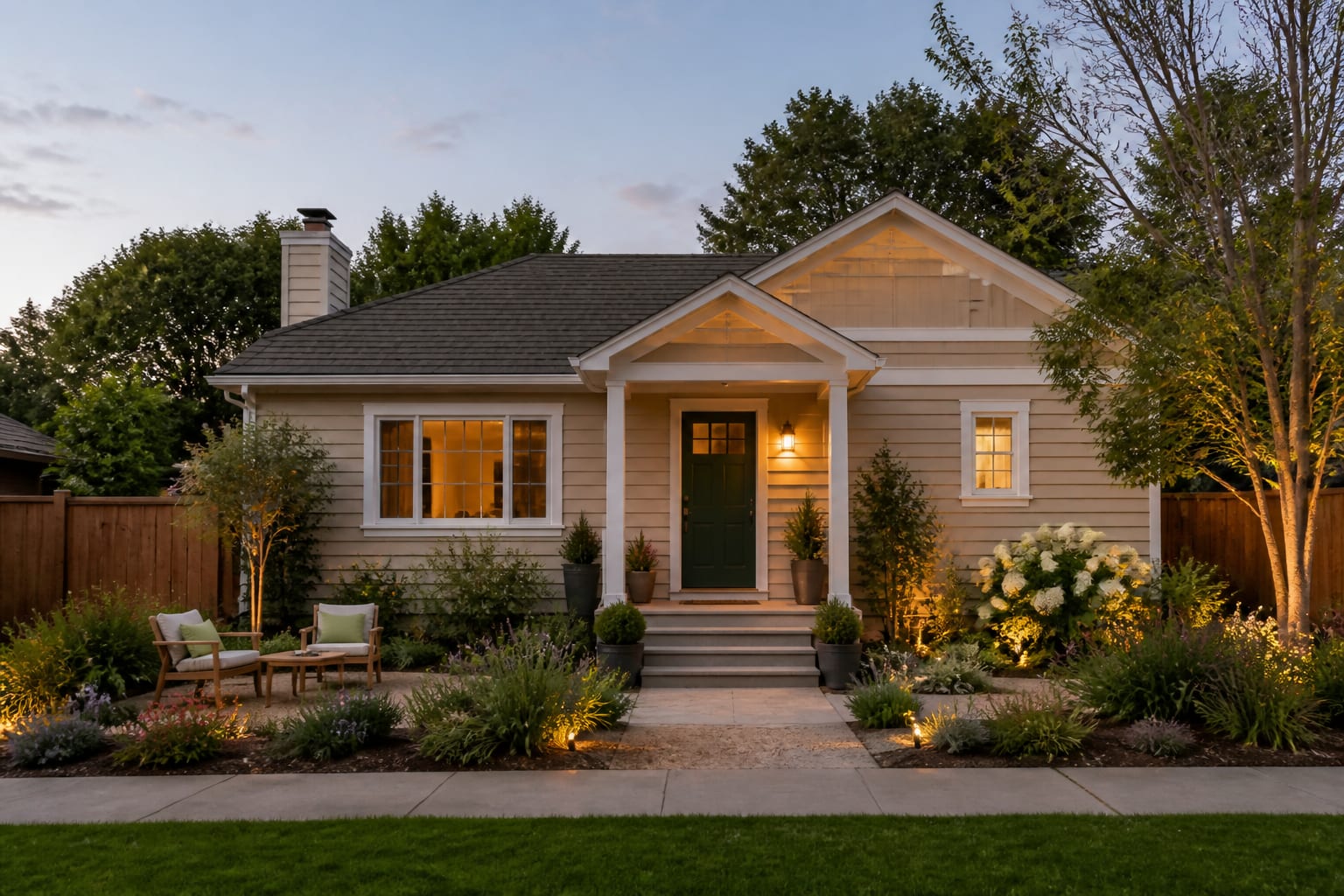
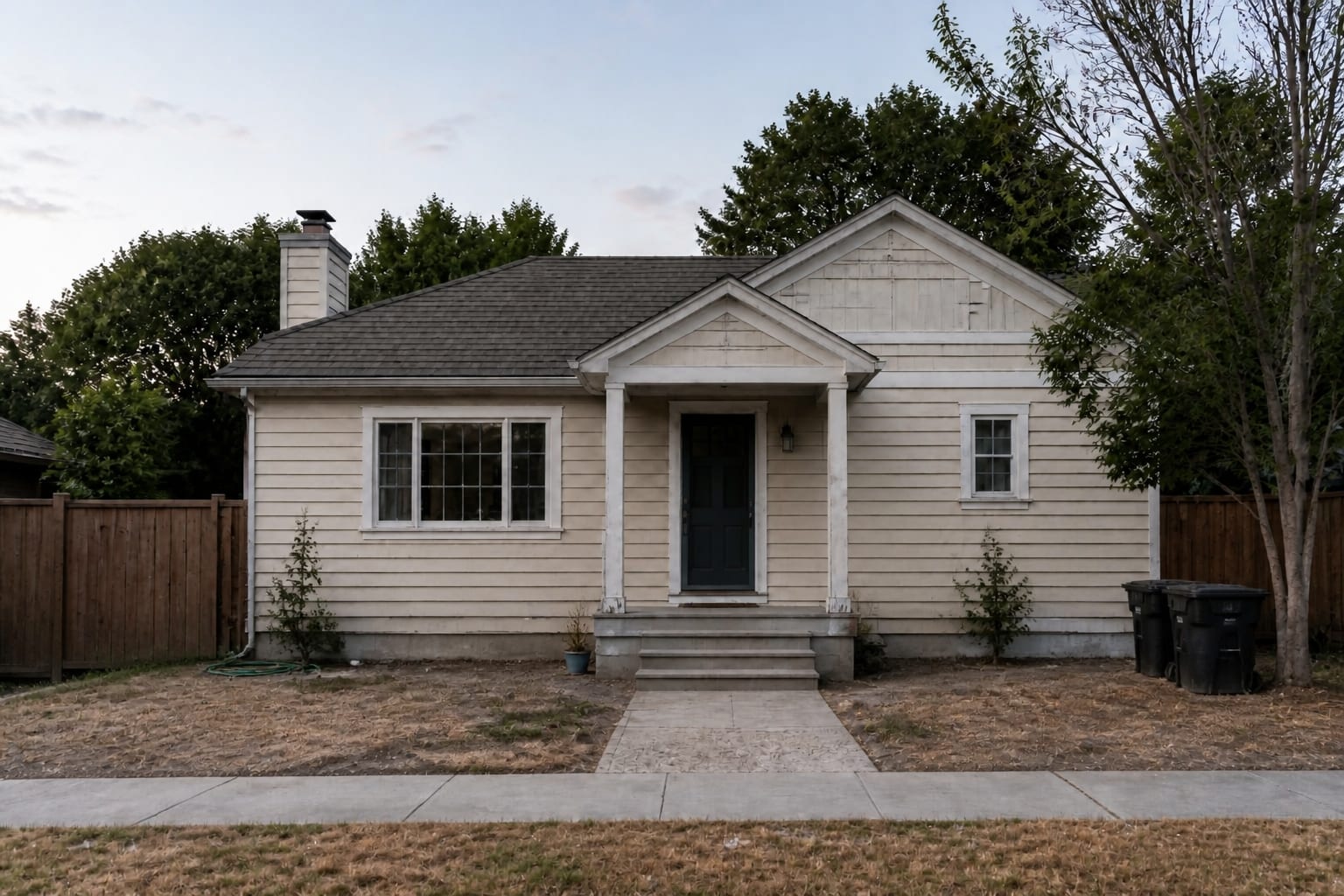
AI exterior paint color ideas work best when they start from your own house photo, not a swatch. The tool overlays body, trim, door, and garage colors onto your actual roof, brick, and driveway so you can judge undertones together, then confirm the strongest options with large outdoor samples before buying gallons.
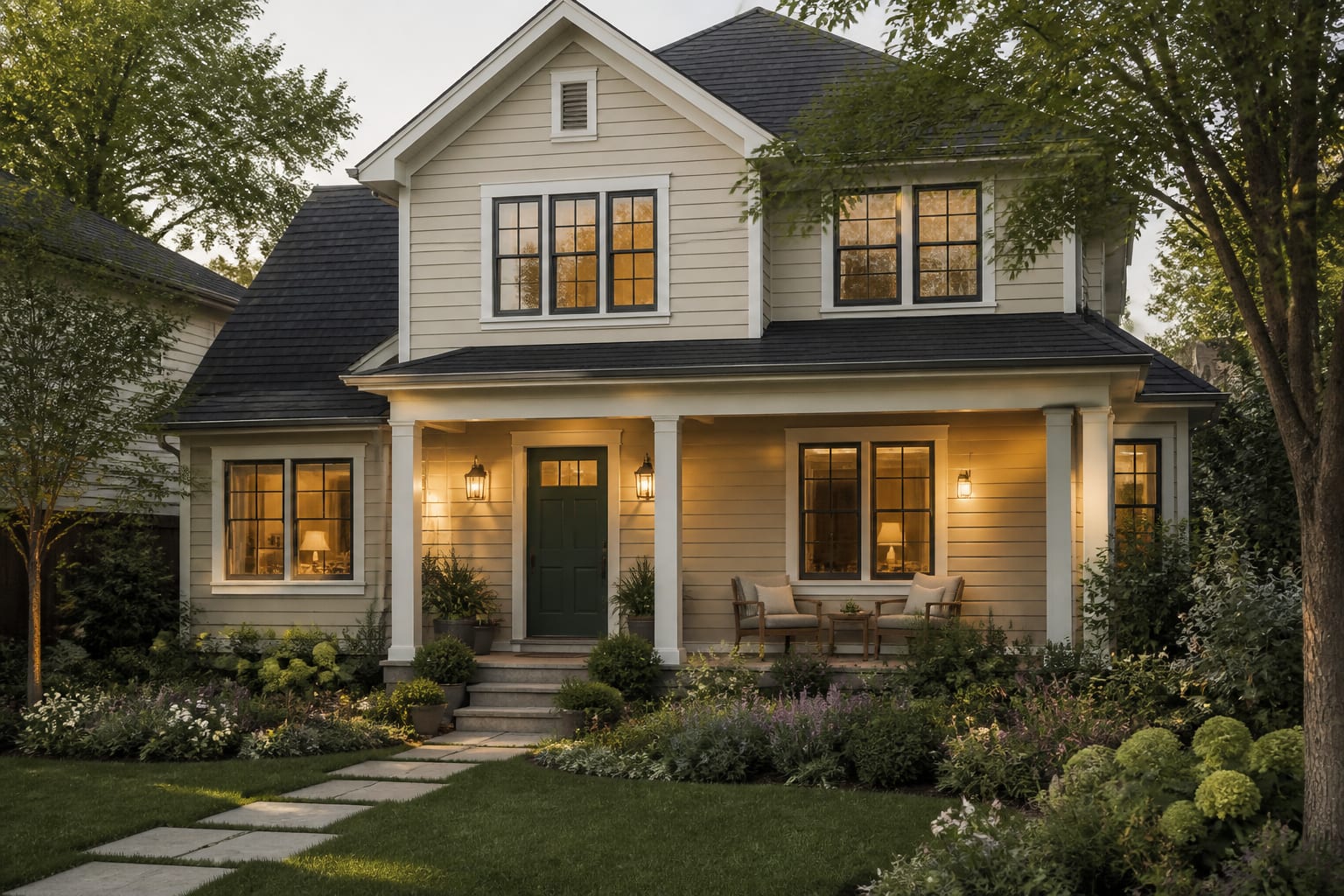
How does AI generate exterior paint colors from a photo?
AI suggests exterior paint colors by rendering siding, trim, shutters, and the front door in different palettes on your actual house instead of a swatch. The value isn't a perfect image; it's seeing the whole elevation at once instead of judging a chip against one square foot of siding.
A good preview keeps the roof, brick, stone, gutters, windows, garage door, porch columns, and driveway visible, because those surfaces set the limits of any palette. A cool gray body can look sharp in a rendering and still clash beside orange brick or a warm tan roof. If the project involves more than paint, pair the color test with a broader AI exterior house design from a photo so lighting, landscaping, and entry details work together.
What makes an exterior color palette work?
Exterior paint works when the palette has hierarchy: body as the field, trim as the outline, front door as the focal point, and masonry as the fixed anchor. When every surface gets equal weight, the house looks flat. When contrast is too sharp, the trim fights the roof.
Start with the roof, since it's usually the largest fixed plane.
- A charcoal roof supports crisp white trim, deep green shutters, black accents, or warm greige siding.
- A brown or weathered tan roof favors cream, olive, mushroom, taupe, or muted clay over blue-gray.
- Red or orange brick usually pairs better with warm whites, bronze, olive, or softened black than icy white or cool charcoal.
Trim should clarify the architecture. Invisible trim makes a house look tired even after fresh paint; overly bright trim against warm masonry can make brick look dirty. The front door can carry more personality, but it should still echo something already on the house, such as roof depth, brick warmth, metal finish, or nearby planting.
Which exterior paint ideas should you preview first?
Skip the trendiest color and start with controlled tests that reveal what's actually making the house feel off.
- Body color: Preview warm white, greige, and putty against the roof using 18-by-24-inch boards moved between sun and shade.
- Trim contrast: Test two strengths so windows and fascia read cleanly from 30 to 50 feet without looking outlined in marker.
- Front door: Choose the color after the body settles. Deep green, oxblood, navy, black-brown, or clay work if they relate to roof, brick, or hardware.
- Garage door: Keep it close to the body color or one step deeper so it doesn't become the accidental focal point; save contrast for the front door.
- Shutters: Test removal as seriously as repainting. Keep shutters wide enough to plausibly cover the window if closed.
- Landscape check: Preview the palette beside greenery, mulch, and concrete, since 24-to-36-inch shrubs soften a new color while sparse foundation plants leave it looking unfinished.
If a plain facade keeps needing thicker porch posts, a different garage treatment, or stronger entry framing in every preview, the fix may be architectural. Try a dedicated house facade redesign workflow before blaming the paint.
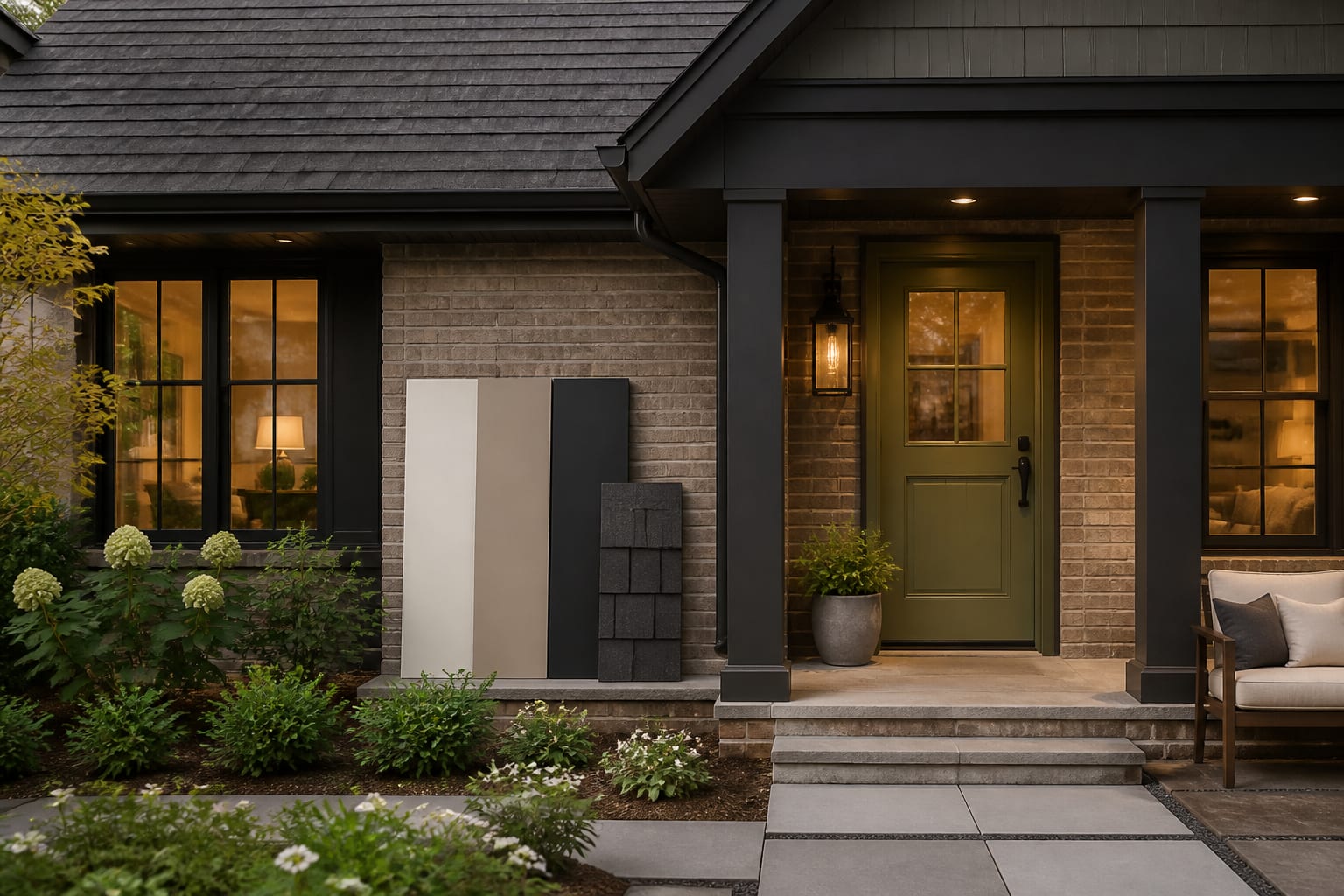
How do you use AI to preview exterior paint before committing?
Upload a straight daylight photo from the curb or driveway, not an angled garden shot. It should show the full front elevation, roof edge, garage, porch, driveway, gutters, downspouts, lights, and any brick or stone that stays.
- Run a first pass changing only body and trim colors.
- Run a second pass with the same body color but different door, shutter, garage, and hardware colors.
- Run a third pass holding the paint steady while testing lights, house numbers, planters, and window boxes.
That slower sequence shows which single choice actually improved the house. If window boxes suit the architecture, treat them as part of the color plan: match the box to the window width and choose foliage that relates to the door, trim, or masonry. Check these window box ideas that fit the architecture before adding boxes to every window.
Once a preview earns approval, write the real-world checklist beside it: body, trim, door, garage, shutter plan, roof and masonry undertone, sample board size, fixture finish, house number height, planter diameter, and any HOA restrictions.
What are the most common exterior paint color mistakes?
Exterior mistakes are costly because they're visible from the street. The usual problem isn't boldness; it's choosing one color without respecting the rest of the elevation.
- Testing white indoors. Exterior light is harsher, so test warm white, cream, and soft greige outside beside the roof, brick, and concrete before buying gallons.
- Equal contrast everywhere. Matching body, trim, and garage intensity buries the front door. Give the entry a stronger door color and house numbers around 4 to 6 inches tall.
- Ignoring fixture scale. Fresh contrast makes small lanterns look tinier. Size a side lantern to roughly one quarter to one third of the door height.
- Copying black-and-white on a warm house. Black trim can look crisp, but beside orange brick or brown shingles, black-brown, bronze, olive, or deep green often integrates better.
- Skipping physical samples. Screens smooth undertones. Put large boards on every visible elevation and check them in morning light, afternoon glare, and shade.
Before buying paint, make the palette prove itself from the curb, the driveway, and the front door. The winning exterior color isn't the prettiest swatch; it's the one that makes the existing roof, windows, masonry, and planting look like they were always meant to share one house.
Frequently Asked Questions
Can AI suggest exterior paint colors from a house photo?
Yes. AI can render body, trim, door, and garage colors on your actual house photo so you compare palettes against the real roof, brick, and driveway instead of a paint chip. Keep the full elevation visible in the source photo for the most useful result.
What photo works best for an AI exterior paint preview?
Use a straight daylight shot from the curb or driveway showing the full front elevation: roof edge, garage, porch, walkway, gutters, downspouts, and any brick or stone staying in place. Avoid dramatic angled shots that hide fixed materials the palette needs to respect.
How big should exterior paint samples be?
Use sample boards at least 18 by 24 inches, not small chips. Move them around the house to check morning light, afternoon glare, and shade, since exterior sun shifts color far more than any screen preview can show.
Should the garage door match the body color?
Usually yes, or one shade deeper. Keeping the garage close to the body color prevents it from stealing focus, letting the front door carry the stronger, more distinct accent color instead.
What's the most common exterior paint mistake?
Choosing one color in isolation, most often a white tested indoors, without checking it against the roof, brick, and masonry outside. Exterior light is harsher, so undertones that look neutral on a screen can turn distinctly cool or warm in full sun.