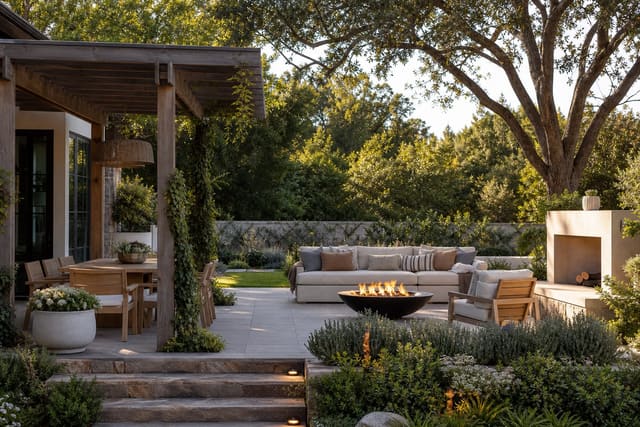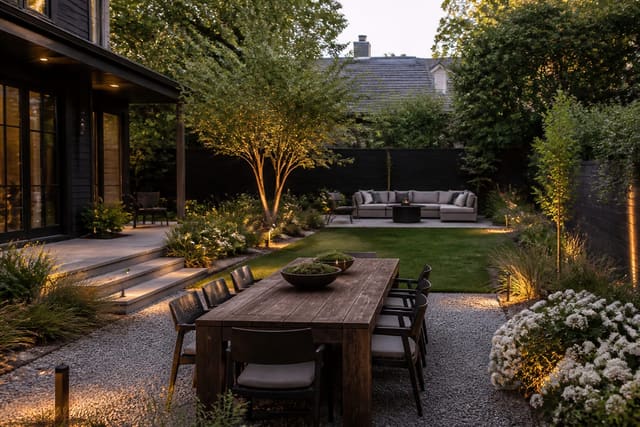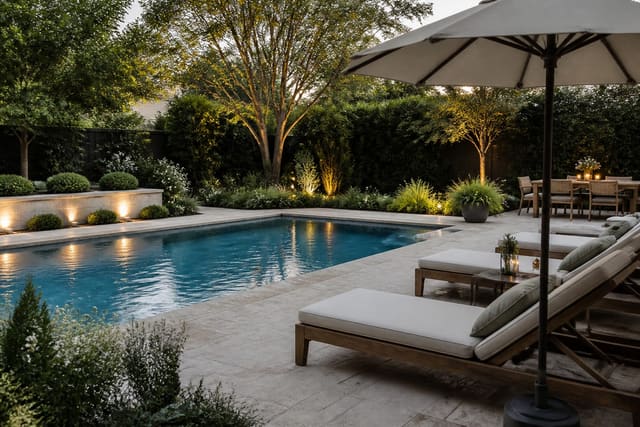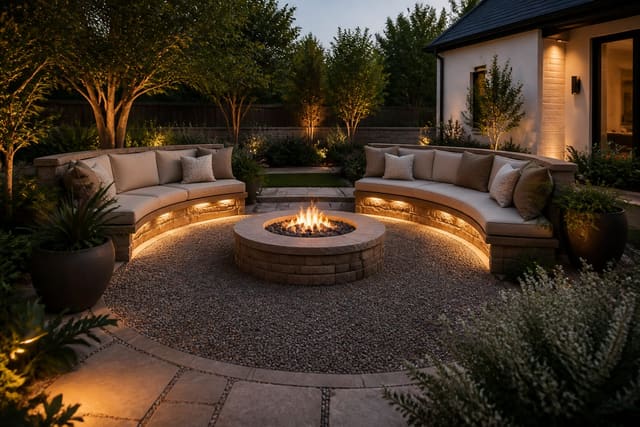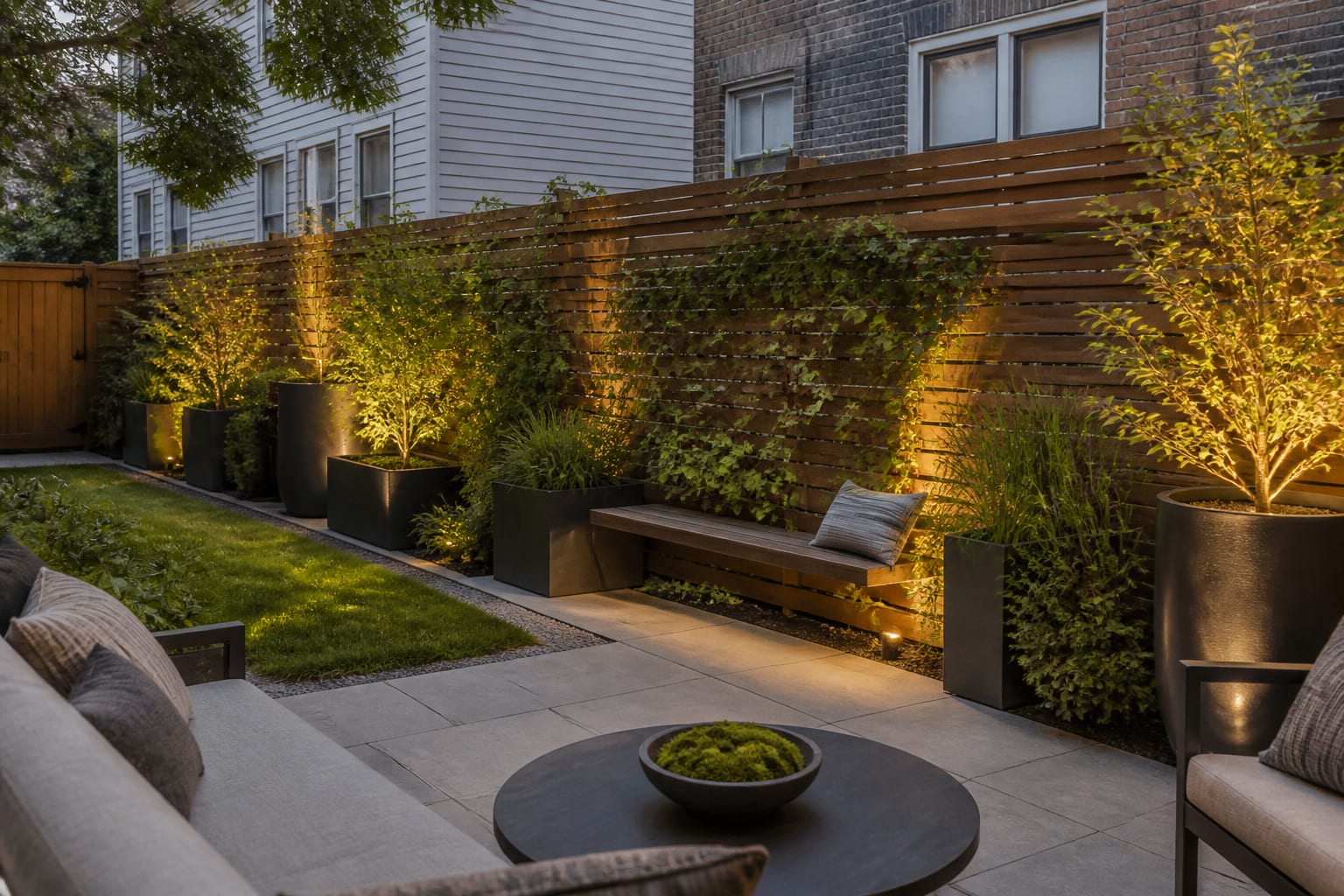
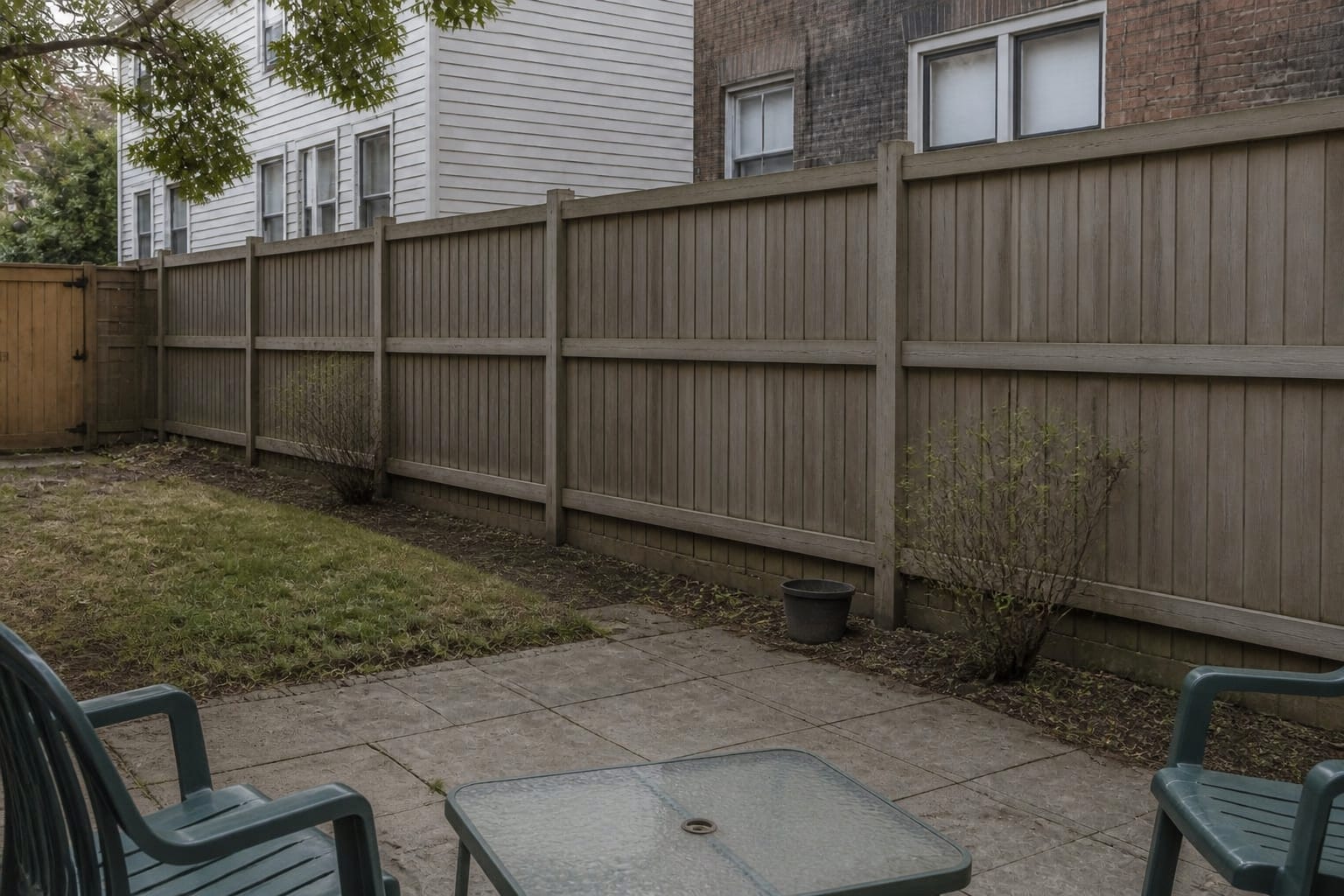
AI can design a backyard fence or privacy screen by letting you preview screen height, material, planting, and spacing directly on a photo of your yard before construction starts. Rather than guessing at height or material, you test options against your actual sightlines, gates, and patio layout first. The goal is a boundary that edits the specific view bothering you, not one that seals off the whole yard.
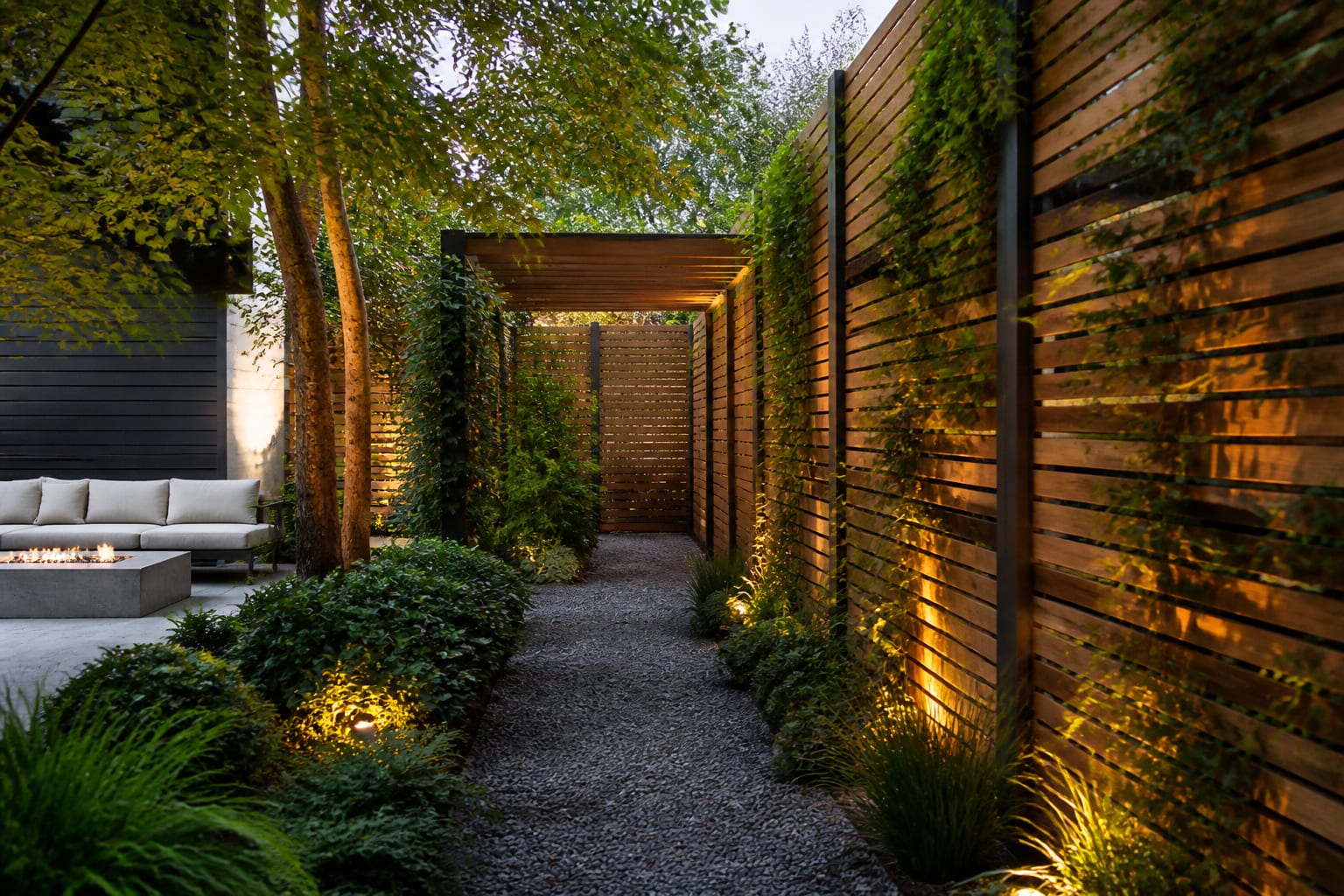
What makes a backyard boundary feel private without feeling boxed in?
A boundary feels private without feeling boxed in when the screen blocks the specific view that bothers you and leaves the rest lighter. Stand at the grill, dining table, lounge chair, and back door to mark which sightline is actually exposed. A 6 foot solid fence may suffice at the property line, but a taller visual break near one seating area often solves the real problem better than raising the whole perimeter (check local height rules first).
Scale the screen to yard depth. In a shallow 18 foot yard, a full-height dark fence on every side shrinks the lawn instantly; in a deeper yard, the same height can disappear behind planting. Try a layered edge: solid fence at the base, 18 to 24 inches of planting in front, and taller vertical accents only where privacy needs to rise.
Color decides whether the boundary recedes or advances. Charcoal, deep green, and weathered gray tend to fall back behind planting, while bright white reflects glare and highlights every seam. For a fence line tied to a larger plan, see broader AI backyard design ideas so the boundary, patio, and planting share one language.
Which before-and-after moves change the boundary first?
The strongest privacy screen projects start with sightlines and structure, not decorative panels.
- Block the view from the seat. Test a screen that rises 12 to 18 inches above the unwanted view from where you actually relax, within permitted fence-height limits.
- Use slat spacing intentionally. Horizontal boards with 1/4 to 1/2 inch gaps feel modern and private; 1 to 2 inch gaps suit airflow, vines, and filtered light.
- Give the base a planted buffer. Even a 24 inch strip holds compact grasses, dwarf shrubs, rosemary, or seasonal pots that root the screen visually.
- Keep gates and service routes clear. Leave about 36 inches for bins or mower access and avoid blocking a gate's full swing.
- Light the boundary low. Use warm 2700K exterior step lights or shielded sconces aimed at planting, not bright fixtures aimed at neighbors.
A before-and-after preview should show these moves from the same camera angle. If the result hides the gate, invents a larger patio, or replaces the neighbor's garage with a forest, tighten the prompt and try again.
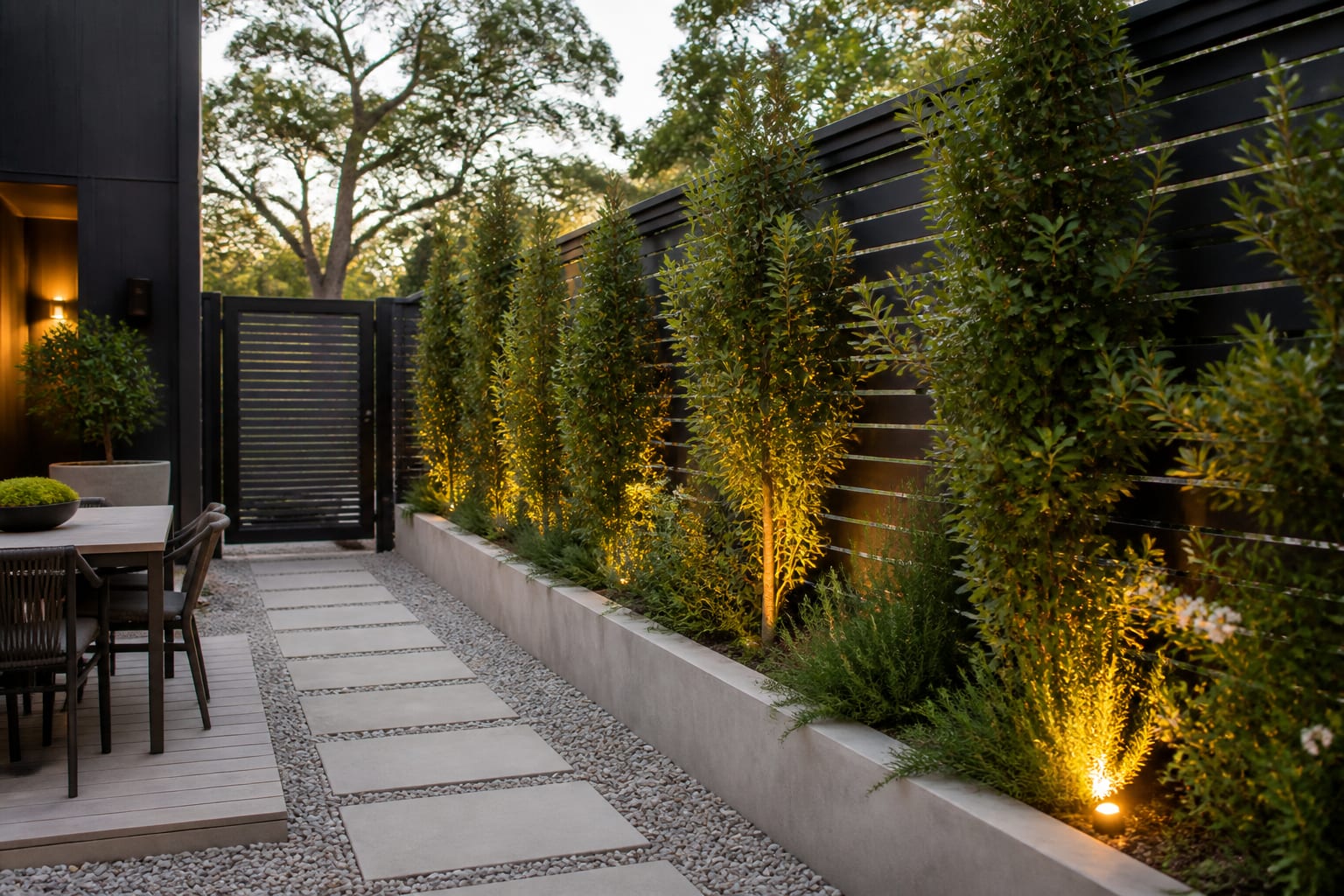
Which fence or privacy screen material fits your yard?
The right material depends on exposure, architecture, maintenance, and the privacy you need. Cedar slats, painted board fencing, woven willow, powder-coated metal, masonry, and hedging each solve a different problem.
Wood is the warmest and easiest to adapt: cedar, redwood, treated pine, and thermally modified wood weather differently, so decide between a silvered surface, a stain, or paint. Horizontal slats can lengthen a narrow yard, but need a consistent rhythm, since mismatched board widths look accidental.
Composite fencing suits low-maintenance zones, especially near pools, and looks best in simple runs. If the screen sits near water, coordinate it with the deck and furniture using AI pool area design so the fence doesn't fight the pool zone.
Metal screens suit modern houses or pattern without bulk, but need restraint; one patterned panel near a seating nook reads as architectural, ten reads like a restaurant patio. Planting is the softest option but is not instant: a hedge reaching 6 feet may take several seasons, so pair it with a structural screen up front and let plants take over visually as they mature.
How do you use AI design to preview your backyard boundary?
Use AI design as a visual rehearsal for the fence line, not a substitute for permits, surveys, or structural posts. Upload straight photos from the patio door, the main seating area, and any side-yard route where the boundary changes.
Write the prompt like a brief: a 6 foot horizontal cedar fence, 1/2 inch slat gaps, a 30 inch planting bed, evergreen shrubs, climbing jasmine on two trellis panels, 36 inch gate clearance, 2700K lighting, and no change to the patio size. Generate three versions before pricing anything: mostly fence, fence plus planting, and a partially planted screen. The middle option usually wins, since it gives privacy without sealing the yard. If your seating area includes a grill or future fire feature, check the boundary against AI fire pit design so chairs, screens, and smoke direction are planned together.
Verify every result against the real yard: does the screen block a sprinkler head, sit on a drain, block a gate, or rely on a tree that will outgrow a 9 foot side yard? The preview shows the composition early; the tape measure, code, and plant tag keep it buildable.
What are the most common privacy screen mistakes?
The most common mistake is solving every view with the same height and material, which makes the whole perimeter feel nervous. Build tall only near the exposed seat or window; a 4 foot planted edge may be enough elsewhere if grade, trees, or a shed already block the view.
Switching materials too often makes the yard look pieced together. Give each material a role: wood for the main run, metal for one accent panel, planting for the foreground, rather than cycling through lattice, slats, bamboo, and hedge in 25 feet.
Ignoring wind is costly, since solid panels catch wind in exposed yards; posts, footings, and hardware must suit the site, and freestanding screens need proper anchoring. Forgetting the neighbor-facing side can cause friction too. A legal screen still looks hostile if the back side is raw framing, so choose a design that looks intentional from both sides or soften your side with planting.
Finally, buying plants only for installation day backfires: a 3 gallon shrub can swallow a 30 inch path later. Check mature width, keep spiky plants 18 to 24 inches from walking routes, and leave access for pruning and staining.
Frequently Asked Questions
How tall should a backyard privacy fence be?
Most backyards only need full height near the specific exposed seat or window, often 6 to 8 feet depending on local code. Elsewhere, a lower 4 foot fence or planted edge is enough if grade, trees, or an existing structure already blocks the view. Check the height at the seat, not just at the property line.
Can AI design tools show a fence on my actual yard photo?
Yes. Upload a straight photo of your patio door or seating area and describe the fence height, material, slat spacing, planting, and gate clearance you want. The tool generates a preview on your real yard, letting you compare a mostly-fence option against a fence-plus-planting option before committing to materials.
What is the best material for a low-maintenance privacy screen?
Composite fencing and metal screens generally need less upkeep than wood, especially near pools or damp planting beds. Wood offers more warmth and design flexibility but requires periodic staining or sealing. Choose based on your climate, architecture, and how much maintenance you're willing to do each year.
How much space should I leave for plants near a fence?
Leave at least 24 inches for a planting bed at the base of a screen, and keep spiky or wide-spreading plants 18 to 24 inches back from walking paths. Check each plant's mature width before installing, since a small shrub can outgrow a narrow path within a few seasons.
Does a privacy fence need to look the same on both sides?
No, but it should look intentional on both sides to avoid neighbor friction. Raw framing, mismatched stain, or glare facing the neighbor's yard can create problems even if the fence is legal. Adding planting on your side or choosing a two-sided finished design keeps both yards looking deliberate.