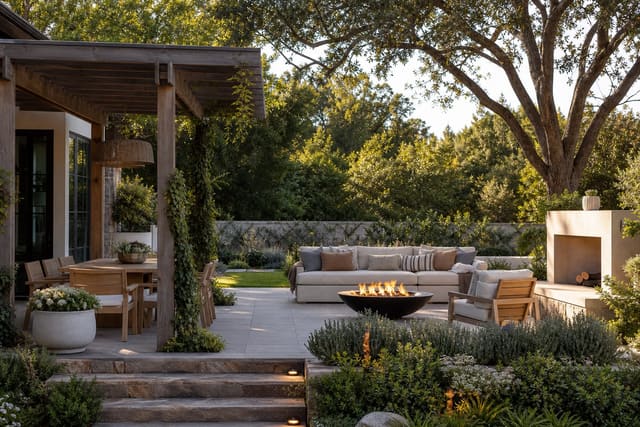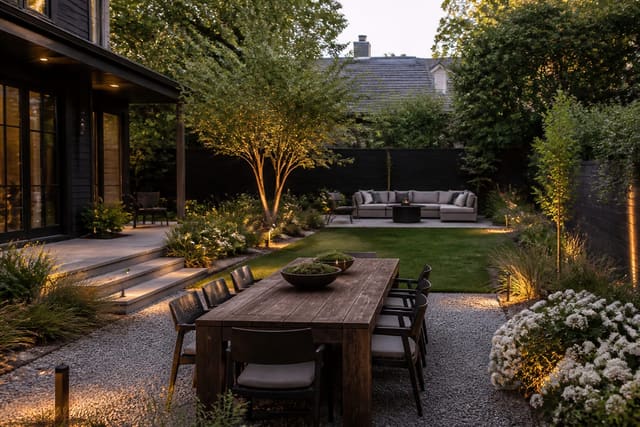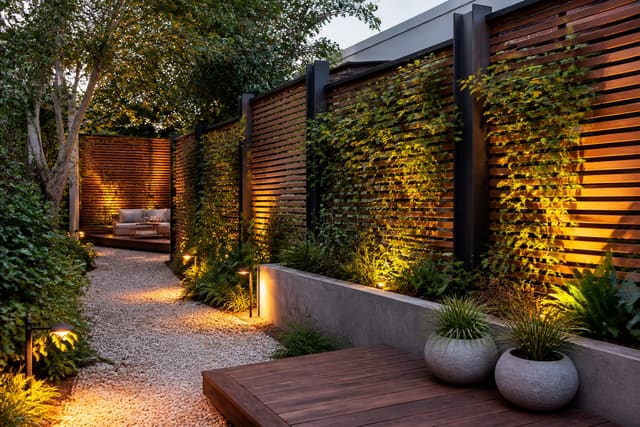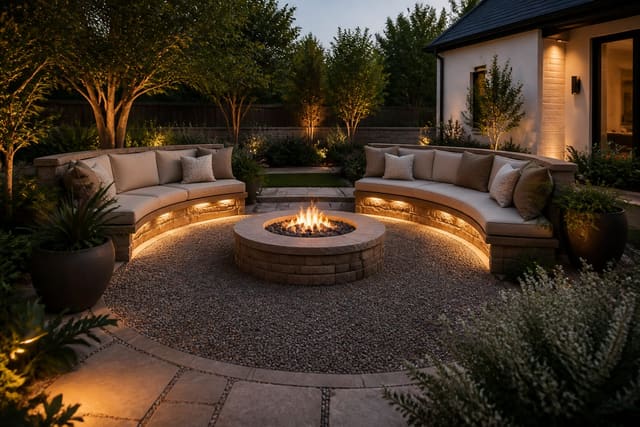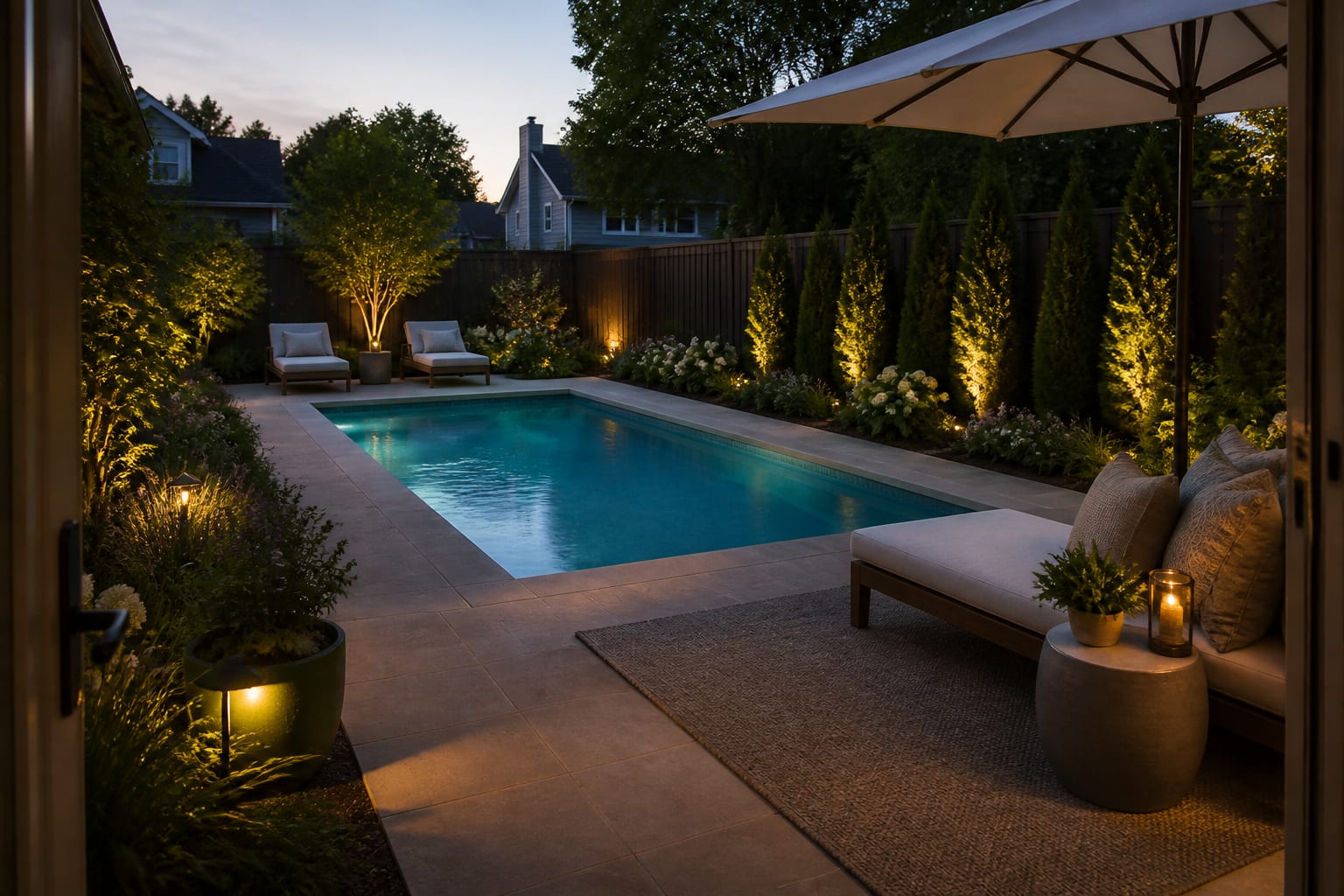
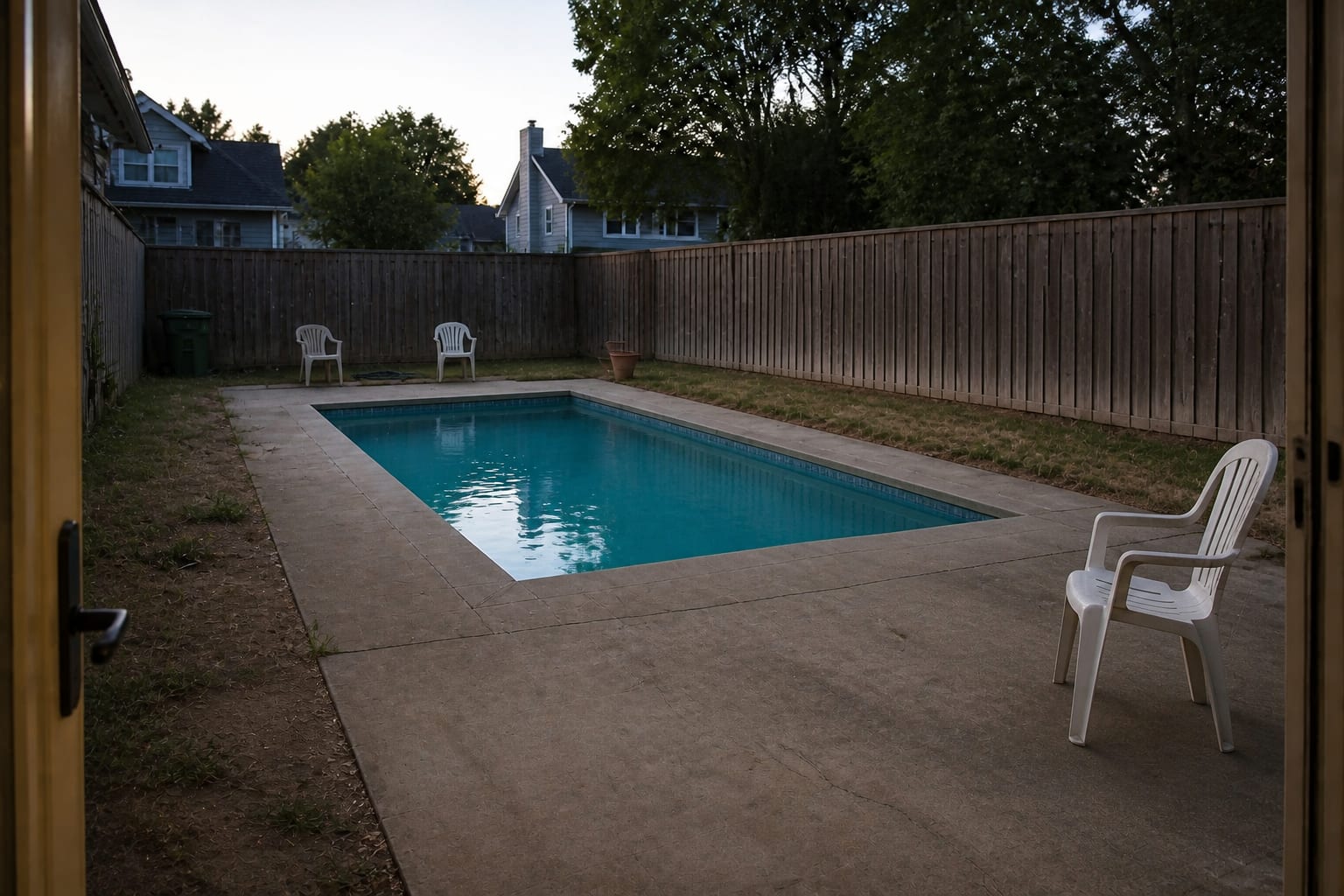
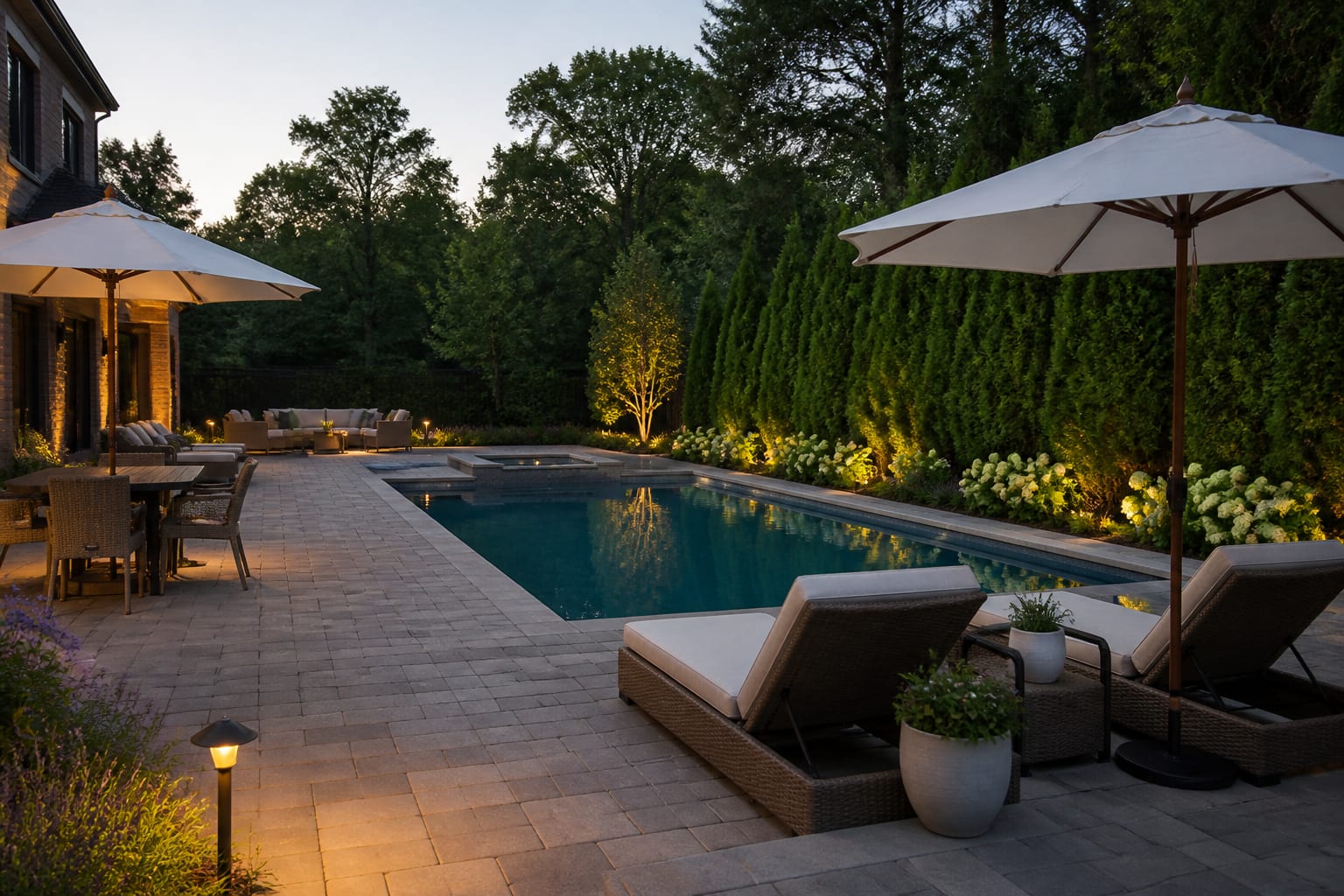
AI pool area design ideas let you test hardscape, planting, shade, lighting, and furniture layouts on a photo of your own backyard before concrete or pavers get poured. Treat the pool as an outdoor room rather than a blue rectangle with leftover chairs, and use AI renderings to settle circulation, privacy, and material choices while changes are still free.
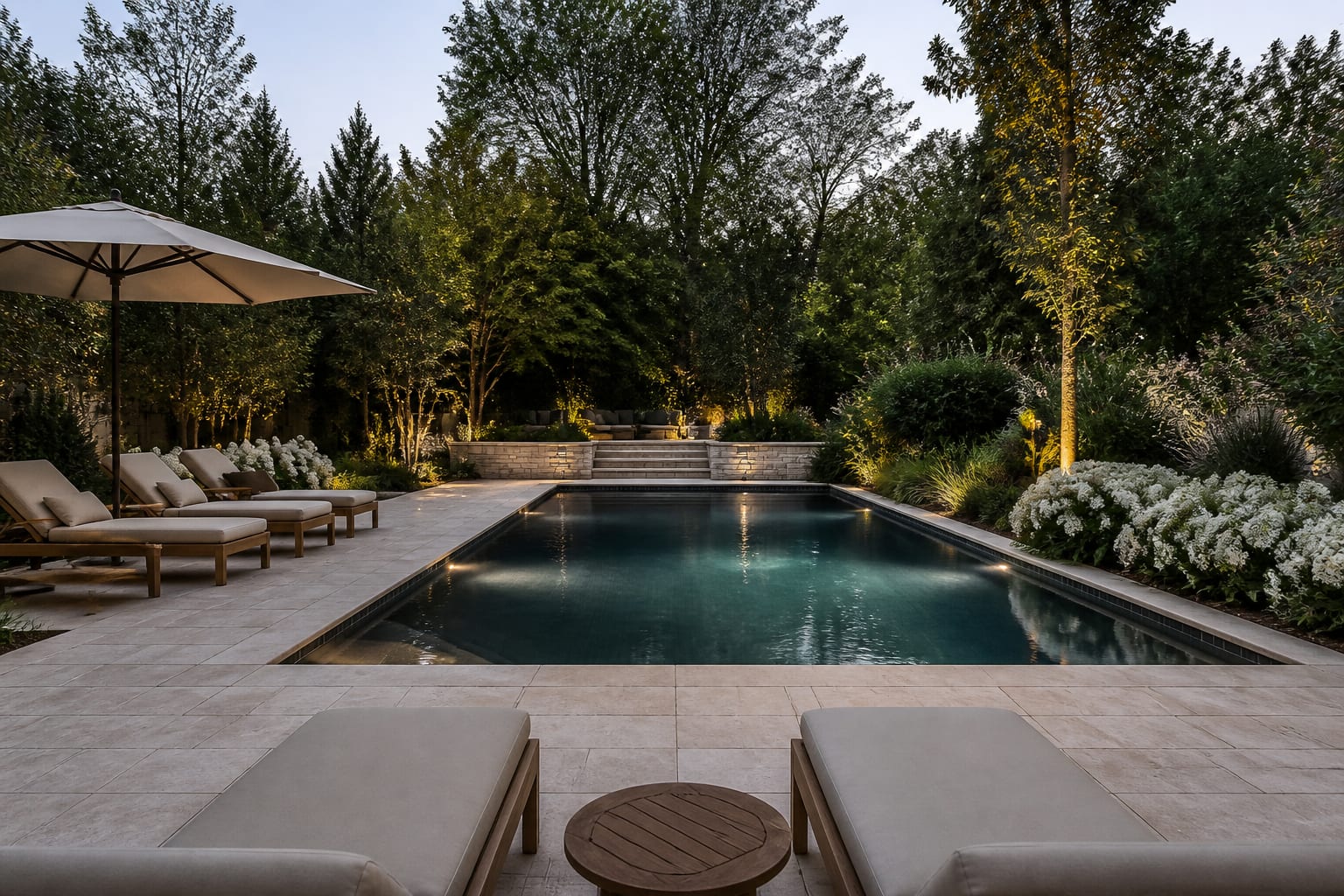
What makes a pool surround feel designed instead of just paved?
A pool surround feels designed when every edge has a job: walking, lounging, planting, screening, or shade. The weak version is easy to spot: coping, a random concrete strip, a few chairs, and a fence that looks unrelated to everything else.
Give the main path around the water at least 36 inches of clear route for daily movement with towels, trays, and kids; 42 inches feels less pinched near steps and gates on heavily used pools. Lounge chairs need roughly 30 to 36 inches behind a chaise so someone can pass while another person stretches out.
Material restraint matters just as much. Pool areas already carry water, coping, fence, house, furniture, umbrellas, and planting as visual elements, so two hardscape materials used well beat five competing ones. Pale concrete coping with warm limestone pavers works; gray pavers, red brick, white gravel, mulch, blue cushions, and a faux stone waterfall usually look like separate weekends.
If the rest of the yard is still unresolved, compare the pool preview against broader AI backyard design ideas for the full yard so the deck, lawn, fence, and planting stop behaving like separate projects.
Which hardscape decisions change the pool area first?
Hardscape carries the most design weight around a pool because it controls heat, glare, drainage, and how bare feet move through the space. Focus first on the elements hardest to change later.
- Coping: Pick a material that relates to both pool and house since it frames the water. A band around 12 inches wide reads cleanly on most residential pools.
- Paving and drainage: Outdoor porcelain, concrete pavers, stone, and textured concrete suit wet areas, but joints and slope matter more than looks. Surfaces should drain away from the pool per local code.
- Lounge pad: Group furniture in one generous zone instead of scattering chairs along every edge. Two chaise lounges need roughly a 7 by 8 foot pad including side clearance and a small table.
- Gravel: Use it only where it stays put, behind steel, stone, or concrete edging and away from the main swim route, since loose stone migrates into skimmers and bare feet.
- Lawn or garden transition: A low seat wall, planted bed, turf strip, or raised planter makes the deck feel integrated instead of dropped onto the yard.
Shade belongs in this conversation too. A 9 foot umbrella may shade two loungers at noon but miss them by late afternoon, so test a pergola, shade sail, cantilever umbrella, or small tree from the pool's actual sun side rather than a product photo.
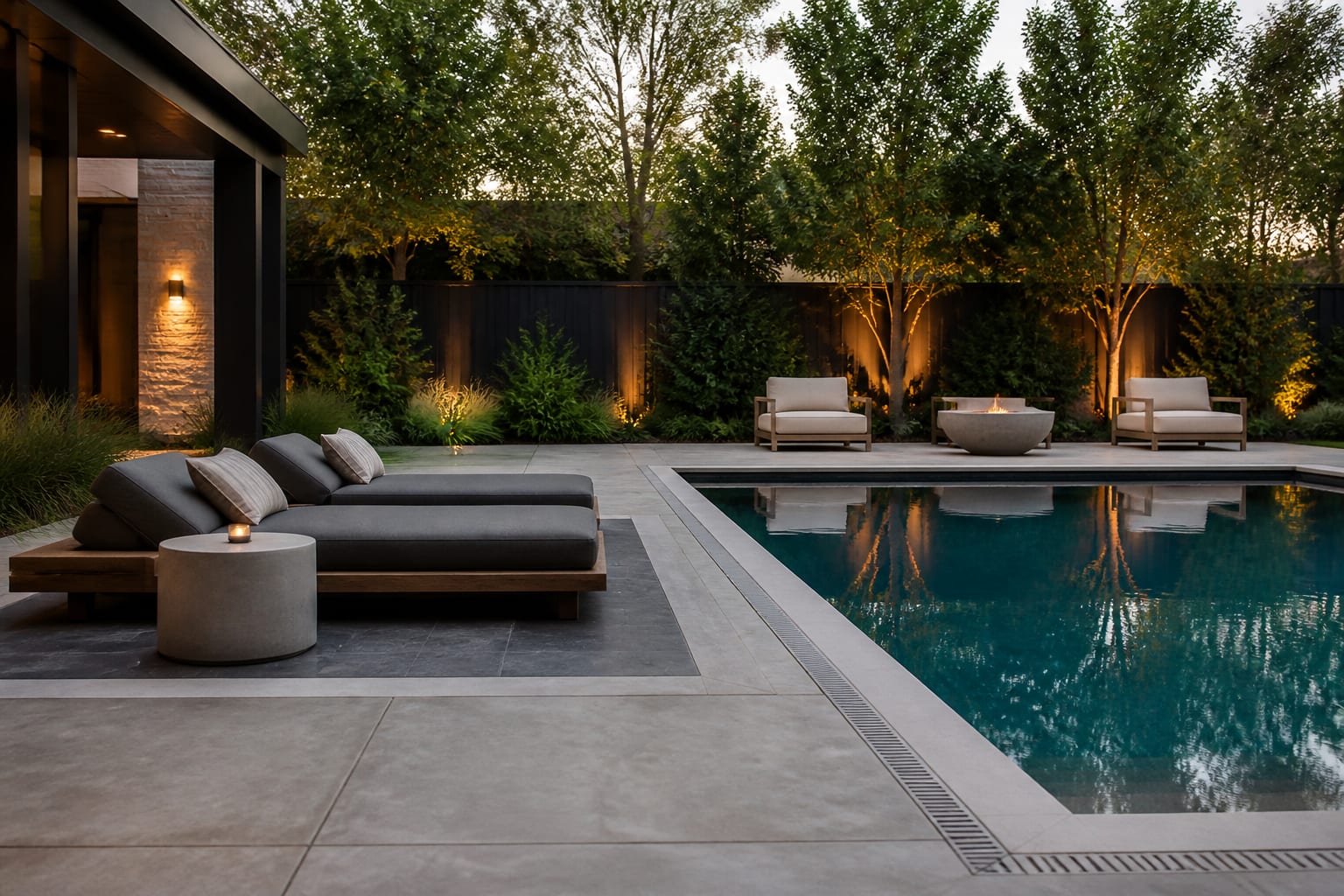
How should planting, privacy, and furniture work around water?
Pool planting should soften edges without fighting the water. Use plants as architecture: low masses near the deck, taller screening at the exposed boundary, and a few sculptural shapes that hold up even out of bloom.
Keep messy plants away from the coping. Trees that drop fruit, petals, needles, or heavy leaves create ongoing maintenance, and thorny plants near a narrow path are a hazard for barefoot kids, guests, and pets. Reliable choices include ornamental grasses set back from the splash zone, evergreen shrubs, clipped hedges, structural succulents in warm climates, and broad-leaf plants where shade and water allow.
Target privacy at the specific problem view rather than walling off the whole yard. A taller planted screen, pergola return, or slatted panel near the seating area can solve a neighbor's sightline better than a continuous tall fence. For exposed boundaries, review AI fence and privacy screen design alongside the pool plan so screens, hedges, gates, and lounge chairs line up.
Choose furniture for wet use, glare, and storage, not just showroom finish. Powder-coated aluminum, teak, resin wicker with quality frames, and performance cushions all work, but scale matters most: a family pool needs a towel bench, a lidded storage box, and tables within reach of every chaise pair.
How do you preview a pool area with AI before you commit?
Upload a straight photo from the house or patio door first, since that view usually decides whether the pool feels connected to the home. Add a second photo from the main lounge area or the gate if privacy is the concern.
Write a measured brief: design a backyard pool area with warm light pavers, 36 inch clear circulation on the main route, two chaise lounges on a 7 by 8 foot pad, layered evergreen planting along the fence, one umbrella shade zone, low 2700k path lighting, no new pool shape, and no change to the house or fence line.
Run at least three versions before pricing anything: one restrained and mostly hardscape, one greener and resort-like, one testing stronger privacy or shade. The winner is rarely the most dramatic image; it's the version that keeps the same pool, fence, and awkward corners while still making the yard feel calmer.
If the pool zone will also include a future flame feature, preview AI fire pit design near the seating area separately, since fire, furniture, pool traffic, and wind direction need more discipline than one rendering pass can deliver.
What pool area mistakes make a backyard feel unfinished?
The most common mistake is spending the whole budget on the water and treating the surround as leftover space, which can make even a large backyard feel temporary.
- Furniture too close to the coping. A chaise that looks fine empty can block the walking route once towels, sandals, and side tables appear.
- Slippery or glaring materials. Very pale surfaces glare in full sun and glossy tile can be risky wet; confirm exterior wet-area ratings and test samples beside the water first.
- Planting for month one, not maturity. A 3 gallon shrub can grow into the path or shed into the pool; check mature width and keep spiky plants clear of swim entries.
- No lighting plan. One bright house wall light isn't enough. Low, warm, shielded fixtures along steps, planting, and paths make the water safer and the yard more usable at night.
- Copying hotel-pool drama at home scale. Fire bowls, giant cabanas, and rows of identical loungers can look stiff beside a family house; one strong lounge zone plus one shaded pause usually reads better.
A plan is ready to build when it survives five checks: clear circulation, comfortable shade, controlled privacy, pool-friendly planting, and a hardscape palette that still makes sense from inside the house. If the AI pool surround only looks good from one angle, keep revising before the installer sets any edges.
Frequently Asked Questions
How wide should the walkway be around a pool?
Keep at least 36 inches of clear walking space on main circulation routes; 42 inches is more comfortable near steps, ladders, or gates on heavily used pools. Lounge chairs need roughly 30 to 36 inches of clearance behind them so someone can pass while another person is stretched out.
What plants should I avoid near a pool?
Avoid trees that drop fruit, petals, needles, or heavy leaves near the coping, since debris turns pool maintenance into a routine chore. Skip thorny plants along narrow paths, since bare feet and pets pass through constantly, and check mature plant size so growth doesn't crowd the swim entry.
How many hardscape materials should a pool deck use?
Two well-chosen hardscape materials usually look more expensive than five competing ones. Pale concrete coping with warm limestone pavers reads as intentional, while mixing gray pavers, brick, gravel, and mulch tends to look unplanned and disconnected.
Can AI design tools show privacy screening around my actual pool?
Yes. Upload a photo from the exposed boundary or the specific window causing the problem, then prompt for a planted screen, pergola return, or slatted panel in that spot rather than a full-yard fence. This targets the real sightline instead of over-building privacy everywhere.
How many AI design versions should I generate before pricing a pool area?
Generate at least three: one restrained and mostly hardscape, one greener and resort-style, and one that tests stronger privacy or shade. Compare them against the same fixed pool shape and fence line, and pick the version that still looks calm rather than the most dramatic image.