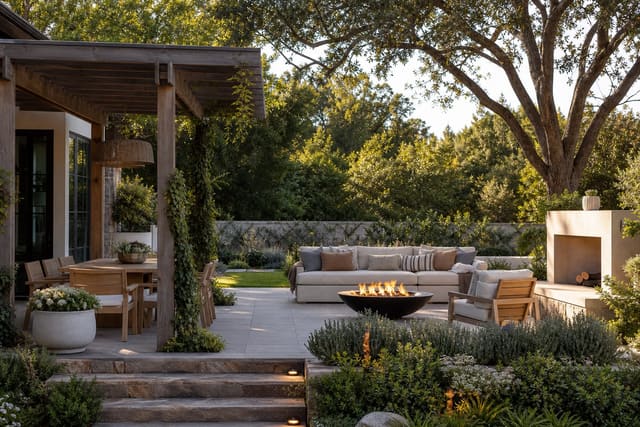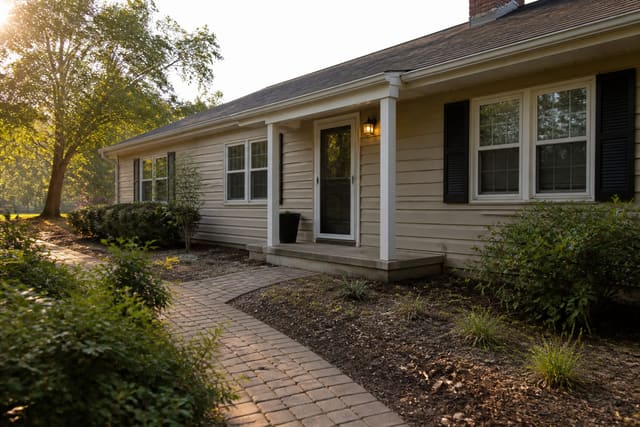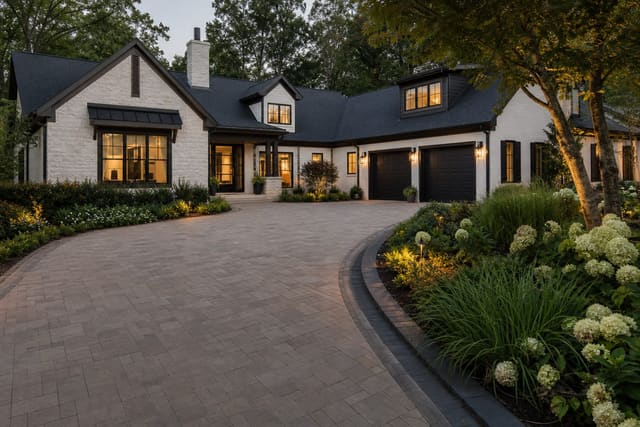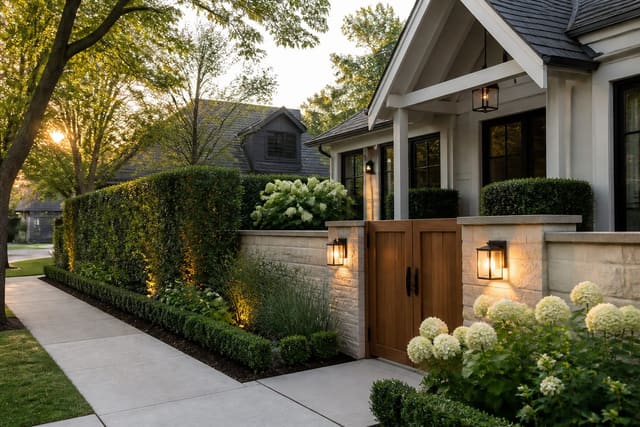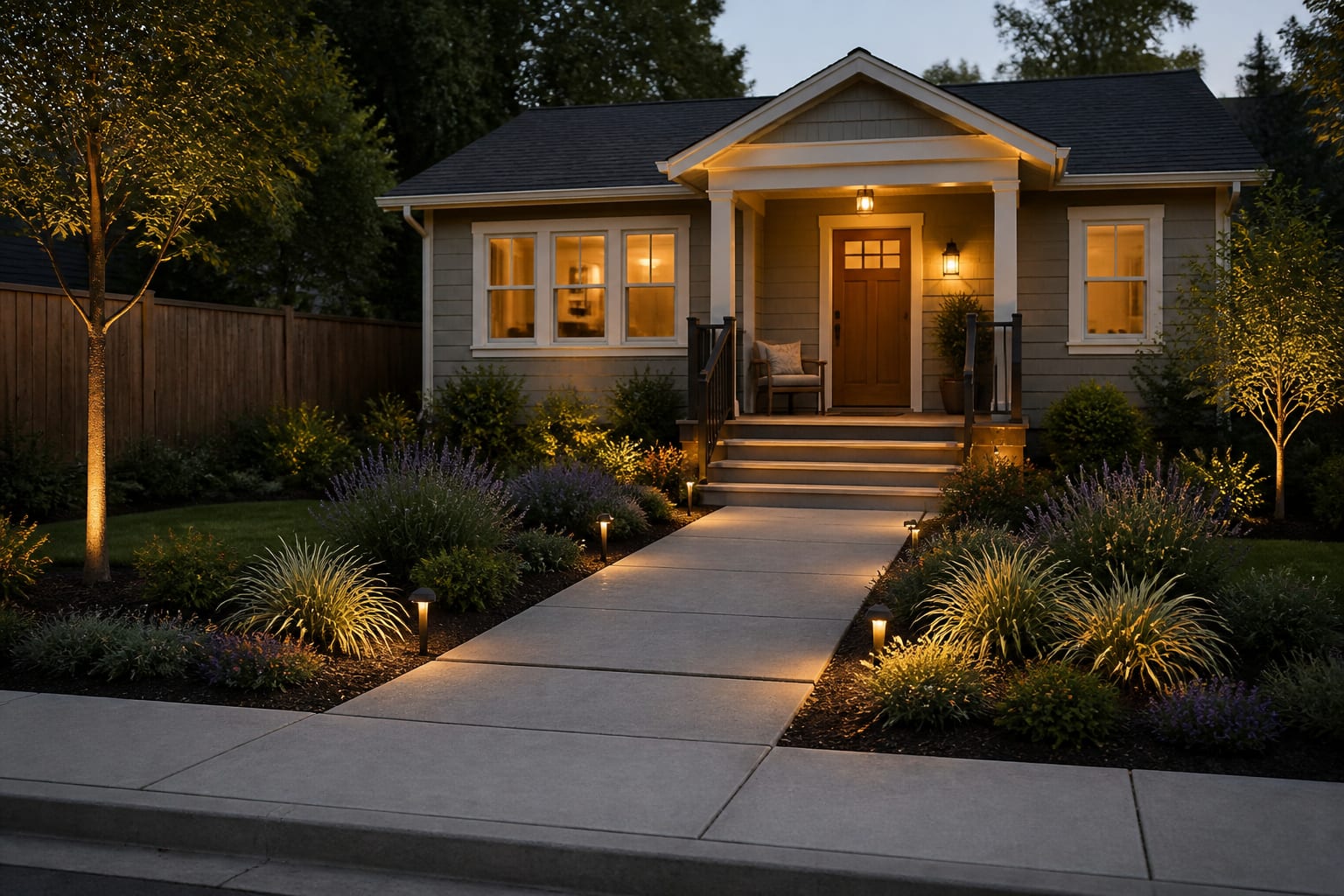
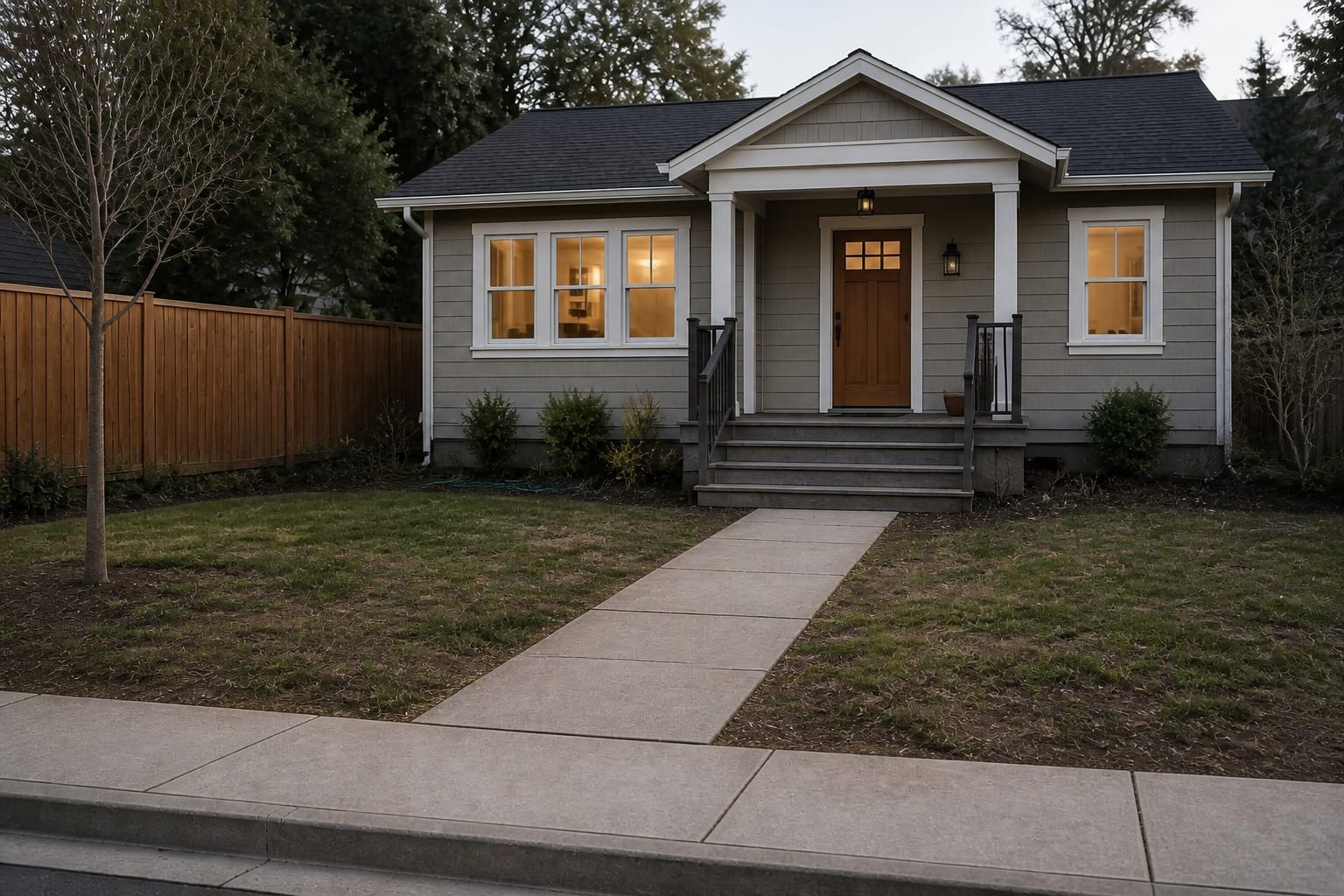
AI front yard landscaping design lets you preview planting beds, walkways, privacy screens, and lighting on a photo of your own house before you start digging. It's strongest for visual calls like bed shape, path width, and plant massing, and weakest on physical facts like drainage, soil, and mature plant size, which you still have to verify yourself.
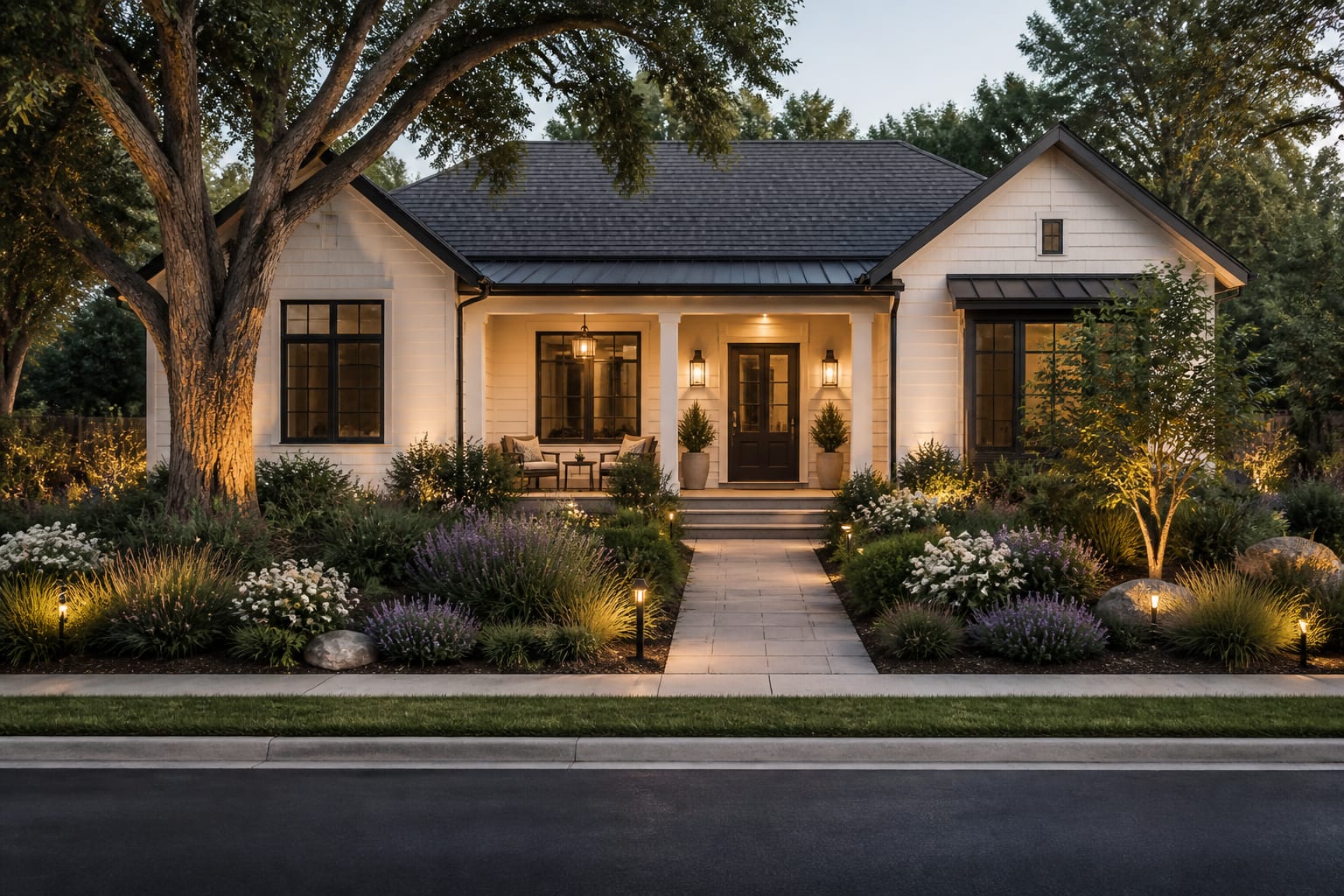
Can AI help design a front yard landscape?
Yes. AI previews planting beds, walkways, privacy screens, lighting, and curb appeal changes on a photo of your actual house, which makes it strongest for visual decisions: where a bed edge should curve, whether a walkway looks too narrow, or how tall foundation planting should be. It's weaker on physical truths you must still check — drainage, soil, mature plant size, irrigation, local codes, and utility lines. A workable plan accounts for mature canopy spread (20 to 40 feet for a shade tree), curb setback (typically 8 to 12 feet by local code), and a 3-foot sightline clearance around the driveway entry.
The photo matters more than the prompt. Include the full house face, roof edge, driveway, sidewalk, porch, existing trees, and any utility box that controls the bed. If you're also changing siding, trim, or shutter color, compare the landscape preview against a full AI exterior house design plan so the planting matches the facade's personality.
What makes a front yard look designed instead of just planted?
A designed front yard has hierarchy: the eye reads the route to the door, the house feels grounded, and planting looks tied to the architecture rather than decorating its base. An 18" mulch strip with small shrubs makes a house look taller and flatter; a 4' to 8' bed lets plants layer instead of lining up like nursery stock.
The walkway is the first scale test. Aim for at least 42" wide, or 48" if two people might walk side by side or carry groceries. Where the path meets the driveway, guests shouldn't step through mulch or around a parked car — check driveway design ideas that improve curb appeal before letting plants fill every open edge.
Foundation planting should step, not squat: low plants near the walkway, 24" to 36" shrubs where they won't block windows, and taller vertical accents at corners or porch posts. The front door needs a visual frame — lighting, house numbers, a wider mat, or a stronger path edge does more than another random shrub.
Which front yard changes should you preview first?
Start with structure, not flower color — structural moves decide whether the planting looks calm or scattered.
- Widen or reshape the front path before choosing plants. A 42" to 48" path reads more generous than a skinny builder path; a 5' by 5' landing keeps the entry from feeling pinched.
- Deepen the foundation bed before adding shrubs. A 4' bed holds low perennials and compact shrubs; 6' to 8' supports foreground, middle, and back layers without constant pruning.
- Test privacy with height, not clutter. Use 30" to 48" shrubs, ornamental grasses, trellised vines, or small trees where sightlines need filtering — see front yard privacy ideas that still look welcoming.
- Preview lighting as part of the landscape. Warm 2700K path lights, a porch lantern sized to the door, and one or two uplights on a tree or textured wall carry curb appeal after dark.
- Group plants instead of sprinkling singles. Repeat in groups of three or five, then let one taller accent mark the porch, corner, or path bend.
- Keep maintenance realistic. Skip tight formal hedges if you hate pruning; keep beds simple to clean if leaves collect near the porch.
How do you use AI design to preview your front yard?
Upload a straight daylight photo from the curb or sidewalk, keeping the driveway, roof, sidewalk, porch, windows, existing trees, and grade visible. Ask for one low-maintenance evergreen direction, one softer cottage direction, and one cleaner modern direction on the same house and path. Comparing all three shows whether the yard wants curved beds, straighter geometry, stronger entry contrast, or more privacy.
Once a direction wins, translate it into a checklist: path width, porch landing size, bed depth, edging material, shrub height at maturity, tree spread, fixture size, light temperature, mulch color, and irrigation needs. Photograph the yard again when it gets harsh sun or deep shade — a preview can make every plant look healthy, but exposure decides what survives.
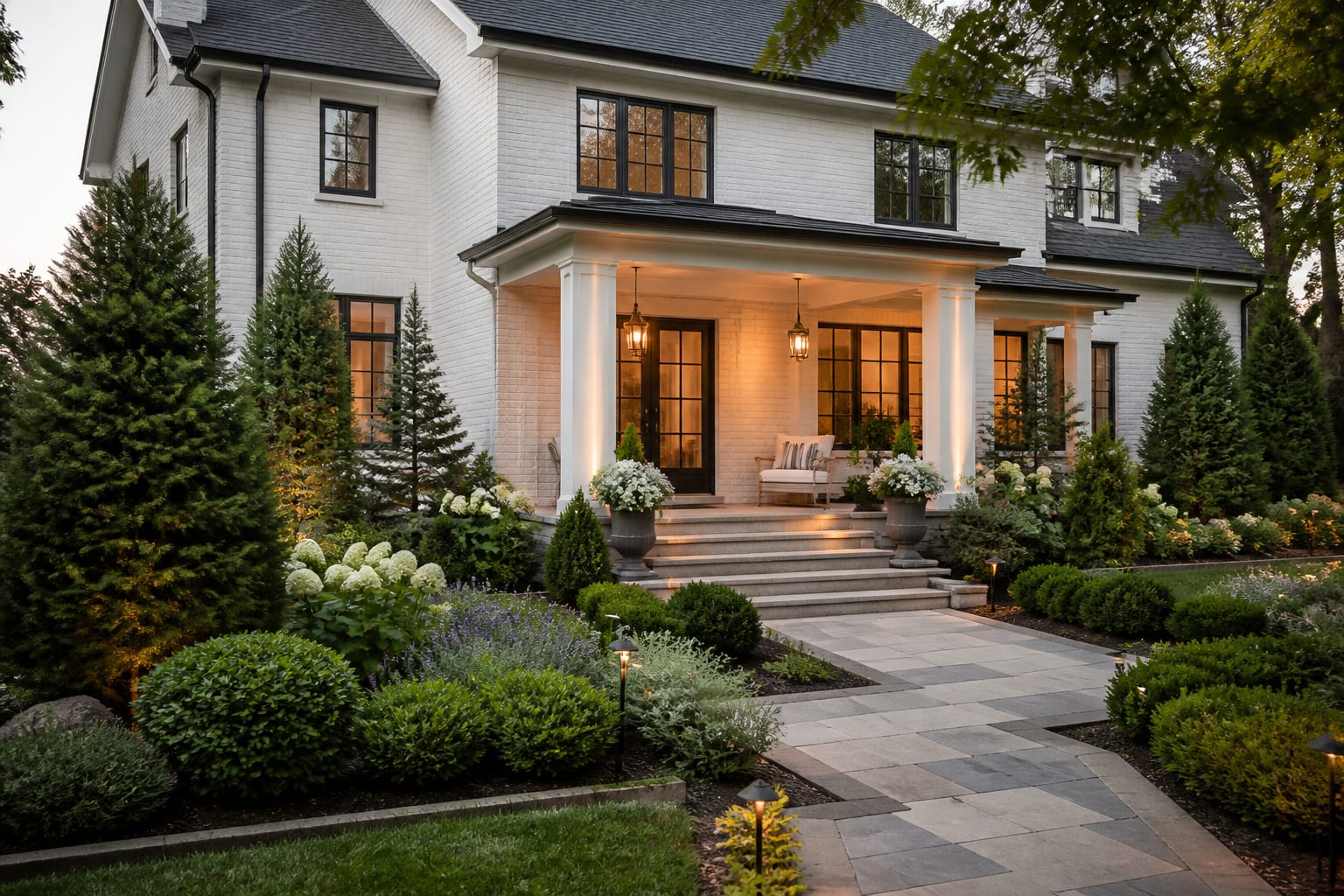
What are common front yard landscaping mistakes?
The most common mistake is buying plants before the yard has a shape. Plants are the finish, not the structure, and a weak bed line makes even good shrubs look accidental.
- Plants that mature too tall hide windows, railings, and house numbers. Check mature height on the tag, not nursery size, and keep foundation shrubs below the sill unless screening is the goal.
- Nervous, wiggly bed edges are harder to mow and read as indecisive. Use one broad curve or a straight edge and let plants soften it.
- Ignoring the driveway edge overlooks how most people first see the yard. A 2' to 3' planting strip or a better apron edge connects the driveway instead of leaving it as leftover pavement.
- Planting for instant fullness crowds the path once shrubs double in size. Leave room for mature spread and fill gaps with annuals or low perennials instead.
- Copying a lush AI preview without checking exposure fails fastest in hot, windy, or shaded yards. Match plants to sun hours, soil moisture, and realistic watering.
Before buying, mark the bed edge with a hose and walk the path from sidewalk to porch. Check the view from the curb, the driveway, and the front door — if it still works from all three, the direction is worth pricing.
Frequently Asked Questions
Can AI actually design my front yard, or just generate pretty pictures?
It does both: AI previews realistic bed shapes, path widths, and plant massing on your actual house photo, which is genuinely useful for structural decisions. It can't verify drainage, soil, sun exposure, or local codes, so treat the preview as a planning tool and confirm physical details before buying or digging.
How wide should a front walkway be?
A main front walkway should be at least 42" wide, with 48" preferred if two people might walk together or carry groceries. A 5' by 5' landing at the porch keeps the entry from feeling pinched, especially where the path meets a driveway or steps.
How deep should foundation planting beds be?
Foundation beds generally look best at 4' to 6' deep, with 6' to 8' giving room for a full foreground, middle, and back layer. Beds under 2' force plants into a single thin row, which tends to make the house look flatter and taller than it is.
What's the biggest mistake in front yard landscaping?
Buying plants before establishing the bed shape and path width. Structure — walkway size, bed depth, and edge lines — determines whether planting looks intentional, so settle those first and treat plant selection as the finishing layer.
Does an AI landscaping preview account for sun and soil conditions?
No. AI previews are visual tools for bed shape, plant massing, and layout; they don't know your yard's sun hours, soil type, or drainage. Confirm exposure and soil conditions on-site, and match plant choices to those realities before purchasing.