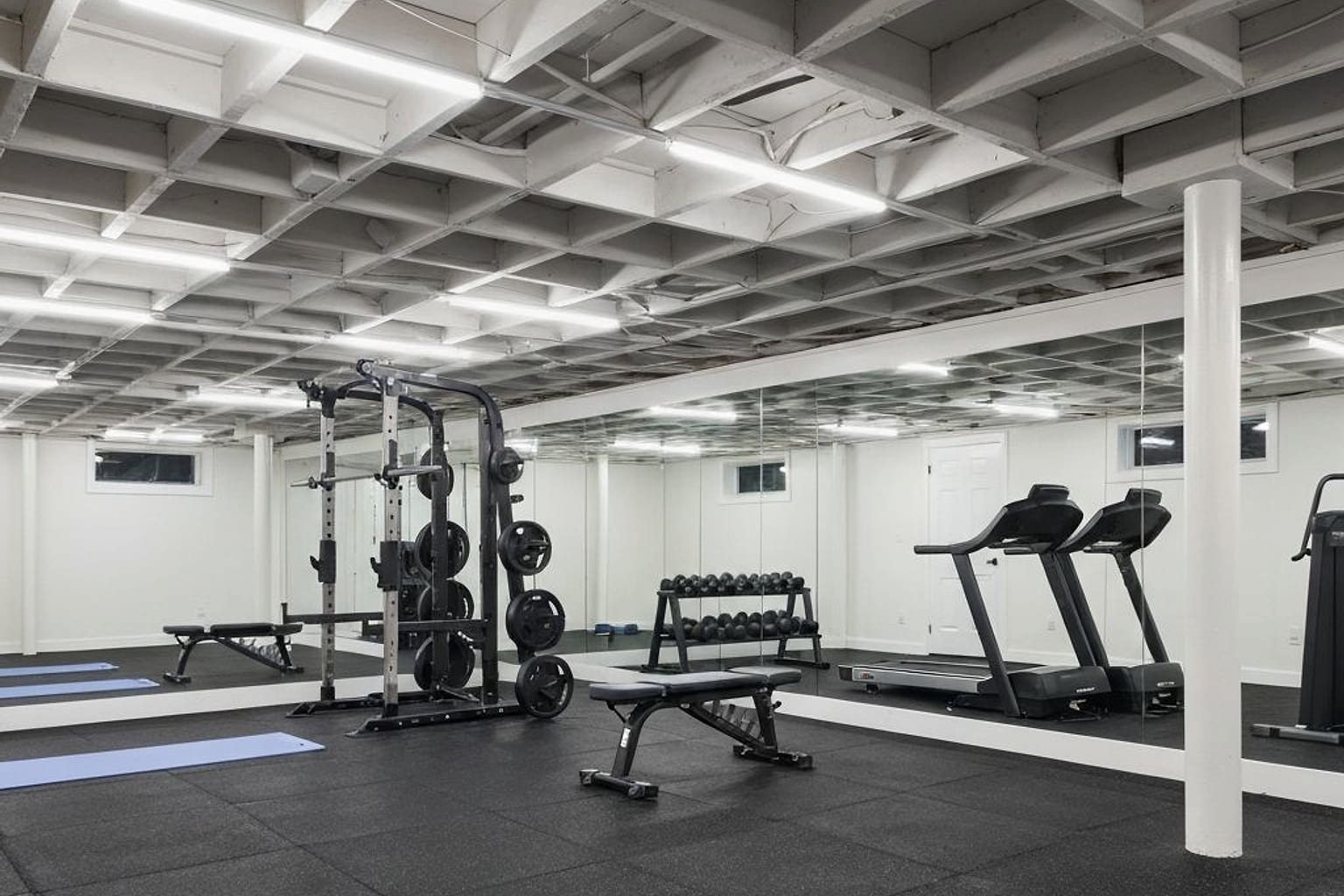
AI home gym design previews equipment scale, flooring, mirror placement, and ceiling-sensitive choices on one uploaded photo so you can buy a rack, bench, or treadmill that actually fits your basement. It will not confirm joist strength or electrical load, but it stops you from buying gear the room can't hold. If the room feels like punishment, you'll use it less, even with the right equipment.
Can AI help design a home gym from a photo?
Yes, a photo-based preview can test equipment placement, flooring, mirrors, lighting, wall color, and storage in the room you already have. It won't confirm ceiling clearance, electrical capacity, or manufacturer safety specs, so treat the image as a concept tool, not an installation plan.
Stand at the basement entry and show the ceiling, floor, support posts, windows, mechanical doors, and the wall you imagine for mirrors or storage. Leave low beams, furnace closets, and sump covers visible; those details set the real limits of the plan.
Name the workouts in your prompt, not just the vibe: "keep the concrete floor, support post, and utility door; create a basement gym with a lifting zone, cardio corner, stretch mat, warm lighting, mirrors, closed storage, and a darker wall color." If the basement still needs broader planning, compare this concept with an AI basement design plan for unfinished rooms before you dedicate the best wall to one machine.
What makes a basement gym look designed instead of dumped downstairs?
A designed gym has zones that match movement: strength needs stance and storage, cardio needs airflow and sightline, stretching needs clean floor and softer light. Cramming all three into one undivided patch is what reads as messy, even when every item is useful.
Start with the largest fixed piece. A treadmill runs about 6 to 7 feet long and many ellipticals need extra overhead room during use. A squat rack may need roughly 7 feet of ceiling height or more with pull-up bars. Don't let a preview place a tall rack under a duct just because the image looks balanced.
Flooring should define the zone without a locker-room feel. Rubber tiles around 8mm handle general exercise; mats near 3/8 inch or thicker belong under weights. Preview a clean tile edge so the floor looks intentional from the stairs. A stretching mat can work at 4x6 feet, but a yoga-plus-dumbbell zone often needs closer to 6x8 feet.
One 36x72-inch mirror, or a matched pair, usually looks calmer in a narrow basement than a full reflective wall facing open shelves or exposed pipes.
Test this on your own room photo with Re-Design before choosing a final layout; keep the ceiling line, daylight, and main path visible so the preview solves the space you actually have.
The equipment decision that controls the whole room
Equipment density is the decision that matters most. Most cluttered home gyms fail not because of wall color, but because three different training fantasies are packed into one corner.
Choose the primary workout first:
- Lifting priority: give the rack the best wall, add wall-mounted storage for plates and bands, and leave 30 to 36 inches of clearance around the bench path so bar ends miss drywall, mirrors, and posts.
- Cardio priority: put the machine where the ceiling is highest and the view isn't a water heater.
- Mixed use: favor adjustable dumbbells, folding benches, and wall rails, which read as controlled even in a small footprint.
Open shelving suits towels and baskets, but hooks, vertical bar storage, and closed cabinets (15 to 18 inches deep) keep bands, rollers, and shoes off the walkway. Matte black gear disappears against charcoal, olive, or warm gray walls, while bright white often makes black machines and unfinished ceilings look harsher. If your space doubles as a desk zone, borrow the discipline from AI home office design for real work zones: define each wall's job before decorating it.
Common home gym design mistakes
- Skipping ceiling clearance. Measure the lowest beam, duct, and light fixture against equipment specs and your own reach before buying a rack or bar.
- Using one harsh overhead light. Warm bulbs around 2700K to 3000K flatter rubber, mirrors, and painted drywall better than a single cold fixture. Add a sconce or lamp away from the workout path to avoid mirror glare.
- Skipping storage. Bands, rollers, mats, and towels multiply fast. If a preview shows a perfectly empty floor, ask for the same design with visible accessory storage.
- Ignoring noise. Dropped weights and jump training travel through framing. Use rubber under strength zones and keep impact work away from shared bedroom ceilings.
- Letting the gym fight a media room. A darker wall, cabinet, or rubber floor inset can separate a workout corner from a sofa or projector setup without chopping the basement into leftovers. Check sightlines against AI home theater design concepts before a rack blocks the best screen wall.
Use AI design to preview your gym before heavy gear arrives
Use AI design to rehearse the choices that are annoying to reverse: rack wall, cardio corner, mirror size, floor boundary, lighting temperature, and storage depth. Upload one clean photo and generate several versions that keep the same posts, ducts, stairs, and windows.
Run a first set by workout type: strength-focused, compact cardio, yoga and mobility, family fitness, and hybrid gym-plus-lounge. Pick the version where movement looks safe and the basement keeps a clear path to storage or mechanical access, not the most dramatic screenshot.
In a second set, keep the best layout and vary the expensive decisions: black tile versus lighter speckled floor, one large mirror versus two vertical mirrors, charcoal walls versus warm mushroom, open shelves versus closed cabinets. If previews improve when equipment count drops, believe the room.
Renters should focus on removable flooring, freestanding storage, plug-in lighting, and portable mirrors that leave without wall damage. Owners can test permanent mirrors, hardwired lighting, and wall-mounted racks, but should confirm measurements and product specs before installation.
For the broader upload workflow, use the AI design complete guide as the parent checklist, then return to this room-specific pass for scale, light, and layout.
Frequently Asked Questions
Can AI design a home gym from one photo?
Yes. Upload a corner photo showing the ceiling line, full floor, and any low beam, and the AI previews rack height, treadmill clearance, mirror walls, and rubber tile layouts while keeping room dimensions honest. Treat it as a scale and circulation test, not a shopping command.
What ceiling height does a home gym need?
A power rack with pull-ups needs 9 to 10 feet minimum; overhead pressing needs at least 9 feet. A 7-foot-6-inch basement can still host a bench, dumbbells, and treadmill if the deck plus rider height clears the joists.
What flooring works for a home gym?
Three-eighth-inch interlocking rubber tiles handle dumbbells and treadmills, 1-inch horse-stall mats belong under racks and platforms, and carpet plus a single under-treadmill mat works for cardio-only setups. Match thickness to the heaviest equipment in the zone.
How big should a home gym mirror be?
A 60x96-inch wall mirror behind the lifting zone is enough for a form check; full mirror walls mostly amplify clutter beyond the first 8 feet. Size the mirror to the movement zone, not the whole wall.
Does a home gym need ventilation?
Yes, at minimum one openable window or a 200 CFM exhaust fan. Cardio in a closed, airless basement raises humidity and pushes it into adjacent walls.
Ready to see this on your own room? Open Re-Design and run the preview before you buy, paint, drill, or move furniture.
Three transformations to try
1. Strength-first pass with power rack, bench, and rubber tiles 2. Cardio-first pass with treadmill, mirror wall, and ventilation 3. Hybrid pass with foldable rack, dumbbells, and rolling storage