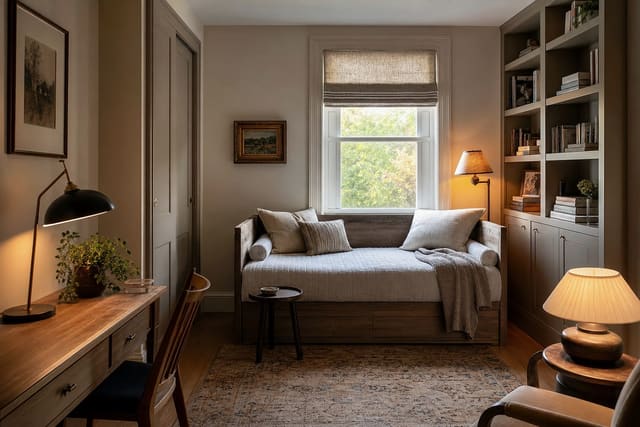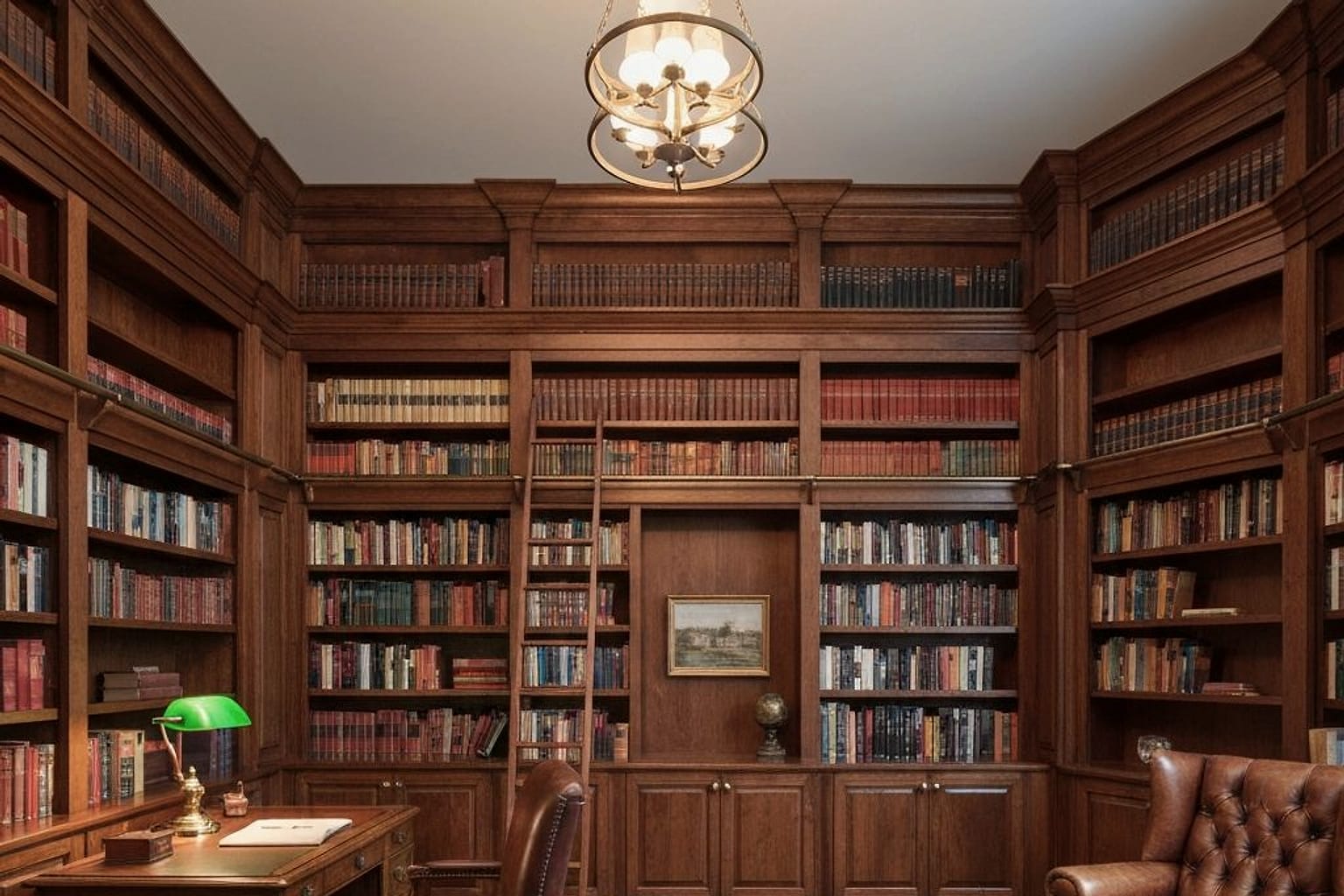
AI home library design turns one room photo into previews of built-in or modular shelving, reading-chair scale, lamp placement, and rug size before you buy anything. It tests whether a bonus room, den, or corner can hold a real library or just decorative bookshelves with one lonely lamp.
What changes when a spare room becomes a real reading room?
Re-Design turns an uploaded photo into previews of shelves, seating, lighting, color, and rugs. Most spare rooms carry odd leftovers — a sloped ceiling, closet door, narrow window, wall-to-wall carpet, or furniture waiting for a purpose.
Decide the room's job before testing layouts. If quiet reading is the real goal, stop testing setups that give the best wall to a treadmill or spare sofa. Compare it against an AI bonus room design framework before you commit the square footage to books.
A useful prompt protects what you already have: keep the window, closet door, carpet, ceiling slope, and trim; create a calm home library with wall shelves, two reading chairs, warm task lighting, a 6x9 rug, closed lower storage, and a small table for books. That gives the AI a design problem instead of a vague "cozy library" wish.
How much shelving does the room actually need?
Book storage controls the room more than the chair does — shelves are architecture here, and the wrong scale makes the whole space feel temporary.
Standard shelves 10 to 12 inches deep fit most novels, design books, and baskets. If a preview shows 24-inch cabinetry in a small bonus room, keep the built-in mood but shrink the depth before pricing anything.
Shelf height should follow the wall, not the product line. In an 8-foot room, cases stopping at 72 inches leave an awkward dusty gap above them; taller cases or a painted continuation read more deliberate. On sloped ceilings, put closed cabinets, a bench, or short shelves on the low side instead of forcing full-height millwork everywhere.
Built-ins suit a permanent room; freestanding shelves suit renters or layouts that might change. A pair of 30- to 36-inch bookcases can frame a window without locking you into carpentry. A continuous built-in wall needs real measurements for outlets, baseboards, vents, and door swing first.
Mix open and closed storage: open shelves hold books and objects; closed lowers absorb craft supplies, electronics, and office overflow. If the room doubles as a workspace, borrow discipline from AI home office design for real rooms so the reading mood survives visible admin clutter.
Test this on your own room photo with Re-Design and keep the room structure, daylight, ceiling line, and main path visible so the preview solves your actual space.
What makes a reading chair, light, and color actually work?
A reading chair earns its keep only if someone stays in it. Pick a seat depth around 20 to 24 inches for most readers; deeper lounge chairs need an ottoman or people end up curled awkwardly. Leave about 18 inches to a side table so a drink, book, and lamp stay within reach.
Light belongs at shoulder or eye level, not blasting from the ceiling. A 58- to 64-inch floor lamp works beside a lounge chair; a table lamp shade should sit low enough to light the page, not the molding. Warm bulbs around 2700K to 3000K flatter wood shelves, cream walls, leather, and paper better than cool white light.
The room can be darker than a bedroom but not gloomy. Test warm white, mushroom, olive, clay, deep blue, or muted plum in the preview against your actual floor and daylight. North-facing rooms usually need more warmth, and golden oak floors need a calmer, dustier wall color so the wood doesn't turn orange.
Rug size decides whether the seating reads as a zone or a stranded chair. Over wall-to-wall carpet, layer a low-pile rug only if doors and chair legs still clear it.
Give every seat one landing surface — a pedestal table, drink table, or low shelf — or books end up stacked on the floor and the room reads messy no matter how full the shelves are.
What mistakes should you avoid in an AI library preview?
- Shelving every wall. A library still needs breathing room; leave one wall for art or a quieter color so the chair doesn't feel boxed in.
- Choosing the moodiest render. Dark shelves and leather chairs look dramatic, but a small room with one window may need lighter shelves and stronger lamps — test a paler, lower-contrast version too.
- Ignoring the wall's real obstacles. Built-ins must clear outlets, returns, baseboard heaters, and door swings; reject any preview that floats seamless shelving over a vent or switch.
- Forgetting the room's other job. Many "libraries" also store crafts, files, or guest bedding — put that in the prompt, or check AI craft room design ideas for hybrid layouts.
- Buying shelves before counting books. Paperbacks, oversized art books, and binders need different spacing; adjustable shelves prevent awkward gaps and sagging stacks.
How do you use AI previews to plan the real purchase?
Use the preview to rehearse the choices that are hard to reverse: shelf wall, depth, chair size, rug scale, lamp placement, wall color, and whether the room should feel like a study or a family reading nook.
Shoot the room from the doorway, then from its widest corner, showing walls, window, closet, ceiling line, and existing furniture. Add a second angle for any dormer, knee wall, or sloped ceiling so the AI works with the awkward part instead of erasing it.
Generate several versions — classic built-in, light modern, moody study, closed-storage family room, renter-friendly freestanding — and pick the one where a lamp is reachable, a book comes down easily, and nobody sidesteps furniture to cross the room.
In a second round, lock the layout and test individual variables: 10-inch shelves against 14-inch, one deep chair against two smaller ones, a 5x8 rug against an 8x10, mushroom walls against deep blue. If several versions improve with shallower shelves or a smaller chair, trust that signal.
Renters should lean on freestanding bookcases, plug-in sconces, washable rugs, and no-drill shades; owners can test built-ins, library ladders, hardwired picture lights, and window seats — but let the image lead to real measurements and quotes before ordering.
For the broader workflow, the AI design complete guide is the parent checklist; return here for room-specific scale and lighting calls.
Frequently Asked Questions
Can AI design a home library from one photo?
Yes. Upload a wall photo showing baseboards, ceiling, and any window, and the AI previews built-in shelves, modular bookcases, reading chairs, and warm lamp lighting while keeping wall length and ceiling height honest. Treat it as a scale and circulation test, not a shopping command, and keep the room's openings, ceiling line, and daylight visible in the photo.
Built-in shelves or modular bookcases for a home library?
Built-ins win in a long-term home where the wall is permanent and books are the anchor; modular bookcases win for renters, evolving collections, or rooms that may change function within 5 years. Judge the preview against ordinary use — door swing, chair pullout, walkway width, and evening light — more than a perfect catalog angle.
How deep should home library shelves be?
Ten to 12 inches handles most novels, hardcovers, and trade paperbacks; coffee-table books and atlases need a separate 14- to 16-inch lower band. Generate one conservative version and one bolder version, then pick whichever still works with the existing windows, trim, floor color, and furniture you plan to keep.
What chair fits a home library best?
A 32- to 36-inch-wide reading chair with a 19- to 21-inch seat depth and a 28-inch arm height supports a book and a coffee mug comfortably. Club chairs read scaled, wingbacks read formal, and tub chairs read cramped after an hour, so use the preview to narrow measurements before ordering anything custom.
How do I light a home library without ruining the books?
Use a warm 2700K floor lamp at the chair, a wall sconce on a dimmer, and avoid direct daylight on the spines; UV from south- or west-facing windows fades cloth covers and dust jackets within a year. Layered shades over the window protect books while still letting in daytime light for reading.
Ready to see this on your own room? Open Re-Design and run the preview before you buy, paint, drill, or move furniture.
Three transformations to try
1. Built-in wall pass with one reading chair and floor lamp 2. Modular pass with two bookcases and a chaise 3. Library corner pass inside a bigger room with a sconce-lit nook