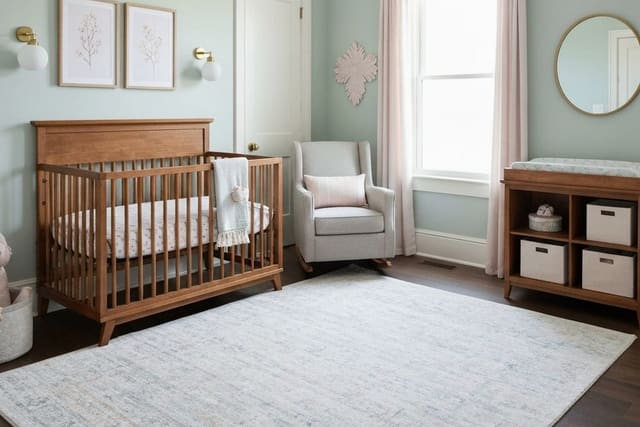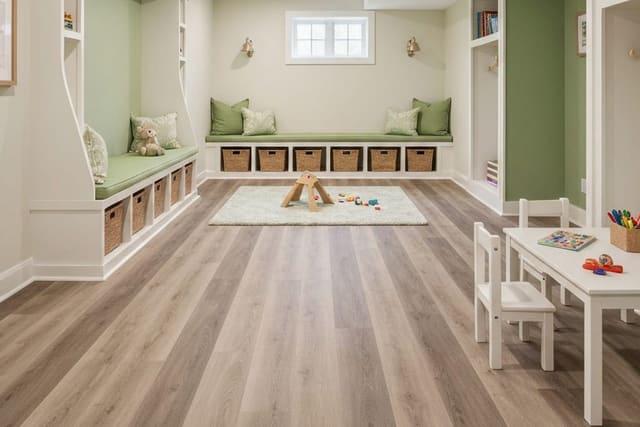
AI kids bedroom design previews bed scale (twin, full, bunk), closed toy storage, growth-friendly desk placement, and gentle lighting on one uploaded photo, so a room built for a 4-year-old still works at age 8. The safest kids' rooms are the simplest ones: cluttered "fun" design creates more bumps and toy avalanches than delight. A good preview turns that emotional, messy room into a set of visible choices before you buy anything.
Can AI design a children's bedroom from a photo?
Yes. Upload a doorway photo showing the bed wall, windows, closet doors, and floor, and the AI can test layouts, calmer colors, storage, bed options, and lighting before purchase. Treat it as a preview, not a promise — it can show whether a loft bed overwhelms the window wall or a pale green paint calms the room, but real measurements still matter.
Name the child's age range and the room's job in your first prompt: "Design a shared bedroom for a 5-year-old and 8-year-old with two beds, book storage, toy bins, warm lighting, and a quiet homework corner" beats "cute kids room." If you're moving from baby furniture into a bigger setup, compare against AI nursery design ideas so you don't keep nursery proportions in a school-age room.
What layout keeps a kids bedroom safe?
Bed placement controls the whole room. Put the bed where the child can get in and out easily and the path to the door stays clear in the dark — at least 24 inches of walking space, 30 if a parent still sits there for bedtime. A twin mattress runs about 38 by 75 inches, a full about 54 by 75 inches; that 16-inch difference matters in a 9 by 10 foot bedroom.
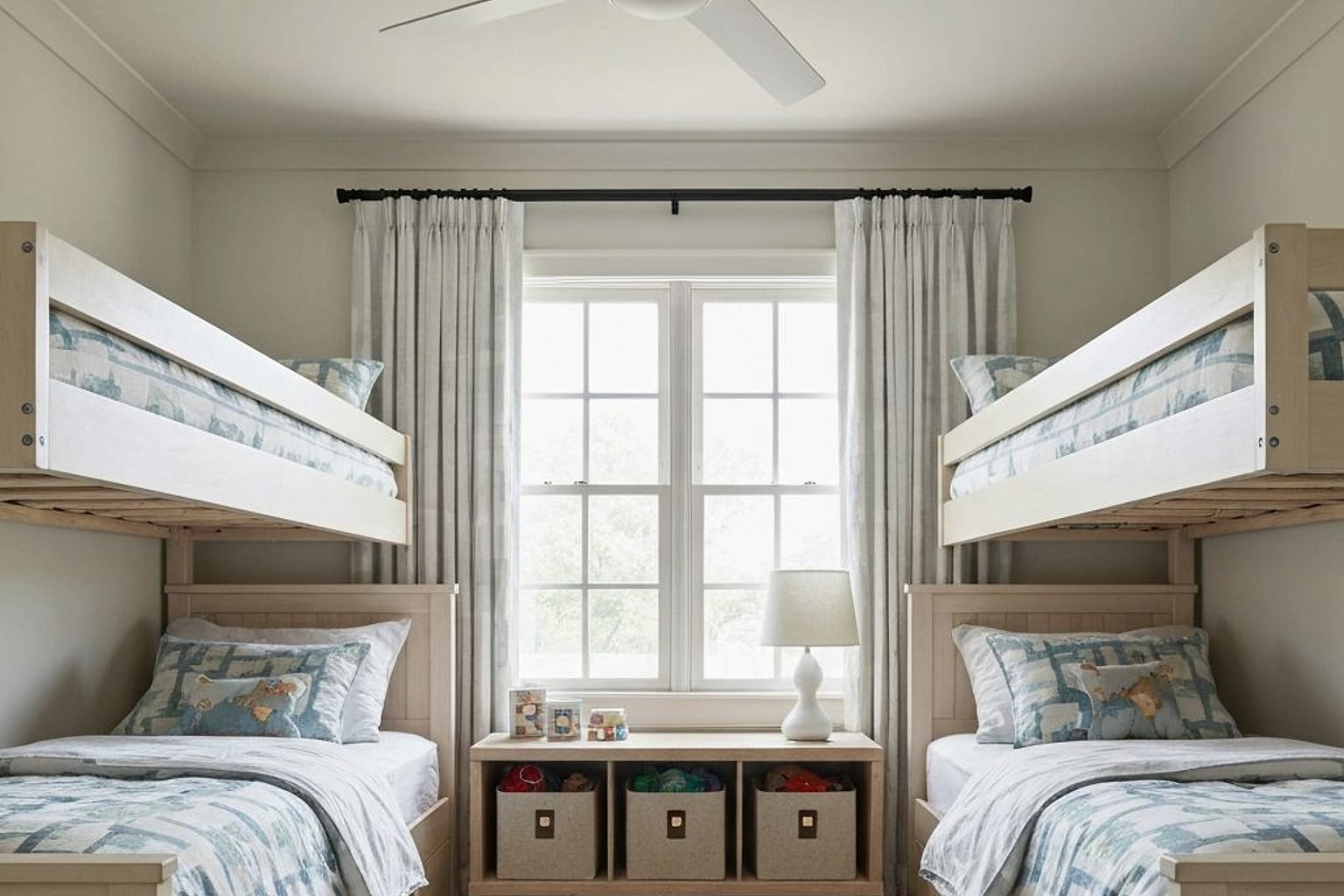
For bunk beds, check real ceiling height: most rooms need roughly 30 to 36 inches between the top mattress and ceiling so a child can sit up without feeling pinned. Shared rooms need stricter judgment — two twins with a narrow 18-inch nightstand between them may beat bunks for kids who fight at bedtime or need separate reading lights. Bunks save floor area but concentrate noise and climbing in one corner, so preview both before assuming space-saving means peaceful.
Keep heavy storage off the sleep path. Secure tall bookcases to the wall, and keep anything above the bed light or soft. Test this on your own room photo with Re-Design before finalizing the layout, keeping the ceiling line, daylight, and main walking path visible so the preview matches the space you actually have.
What should change in a believable before and after?
A believable transformation changes the room's rhythm, not just the paint color. The "before" often shows a bed jammed in a corner, scattered bins, and storage that looks full even when organized; a stronger "after" gives sleep, play, dressing, and reading their own zones.
Storage should sit at child height. Open bins around 10 to 13 inches deep work for blocks and toys because kids can see the category without dumping everything; higher closed shelves suit art supplies, keepsakes, and out-of-season items. All-open storage looks loud by Tuesday, so mix open lower bins with closed doors or drawers above.
Color is where parents overcorrect. Test warm white, clay, muted blue, sage, or dusty pink before defaulting to stark white or primary colors. A rug should connect the bed to the room — 5 by 8 for most twin rooms, 6 by 9 for a larger full-bed room — and low-pile or washable materials beat a thick shag that becomes a crumb trap.
If the bedroom doubles as a toy room, borrow ideas from AI playroom design for real storage and test where mess actually lands at cleanup. Play space deserves the same discipline as sleep space, with floor left for building and sitting friends.
What are the common kids bedroom AI mistakes?
- Style over supervision. Ladders, lofts, and canopies may look magical in a render; verify age-appropriateness and follow manufacturer instructions before buying.
- Making the room too grown-up too fast. Hooks at 42 to 48 inches, low book ledges, and easy-open drawers get used more than a beautiful cabinet a child needs help reaching.
- Ignoring night lighting. A single ceiling fixture feels harsh at bedtime; warm 2700K to 3000K bulbs, a shaded bedside lamp, and a low night light near the door path work better.
- Letting AI invent square footage. If the preview crams a desk, full bed, play table, and tent into a compact room, keep the mood but reject the layout — measure clearances yourself.
- Designing only for the photo. Real bedrooms hold laundry, papers, and half-finished crafts, so leave blank floor and at least one closed storage zone for the unphotogenic parts of childhood.
How do you test a kids bedroom before the weekend project?
Upload a clean photo but keep real problems visible — radiator, closet doors, sloped ceiling, and awkward corners included. Run one round testing broad directions (calm woodland, colorful modern, vintage schoolhouse, shared-room practical), then a second round varying purchases: twin versus full, low dresser versus tall wardrobe, cubbies versus drawers, blackout curtains versus roman shade.
For a bedroom that sometimes hosts cousins, use guest room layout thinking as a pressure test — a trundle or daybed only works if the everyday room keeps enough floor and storage the child can manage. The winning version should pass a plain test: can the child sleep, dress, read, and clean up with less friction than before?
For the broader upload workflow, use the AI design complete guide as the parent checklist, then return here for scale, light, and layout choices specific to kids' rooms.
Frequently Asked Questions
Can AI design a kids bedroom from one photo?
Yes — upload a doorway photo showing the bed wall, window, and closet, and the AI tests twin, full, or bunk beds, closed bins, and reading nooks while preserving outlets and closet doors. Treat the preview as a scale and circulation test, not a shopping command, and keep fixed storage and daylight visible in the photo.
Twin or full bed for a kids bedroom?
Choose twin when the room is under 100 sq ft or two kids share, since bunks free up floor for play. Choose full when the child is 9 or older, or sleepovers happen weekly, since a full beats a twin XL for resale and guest use later. Check door swing and walkway width against the real room, not just the render.
How much closed storage does a kids bedroom need?
Aim for roughly 70 percent closed storage (drawers, lidded bins, closet) and 30 percent open (one bookshelf, one current-toy cubby). Fully open storage looks like a yard sale within a month. Test a conservative version and a bolder version, then pick whichever still fits your existing windows, trim, and furniture.
Should a kids bedroom have a desk?
Yes, starting around age 7 — a 36-inch desk with a good lamp, an ergonomic chair, and a pinboard supports homework habits. Before age 7, a small art table is enough. Use the preview to narrow measurements, then confirm outlet locations and real clearances before ordering anything custom.
What lighting works in a kids bedroom?
Use three layers: warm 2700K ambient light, a bedside reading lamp the child can reach, and a small dusk-sensor night light near the door path. One cool overhead fixture alone destroys bedtime calm and makes cleanup feel harsh.
Ready to see this on your own room? Open Re-Design and run the preview before you buy, paint, drill, or move furniture.
Three transformations to try
1. Twin-plus-play pass with one twin, low storage, and reading nook 2. Bunk pass with bunk bed, storage drawers, and dual nightstands 3. Full-bed pass with full mattress, desk, and growth-friendly storage