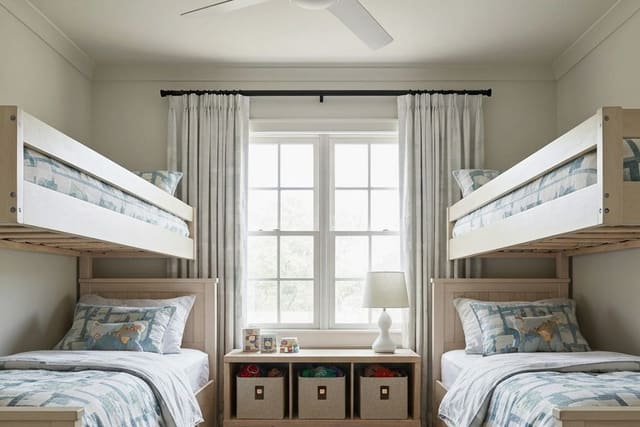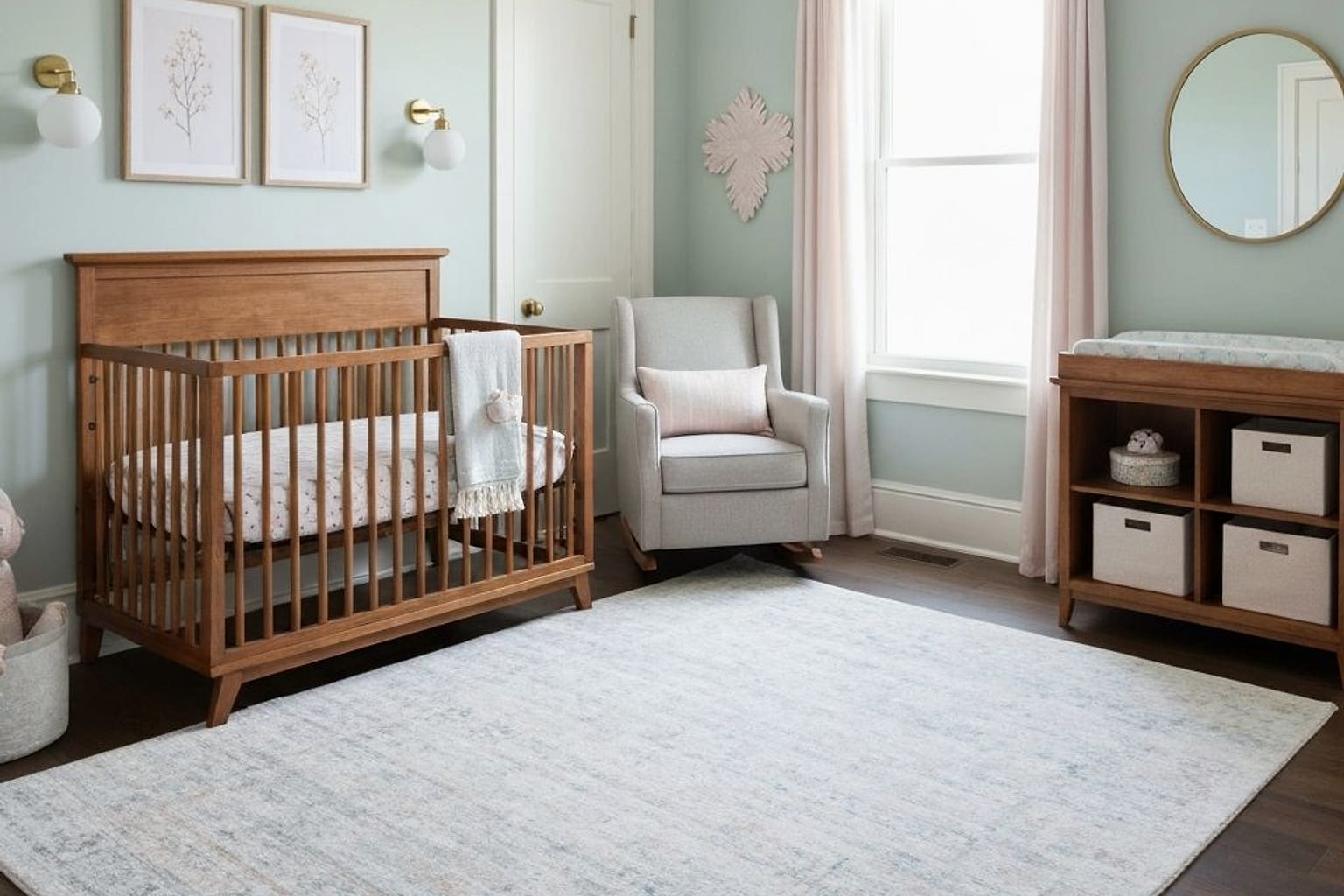
AI nursery design ideas work by letting you upload a photo of your room and preview crib placement, changing-table height, glider position, blackout shades, and storage before the baby arrives. Skip the theme hunt — a calm, safe, functional layout for feeding, changing, and sleep matters far more than a mural, and AI previews let you test that layout in your actual room instead of a catalog photo.
Can AI design a nursery before the baby has a personality?
AI can design a nursery by using your uploaded room photo to preview crib placement, wall color, curtains, rugs, lighting, storage, and style direction. The image is not a safety plan or a measurement tool — it lets you test big visual decisions before you buy the crib, paint the room, or inherit three rocking chairs.
Start with one straight-on photo from the doorway at chest height, showing the window, closet, floor, ceiling line, outlets, and vents. Clear laundry baskets but don't crop out awkward corners; the tight wall beside the closet may be the best spot for book ledges.
Use a practical first prompt: keep the beige carpet, white trim, window, closet door, and ceiling fan; create a calm nursery with a crib, blackout curtains, dresser changing station, glider, warm lamp light, closed storage, and soft green walls. If you're weighing a shared-room future, the AI kids bedroom design guide is a useful second lens, since nursery furniture shouldn't trap the room in baby mode forever.
Where should the crib and changing station go?
Crib placement controls more of the nursery than wallpaper. Keep the crib away from cords, curtain loops, heavy art, and shelves — if an AI preview adds a canopy or shelf over the crib, keep the color idea and reject the layout.
A standard crib mattress runs about 28 by 52 inches, so plan roughly 30 inches of working room along one long side for sheet changes. In a converted office or small bedroom, a mini crib may be worth previewing, but accept its shorter lifespan.
The changing station should sit near storage, not necessarily near the crib. A 34- to 36-inch-high dresser works well as a changing surface with a secured pad on top and diapers in the top drawer; keep wipes, creams, and spare sheets within arm's reach.
Give the glider its own landing zone — room to rock without scraping the wall, plus a small table for a bottle and a dimmable lamp. If the chair blocks the closet door in a preview, the seating is too big, not the closet too small.
Test this on your own room photo with Re-Design before finalizing the layout, keeping the room structure, daylight, and main path visible.
What should change in the before-and-after?
A believable nursery before-and-after replaces scattered cute objects with a working sequence: sleep, change, feed, store, and soften the light. Give each wall a job instead of stuffing the room with theme pieces.
Color is the easiest place to overreact. Test warm white, oat, mushroom, clay, muted blue, dusty rose, or pale butter before bright primaries or high-contrast murals. Cool gray can look flat in north-facing rooms; creamy whites and warm woods often read calmer than stark white in sun-drenched ones.
Blackout control matters more than the paint name. Use lined curtains or blackout shades that fully cover the glass, hung 6 to 10 inches above the casing to add height — but keep fabric and cords away from the crib.
Rug scale changes the whole room: a 5-by-8 rug can connect crib and chair in a small nursery, while a 6-by-9 suits a room with a full dresser. Skip tiny bath-mat-sized rugs, and favor low-pile or washable materials over shag.
Plan two lighting moods: a warm 2700K to 3000K overhead for cleaning and folding, and a soft shaded lamp near the chair for night feeds. If the room might later host guests, borrow flexibility from AI guest room design ideas rather than building in fixed nursery-only features.
What mistakes should you avoid with nursery AI previews?
- Treating the image as a safety approval. Loose blankets, canopy fabric, and shelves near the crib may photograph sweetly but ignore current infant-sleep safety guidance.
- Buying a theme before storage. Woodland, celestial, or coastal themes don't solve diapers, wipes, pump parts, and outgrown clothes — plan one closed storage zone even in a small room.
- Choosing furniture that only works for six months. A convertible crib, standard dresser, and neutral rug outlast the newborn phase; an all-newborn room goes obsolete fast.
- Ignoring adult comfort. Test chair size, lamp reach, hamper location, and the path from door to crib — adults spend the long nights in that room too.
- Letting AI invent a bigger room. If a preview crams a crib, daybed, wardrobe, and play tent into a 9-by-10 room, keep the palette and cut the furniture list in half. For a future play corner, compare against AI playroom design ideas so toys get a realistic home instead of overtaking the crib wall.
How do you use AI to preview a nursery before committing?
Use AI as a rehearsal for the decisions that are annoying to undo: crib wall, wall color, blackout treatment, dresser size, glider bulk, rug scale, and lighting warmth. Upload a clean photo and generate several versions that keep the same architecture rather than fantasy rooms with better windows.
- Round one: test broad moods — warm minimal, vintage storybook, soft modern, colorful-but-calm, nature-inspired, classic neutral.
- Round two: keep the layout that works and vary costly details — wood crib vs. white crib, sage vs. mushroom walls, patterned vs. quiet rug, roman shade vs. curtain panels.
- Round three: separate what to install before the baby arrives from what can wait until the room's daily rhythm is clear.
Renters should favor reversible moves: washable rugs, removable wallpaper on one wall, plug-in lighting, freestanding dressers, and no-drill shades. Owners can test built-ins, new sconces, or a closet conversion, but measurements still come after the preview.
The winning concept isn't the sweetest screenshot — it's the version where the crib is safe, the chair is usable, the light dims, the diapers are reachable, and the room can grow past the newborn haze. For the broader workflow, see the AI design complete guide, then return here for room-specific scale and layout calls.
Frequently Asked Questions
Can AI design a nursery from one photo?
Yes — upload a doorway photo showing the crib wall, window, and closet, and the AI can test crib placement, changing table, glider, and storage while preserving outlets and door swings. Treat it as a scale and circulation test, not a shopping command, and keep the room's openings, ceiling line, and daylight visible in the photo.
Where should the crib go in a nursery?
Against an interior wall, away from windows, blinds, cords, radiators, and vents. Visibility from the door matters for nighttime checks, and a 30- to 36-inch clear path around the crib helps sleepless adults navigate safely without knocking into furniture.
Glider or rocker for a nursery?
A glider with arm pads and a matching ottoman beats a rocking chair for nursing — the arm height supports a feeding pillow, the locking mechanism prevents toddler injuries later, and the ottoman doubles as a side table for bottles and lamps.
Do nursery walls need blackout treatment?
Yes — blackout shades or lined drapes are the single biggest nap-quality improvement. Cellular shades with side channels block daylight at the edges where regular curtains leak light, which matters most for daytime naps in bright rooms.
What lighting works best in a nursery?
Warm 2700K ambient light on a dimmer, a low-glow night light that doesn't require a switch, and one brighter bedside lamp for emergencies. Cool overhead lighting alone tends to wake both parent and baby during night feeds.
Ready to see this on your own room? Open Re-Design and run the preview before you buy, paint, drill, or move furniture.
Three transformations to try
1. Calm-classic pass with crib, glider, and dresser-changer combo 2. Small-room pass with corner glider, wall-mount changer, and blackout shades 3. Growth pass with convertible crib, full dresser, and reading nook for toddler years