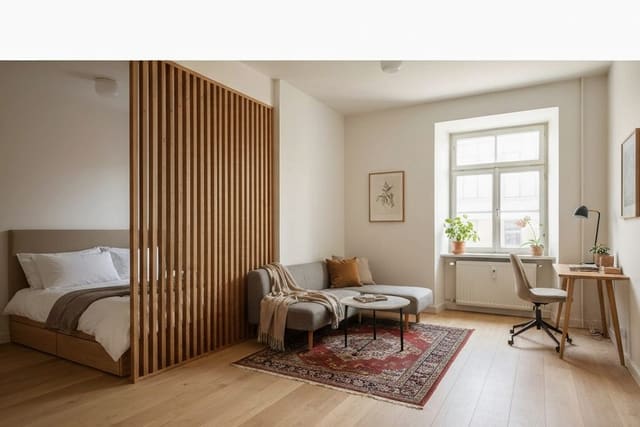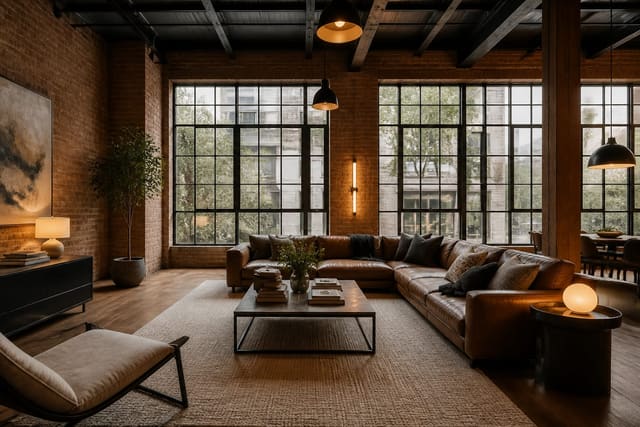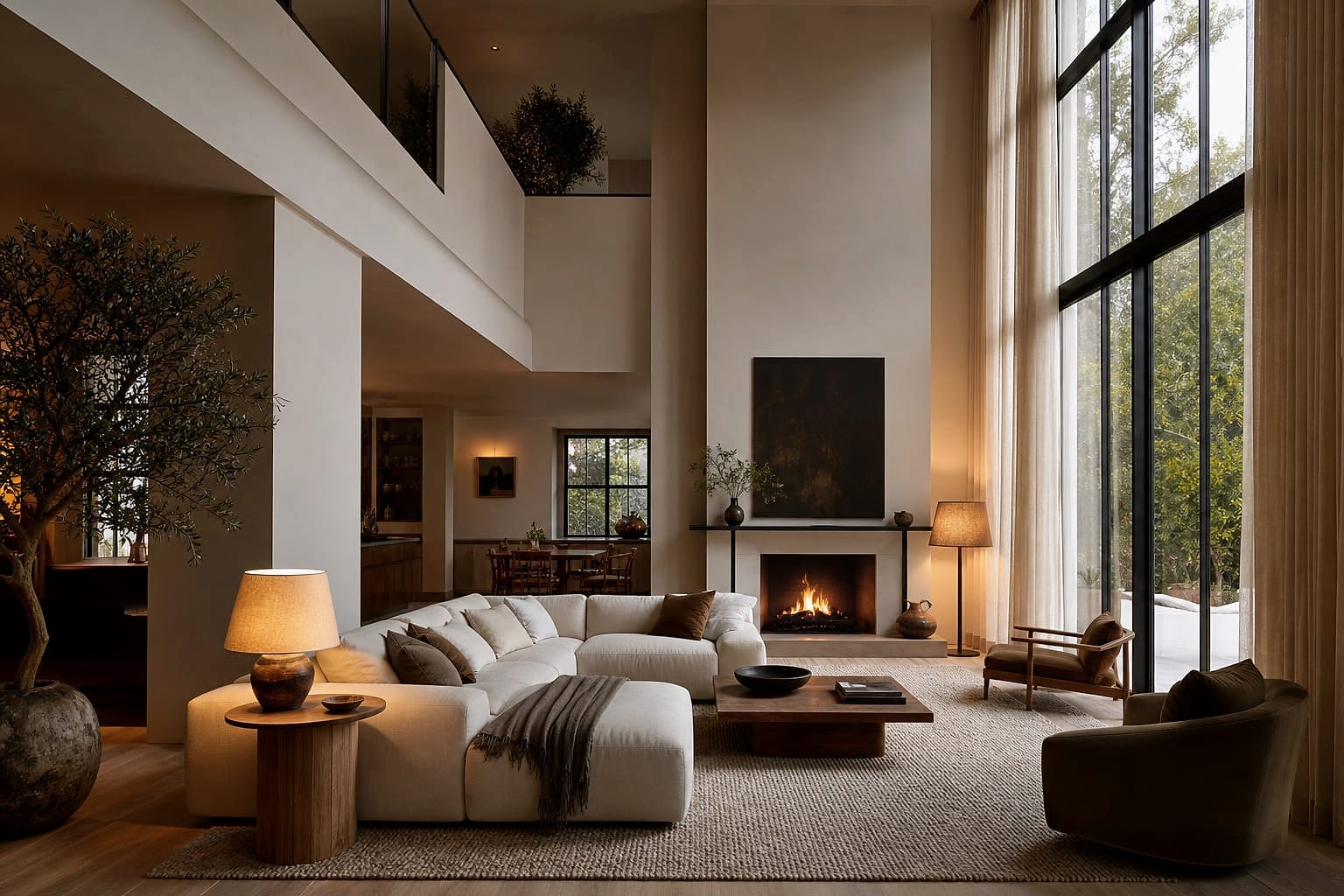
AI loft and mezzanine design lets you preview railing style, sleeping-versus-office function, sloped-ceiling clearance, and stair-landing furniture directly on your uploaded photo, so the upper level reads designed instead of leftover. Upload a real photo and the tool tests layout, zoning, lighting, and furniture scale against your actual ceiling height and stair placement before you buy anything.
What makes a loft feel intentional instead of improvised?
A loft feels intentional when the upper and lower levels have separate jobs, clear sightlines, and furniture scaled to the room's height. The common mistake is treating the mezzanine like a bonus shelf: a bed upstairs, a sofa downstairs, and no relationship between them.
Name the mezzanine's job first: bedroom, office, reading platform, guest zone, or storage deck. A sleeping loft needs privacy and low-glare light; a work mezzanine needs desk depth and outlet planning; a lounge platform needs rail safety and enough headroom to sit without feeling pinned.
Headroom is the first reality check. Most mezzanines feel comfortable where the walking zone hits roughly 7 feet, while a sleeping platform can tolerate less since the person mostly sits or lies down. Judge a sloped ceiling by its lowest daily-use point, not its tallest corner.
The lower level still needs a normal walking path: about 30 inches for a secondary route and closer to 36 inches from entry to kitchen, bathroom, stair, or balcony. If the sofa, stair, and dining table all fight that path, the loft feels cramped even under 14-foot ceilings.
For open-plan references, compare your photo with AI open plan studio layout ideas, then make sure the vertical split earns its keep rather than just looking dramatic.
What's the biggest decision in a mezzanine layout?
The stair-or-ladder choice controls circulation, safety, visual weight, and what can realistically live upstairs. A ship ladder looks clean in a photo but is a poor daily route for laundry, pets, or a sleepy adult carrying water.
A straight stair is easiest to use but eats the most floor, though the space underneath can often become storage or a book wall. A spiral stair saves footprint and adds sculpture but is awkward for moving a mattress or desk chair.
Treat railings as architecture: black metal sharpens an industrial shell, pale wood softens a white mezzanine, and glass preserves light but shows fingerprints and can feel too slick against rough brick. A visually heavy rail edge makes the whole room feel top-loaded.
Furniture below the mezzanine should respect the ceiling compression, using low-profile pieces like a 30-inch sofa back, a slim desk, or closed storage. Avoid tall bookcases under a low deck unless you want a library-cave effect.
Light is the other lever, since a mezzanine casts a permanent shadow below. Layer a warm overhead source, a lamp on the lower floor, and a task light upstairs, using bulbs around 2700K to 3000K to flatter brick, timber, concrete, and steel.
Test this on your own room photo with ReDesign before finalizing the layout, keeping the room structure, daylight, ceiling line, and main path visible so the preview solves the space you actually have.
What should change in a loft before-and-after?
A believable before-and-after fixes hierarchy first. The old version usually has furniture lined against the longest wall, a mattress visible from the entry, a tiny floating rug, and a rail that looks unrelated to everything below.
The stronger after gives each level a visual job, separated through color, texture, lighting, or rail design rather than a full wall. In a compact seating zone, a 5-by-8 rug can work if the front sofa legs sit on it; in a wider loft, an 8-by-10 or 9-by-12 rug anchors the room better than three small rugs explaining every function.
Let window height guide furniture height: keep bulky pieces away from tall industrial glass, avoid blocking a low sill with a high sofa back, and use taller art or shelving to connect furniture to a high window line.
Repeat one finish across levels to keep a non-standard layout from feeling chaotic: black steel on the rail and lamp, white oak on the stair and table, or warm plaster on both walls. For a rawer shell, filter choices through industrial loft design ideas, then check them against your actual ceiling height and stair location.
What mistakes should you avoid in a loft AI preview?
- Invented headroom. AI may show a graceful mezzanine bedroom your real ceiling can't support—check floor-to-ceiling height above and below before pricing anything.
- A bed dominating the entry view. Use a partial screen, tall headboard, curtain track, or rail detail to add privacy without blocking borrowed light.
- Oversized furniture because the ceiling is tall. Vertical volume doesn't widen the floor; test a 72- to 84-inch sofa or 36-inch round table before assuming bigger is better.
- Ignored acoustics. Hard floors, brick, and steel make lofts sound sharp—add a large rug, lined curtains, or upholstered seating to absorb the bounce.
- A junk-balcony mezzanine. Visible storage bins and a lonely chair read as unfinished; closed storage and one deliberate function do more work than clutter.
How do you use AI to preview your loft before you commit?
Use AI design as a rehearsal for hard-to-reverse decisions: mezzanine function, stair style, rail color, zoning, rug size, lighting layers, and storage depth. Generic loft inspiration rarely matches your beam placement, window rhythm, or ceiling slope, so the upload-photo approach matters here.
- Shoot from the entry or widest corner so the tool sees the lower floor, mezzanine edge, stair, windows, and ceiling line.
- Add a second photo from the mezzanine looking down if the upper level isn't visible from one angle.
- Write a specific prompt: keep the brick walls, black rail, concrete floor, and mezzanine footprint; redesign with a calmer sleeping platform, defined living area, layered lighting, closed storage, an 8-by-10 rug, and a clear 36-inch path to the stair.
- Run a wide first set: sleep loft, office mezzanine, guest platform, library loft, storage-focused version.
- In a second set, keep the best function and vary style: warm industrial, minimal white, vintage artist loft, or tailored black and oak.
For broader floor-plan thinking, compare your strongest preview with loft apartment design ideas before buying anything that only solves one angle.
Renters should stick to reversible moves: freestanding screens, plug-in sconces, washable rugs, and furniture that leaves without damage. Owners can explore built-in stairs, rail replacement, or structural changes, but the preview should still lead to measurements, code checks, and trade quotes.
The winning concept isn't the tallest-looking screenshot. It's the version where the stair feels natural, the upper level has a real purpose, the lower floor stays walkable, and the whole vertical room reads as one home.
For the full workflow, use the AI design complete guide as your parent checklist, then return here for loft-specific scale and lighting choices.
Frequently Asked Questions
Can AI design a loft or mezzanine from one photo?
Yes. Upload a photo from the stair or ladder POV and the AI previews railing height, bed scale, desk placement, and storage under sloped ceilings while preserving structural posts. Treat it as a scale and circulation test, keeping the room's openings, ceiling line, and daylight visible in the photo.
What is the minimum loft height?
Most codes require 7 feet of clearance for a habitable room; a sleeping-only mezzanine can drop to 4–5 feet if the railing meets fall-protection code and access is by ladder. Check door swing, chair pullout, walkway width, and storage reach against the preview before finalizing anything.
Bed or office for a small loft?
Choose a bed if bedrooms below are scarce or the loft has the best window; choose an office if the home already has bedrooms and the loft is the only quiet workspace. Bed-plus-desk together is the weakest option in lofts under 80 square feet.
How tall should a loft railing be?
Most codes require 36 inches minimum for residential railings and 42 inches for commercial use; check your local jurisdiction and add roughly 6 inches of extra height if children use the loft regularly.
Can a mezzanine work as a guest room?
Yes, as long as the railing, ladder or stair, and window egress meet code. A daybed plus a curtain on the railing handles occasional guests without permanently committing the loft to a bedroom.
Ready to see this on your own room? Open Re-Design and run the preview before you buy, paint, drill, or move furniture.