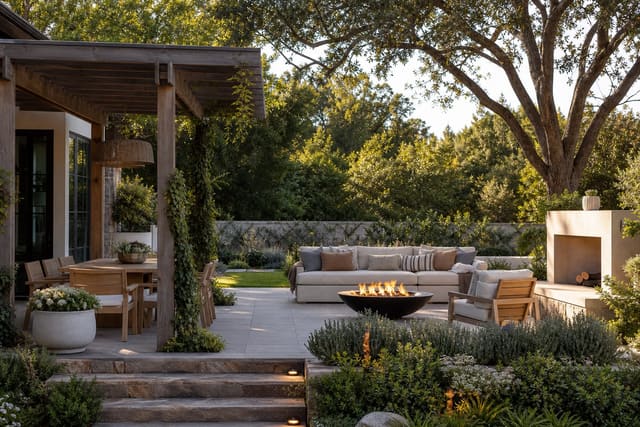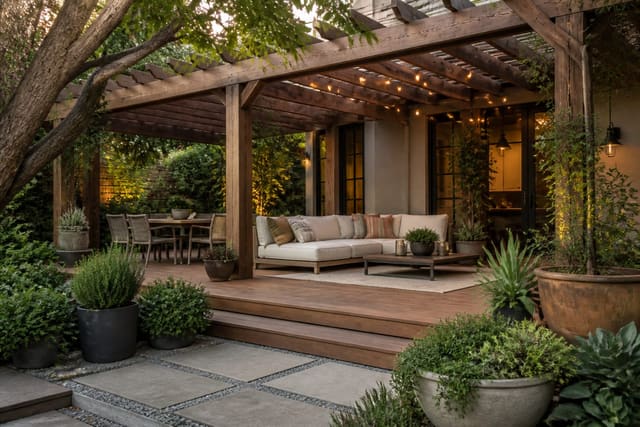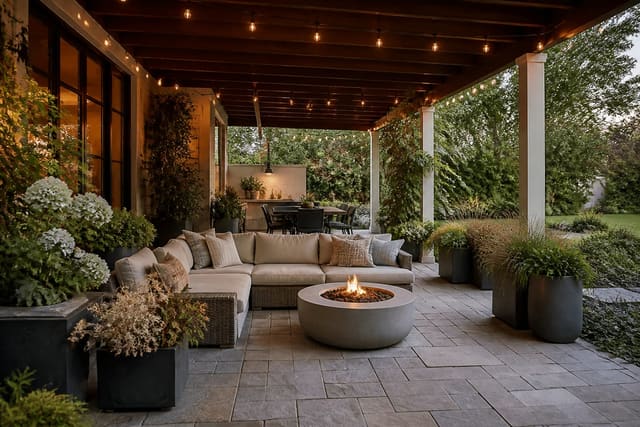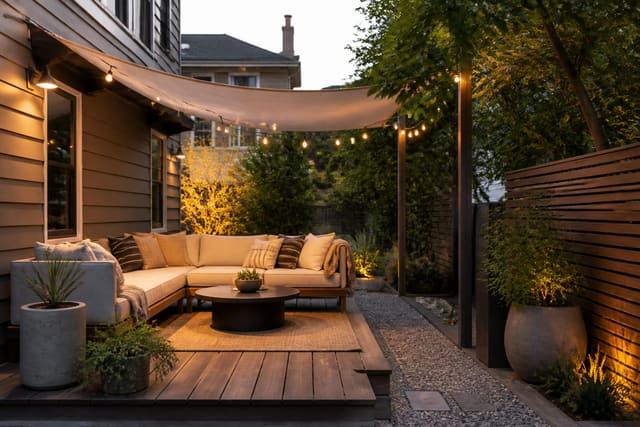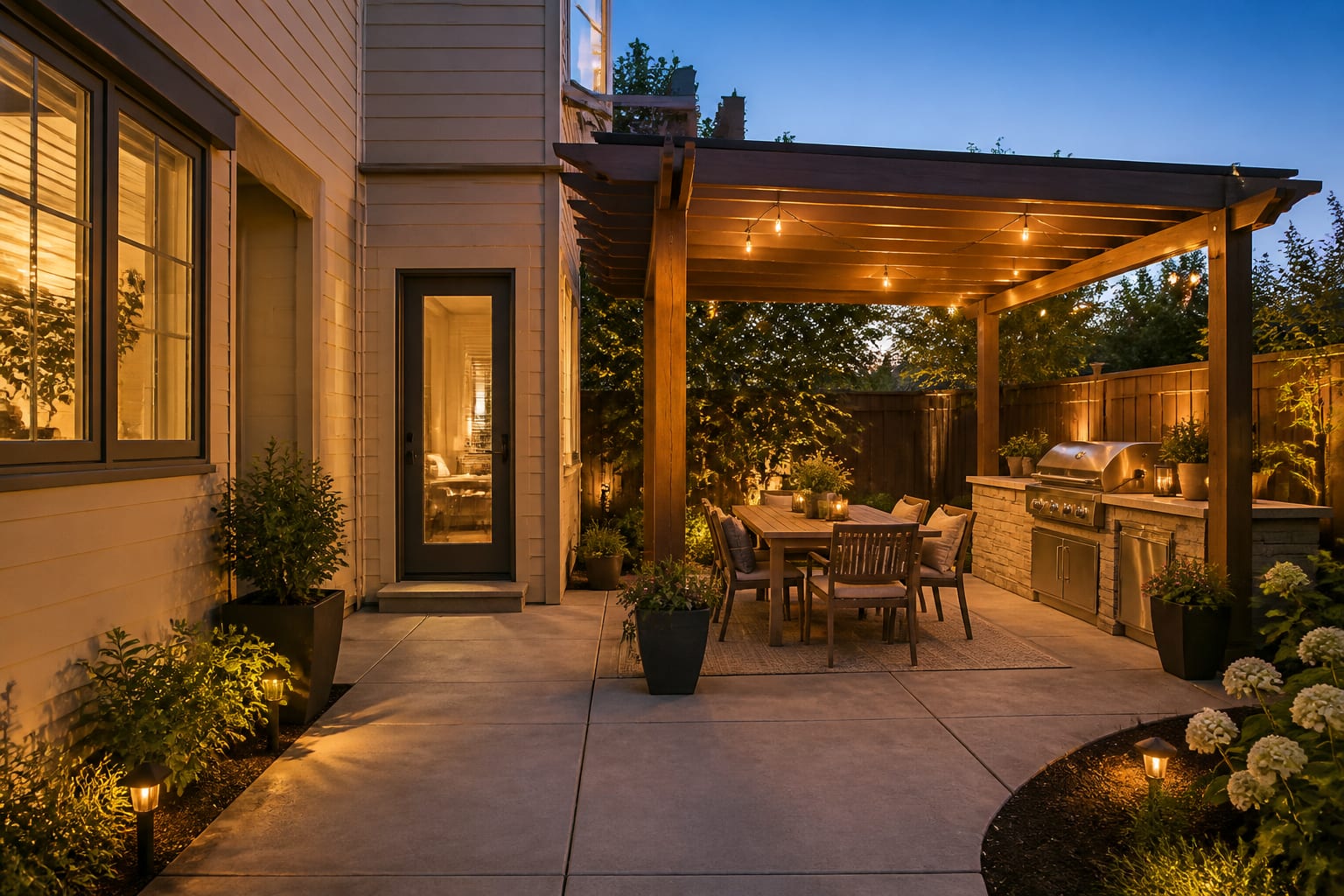
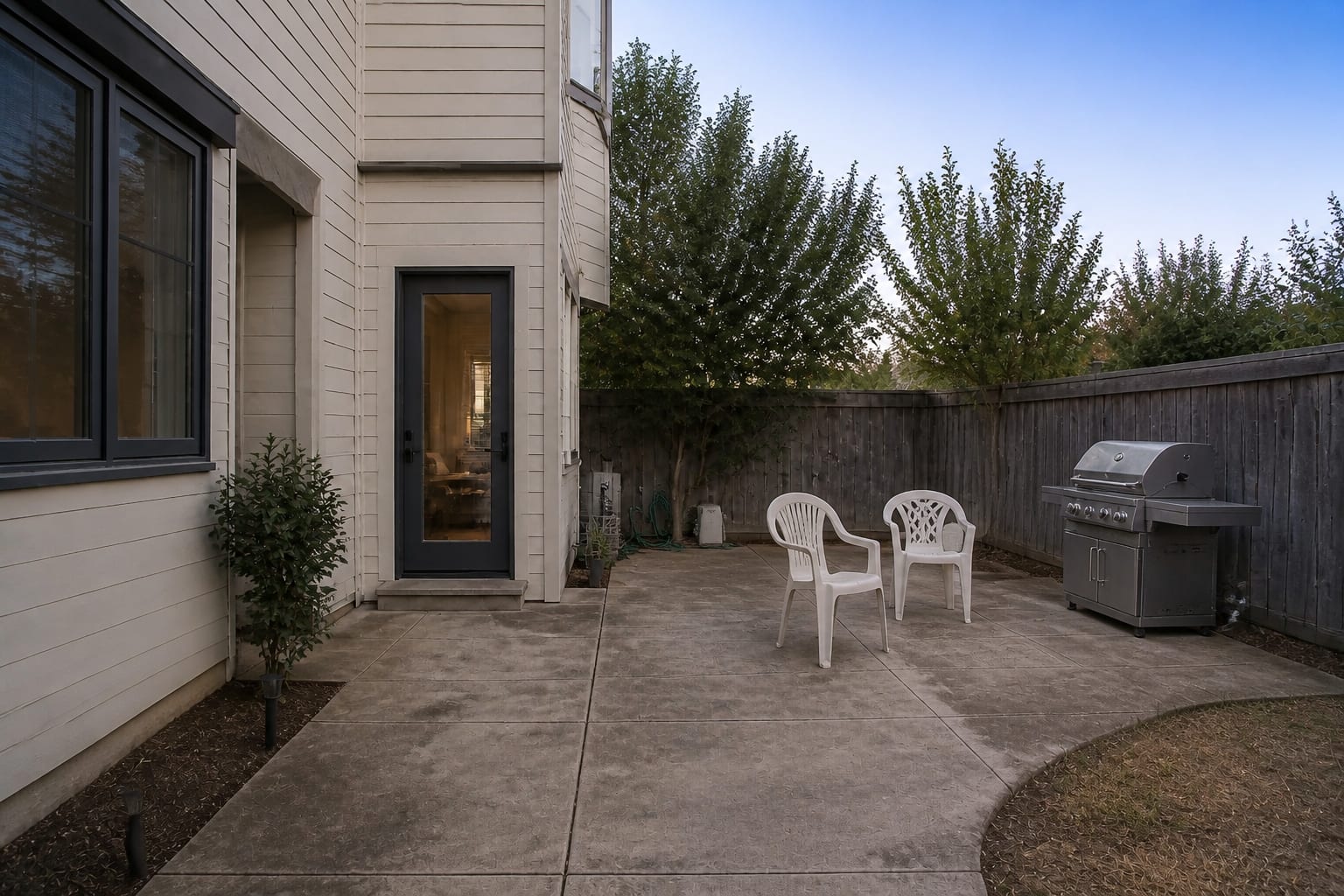
AI outdoor kitchen design uses a photo of your patio to preview how a grill, prep counter, dining area, shade, and lighting could work together before you build. Circulation, not the grill, is what makes or breaks the layout. The goal is catching awkward flow or sizing problems before you pour concrete or price cabinets.
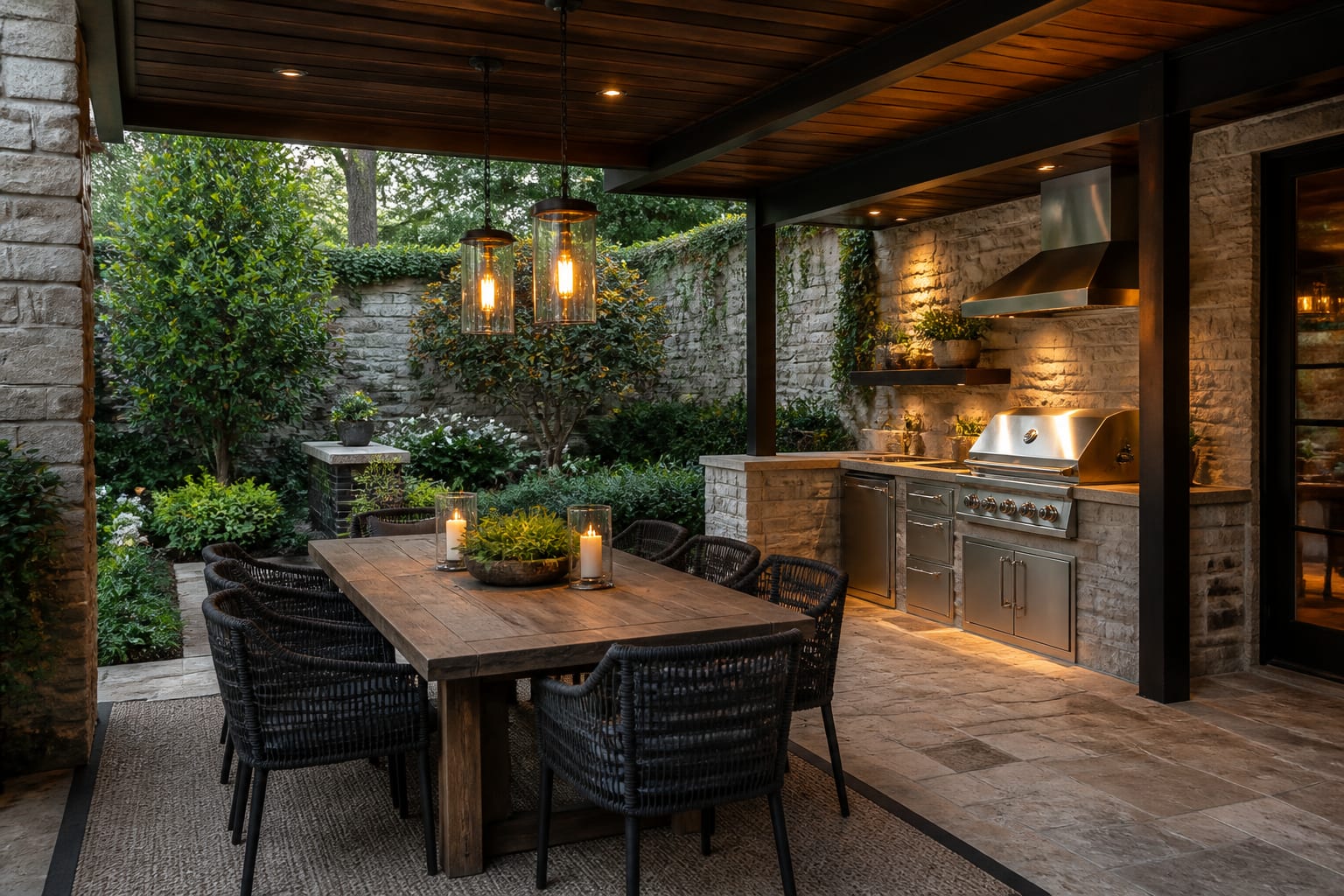
What makes an outdoor kitchen feel built in, not bolted on?
An outdoor kitchen feels built in when the cooking run respects the patio's traffic, architecture, and sightlines instead of sitting like a grill cart with stone around it. The house wall, door swing, steps, fence, and dining table all need to be part of the same plan. If the cook has to back into the main walkway every time the grill opens, the layout is already wrong.
Use a loosened work-triangle: a hot zone, a prep zone, a landing zone, and a cleanup or trash zone. A grill landing counter is often at least 18 to 24 in. on one side, and 36 in. is better once trays, tongs, and platters are involved. Adding a sink, fridge, or ice maker moves the project from furniture into utilities, so treat it with more caution.
Seating needs the same logic. A counter-height bar can be social, but stools need pullback room; a dining table needs chair clearance; lounge seating shouldn't sit in smoke. If shade is part of the plan, apply the same thinking as patio shade structure planning: cover the cook and guests without trapping heat or blocking the back door.
Which layout decisions should you test before building?
Test the decisions that change how the patio functions, not the cabinet color, since those are the choices that get expensive once gas, concrete, or masonry are involved.
- Size the cooking run around real appliances. Outdoor equipment runs deeper and hotter than it looks in a render; preview a 7 ft., 9 ft., and 12 ft. run before assuming longer is better.
- Protect the main route. Keep about 36 in. of walking space on the busiest path, with extra clearance where chairs, cooler lids, or cabinet doors swing open.
- Add prep counter before extra appliances. A 24 to 36 in. landing surface near the grill often improves daily cooking more than a beverage fridge that needs power and upkeep.
- Keep dining out of the smoke path. If the breeze carries smoke toward the table, rotate the seating, shift the grill, or add a partial screen.
- Preview lighting as a cooking tool. Use warm task light near 2700K–3000K over the grill, plus lower path or step lights so guests can move safely after dark.
- Test materials next to the house exterior. Stone, porcelain, stucco, stainless, concrete, brick, and wood all shift outdoors; a counter that looks great online can clash with your siding or pavers.
Once the cooking zone works, compare the concept against AI patio design ideas for outdoor rooms so the kitchen isn't the only designed part of the yard.
How do you preview an outdoor kitchen with AI before committing?
Upload a straight daylight photo showing the full patio, house wall, doors, windows, steps, existing grill, fence, and the view from seating. A cropped grill photo produces a nicer grill corner, not a better outdoor kitchen. The camera needs enough context to show entry points, food landing spots, and where guests gather.
Run three controlled versions on the same footprint: a compact grill-and-prep wall, a longer kitchen with bar seating, and a hybrid with a smaller cooking run plus stronger dining and planting. A photo-based outdoor design tool works better here than a fantasy prompt; before relying on one polished image, check the best AI app for outdoor space design. The useful output is the version where grill, counter, table, shade, and walking path feel like one plan, not the prettiest single scene.
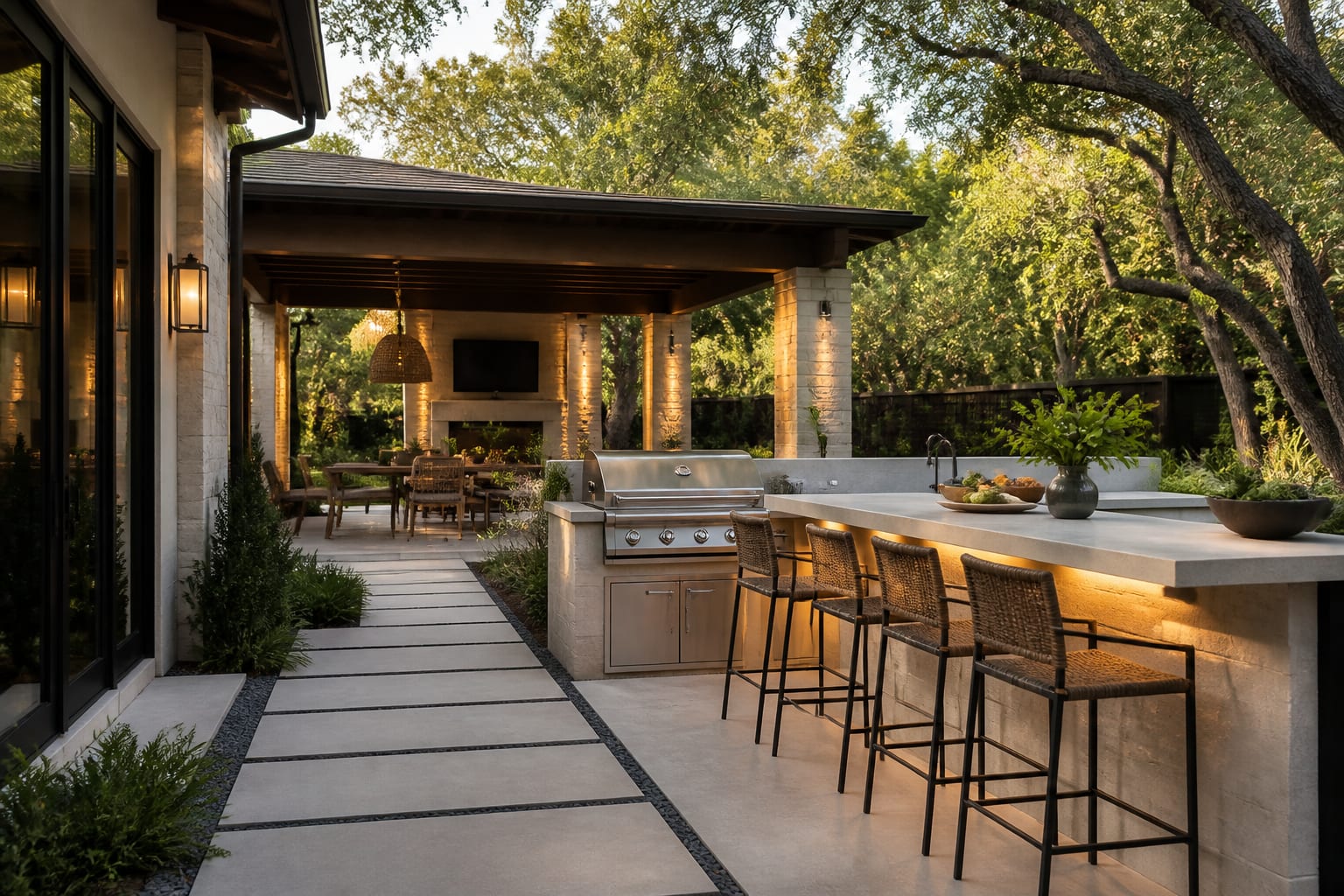
What are the most common outdoor kitchen mistakes?
The biggest mistake is treating the AI image as proof the build will work; a generated counter can look perfect while ignoring heat, venting, drainage, and utility routes. Other frequent errors:
- Making the grill the only focus. Without landing counter, storage, trash, and lighting, a beautiful grill is still under-designed.
- Putting bar stools in the walkway. Stools look social in a render but block circulation; keep them off the door-to-table route.
- Copying indoor finishes outside. Glossy cabinets, porous stone, and untreated wood photograph well but age badly against sun, rain, and freeze-thaw cycles.
- Ignoring shade until it's too hot. A patio that looks great in a morning photo can be miserable at dinner; preview shade with the sun angle you actually cook under.
What should you check before buying concrete, cabinets, or appliances?
Save the strongest AI preview, then convert it into a checklist: grill width, counter length and depth, appliance clearances, walkway width, chair pullback, lighting locations, outlets, gas or electric route, drainage, and shade footprint. Mark the proposed layout on the patio with tape or chalk, then walk the food route from indoor kitchen to grill to table.
Confirm every fixed system before the finishes win you over: gas, electrical, plumbing, permits, fire separation, and clearances for anything attached to the house need qualified review. Renters or smaller budgets can test the concept first with a freestanding grill, prep cart, rug, and planters before committing to a built-in kitchen.
Frequently Asked Questions
Can AI actually design a working outdoor kitchen layout?
AI can preview layout options, appliance placement, counter sizing, shade, and lighting from a patio photo, which helps you compare concepts before spending money. It cannot verify gas lines, electrical capacity, drainage, or permits, so treat the preview as a planning tool, not a final engineering plan.
How much counter space does an outdoor kitchen need?
Plan for at least 18 to 24 in. of landing counter beside the grill, with 36 in. preferred if you're handling trays and platters. Add a separate 24 to 36 in. prep counter if the budget allows, since most patios suffer more from missing counter space than missing appliances.
How wide should the walkway be around an outdoor kitchen?
Keep about 36 in. of clear walking space on the main route between the house and the seating area. Add extra clearance anywhere chairs pull back, a cooler lid lifts, or the grill lid swings open so the path doesn't get blocked during use.
What's the biggest mistake people make with outdoor kitchen design?
The most common mistake is designing around the grill alone and ignoring prep counter, storage, circulation, and shade. A kitchen with a great grill but no landing surface or clear walking path will feel unfinished and awkward to actually cook in.
Do I need a professional before building a built-in outdoor kitchen?
Yes, for anything involving gas lines, electrical work, plumbing, or structures attached to the house. Use AI previews to settle layout and style first, then bring in a licensed contractor to confirm clearances, permits, and code compliance before construction starts.