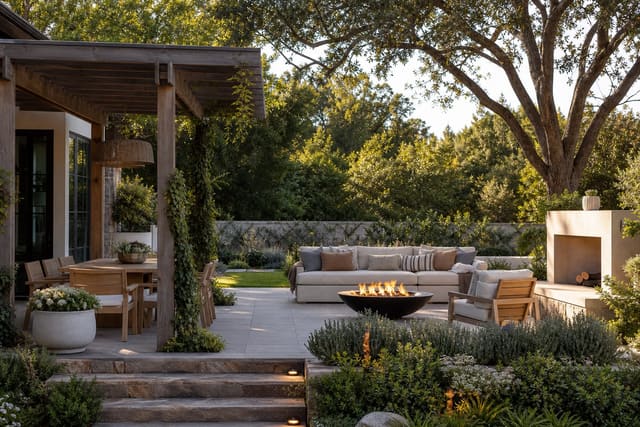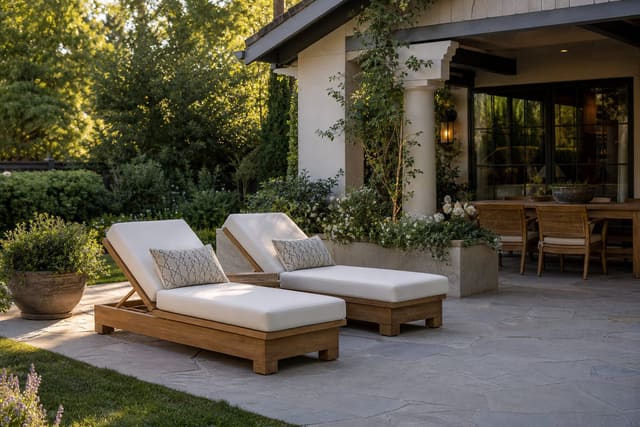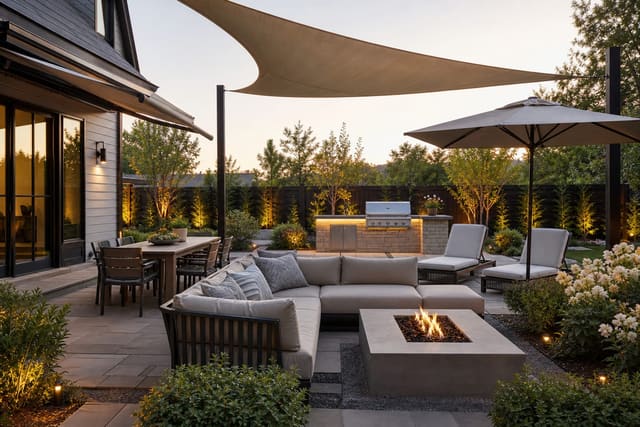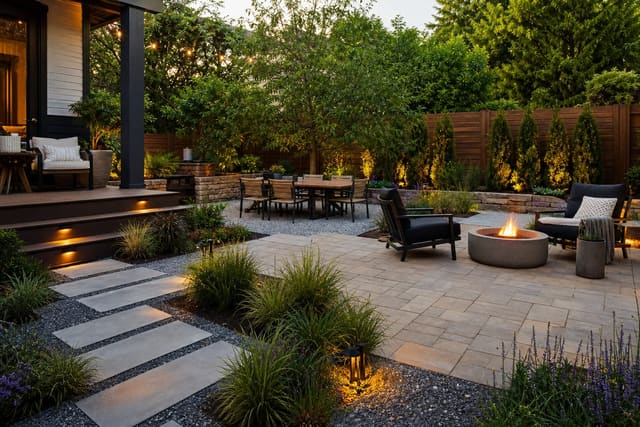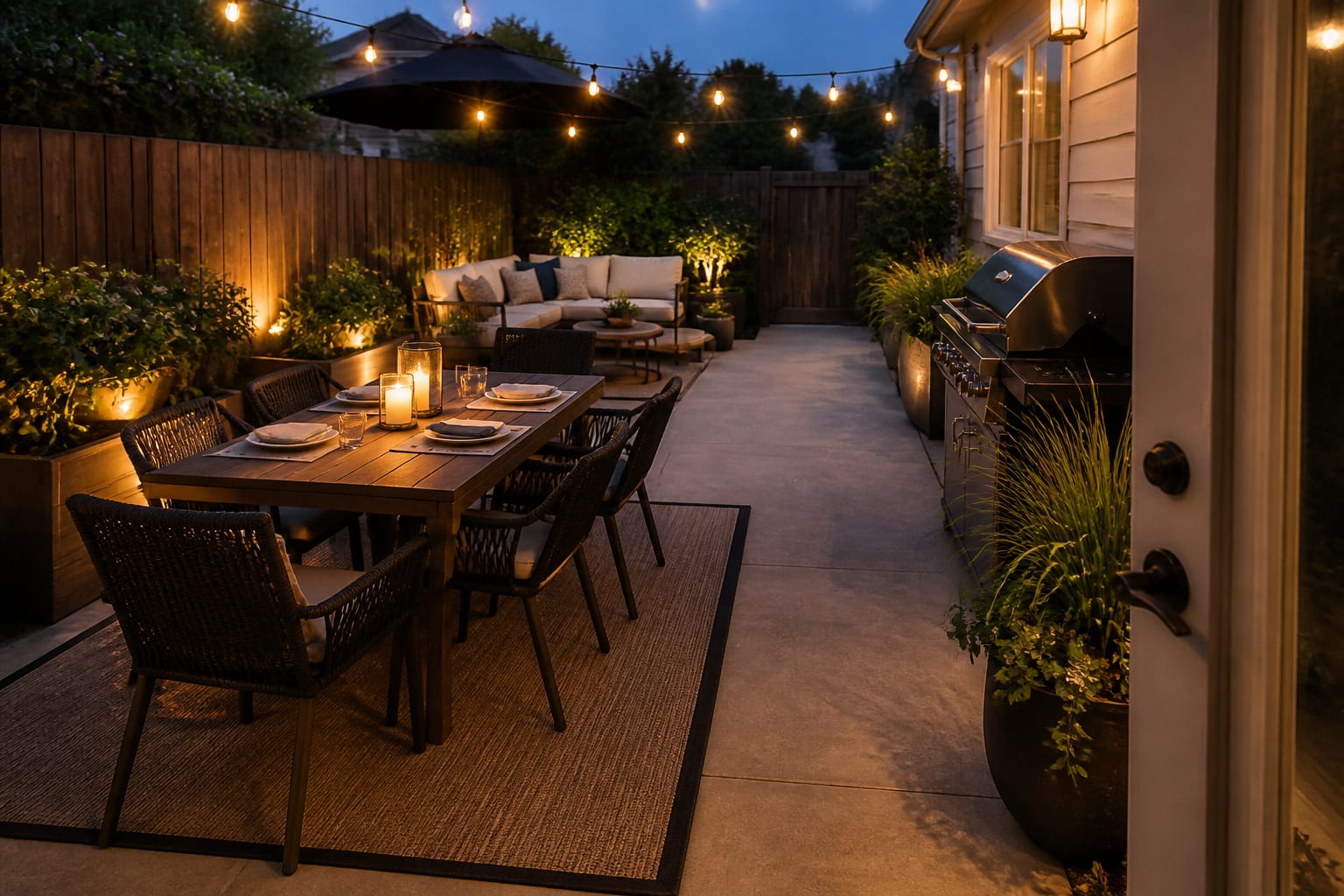
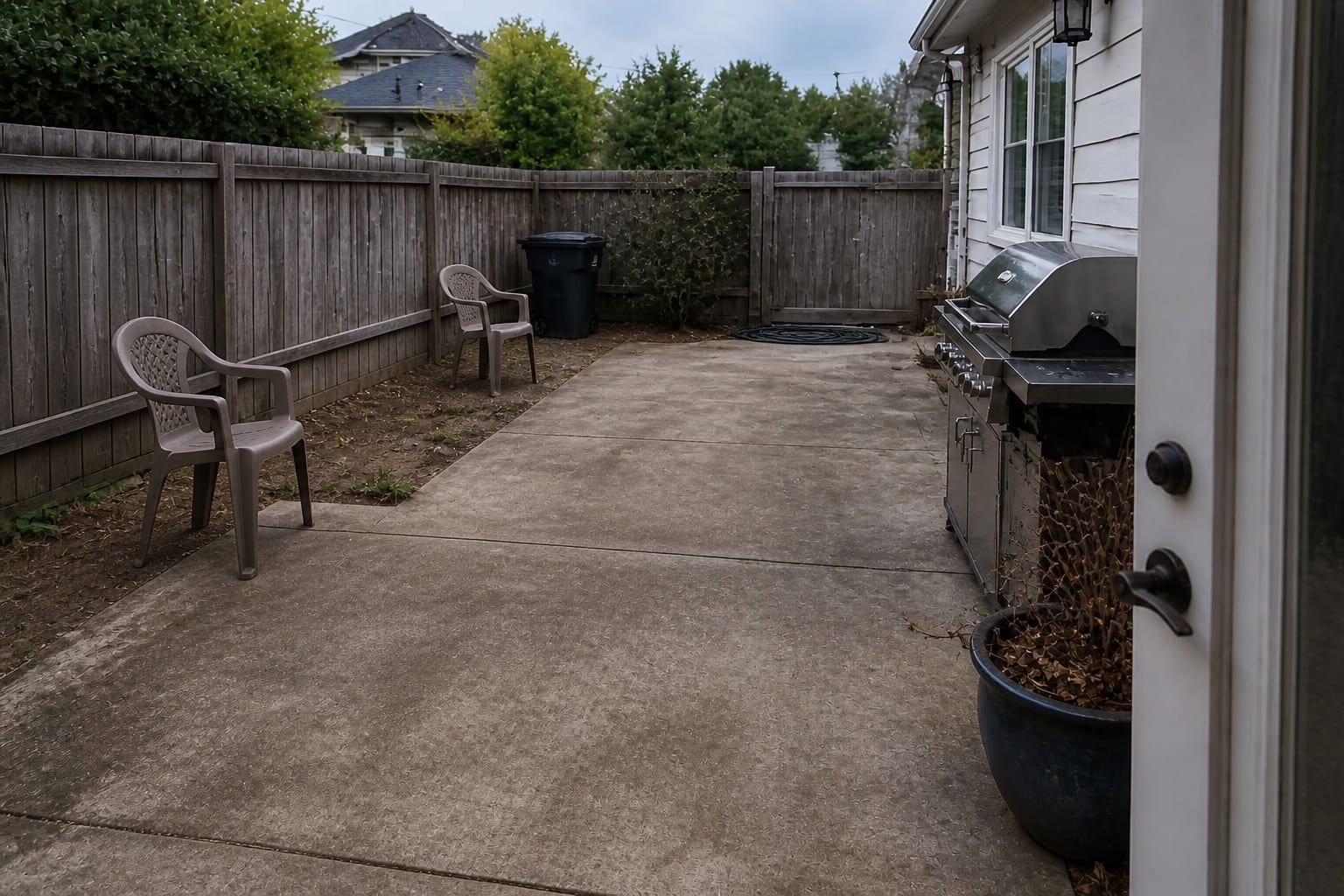
The best AI outdoor space design app is Re-Design, because it starts from your actual patio photo instead of a generic courtyard fantasy. It's built for homeowners and renters who need to compare shade, furniture, flooring, planting, and lighting directions fast, before committing money to a space where sun, drainage, and clearances all decide the outcome.
What makes an outdoor preview trustworthy?
A trustworthy preview keeps the inconvenient parts of the patio visible. The sliding door, stair tread, downspout, fence line, AC unit, grill, and sunniest corner aren't clutter to erase; they're the rules of the room.
Outdoor design succeeds when a plan respects three layers: ground, shade, and use. Ground decides whether furniture sits level and a rug dries. Shade decides where people actually sit at 2 p.m. Use decides whether the space is for two coffees, six dinners, or a grill that needs a safe landing zone.
If your concrete pad is only 10 by 12 feet, the app shouldn't suggest a deep sectional, a 72-inch table, and a fire pit all at once. If the door swings outward, the plan needs to leave that clear. On a 5-foot-deep balcony, a 30-inch bistro table may work while a full dining set turns the space into an obstacle course.
For furniture uncertainty, pair the preview with a patio furniture size and layout guide before ordering. A render shows mood; seat depth, arm height, and chair pullback decide daily comfort.
Which app is best for designing an outdoor space?
Re-Design is the top pick when your goal is to upload a real patio photo and compare believable directions before spending on furniture, flooring, shade, or lighting. This matters more outdoors, since the existing surface, fence, house color, and views all shape the result far more than a generic inspiration image admits.
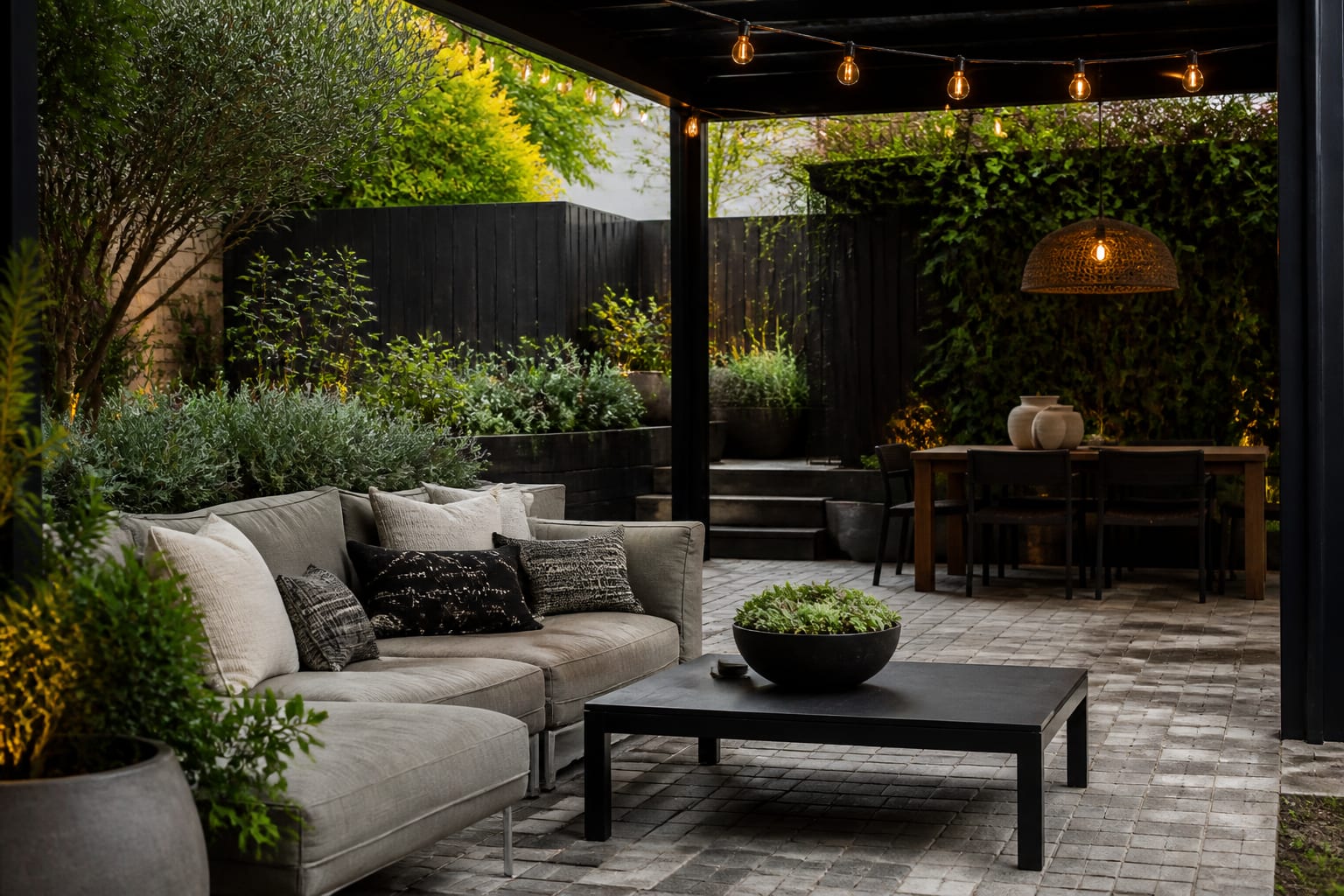
That verdict has limits. No AI app can inspect a rotting deck board, confirm a pergola footing, calculate drainage, or check wind load. Use the preview to choose direction: wood-tone furniture versus black metal, gravel versus pavers, umbrella versus sail shade, string lights versus lanterns.
Compare one layer at a time: layout, then shade, then surface, then planting, then lighting. Changing everything at once can hide which single choice actually solved the problem. If the patio suddenly works whenever shade and a larger rug are added, those two moves deserve attention before replacing every chair.
How should you compare AI patio design apps?
Compare tools by the decisions they help you make, not the gloss of the image. A patio preview has to survive heat, rain, dirt, and people moving through with plates in hand.
| Tool type | Best outdoor use | Where it helps | Where it can mislead |
|---|---|---|---|
| Re-Design photo-based preview | Testing your own patio, deck, or balcony before shopping | Fast comparison of layout, shade, furniture, rugs, planting, lighting | Still needs measurements, specs, drainage checks, and installation judgment |
| Landscape design software | Planning beds, hardscape edges, irrigation, larger yard changes | Stronger for site planning and plant zones | Slower when you only need one patio direction |
| Generic image generator | Broad mood references for a dream garden | Useful for unusual material combos | May invent space, remove railings, or ignore weather exposure |
| Retailer visualizer | Seeing one catalog's products in a space | Helpful once the shopping list is narrow | Can push you toward available items before the layout is right |
Filter every preview against these checks:
- Keep the walking path honest. Aim for about 36 inches on the main route from door to seating, accepting 24 inches only at short pinch points.
- Size the seating before the style. A 40-inch-deep lounge chair can swallow a small patio; slimmer 28-32 inch chairs often feel calmer in tight spaces.
- Check shade before color. A 7.5- to 9-foot umbrella covers a compact dining table; a larger lounge zone may need a sail, pergola, or cantilevered shade.
- Treat the floor as a design surface. Compare options with patio flooring ideas for real weather before assuming furniture alone will fix a weak surface.
- Plan lighting at human height. Combine low path lights, table lanterns, and warm bulbs around 2700K instead of one harsh wall lantern.
Common mistakes when choosing an outdoor design AI tool
The first mistake is picking the app with the most dramatic render. A resort-style image with a sunken fire pit is useless if your rental patio has one outlet, a 6-foot fence, and no drilling allowed.
The second mistake is hiding the awkward constraint from the upload. Keep the utility box, cracked slab, narrow gate, or AC unit in the photo. If the preview erases what you actually live with, it's decorating the wrong patio.
The third mistake is trusting furniture scale without checking dimensions. Dining chairs typically need 30-36 inches behind them to pull out, and grills need clearance from walls and fabric. A plan that blocks the back door will annoy you every weekend.
The fourth mistake is ignoring weather and storage. Cushions, rugs, umbrellas, and planters all face sun, rain, and wind; decide on the cleaning routine before buying white cushions under a shedding tree.
The fifth mistake is treating plants as decoration instead of architecture. Tall planters can screen a neighbor and small trees can frame a dining zone, but containers need drainage holes and enough weight to resist wind on exposed decks.
How do you use AI design to preview your patio before you commit?
Show the whole outdoor problem in your photo: house wall, door, paving edge, fence or railing, and the corner you're tempted to crop out. Take one photo in daylight and one after dark if evening use matters.
Ask for narrow comparisons. Try three shade approaches on the same patio: market umbrella, sail shade, and pergola-style cover. Then compare furniture on the winning shade idea. This outdoor shade guide helps separate a pretty canopy from one that actually covers the seats.
After saving the strongest preview, measure the patio, door swing, grill zone, chair pullback, umbrella diameter, and rug footprint. Check drainage away from the house, surface levelness, and whether cords can reach outlets without crossing a walkway.
Renters should focus on removable decisions: freestanding shade, washable rugs, weighted planters, plug-in lighting, and folding furniture. Owners can test paver extensions, built-in benches, or outdoor kitchens, but structural, electrical, and gas work still needs a professional.
Frequently Asked Questions
What is the best AI app for designing an outdoor space?
Re-Design is the best choice because it works from your actual patio photo, letting you compare shade, furniture, flooring, planting, and lighting directions before spending money, rather than generating a generic fantasy courtyard unrelated to your real constraints.
Can AI accurately show how furniture will fit on my patio?
AI previews suggest style and layout direction but can't guarantee exact fit. Always confirm dining chair pullback (30-36 inches), lounge chair depth (28-40 inches), and door clearance with a tape measure before buying anything shown in a render.
How much shade coverage does a patio dining table need?
A 7.5- to 9-foot market umbrella typically covers a compact dining table. Larger lounge areas or multi-zone patios usually need a sail shade, pergola, or cantilevered cover instead of a single umbrella to protect all the seating.
What's the biggest mistake people make with outdoor AI design tools?
Choosing the most dramatic image instead of the most useful one. A luxury render with a sunken fire pit means nothing if your real patio has limited power, a short fence, or rental restrictions on permanent changes.
Should renters and homeowners use AI patio design differently?
Yes. Renters should preview removable items like freestanding shade, washable rugs, and plug-in lighting. Homeowners can test more permanent ideas such as paver extensions or pergolas, but should still confirm structural and electrical work with a professional.